Basilica Majorum of Carthage: A Christian Martyrs’ Basilica in Tunisia
Site at a Glance
- Rating
- 3.2
- Popularity
- Very Low
- Country
- Tunisia
- Primary era
- Classical
- Eras represented
- Classical, Medieval, Modern
- Civilizations
- Byzantine, Roman
- Site type
- Religious
- Remains
- Basilica
On this page10 sections
History
The Basilica Majorum of Carthage is a ruined Christian basilica at the archaeological site of Carthage in Tunisia. Built in the early fourth century, it developed from a place used as a pagan cemetery from the first century and became associated with the burial of the Christian martyrs Perpetua and Felicity, whose remains were deposited there in 203.
From Cemetery to Christian Basilica
The church was identified as the Basilica Majorum through an inscription naming the martyrs and a historical account by Victor of Vita, a fifth-century Christian historian who described the Vandal persecution in North Africa. Numerous other Christian inscriptions found at the site reinforce its religious character. Augustine of Hippo also preached several sermons in the basilica.
The basilica was later requisitioned by the Vandals and converted for Arian worship. Arianism was a Christian theological movement that rejected the full equality of the Son with God the Father, and it was supported by the Vandal ruling elite in North Africa. During the Byzantine period, when Carthage was governed by the Eastern Roman Empire, the church returned definitively to Catholic use and underwent alterations.
Abandonment and Investigation
The basilica was abandoned in the early seventh century as the urban fabric contracted around it. Its later isolation from Carthage’s other archaeological remains, together with the very poor preservation of its fabric, has left the site difficult to study.
Alfred Louis Delattre excavated the basilica between 1906 and 1908. The remains were subsequently reburied, then exposed again for the Eucharistic Congress of 1930. The Basilica Majorum is listed as a monument in Tunisia and forms part of the World Heritage site of Carthage, with a declaration date of 13 March 1912 associated with this status.
Remains
The Basilica Majorum, also known as the Basilica of Mcfida, formed a substantial complex set apart from the other remains of Carthage. Its plan included an apse, seven naves, and thirteen bays. A ciborium, a canopy over an altar or sacred feature, stood in the middle of the central nave. Beneath the altar was a funerary chapel connected with the burial of Perpetua and Felicity.
Basilica and Martyrs’ Shrine
Main Basilica
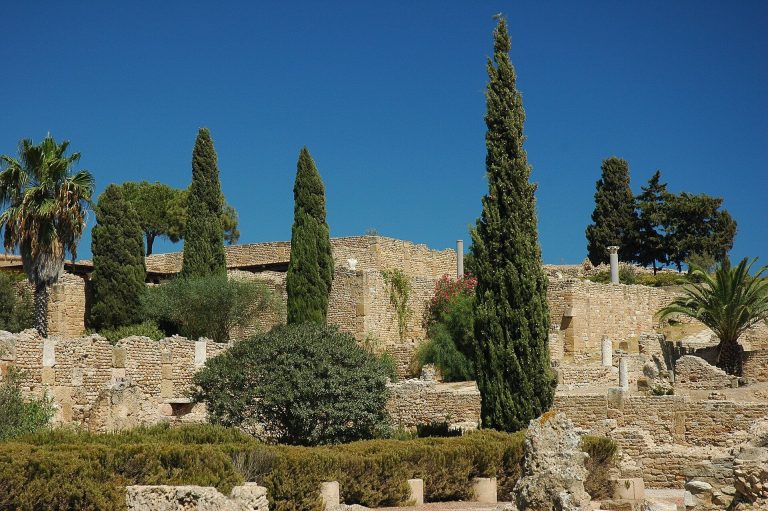
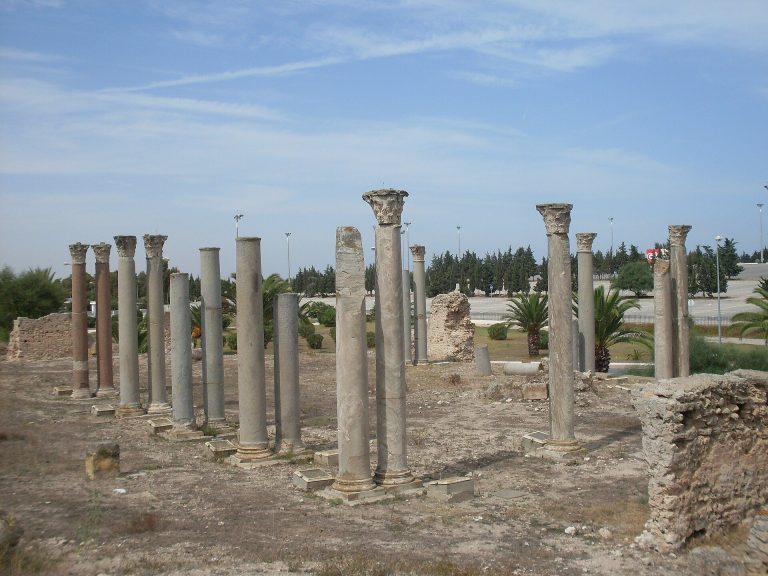
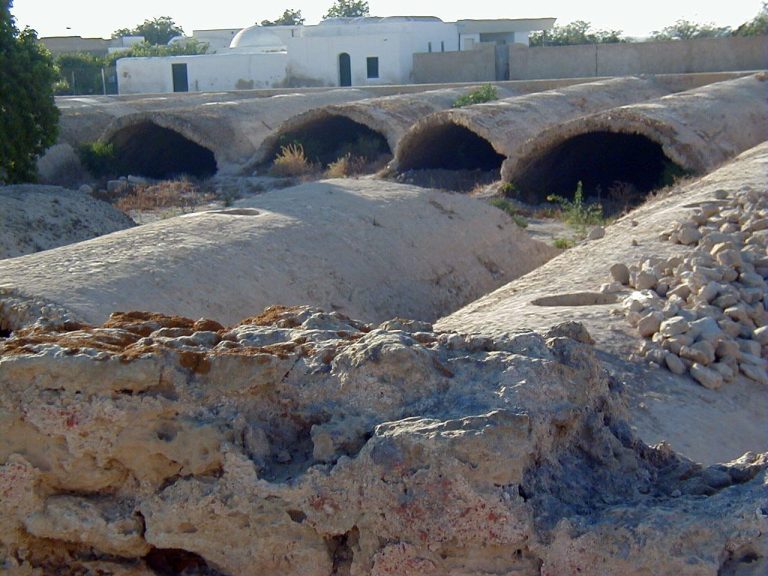
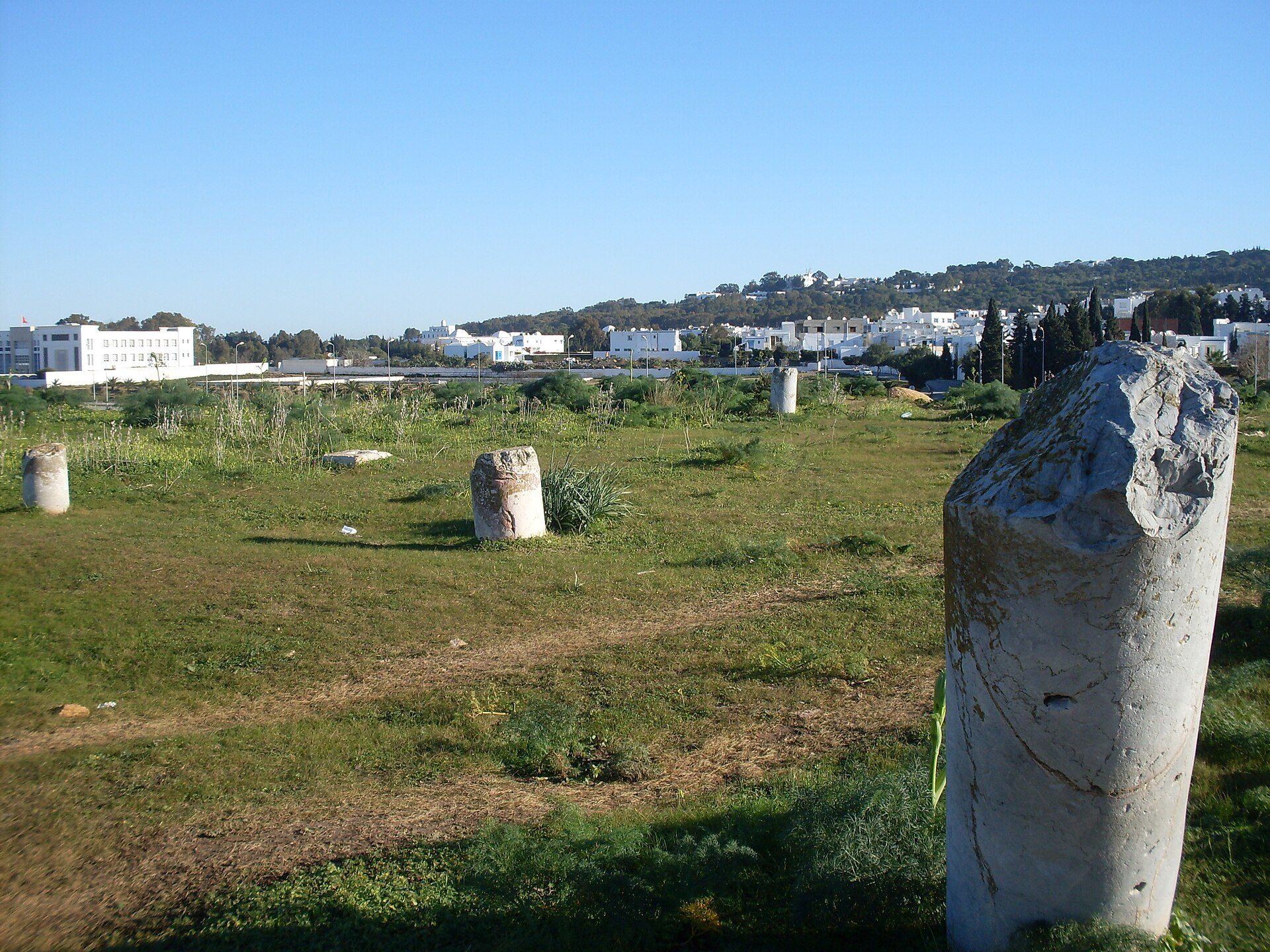
The church’s surviving structure is represented mainly by column shafts and a few walls. These fragments convey the scale of a building organized around multiple naves and bays, although the condition of the remains prevents adequate study of the basilica as a whole.
Confession of Perpetua and Felicity
The martyrs’ chapel was a Confession, a shrine or crypt associated with the burial or relics of martyrs. The only surviving reconstruction is the rebuilding of this shrine carried out in the 1930s. It reproduced the original form and included two staircases on its sides.
Surviving Fabric
Columns and Walls
The excavated remains are in very poor condition. Delattre attributed part of this loss to the reuse of building materials in nearby houses, particularly in La Marsa and Sidi Bou Said. The surviving shafts and wall fragments therefore provide only a limited physical record of the former complex.
1930s Reconstruction
The reconstructed Confession preserves the principal surviving representation of the martyrs’ shrine. Its reproduction of the original form and its two lateral staircases distinguish it from the scattered masonry and column fragments elsewhere in the ruins.