Qalat-i Dinka: A Neo-Assyrian Settlement in Iraq
Site at a Glance
- Rating
- 4.3
- Popularity
- Very Low
- Country
- Iraq
- Primary era
- Iron Age
- Eras represented
- Stone Age, Iron Age
- Civilizations
- Assyrian
- Site type
- City
On this page12 sections
History
Neo-Assyrian settlement
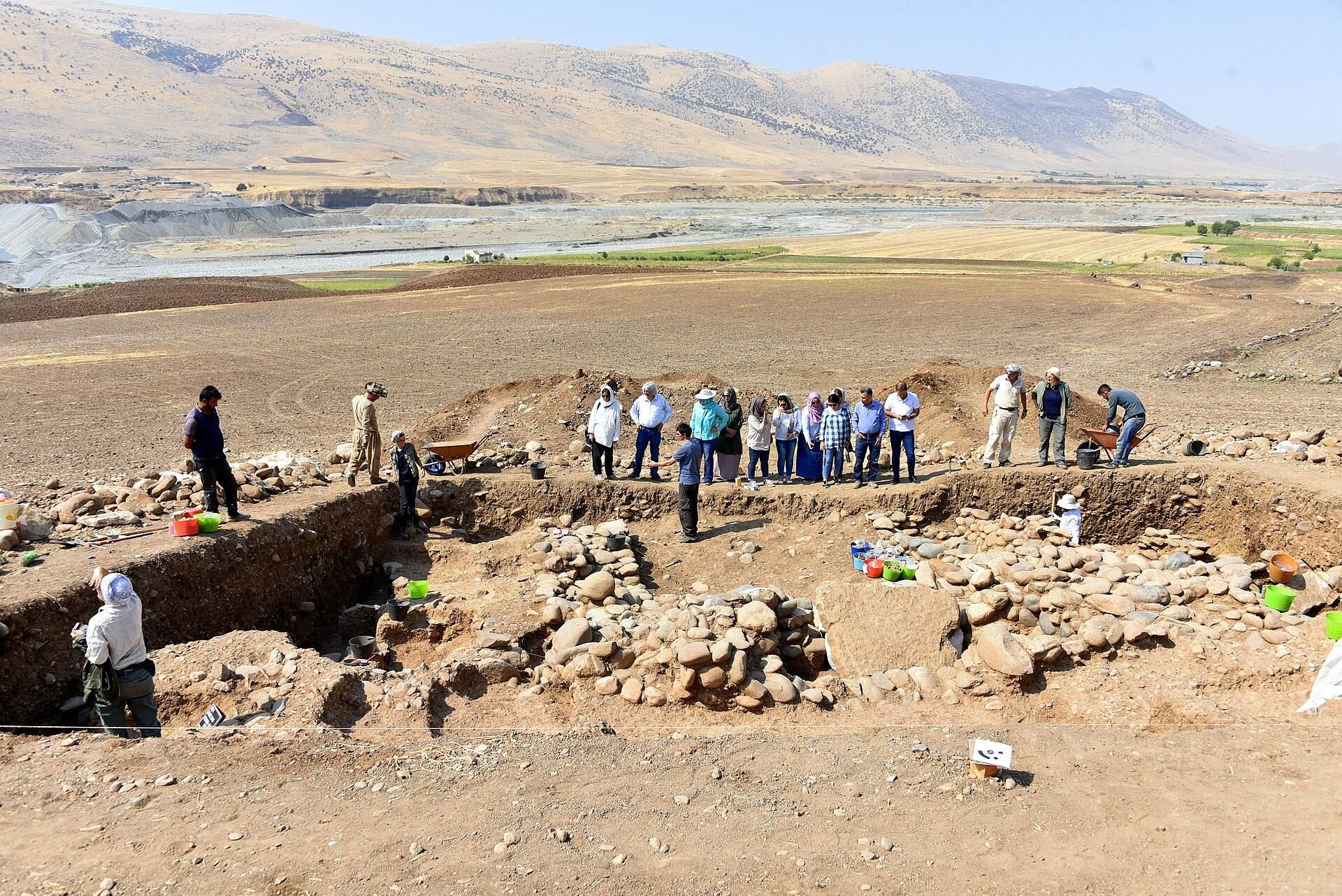
Qalat-i Dinka is a Neo-Assyrian archaeological settlement in Sulaymaniyah Governorate, Iraq, on the Little Zab River in the Peshdar Plain. It developed during the Iron Age, when the Neo-Assyrian Empire, a state centered in northern Mesopotamia, expanded across much of the Near East during the first millennium BC. Covering about 60 hectares, the settlement occupied a strategic position between the Zagros Mountains and the Mesopotamian plain.
A fragment of a cuneiform tablet, a clay document marked with wedge-shaped impressions, was accidentally discovered at the site. The tablet records the sale of a female slave and dates to the reign of Shalmaneser V, the Neo-Assyrian king who ruled around 726–722 BC. Its presence demonstrates a strong Assyrian presence in the region. Qalat-i Dinka may have served as an administrative or commercial center on the eastern frontier of the empire, although that interpretation remains tentative.
Earlier and later occupation
Copper Age remains from several parts of the settlement show that the location was occupied before the Neo-Assyrian period. The later Sasanian period brought a different use of the site. The Sasanian Empire was the Iranian imperial dynasty that ruled much of Iran and neighboring regions from the third to the seventh century AD, and at Qalat-i Dinka the settlement functioned primarily as a cemetery during this phase rather than as a major urban center.
Archaeological investigation
Archaeological work began in 2016 and has continued through the Peshdar Plain Project, led by Karen Radner of Ludwig Maximilian University of Munich. Magnetometer surveys, which map buried features by detecting changes in soil magnetism, have clarified the settlement’s scale and organization. The site is treated as a protected archaeological area, although modern looting and agricultural activity have damaged archaeological layers and continue to hinder investigation.
Remains
Settlement layout
The settlement was organized in two parts, with a citadel spread across a hill and a lower city extending northward. Magnetometer survey results indicate a planned urban layout with organized streets and residential areas. Excavations have exposed small areas in different parts of the settlement, allowing the buried plan to be considered alongside the excavated remains.
Buildings and production
Residential buildings
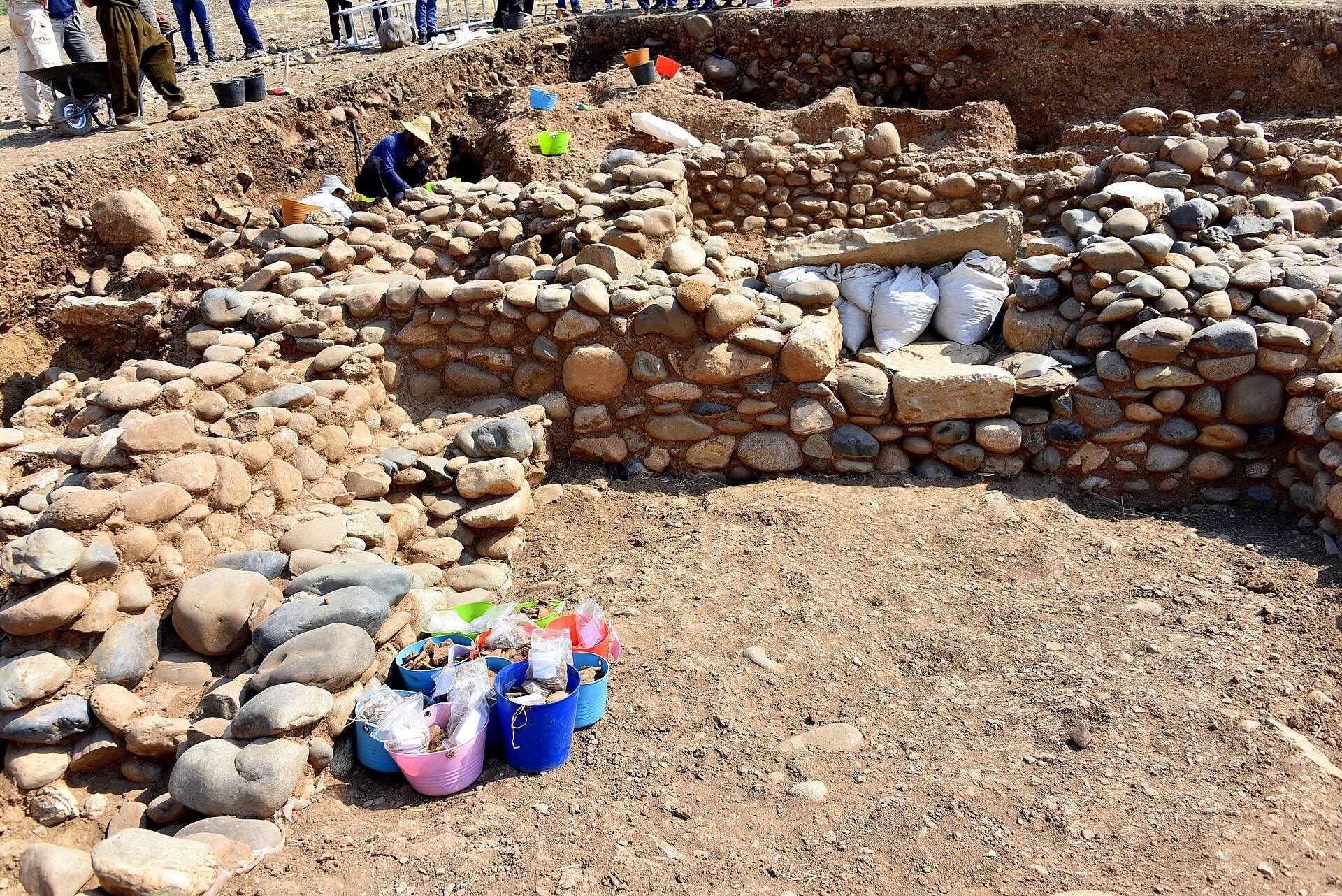
Residential buildings were constructed largely from rubble. One substantial building, possibly associated with a wealthy citizen or official, contained a large hall with a brick-paved floor. Three successive phases can be traced there: an earlier wall beneath the building, the construction phase of the house, and later graves distributed across the excavated area.
Copper Age furnace
A completely exposed furnace belongs to the Copper Age occupation. Its form and position provide evidence for early metalworking at Qalat-i Dinka, linking the physical remains of production to the settlement’s earliest known phase.
Objects and burial remains
Urban finds
Large quantities of pottery were recovered from the main urban area, including vessels characteristic of the Neo-Assyrian period. Cylinder seals, small engraved objects rolled across clay to leave an identifying or administrative impression, were also found. Their style places them in the first half of the first millennium BC. Numerous iron arrowheads and other weapon-related objects point to the presence of military equipment within the settlement.
Later graves
Later graves contained jewelry as burial offerings. A well-preserved bronze bowl was also recovered, while Sasanian graves generally contained small numbers of offerings, principally stone and glass beads. Excavated features include Room 58 and numbered graves 103 and 109. Some objects from Room 58 were collected in buckets during excavation, and part of a skeleton was exposed in Grave 103. Looters’ pits have disturbed the ruins and surrounding exposed surfaces.