Huaca Palomino: A Ychsma Ceremonial and Administrative Center in Lima
Site at a Glance
- Rating
- 4.2
- Popularity
- Low
- Country
- Peru
- Primary era
- Medieval
- Eras represented
- Medieval
- Civilizations
- Unclassified
- Site type
- Religious
- Remains
- Temple
On this page5 sections
History
Huaca Palomino is a Ychsma archaeological site on the left bank of the Rímac River in Lima, Peru. It developed during the Late Intermediate Period, between about AD 900 and the fifteenth century, as part of the Maranga complex and the wider political sphere of the Lordship of Ichma. The site was both a ceremonial and administrative center within the pre-Columbian societies of the Lima region.
Ychsma Development and Maranga
The Ychsma, also called Ichma, occupied the lower valleys of the Rímac and Lurín rivers on Peru’s central coast. Their political organization consisted of smaller communities and regional authorities rather than densely concentrated cities in the modern sense. Huaca Palomino formed part of the Maranga state, a pre-Columbian political and archaeological complex whose principal surviving center lies in what is now Parque de las Leyendas.
Construction and the site’s greatest development belong broadly to the period from AD 900 to the fifteenth century. Chronological estimates place this phase between AD 900 and 1440, while another construction span extends to AD 1476. The Maranga state had been influenced by the Wari, a major Andean civilization whose political and cultural influence altered construction and funerary practices in parts of the central Andes before the rise of the Inca state. Huaca Palomino itself remained associated with Ychsma occupation and is not attributed an Inca occupation or influence.
The site probably served several connected purposes. It may have housed governors, stored collected tribute, and provided space for assemblies and administrative ceremonies. Its ceremonial role may also have included use as a temple or oracle. The huaca’s orientation toward a tutelary hill on the northern horizon, understood in Andean religious traditions as a sacred protecting landscape feature, probably belonged to a wider cosmographic system through which the site was understood and organized.
Hacienda Use and Modern Transformation
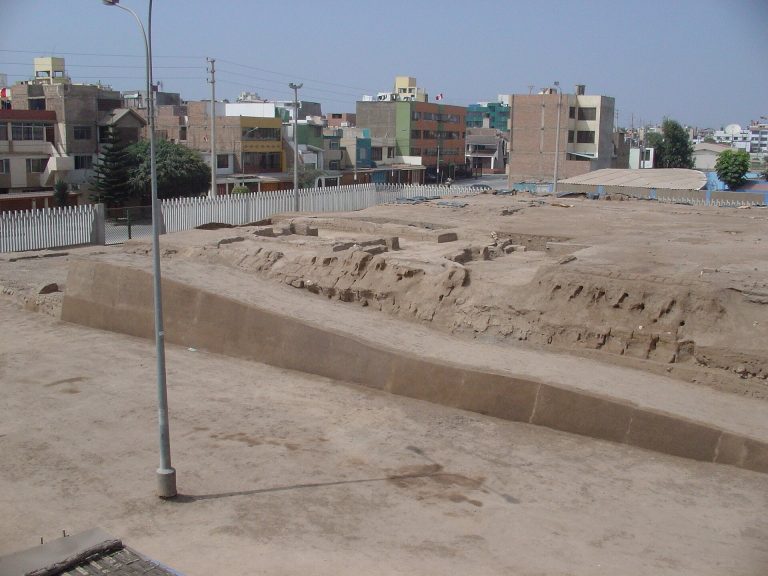
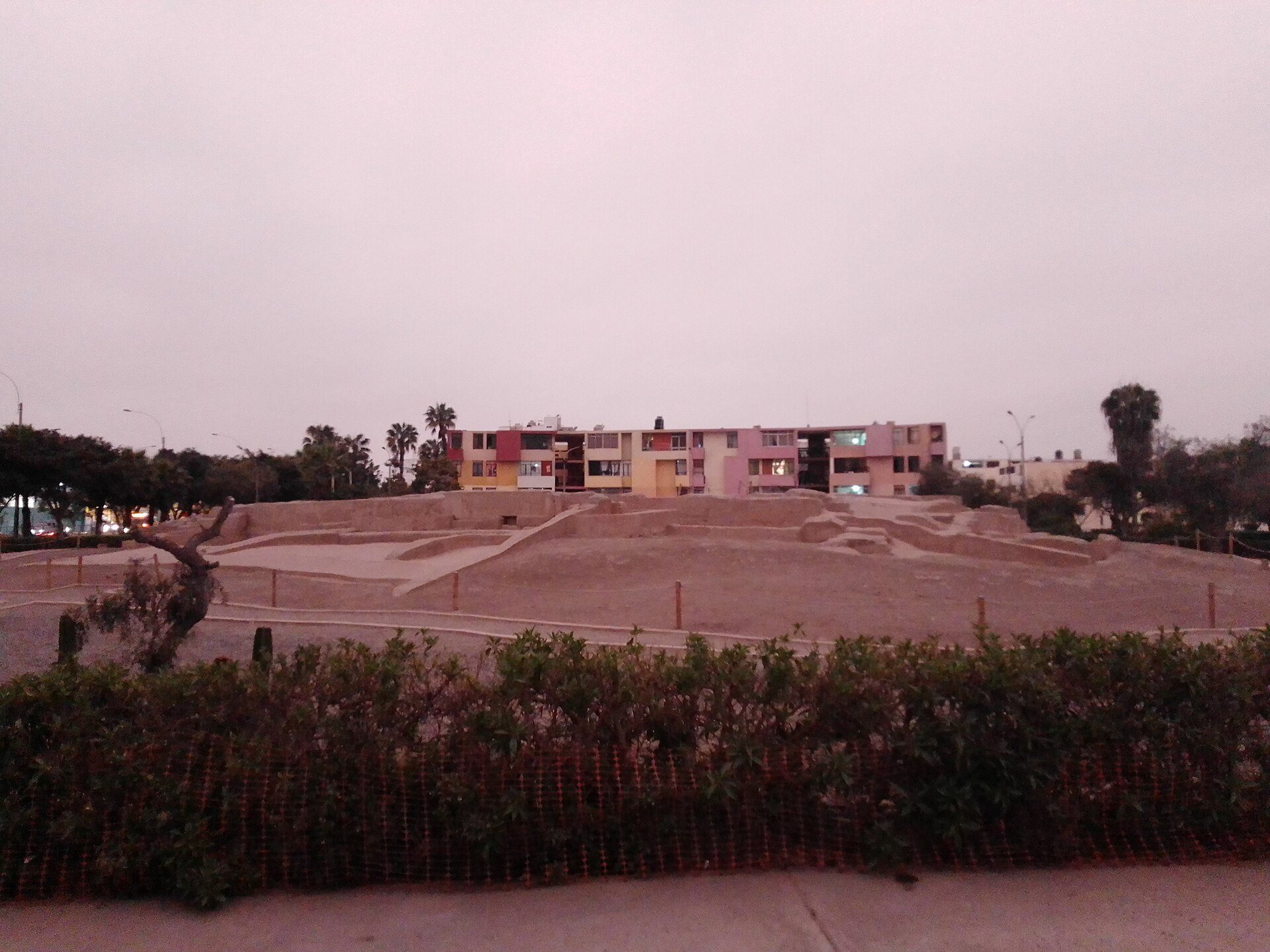
Huaca Palomino formerly stood within the Palomino estate, which later became part of the Pando hacienda owned by José de la Riva-Agüero. The site acquired its present name from this estate. Expansion of agricultural fields during the hacienda period is considered to have destroyed part of the archaeological area. Intensive cultivation during the Viceroyalty and the early Republic caused further deterioration, while urban development in Lima at the beginning of the twentieth century damaged additional remains.
A restoration or rehabilitation intervention took place in 1960, with participation encouraged among local authorities, schools, municipal security personnel, and nearby residents. The site was declared Cultural Heritage of the Nation on July 2, 2004. After a period of abandonment during which it was used for smoking and drug consumption, a 2012 state intervention carried out with the archaeologist Piero Guarisco reduced these activities and formed part of a broader recovery effort. Weathering, wind, sunlight, rain, heat, low night temperatures, erosion, burning waste, aerosol, and other mainly human-related pressures continue to affect the rammed-earth fabric.
Remains
Platforms and Earthen Construction
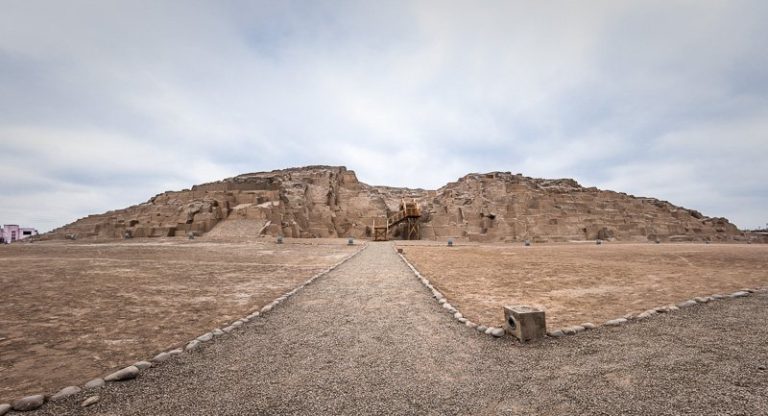
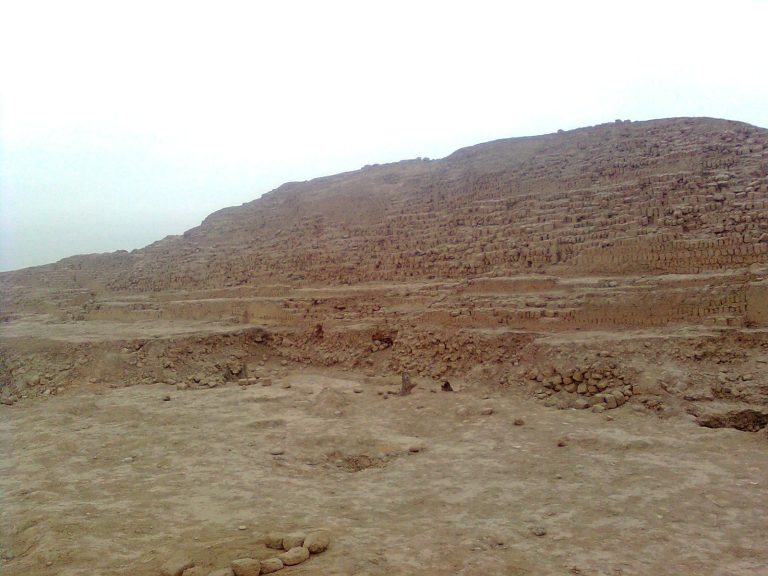
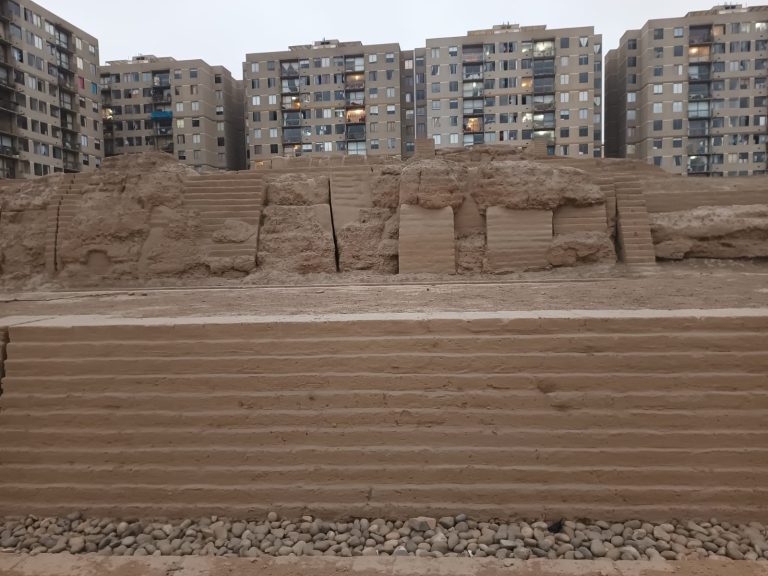
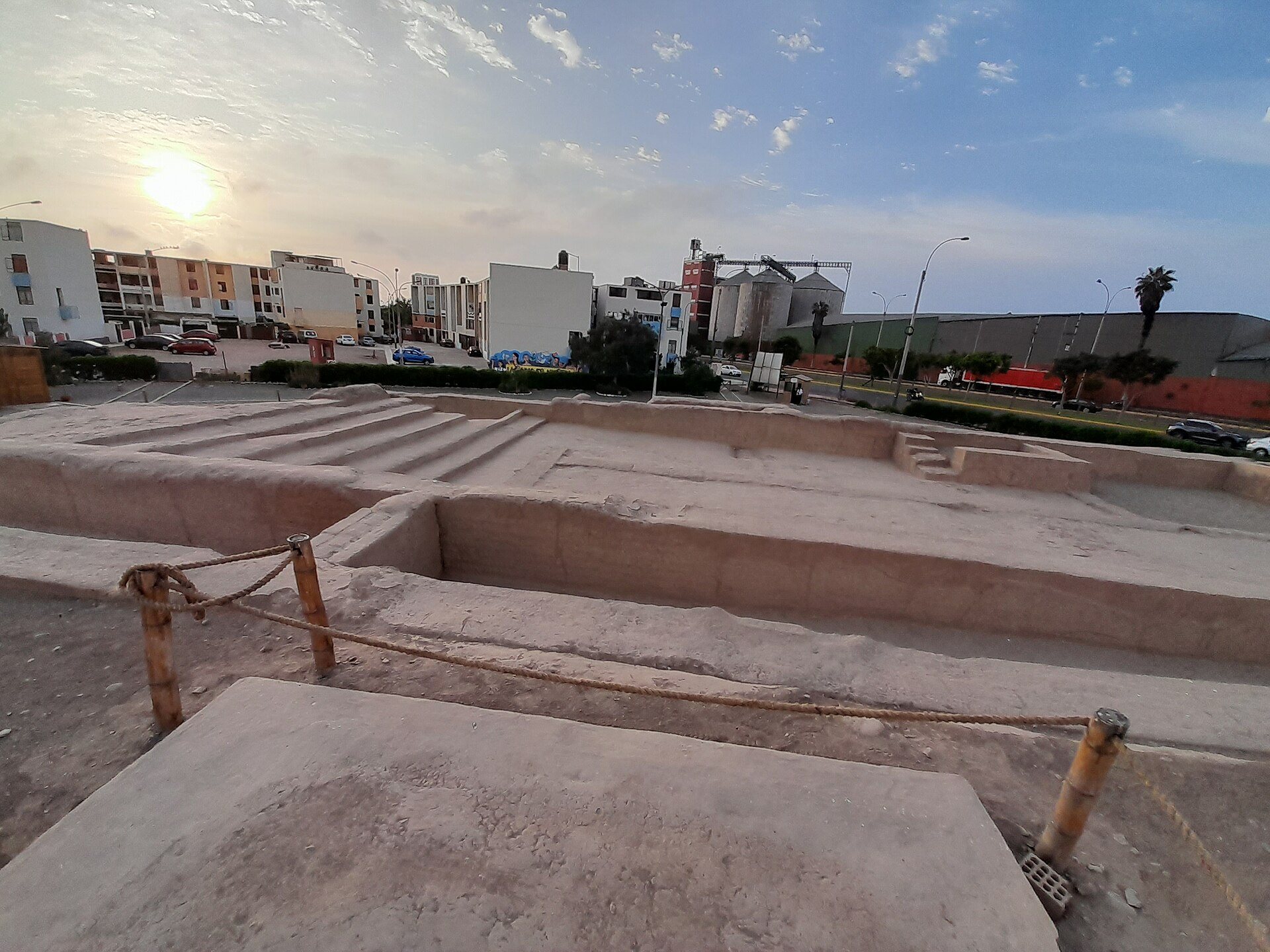
The archaeological site covers approximately 24,940 square meters, while the present huaca occupies about 5,371 square meters. Its surviving form consists of superimposed platforms built around a rectangular base. The base forms a ceremonial platform made chiefly of rammed earth, with adobe and clay also used in the construction.
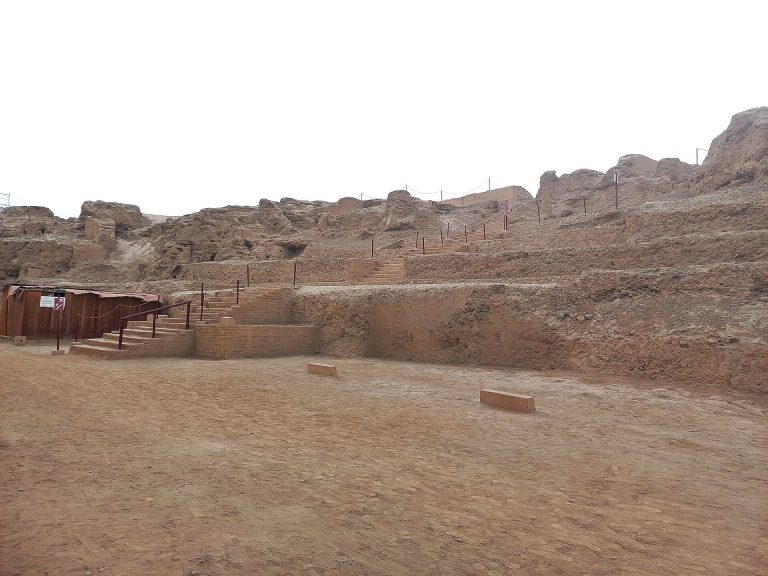
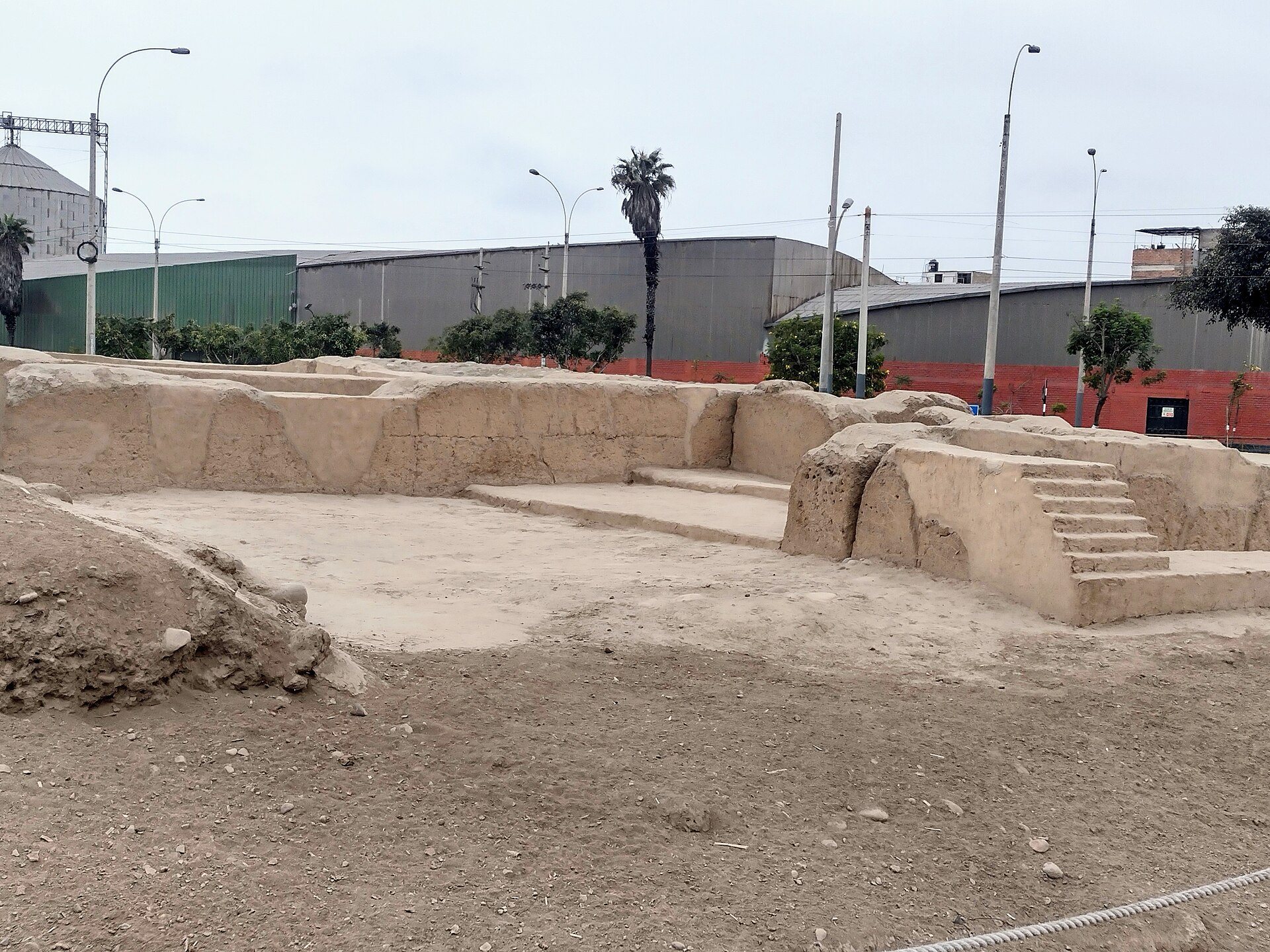
Rammed earth was made by placing damp earth or mud inside molds and compacting it into solid walls and platforms. At Huaca Palomino, this technique produced broad, massive, low walls. Their substantial construction helped resist earthquakes and limit collapse. The architecture also includes stepped structures, raised platforms, and smaller buttresses, features associated with Late Intermediate Period architecture on the central coast.
Steps provided areas for general audiences and may have accommodated administrative ceremonies or rituals. Together with the raised platforms and heavy walls, they have been interpreted as elements of civil-administrative buildings. The surviving structures form part of the Maranga archaeological complex, whose principal core is located in Parque de las Leyendas.