Taforalt Cave: A Prehistoric Cemetery and Hunter-Gatherer Site in Morocco
Site at a Glance
- Rating
- 4.2
- Popularity
- Low
- Country
- Morocco
- Primary era
- Stone Age
- Eras represented
- Stone Age
- Civilizations
- Unclassified
- Site type
- Burial
- Remains
- Necropolis
On this page14 sections
History
Taforalt Cave is a prehistoric archaeological site near Tafoughalt in eastern Morocco, in the Aït Iznasen region. Occupied by hunter-gatherers from about 85,000 to 12,500 years ago, it preserves a long sequence from the Middle Stone Age through the Later Stone Age and contains what may be the oldest known cemetery in North Africa. The site is also known as Grotte des Pigeons.
Early Middle Stone Age occupation
The earliest activity at Taforalt dates to approximately 85,000 to 82,000 years ago. These levels contain a pre-Mousterian, non-Levallois stone industry. Unlike Levallois technology, which prepares a core to produce a flake of a planned shape, this earlier method did not use that particular form of core preparation.
Later occupation belonged to the Aterian, a North African Middle Stone Age tradition associated with prepared-core technology and bifacial tools. Aterian levels at Taforalt contain Levallois artefacts and bifacial foliate points. They also preserve evidence of seasonal habitation, with intervals when the cave was not occupied. Perforated Mediterranean shells from the earliest levels indicate that coastal materials reached the cave, which lies about 40 kilometres from the sea.
From the Aterian to the Iberomaurusian
A distinct non-Levallois industry between the Aterian and Iberomaurusian phases dates to approximately 24,500 years ago. Other evidence indicates that non-Levallois technology may have continued at Taforalt until about 25,000 years ago. The Iberomaurusian, a later North African hunter-gatherer tradition associated with microlithic tools and burial activity, became dominant by about 21,000 years ago.
Iberomaurusian occupation continued from approximately 23,200 to 12,600 calendar years ago. Its inhabitants collected and processed plants, land snails, and other foods, while also hunting animals. The denser artefact deposits and food-processing evidence of the later sequence have been interpreted as signs of more permanent, year-round use. Environmental evidence points to spring plant collection and occupation during that season.
The Iberomaurusian cemetery
In 1951, the team of archaeologist Jean Roche discovered human remains in the Iberomaurusian layers. The cemetery contains at least 34 adolescent and adult skeletons, together with younger individuals. Roche’s initial estimate of approximately 180 people was later revised to about 35 to 40. Taforalt is therefore regarded as probably the earliest and most extensively used known prehistoric cemetery in North Africa.
The graves reflect varied treatment of the dead. Some individuals received primary burial, in which the body remained substantially in its original position, while other remains represent secondary burial, involving later rearrangement or transfer after decomposition. Earlier graves were sometimes disturbed or truncated, bones were selectively removed, and some bodies underwent deliberate post-mortem modification. Cut marks on the remains are not interpreted as evidence of cannibalism. Ochre was applied extensively to some skeletons, while animal and plant remains may indicate ritual practices.
Excavation and later interpretation
The cave was discovered in 1908. Excavations followed in 1944 to 1947, 1950 to 1955, 1969 to 1977, and 2003 to 2018, with another campaign recorded in 2022. Much of the field documentation from the earliest work has been lost. Later investigations by Abdeljalil Bouzouggar, Nick Barton, Louise Humphrey, Ruhlmann, and other archaeologists expanded the study of the cemetery and the wider occupation sequence.
Taforalt is among the most extensively dated Later Stone Age sites in North Africa. Its chronology rests on 67 radiocarbon dates, including conventional and accelerator-mass-spectrometry measurements, together with optically stimulated luminescence, thermoluminescence, and uranium-series dating. The combined evidence places occupation broadly between about 85,000 and 12,500 years ago and indicates a shift toward more sedentary use around 15,000 years ago.
The site has also played an important role in the study of ancient populations. Mitochondrial analysis has examined 31 skeletons, while genome-wide research has studied seven individuals dated to approximately 15,100 to 13,900 calendar years ago. Nuclear-DNA analysis has included five individuals with higher-coverage data. These are described as the oldest human DNA samples recovered from Africa.
The analysed individuals were closely related, suggesting a past population bottleneck. Their genetic composition has been modelled as a combination of West-Eurasian or Levantine-related, Hadza-like, and West-African-related components, although the proportions and origins remain debated. One model estimated about 63.5 percent Levantine-related and 36.5 percent sub-Saharan-African-related ancestry. Another proposed a mixture involving a Dzudzuana-like West-Eurasian component and an ancient North African component, and argued that Taforalt-related ancestry contributed to Natufian and modern West-African populations. The direction and timing of any relationship with later Levantine populations remain uncertain.
Taforalt individuals carried mitochondrial haplogroups U6a and M1b and Y-chromosome haplogroup E1b1b1a1, also known as M78. Dental traits have been interpreted as evidence for genetic continuity between terminal-Pleistocene populations in Iberomaurusian and Capsian regions, while also indicating substantial population diversity. A 2023 study proposed that Taforalt-related ancestry entered later Neolithic populations through admixture with European and Levantine-related groups from about 5500 BC onward, during changes associated with farming, herding, and new pottery traditions in northwestern Africa.
Taforalt was placed on the UNESCO World Heritage Tentative List on 1 July 1995 under the name Grotte de Taforalt. This list records sites considered eligible for possible future nomination and does not constitute inscription on the World Heritage List.
Remains
Cave setting and archaeological deposits
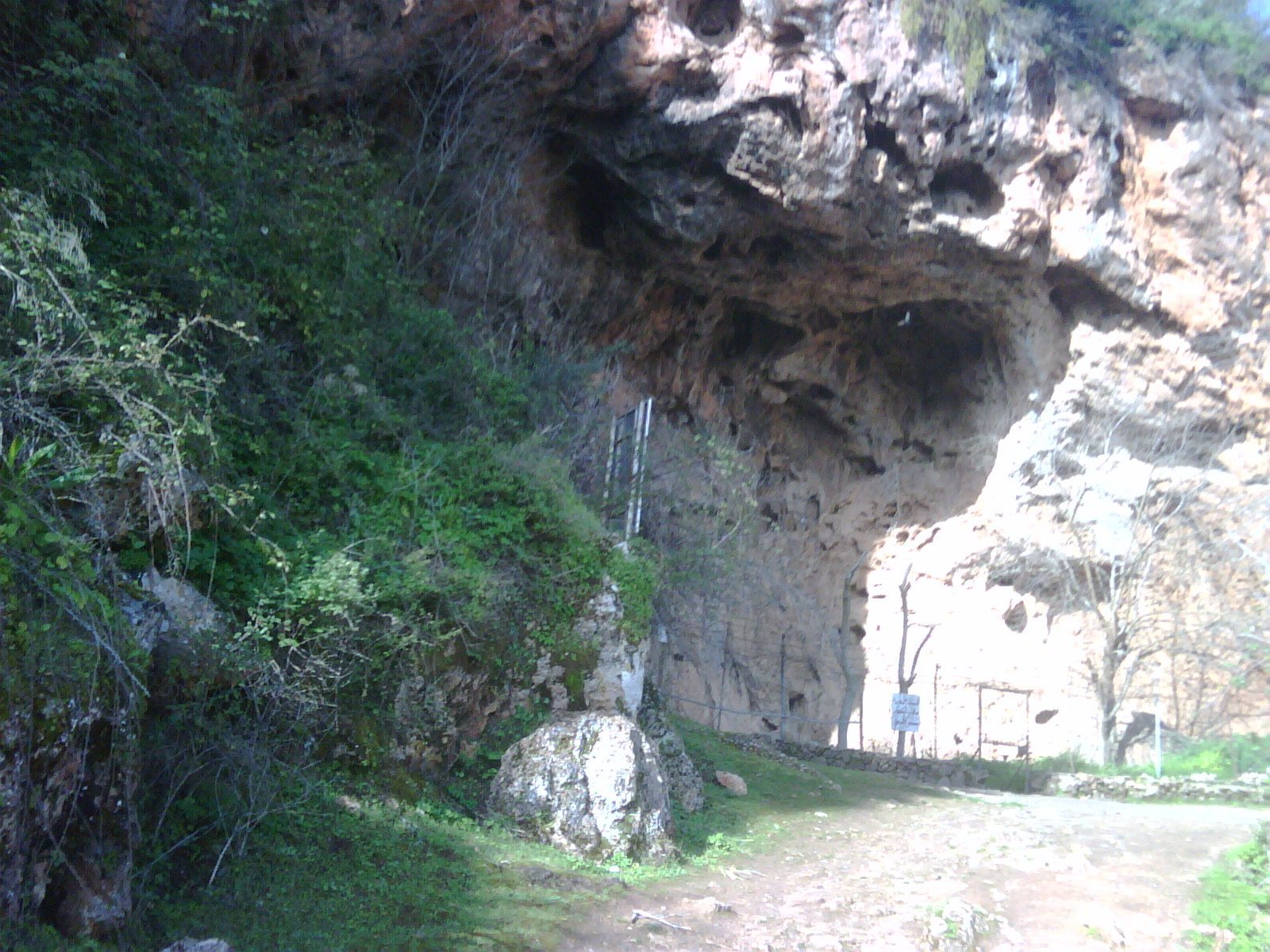
Taforalt lies among steep hills and rocky mountains in the thermo-Mediterranean zone. Its large entrance faces northeast and covers more than 400 square metres. The cave is approximately 720 metres above sea level and about 40 kilometres from the Mediterranean coast.
Human activity and natural processes created an archaeological sequence up to 10 metres thick. The deposits broadly span at least 85,000 to about 10,000 years ago, while the combined occupation dates derived from excavated evidence are generally placed at approximately 85,000 to 12,500 years ago. The stratigraphy follows a broadly consistent colour-based pattern. The Yellow Series lies below the Grey Series, although the sequence varies between areas of the cave.
Yellow Series
The Yellow Series covers the earlier occupation sequence, from approximately 85,000 to 15,000 years ago. It contains pre-Mousterian, Aterian, and earlier Iberomaurusian material, including Levallois artefacts, bifacial tools, and evidence of seasonal use. Intervals without human activity occur within this sequence. In Sector 8, a proposed sterile layer has been interpreted as a possible occupational gap between about 20,000 and 18,000 years ago, although excavations near the entrance have produced evidence that challenges this interpretation.
Grey Series
The Grey Series overlies the Yellow Series and represents later Iberomaurusian occupation from about 15,000 to 12,500 years ago. It accumulated rapidly over approximately 2,500 years and contains extensive hearths, charcoal deposits, dense concentrations of stone artefacts, and evidence of food preparation. All currently identified burials lie within this later series.
Burial areas and human remains
Sector 10 and the burial deposits excavated by Roche form a contiguous collective burial area with dozens of closely spaced graves. Articulated skeletons occur alongside disarticulated bones, reflecting repeated use of the area and secondary burial practices. Some graves were covered by large stones, apparently limiting disturbance from later burials.
Sector 10
Seven bone samples from Sector 10 produced age estimates of approximately 15,077 to 13,892 years ago. Thirteen partially articulated skeletons and additional disarticulated bones were recovered there. Burials nearer the cave entrance and higher in the deposits are probably younger. The area preserves repeated funerary activity within a physically defined part of the cave.
Grave XII
Grave XII contained Individual 1, whose nearly intact skeleton displayed both cut marks and extensive ochre colouring. The burial deposits also contained animal remains, including antelope and bovine horns, mandibles, a hoof, and at least one horse tooth. A single mandible was recovered from the Aterian levels.
Dental evidence provides additional information about the people buried at Taforalt. Analysis of remains recovered during the 1950s found that about 90 percent had avulsion of the upper central incisors, probably carried out during the transition to adulthood. Approximately 51.2 percent of surviving teeth had carious lesions, a pattern potentially related to the consumption and processing of acorns and pine nuts. Women generally did not show the same pattern because their upper central incisors were usually not removed.
Tools, hearths, and food remains
Hearths, charcoal, lithics, shell beads, ostrich eggshell, and other artefacts occur throughout the stratified cave floor. The dry conditions helped preserve human remains and artefacts. Stone assemblages include flakes and bladelets, bladelet cores, river cobbles, microburins, La Mouillah points, backed bladelets, Ouchtata bladelets, obtuse-ended backed bladelets, side scrapers, large bifacial tools, bifacial foliate points, tanged tools, and possible stone palettes.
Land-snail remains are especially abundant in the later Grey Series, where they occur with hearths and indicate extensive collection and cooking. Aterian ash lenses dating to around 80,000 years ago contain large Otala punctata. Plant remains include charred holm-oak acorns, maritime-pine nuts, juniper, terebinth pistachio, and wild oat, showing that gathered foods were processed inside the cave.
Baskets and grinding stones associated with some burials provide evidence for food preparation. The Grey Series combines these subsistence remains with dense occupation deposits and hearths, while the Yellow Series preserves earlier, more seasonal activity.
Environment and coastal connections
Charcoal and small-mammal remains record environmental change around the cave. Charred cedar and deciduous oak occur especially in Group E, where their proportions indicate a shift toward cooler, drier conditions and a more mountainous climate. The wider plant environment included thermo-Mediterranean vegetation such as Tetraclinis articulata and Pinus halepensis, although the prehistoric distribution of some species differed substantially from their present distribution.
The oldest occupation levels contain perforated shells of Nassarius gibbosulus. They were collected dead from the Mediterranean shore and worked for ornamentation before being brought to the cave. Their presence about 40 kilometres inland provides physical evidence for the movement of coastal materials through an exchange network, although the precise meaning of the beads remains unknown.