Chimi Lhakhang: A Buddhist Monastery in Bhutan
Site at a Glance
- Rating
- 4.5
- Popularity
- Low
- Country
- Bhutan
- Primary era
- Medieval
- External website
- Open
- Eras represented
- Medieval
- Civilizations
- Unclassified
- Site type
- Religious
- Remains
- Monastery
On this page10 sections
History
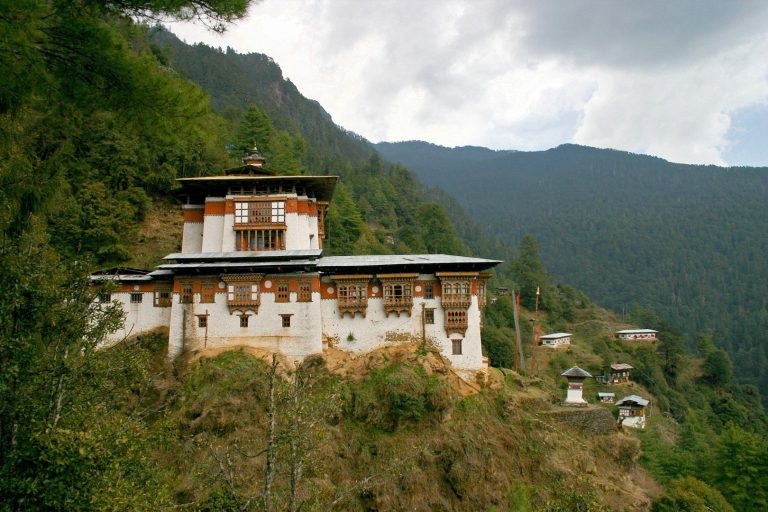
Chimi Lhakhang is an active Buddhist monastery in Teoprongchu, Bhutan, founded in 1499 in the Bhutanese architectural tradition and affiliated with Tibetan Buddhism’s Drukpa Kagyu branch. Its founder was Ngawang Chogyal, the 14th abbot of Ralung Monastery, who established the monastery to preserve local tradition and help spread Buddhist teachings.
Foundation and the legend of Drukpa Kunley
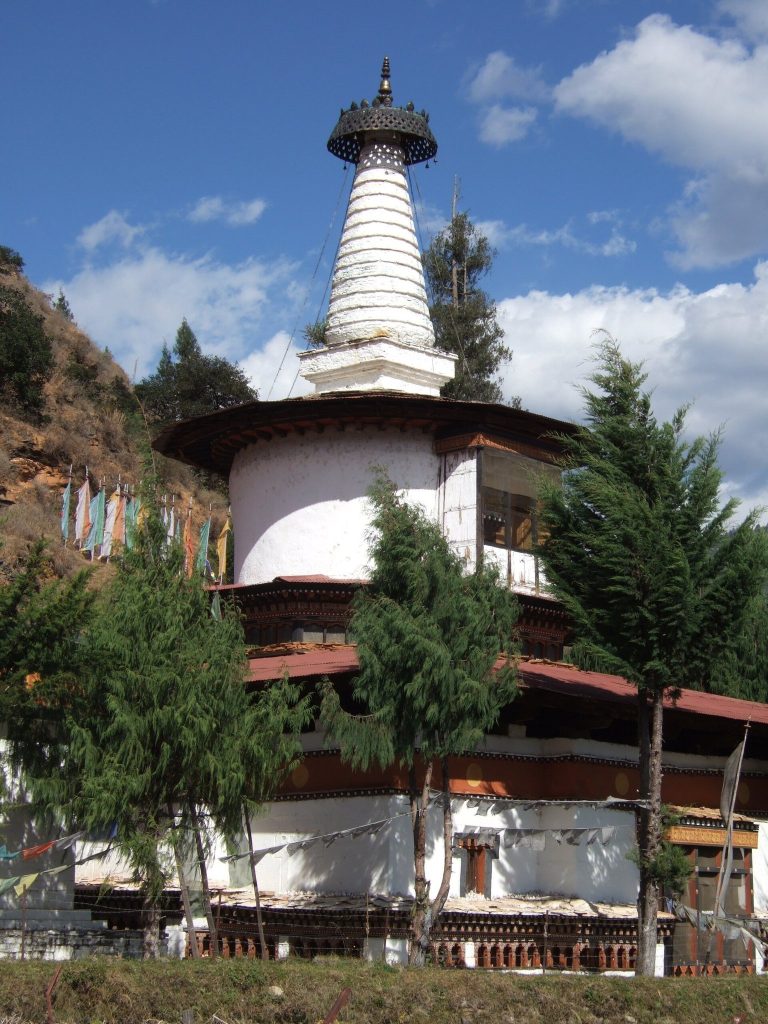
The monastery was blessed by Ngawang Chogyal’s cousin, Drukpa Kunley, who built a chorten, or Buddhist reliquary monument, at the site. The foundation legend says that Kunley subdued a demoness associated with Dochu La using his “magic thunderbolt of wisdom” and confined her in a rock near the chorten. Another version says that she was transformed into a dog and subdued there.
The name Chimi Lhakhang is also rendered as Chime Lhakhang or Khimey Lhakhang. A traditional account gives the earlier name as Khibur or Chibur Lhakhang, referring to a mound formed after the tamed dog was buried. The site’s traditions also connect its name and religious identity with Drukpa Kunley, remembered as the “Divine Madman” or “Mad Saint.”
Religious traditions and continuing use
Drukpa Kunley taught Buddhism through singing, humour, shocking behaviour, and sexual symbolism. Traditions associated with him explain the monastery’s phallic imagery and ritual objects, including the belief that phallic symbols protect against evil spirits, the evil eye, malicious gossip, and misfortune.
Chimi Lhakhang remains a pilgrimage destination, particularly for women seeking blessings for children. Pilgrims may receive a blessing called wang, in which the presiding lama lightly strikes the head with Drukpa Kunley’s original wooden phallic relic, brought from Tibet. Expectant mothers may draw bamboo slips bearing male and female names to choose a name for an expected child. An annual festival is also held for women wishing to have children, and traditions at the monastery associate prayer there with fertility blessings for couples. The monastery is led by Lama Kinga Norbu.
Remains
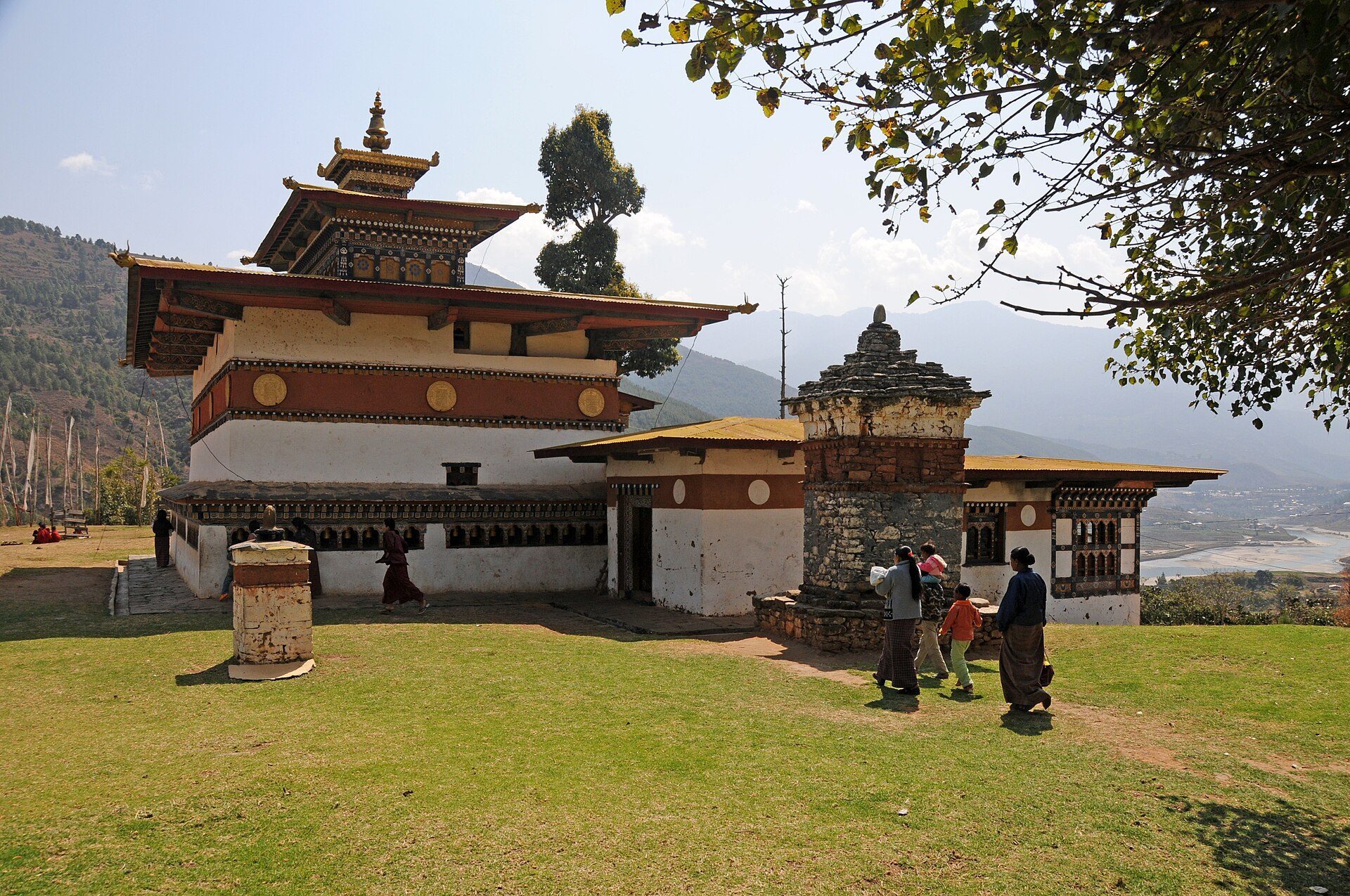
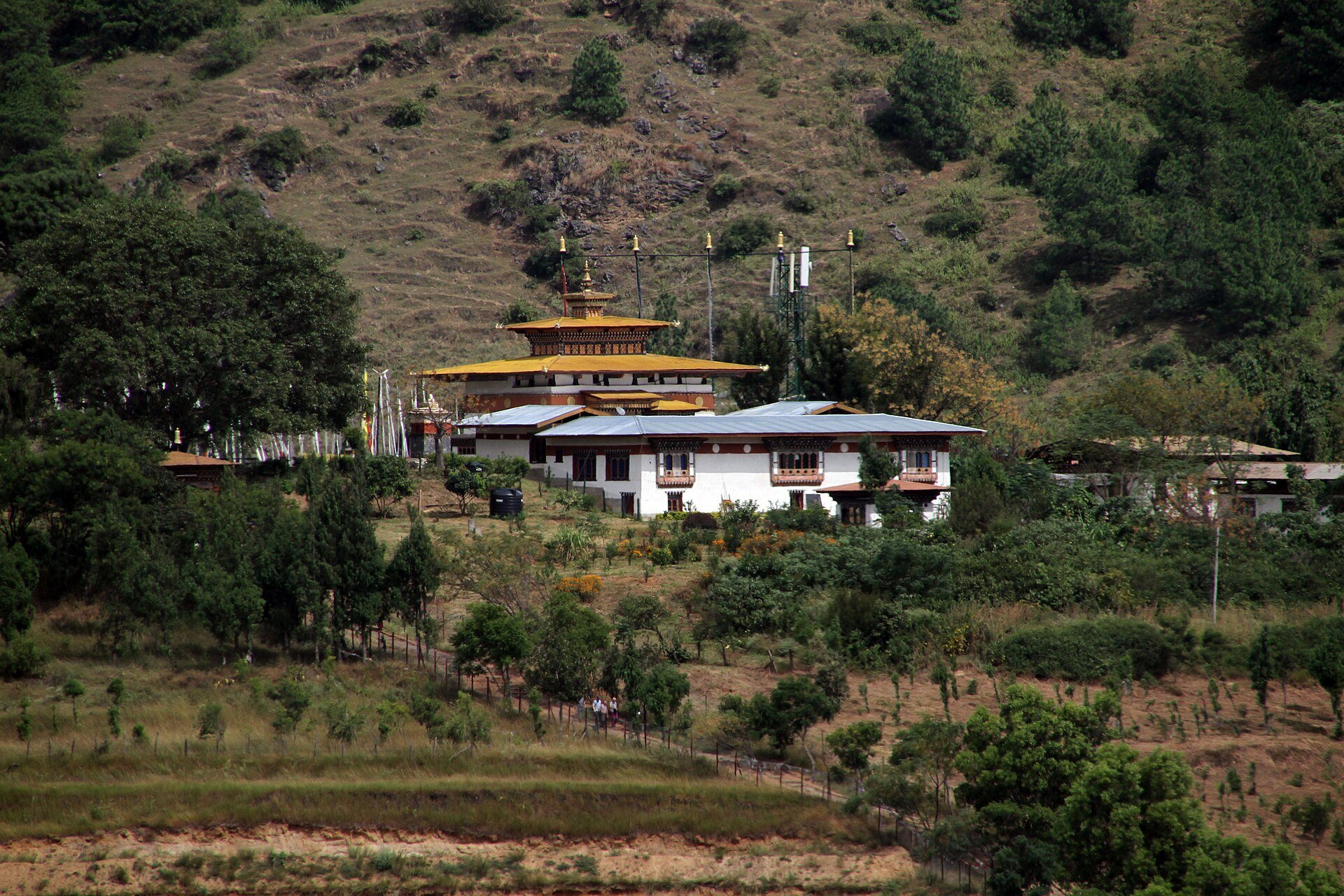
Chimi Lhakhang stands on a rounded hillock near Lobesa and Sopsokha. The monastery and its chorten are reached from Sopsokha by a path through mustard and rice fields, with prayer flags along the approach. A drain or stream follows part of the route, while the hill provides a view toward a nearby settlement. Fruit trees and grassland surround the area, and nearby shops and buildings display painted phalluses on their exterior walls.
Monastery and sacred monuments
Monastery building
The monastery is modest in size, square in plan, and built in the Bhutanese architectural style. It has a golden spire and a yellow or golden-yellow roof. Carved wooden panels or embedded slate panels depicting saints decorate the exterior walls, while interior frescoes show episodes from Drukpa Kunley’s life. A row of prayer wheels stands around or beside the building.
Chorten and sacred objects
A chorten near the entrance marks the place where Kunley is believed to have subdued the demoness and is traditionally attributed to him. Another chorten, associated with the nirvana of an elder named Tenzin, is identified as the monastery’s principal sacred object. The complex also preserves statues of Ngawang Chogyal and Drukpa Kunley, together with a sacred representation of the local protective deity.
Interior religious features
Prayer hall and images
The side prayer hall is decorated in a tantric style and contains thangkas, which are Tibetan Buddhist religious paintings usually made on cloth, along with bells, drums, horns, dorjis, and a kangd, a ritual implement used in tantric Buddhist practice. At the centre of the altar is a reclining statue of Drukpa Kunley in monastic robes, accompanied by a ceramic statue of his dog, Sachi. Images of Zhabdrung Ngawang Namgyal, the religious and political founder of Bhutan’s unified state, Sakyamuni Buddha, and Avalokiteshvara are also worshipped there.
Phallic relics and naming ritual
Phallic ritual objects made of ivory, wood, and bone are preserved at the monastery. The principal wooden relic is about 25 centimetres long and has a silver handle. Bamboo slips inscribed with male and female names are kept near the altar for the naming ritual associated with expectant mothers.