Rinpung Dzong: Bhutanese Fortress-Monastery and Administrative Center
Site at a Glance
- Country
- Bhutan
- Primary era
- Early Modern
- Eras represented
- Early Modern
- Civilizations
- Bhutanese
- Site type
- Religious
- Remains
- Fortified Monastery
On this page15 sections
History
Rinpung Dzong is a dzong, or Buddhist fortress-monastery, in Bhutan and the monastic and administrative center of Paro District. Affiliated with the Drukpa lineage, a branch of the Kagyu school of Tibetan Buddhism, it houses about 200 monks. Ngawang Namgyal began a new fortress here in 1644; he and Karma Rigzin Nyingpo consecrated it in 1646.
Early settlement and foundation
Rinpung is shortened from Rinchen Pung, meaning “fortress on a heap of jewels.” Tradition says that Guru Rinpoche, also known as Padmasambhava, named the rock face below the fortress Ringpung in the eighth century, and that the dzong later took its name from the place.
In the fifteenth century, local people gave the crag of Hungrel to the Buddhist teacher Lama Drung Drung Gyal, a descendant of Phajo Drugom Zhigpo. Drung Drung Gyal established a small temple there and later built a five-storey fortress called Hungrel Dzong.
During the seventeenth century, the Lords of Hungrel offered their fortress to Ngawang Namgyal, the Zhabdrung, a title for a leading Bhutanese religious and political figure associated with the unification of the Bhutanese state. In 1644, he dismantled the earlier structure and began the foundations of a new fortress. The new fortress and temple were consecrated in 1646 by Ngawang Namgyal and Karma Rigzin Nyingpo, who was regarded as the reincarnation of Sangay Lingpa, a revealer of teachings and sacred objects believed to have been concealed. The complex became the monastic and administrative center of western Bhutan.
Regional administration, defense, and religious life
In 1646, Ngonpa Tenzin Drugda became the first penlop, or regional governor, of Paro. The fortress was repeatedly used to defend Paro Valley against invasions from Tibet.
The annual Tsechu, a religious festival, takes place from the eleventh to the fifteenth day of the second month in the traditional Bhutanese lunar calendar, usually in March or April. Sacred images are carried in procession, followed by several days of religious mask dances performed by monks. Before dawn on the fifteenth day, the Thongdrel, a large sacred textile image, is displayed to the public. Tradition requires that sunlight not fall on it. Devotees believe that paying homage to the image brings spiritual merit and the possibility of liberation.
Fire and later changes
In the early twentieth century, during the tenure of Paro’s 23rd penlop, Dawa Penjor, a fire severely damaged the complex. Most of its important relics and statues were lost. Before the enthronement of Bhutan’s first king, Gongsa Ugyen Wangchuck, Dawa Penjor arranged for the dzong to be rebuilt with money raised across Bhutan through a special tax. The fortress also survived the earthquake of 1897.
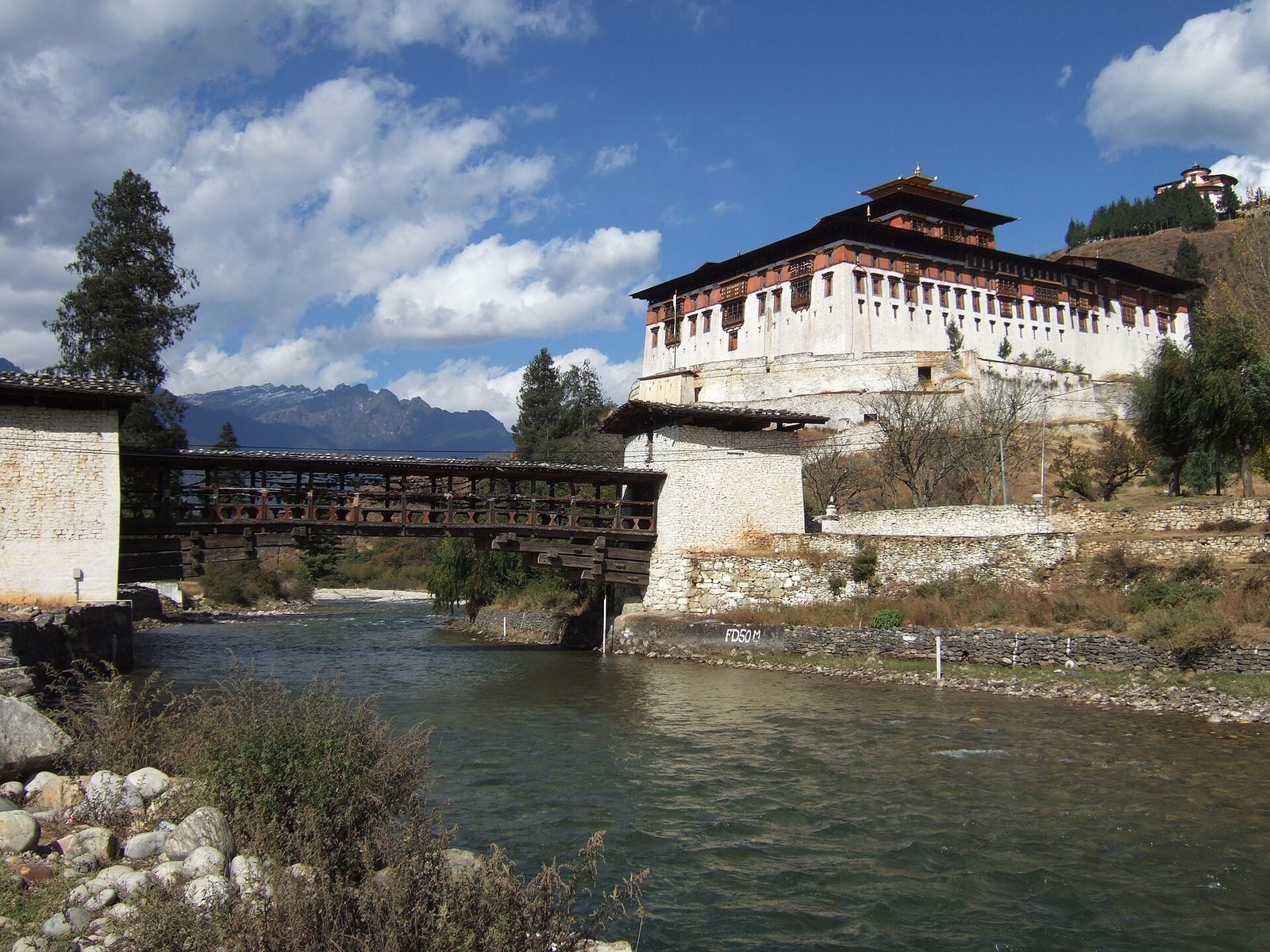
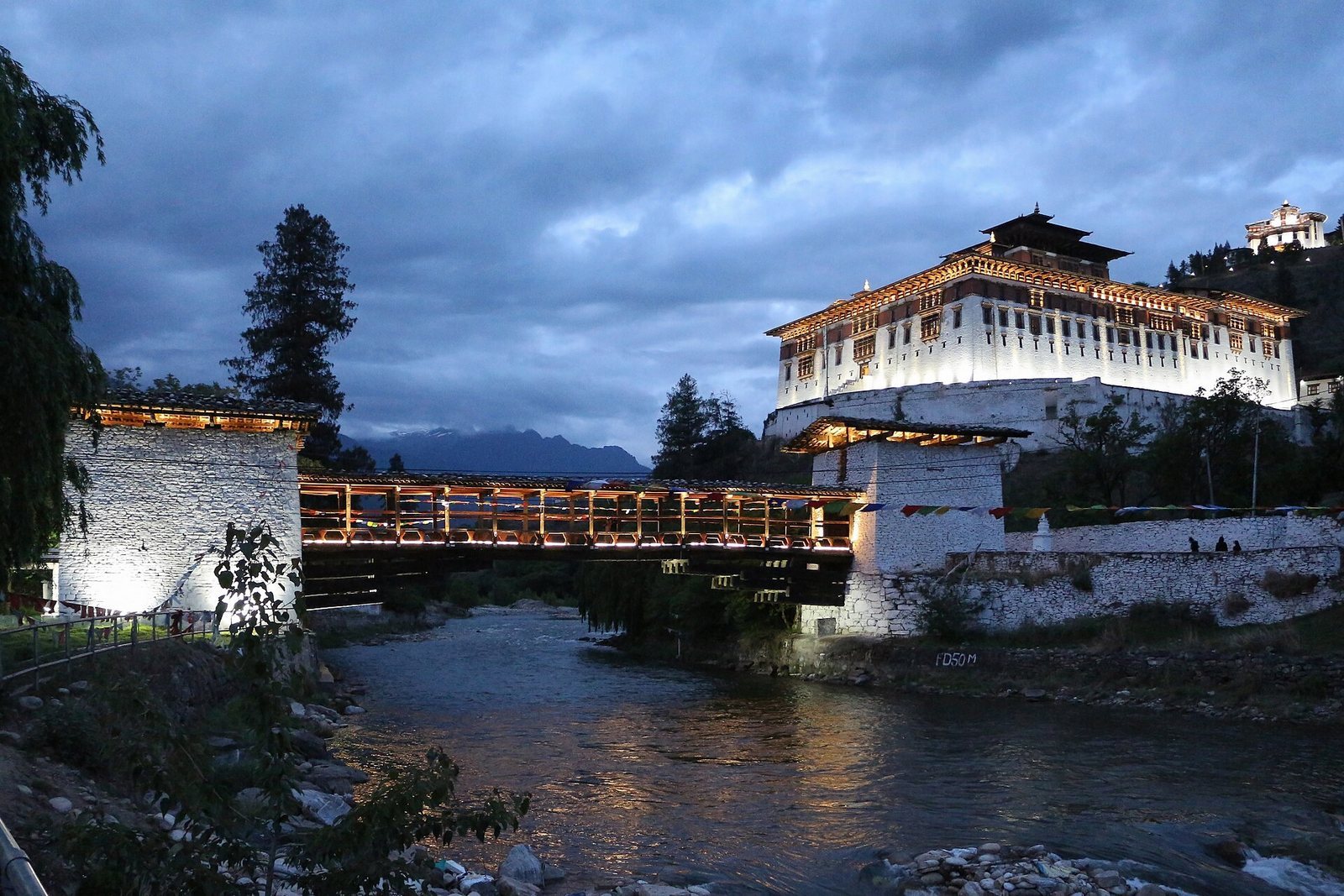
The covered bridge below the dzong was swept away by a flood in 1969. Earlier versions had also been destroyed during wartime to protect access to the fortress.
Remains
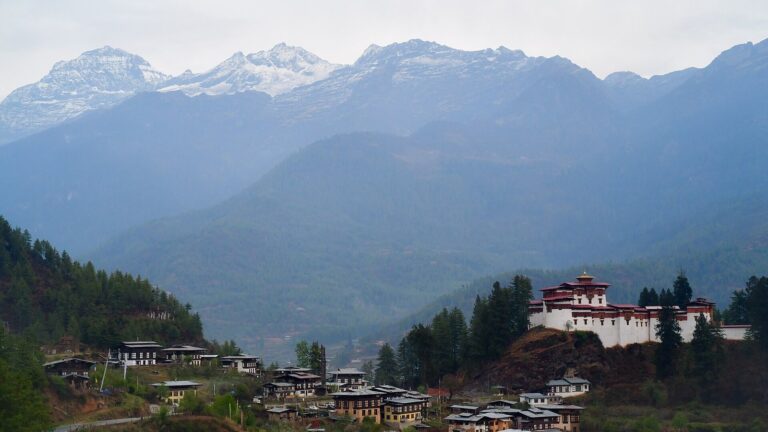
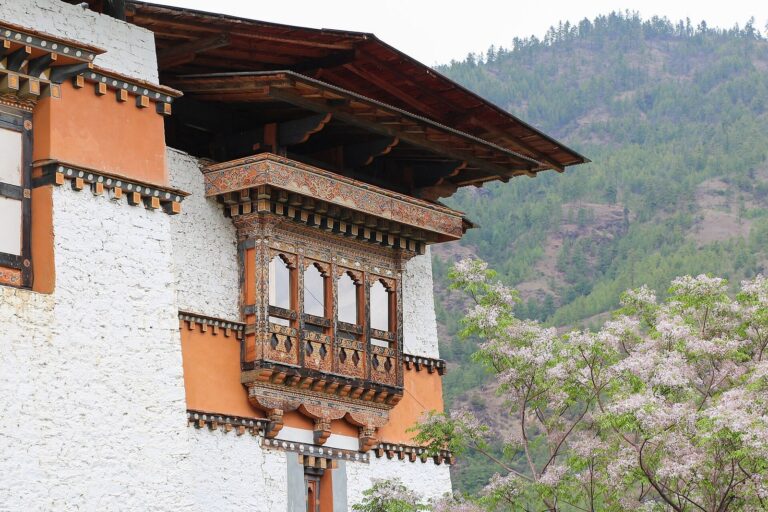
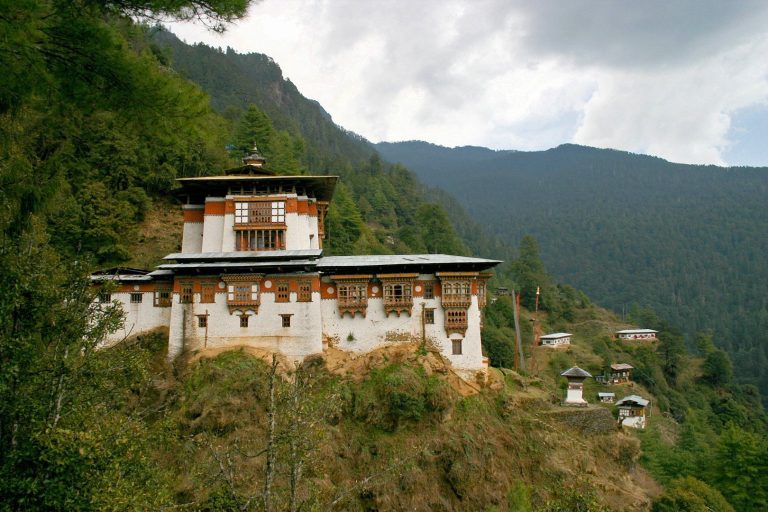
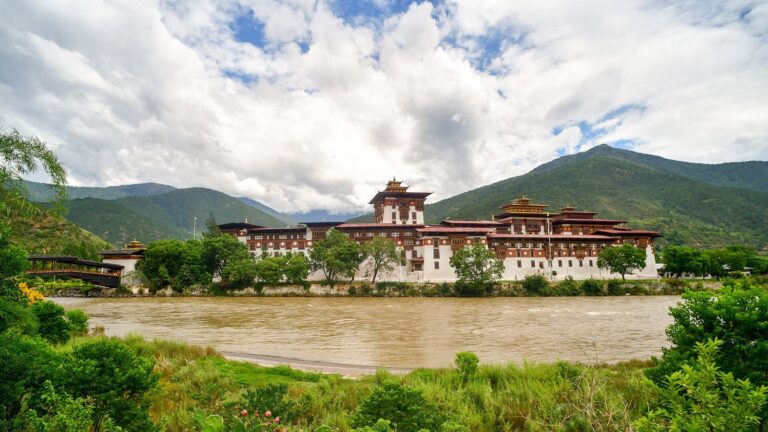
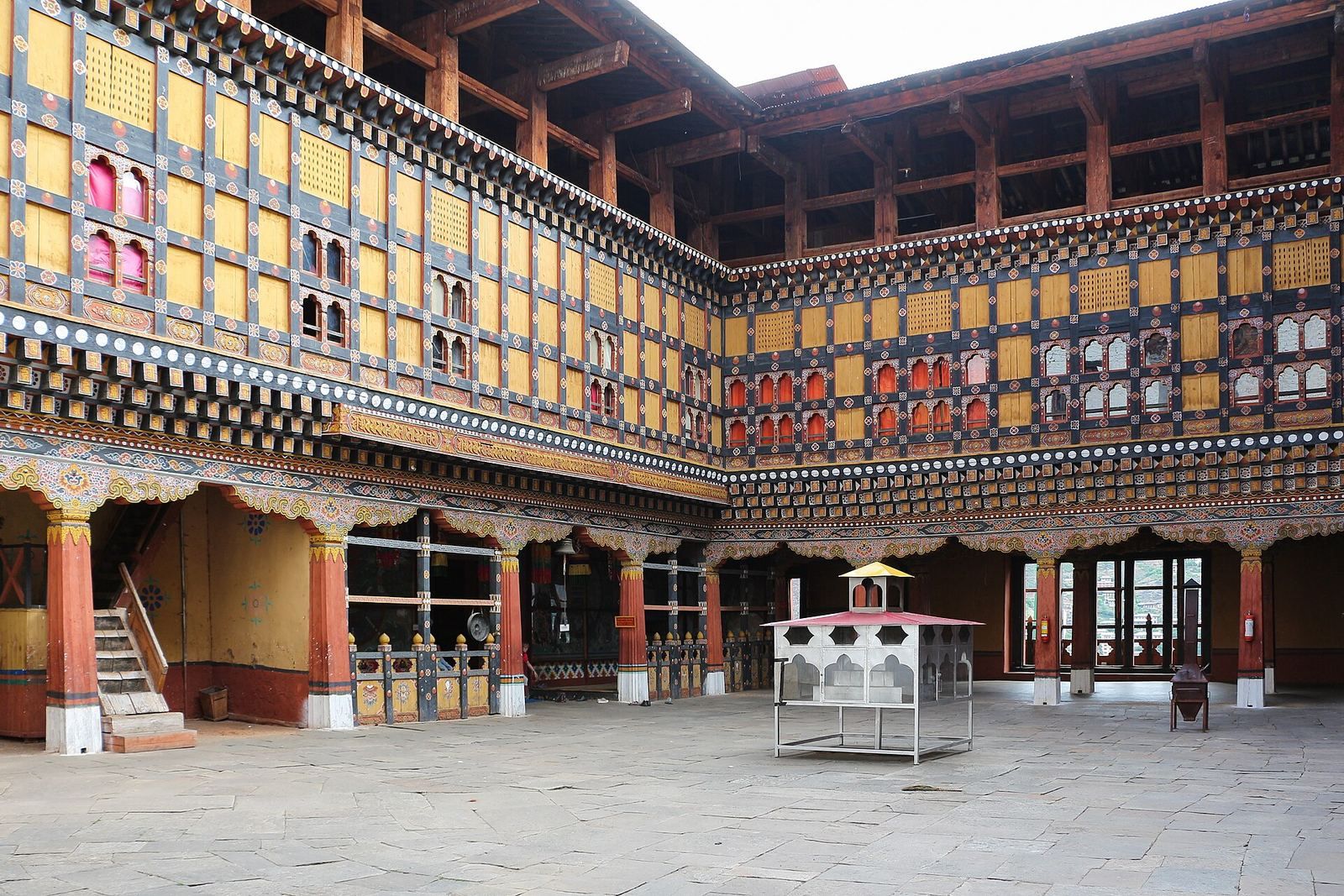
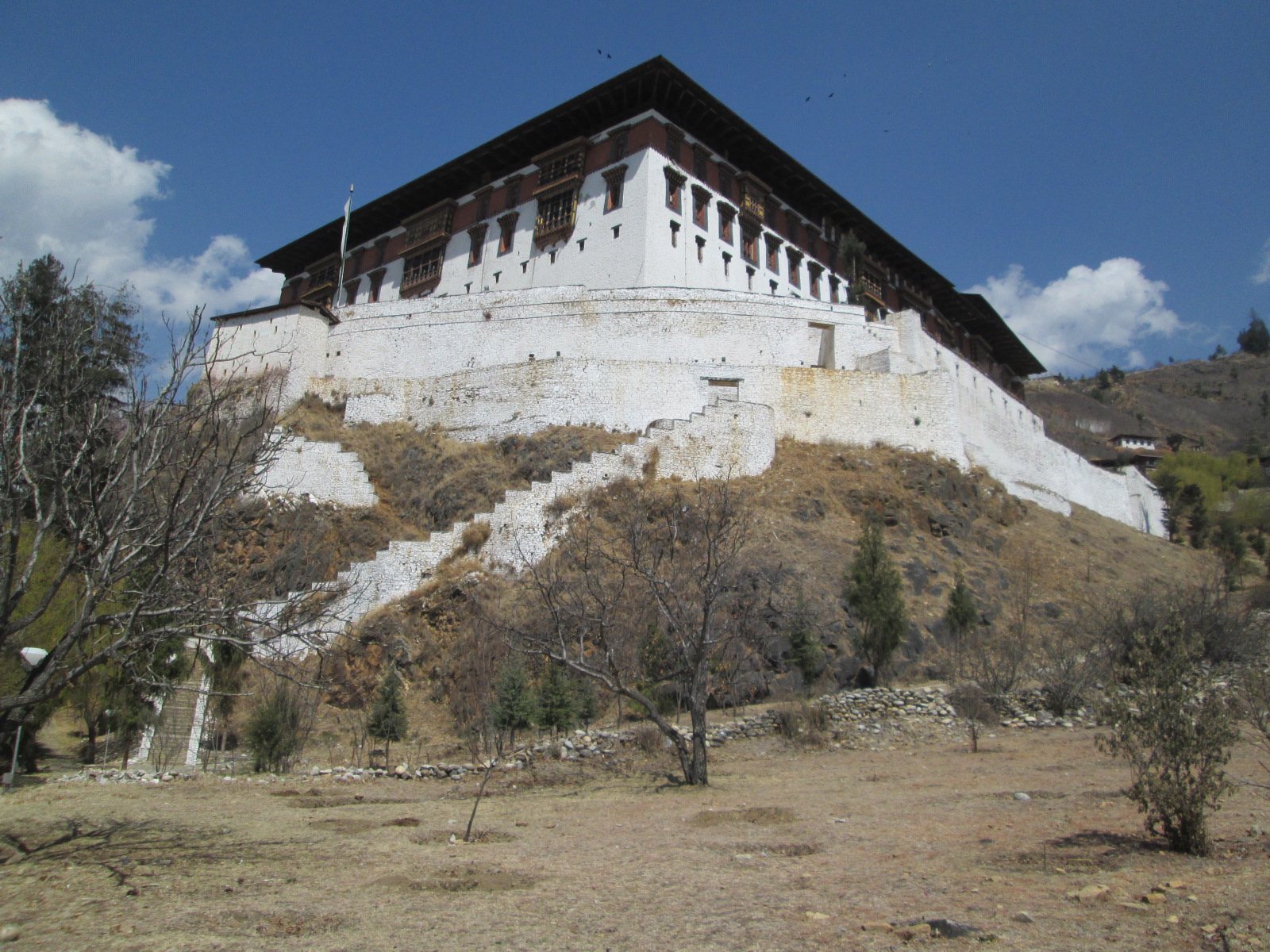
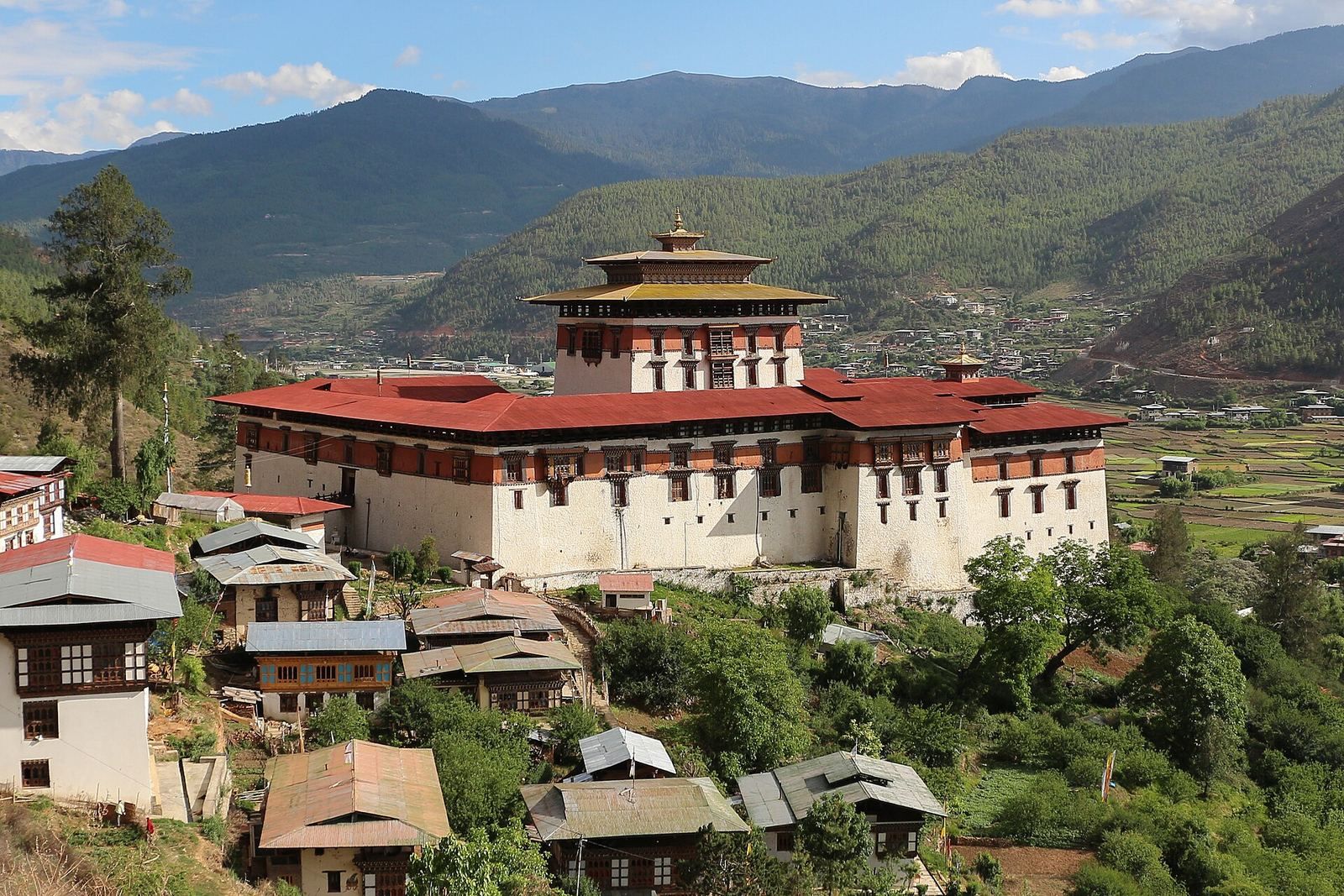
Rinpung Dzong stands on a steep hillside near Ta Dzong. Its main complex brings together administrative and monastic courtyards, a central tower, shrines, chapels, and teaching and prayer halls. The buildings combine tall whitewashed walls with richly carved timber painted in gold, black, and ochre.
Main complex
Courtyards and central tower
The administrative courtyard is six metres higher than the monastic courtyard. At the northeastern entrance, a passage leads into the dochey, or courtyard. The five-storey utse, or central tower, was built in 1649 during the tenure of Paro’s first governor. Its carved and painted timber contrasts with the high whitewashed walls, whose height and finish express the dzong’s power and wealth.
Shrines and chapels
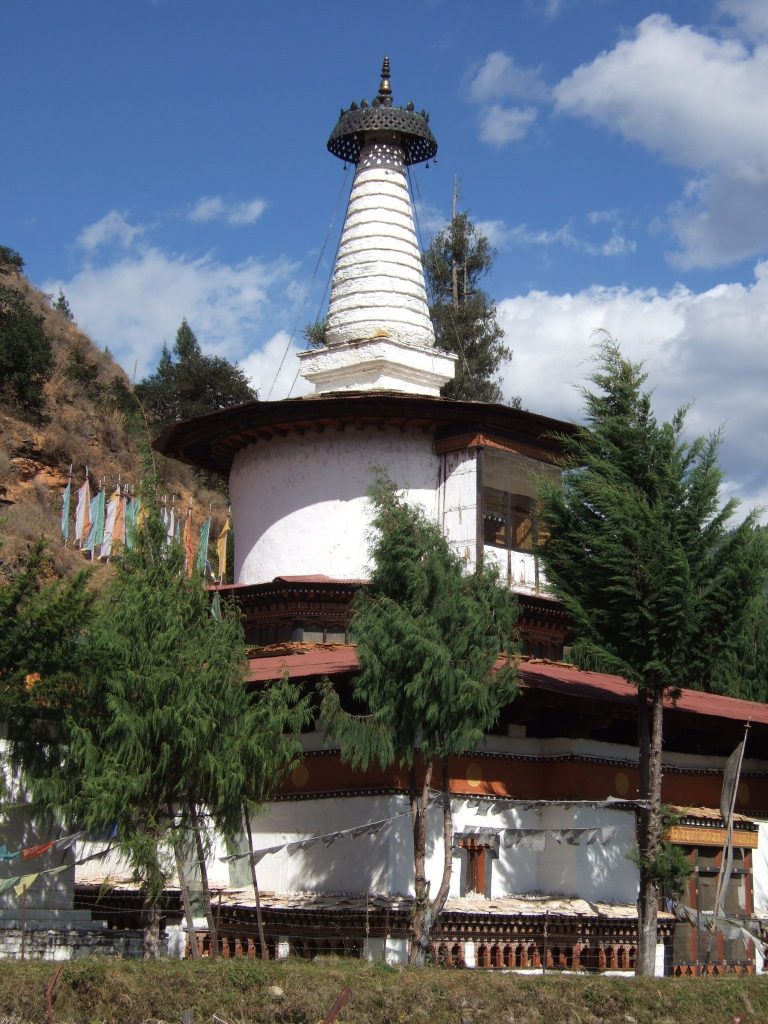
The complex contains fourteen shrines and chapels. They include Kungarwa and the monks’ assembly hall; the Sandalwood Stupa and Protector’s Shrine; the Temple of the Guru’s Eight Manifestations and Chapel of the Head Lama; the Chapel of Amitayus, associated with long life; the Clear Crystal Shrine; the Chapel of Eleven-faced Avalokiteshvara, associated with compassion; the Abbot’s Apartments; the Chapel of Akshobhya, a celestial Buddha; the Temple of the Treasure Revealer; the King’s Apartments, called Gyalpo’i Zimchung; and the Temple of the Bursar.
Upper-floor temples and protector shrine
The fourth floor holds a temple dedicated to the Drukpa lineage of the Kagyu school, a temple devoted to the eight types of chorten, or Buddhist reliquary monuments, and a temple dedicated to the Taras, female Buddhist figures. A statue of Guru Rinpoche made by Sherab Wangchuk is also on this floor. The third-floor goenkhang, or protector shrine, contains statues of Mahakala and Mahakali, protective deities in Buddhist traditions.
Teaching and prayer halls
The kunrey, a Buddhist teaching hall, is centered on images of the Buddha. Its Bhutanese murals depict Mount Meru, a cosmological mountain regarded in several South Asian religious traditions as the universe’s center, surrounded by seven mountain ranges and four continents. Murals in the dukhang, or prayer hall, show episodes from the life of Milarepa, a Tibetan poet and saint.
Thongdrel
The Thongdrel measures 20 by 20 metres and depicts the eight manifestations of Padmasambhava: Guru Pema Jungney, Guru Nima Yoezer, Guru Singye Dradrong, Guru Tshoki Dorji, Guru Shacha Singye, Guru Pema Gyelpo, Guru Dorji Dolo, and Guru Lodan Chokse. It survived the fire that destroyed most of the dzong’s important relics and statues.
Associated buildings and bridge
Ta Dzong
Ta Dzong, a seven-storey watchtower fortress, stands on the hill above Rinpung Dzong. Built in 1649, it became the home of the National Museum of Bhutan in 1968.
Deyangkha Temple and festival ground
The Deyangkha Temple is outside the main dzong. The ground used for the festival’s mask dances is also called Deyangkha.
Nyamai Zam
Below the dzong, Nyamai Zam crosses the Paro Chhu. It is a traditional covered wooden cantilever bridge, a type supported by projecting beams. The present bridge is a reconstruction of the one carried away in the 1969 flood. In 1905, stone-hurling catapults were stored among the items kept within the beams of the dzong’s veranda.