Daereungwon: A Silla Royal and Aristocratic Tomb Complex in Gyeongju
Site at a Glance
- Rating
- 4.5
- Popularity
- Medium
- Country
- South Korea
- Primary era
- Classical
- External website
- Open
- Eras represented
- Classical
- Civilizations
- Silla
- Site type
- Burial
- Remains
- Necropolis
On this page17 sections
History
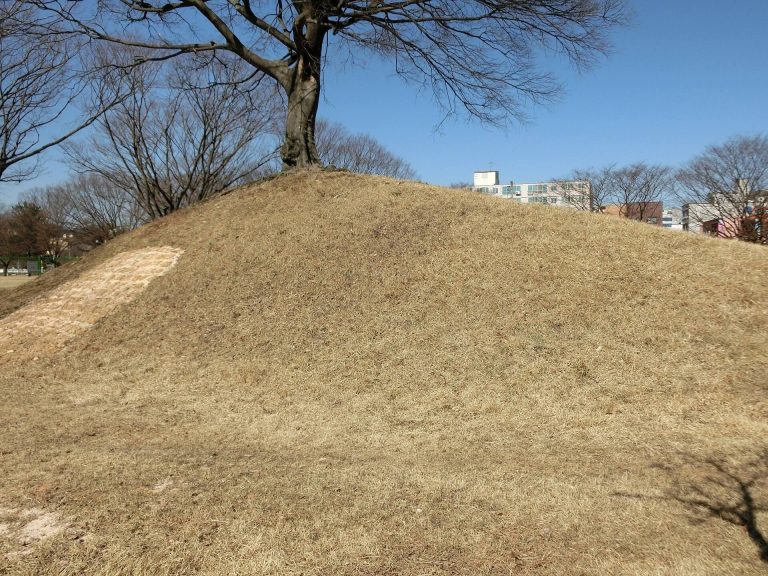
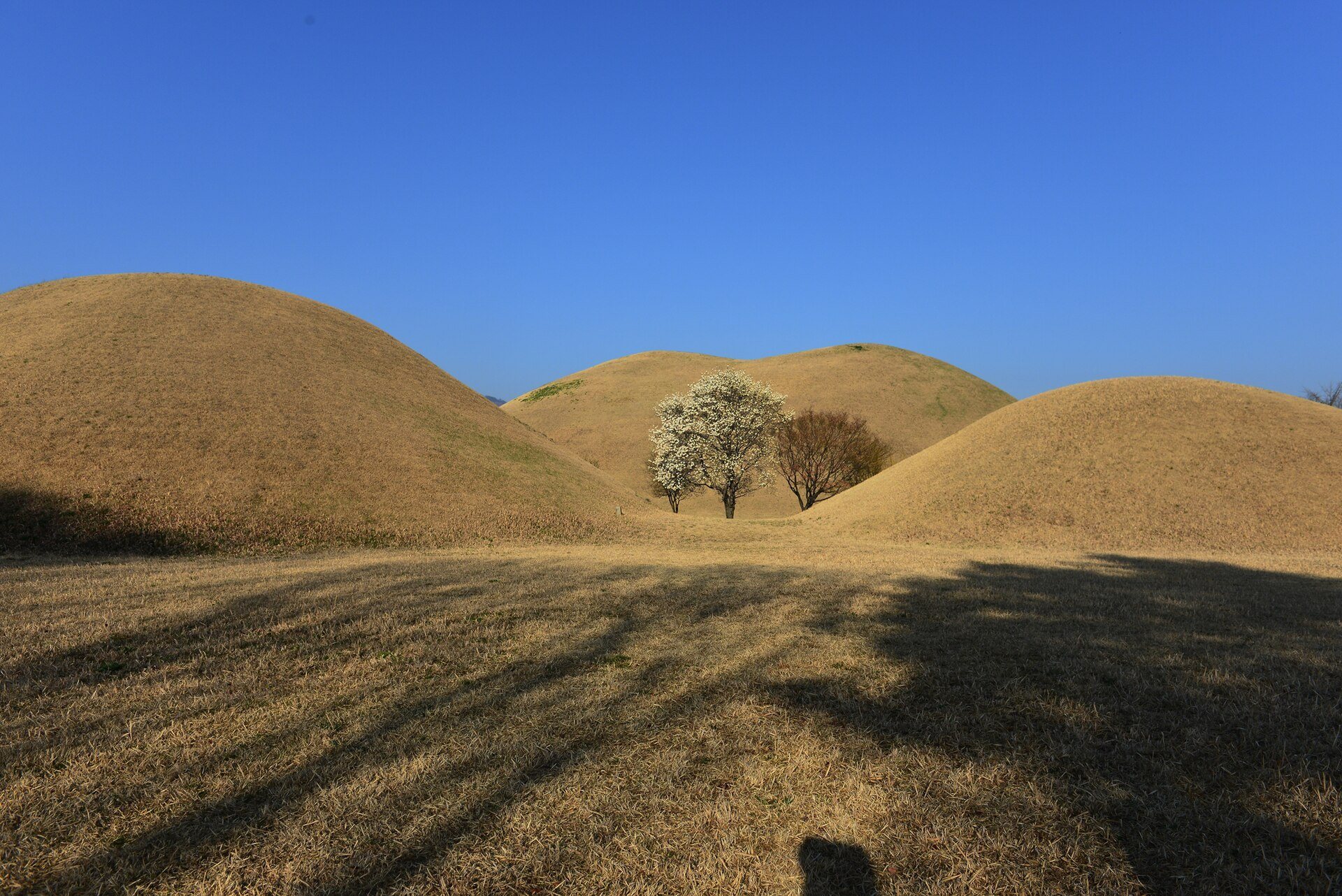
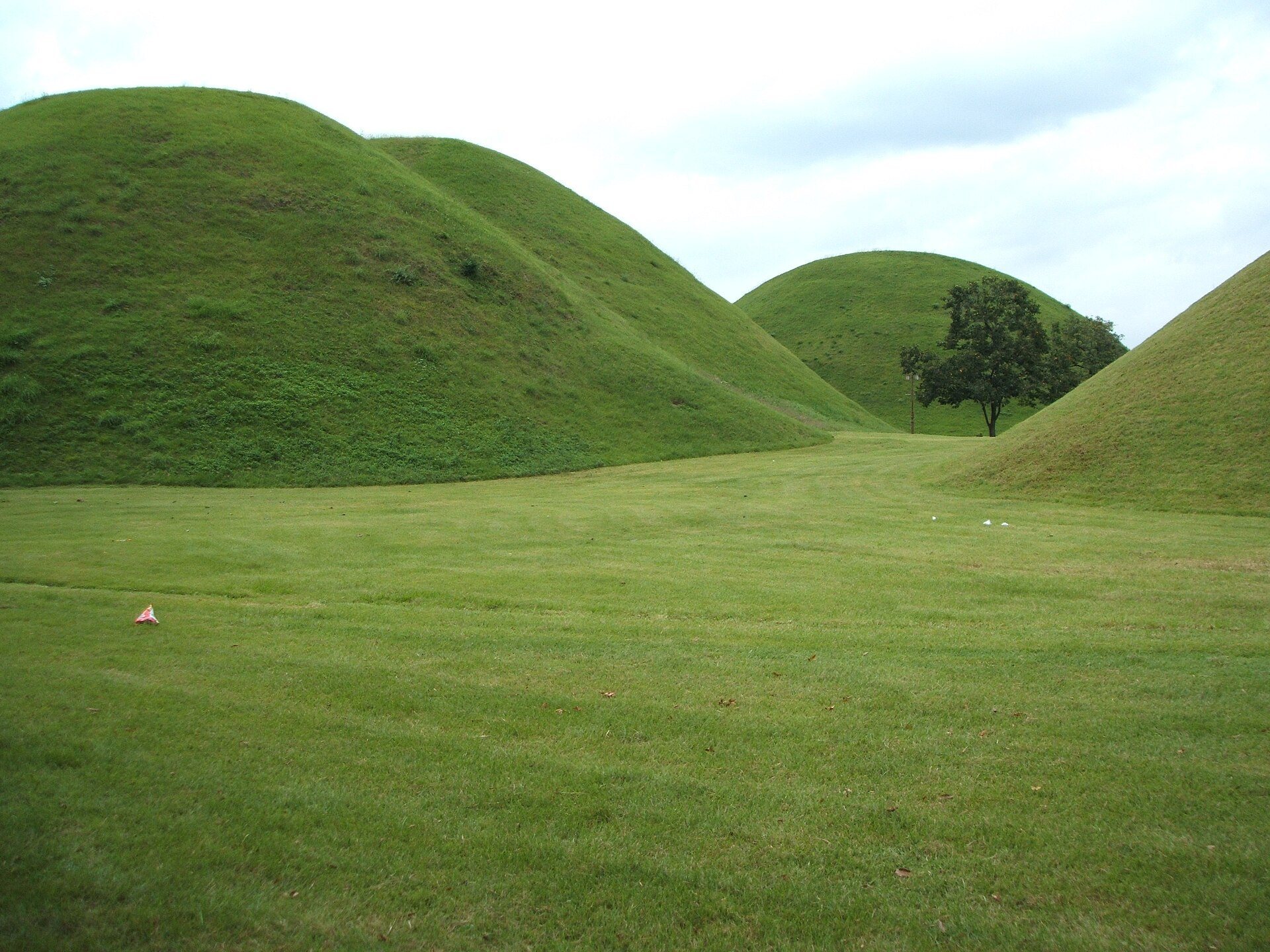
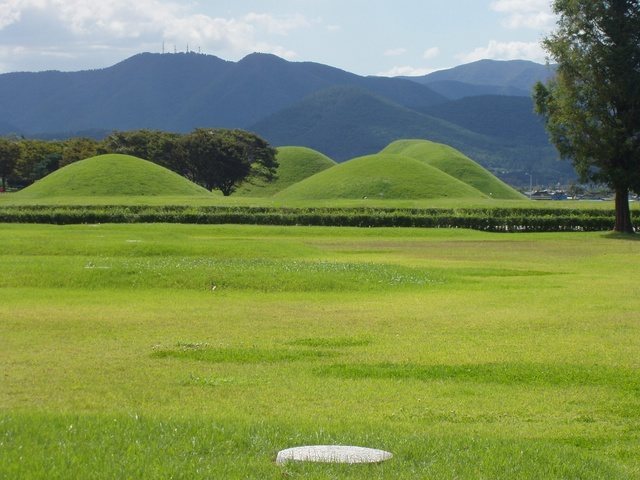
Daereungwon is a complex of Silla-period tumulus tombs in Gyeongju, South Korea, built during the Three Kingdoms period by the Silla kingdom. A tumulus is a burial mound formed by covering a grave or burial chamber with earth. The complex contains 23 tombs associated with kings, queens, and aristocrats, and reflects the Silla elite’s practice of placing burials beneath substantial earthen mounds.
Formation of the integrated complex
The present Daereungwon area brought together five adjacent ancient-tomb groups in the Gyeongju plain: Labor-dong, Noseo-dong, Hwangnam-dong, Hwango-dong, and Inwang-dong. These groups shared a Silla-period historical character and were consolidated and redesignated on 28 July 2011. On the same date, their former separate heritage designations were revoked, and the integrated site became the Historic Site of South Korea officially named Daereungwon Ancient Tomb Complex, Gyeongju.
Daereungwon also forms part of the Gyeongju Historic Areas, which were inscribed on the UNESCO World Heritage List in 2000 under criteria (ii) and (iii). UNESCO World Heritage status recognizes cultural or natural properties judged to have outstanding universal value under the World Heritage Convention.
Early investigations and discoveries
Archaeological investigations began during the Japanese colonial period. Geumgwanchong was excavated in 1921, followed by investigations at Geumnyeongchong and the Siklichong site in 1924 and the excavation of Seobongchong in 1926. Gustav VI Adolf, then Crown Prince of Sweden and an archaeologist who later became king, observed the Seobongchong excavation during a visit to Japan in 1926.
Investigations continued after Korea’s liberation. Houchong was excavated in 1946, Machong in 1953, Ssangsangchong in 1963, and Cheonmachong in 1973. Work at Cheonmachong ran from 6 April to 4 December 1973 as preparation for the excavation of Hwangnamdaechong, which took place from 1973 to 1975.
These excavations produced evidence that helped establish the chronology and cultural connections of Silla tombs. Houchong yielded a bronze vessel inscribed with the name of Goguryeo’s King Gwanggaeto in 1946. Pottery fragments came from Ssangsangchong, while Machong produced horse bones and fragments of a saddle. The complex continued to produce important material, including a pair of ceremonial gilt-bronze shoes discovered in 2020 and dated to the late fifth or early sixth century.
Development of the eastern tomb groups
The Hwango-dong tombs are generally assigned mainly to the fourth and fifth centuries. Their structures are comparable to excavated tombs in neighboring areas, supporting their interpretation as burials for members of the Silla royal family or aristocracy.
The Inwang-dong group extends eastward from Hwango-dong, north of Wolseong, the principal royal palace and fortress area of Silla-period Gyeongju. It represents the easternmost surviving group of ancient tombs in the central Gyeongju plain. Thirteen mounded tombs were identified during the Japanese colonial period, ten more were later recorded, and Tombs 19, 20, 149, and 156 were excavated.
Construction of a freight parking area led to excavations north of Inwang-dong Tombs 19 and 20 in 1977. These investigations revealed tombs from the Samhan period as well as Silla-period pit burials, stone-chamber burials, and stone-mound wooden-chamber tombs. The evidence places the beginning of tomb construction in this area relatively early. The surviving Inwang-dong mounds are interpreted as aristocratic tombs on the basis of their grave goods and the size of their remains.
Remains
The designated area covers approximately 602,314 square metres. Large and small earthen mounds are distributed across the Labor-dong, Noseo-dong, Hwangnam-dong, Hwango-dong, and Inwang-dong areas. The tombs include stone-mound wooden-chamber tombs, pit stone-chamber burials, wooden-chamber tombs, and jar-coffin tombs. In a jar-coffin tomb, one or more large ceramic jars serve as the coffin.
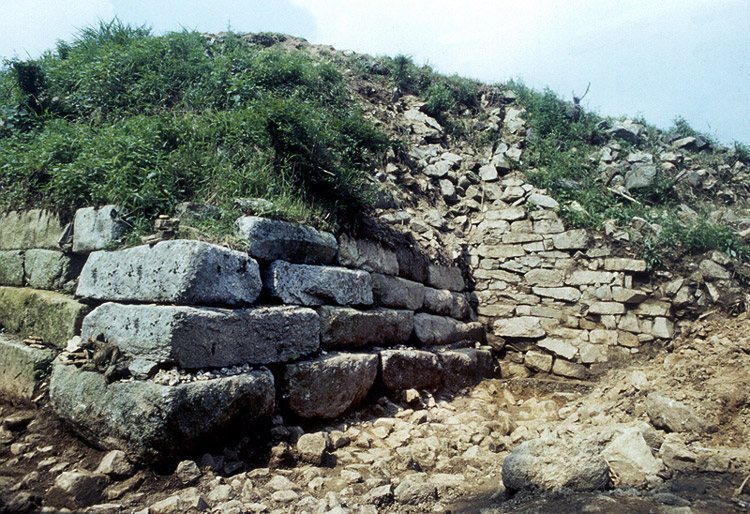
Most burials placed the coffin below ground level, although some coffins were partly or wholly above ground. Stones were piled over the coffin and then covered with earth. This construction helped protect the burial chambers from looting and contributed to the preservation of grave goods, including crowns, jewelry, weapons, horse equipment, pottery, bronze vessels, gilt-bronze shoes, and saddle fittings. Some objects from the complex have received South Korea’s National Treasure designation, a high-level heritage status for items or sites of exceptional national importance.
Labor-dong and Noseo-dong groups
Bonghwangdae
The Labor-dong group includes Bonghwangdae, a large earthen mound with a base circumference of approximately 230 metres, a diameter of 82 metres, and a height of 22 metres. The mound forms one of the principal large tombs in the complex. Geumnyeongchong and the Siklichong site lie to its south, and both used stone-mound wooden-chamber construction.
Noseo-dong tombs
The Noseo-dong group consists of 14 large and small tombs on relatively level ground. Tomb 130 is comparable in scale to Bonghwangdae. The group also includes Geumgwanchong, where a gold crown was excavated in 1921, and Seobongchong, as well as Houchong, Eunpyeongchong, Ssangsangchong, and Machong.
Hwangnam-dong group
Early Silla mounds
The Hwangnam-dong group consists of early Silla tombs distributed across the Hwangnam-dong area. Thirty circular earthen mounds were assigned numbers 90–114 and 151–155 during the Japanese colonial period, with some included within the Daereungwon area. The larger examples use stone-mound wooden-chamber construction, while the surrounding group also included smaller earthen mounds.
Cheonmachong
Cheonmachong is an earthen mound 47 metres in diameter and 12.7 metres high. Excavation uncovered a gold crown and many other artifacts, including a saddle flap decorated with a flying horse. That image gave the tomb its name. The interior of Cheonmachong has been opened for viewing.
Hwangnamdaechong
Hwangnamdaechong is a massive paired tomb measuring approximately 120 metres from north to south, 80 metres from east to west, and 23 metres high. The southern mound produced a gilt-bronze crown, part of a male skeleton, and many other artifacts. The northern mound yielded a gold crown, a silver bracelet inscribed with the words “lady’s belt,” and numerous additional objects. The two mounds are interpreted as the joined burials of a married man and woman, although that identification remains an interpretation rather than a certainty.
Hwangodong and Inwang-dong groups
Hwangodong mounds
The Hwango-dong group contains numerous large and small Silla-period tombs. Prolonged neglect damaged many of the burial mounds, although more than ten remain identifiable as tombs. Most are considered stone-mound wooden-chamber tombs dating mainly from the fourth and fifth centuries.
Inwang-dong Tombs 19 and 20
Inwang-dong Tomb 19 contained twelve burial chambers. One chamber formed a single circular mound, while the other eleven are thought to have been arranged as multiple chambers beneath one visible mound. The larger chambers measured approximately 4.5 metres long and 2 metres wide.
Tomb 20 was a single circular mound measuring 18 metres from east to west, 16 metres from north to south, and 4.2 metres high. Its wooden chamber was approximately 5 metres long and 1.8 metres wide. Tomb 149 was also a single-chamber tomb, with a burial chamber approximately 3.95 metres long and 1.45 metres wide.
Excavated Inwang-dong burials
Excavations at Tombs 19, 20, and 149 produced gold earrings, necklaces, silver belt ornaments, silver-inlaid ring-pommel swords, stirrups, horse trappings, and pottery. The freight-parking-area excavation identified nine stone-mound wooden-chamber tombs, six jar-coffin tombs, ten pit stone-chamber tombs, and two chambers interpreted as wooden chambers.
Three of the excavated burials were large stone-mound wooden-chamber tombs. Two were thought to correspond to the former Tombs 21 and 147. Their contents included gilt-bronze crowns, gold earrings, necklaces with jade pendants, silver belt ornaments, and silver-inlaid ring-pommel swords.
Visible Inwang-dong mounds
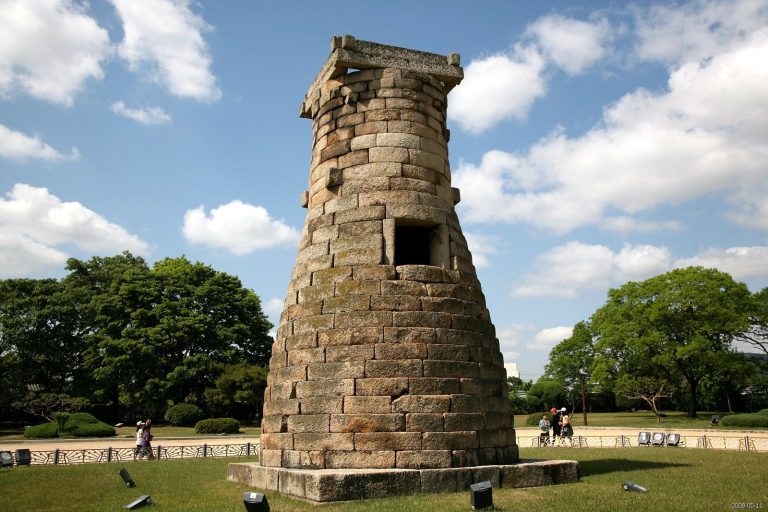
Surviving visible mounds in the Inwang-dong area include Tombs 22, 23, and 24 at Saeteo Village, west of the former Ingyo-dong community office, and Tomb 27 north of Cheomseongdae. Together with the excavated burials, these mounds preserve the eastern part of the ancient-tomb landscape incorporated into Daereungwon.