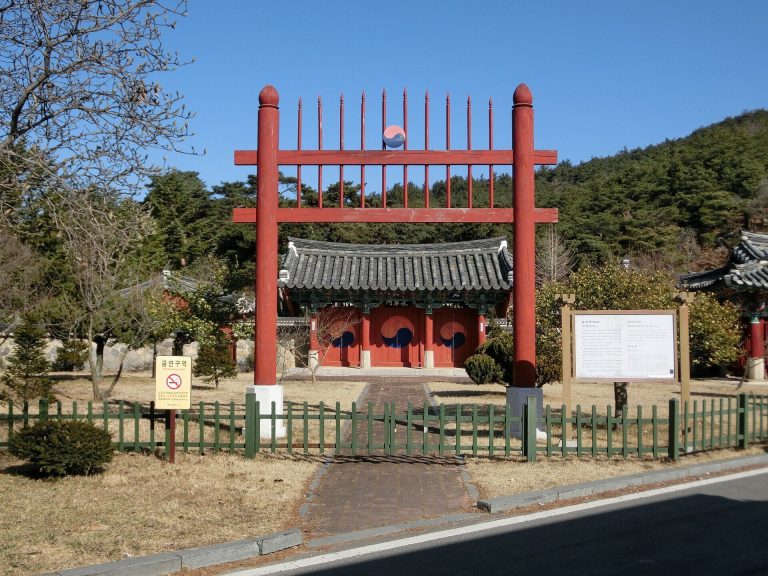
Gold Crown Tomb: A Silla Royal Burial Mound in Gyeongju
Site at a Glance
- Rating
- 4.5
- Popularity
- Low
- Country
- South Korea
- Primary era
- Medieval
- Eras represented
- Classical, Medieval
- Civilizations
- Silla
- Site type
- Burial
- Remains
- Burial Mound
On this page7 sections
History
Gold Crown Tomb is a Silla-period burial mound in Gyeongju, South Korea, the ancient capital of Silla, one of the Three Kingdoms of Korea. It was probably built around AD 500, during the fifth or sixth century, and its Buddhist-influenced form suggests a date after the reign of King Jijeung and before the Unified Silla period, when Silla controlled much of the Korean Peninsula. The tomb probably belonged to a member of the royal or aristocratic class.
The burial and its possible occupant
The identity of the person buried in the mound remains connected to the name Isaji. During conservation in 2013, an inscription reading “King Isaji” was found on a scabbard fitting, and the same name was identified on a scabbard excavated during renewed investigation in 2015. Isaji is therefore regarded as the likely occupant, although no historical text records a king by that name. Jabi and Soji, both Silla monarchs, have also been proposed as possible identifications.
More than 40,000 objects were recovered from the tomb. Their number and the use of gold, silver, bronze, and other costly materials indicate the elevated status and affluent lifestyle of Silla’s ruling class. The assemblage also reflects relationships beyond Silla. Similarities between the tomb’s silver belt ornaments and those from Baekje royal tombs point to contact with Baekje during the latter part of the fifth century. Fine engraving on some vessels suggests connections with Goguryeo, while a bronze tripod pouring vessel may have come from China. Baekje and Goguryeo were the other two major kingdoms of Korea’s Three Kingdoms period.
Discovery and later investigation
The tomb was discovered in September 1921 during house construction in Noseo-dong. Children found beads in soil taken from a nearby mound, and a police officer who noticed the discovery initiated an investigation that revealed the burial. It was the first excavated Silla tomb to produce a royal gold crown, giving the site its modern name and intensifying Japanese official interest in Silla burial mounds. Other large tombs, including Geumryungchong and Seabongchong, were subsequently uncovered.
The initial excavation lasted only four days. The remains and objects were not fully organized or registered, and no final excavation report was produced. The excavated materials were transferred to the Japanese Government-General Museum in Seoul for study. After Geumgango, a building constructed in Gyeongju in 1923 to store and display the crown and related finds, the objects were returned to the Gyeongju Museum.
In the 2010s, the National Museum of Korea reexamined objects collected during the Japanese colonial period as part of a conservation and investigation project. The discovery of the inscription naming King Isaji led to renewed field investigation. A protective facility and interpretive spaces were planned in 2018 to preserve and explain the tomb’s construction, structure, and scale, and the conservation-display space and Silla Tomb Information Center were subsequently established. Gold Crown Tomb forms part of the Noseo-ri tumulus group, designated Historic Site No. 39. Its gold crown and crown ornaments are National Treasure No. 87, while its gold belt is National Treasure No. 88.
Remains
Mound and burial chamber
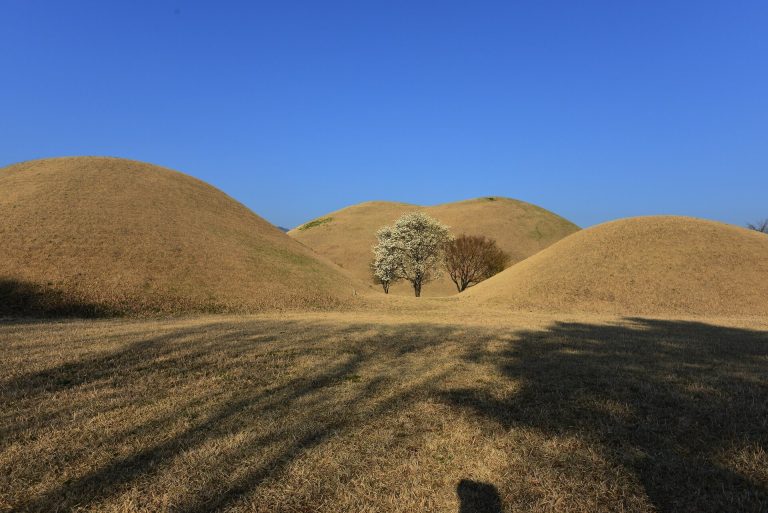
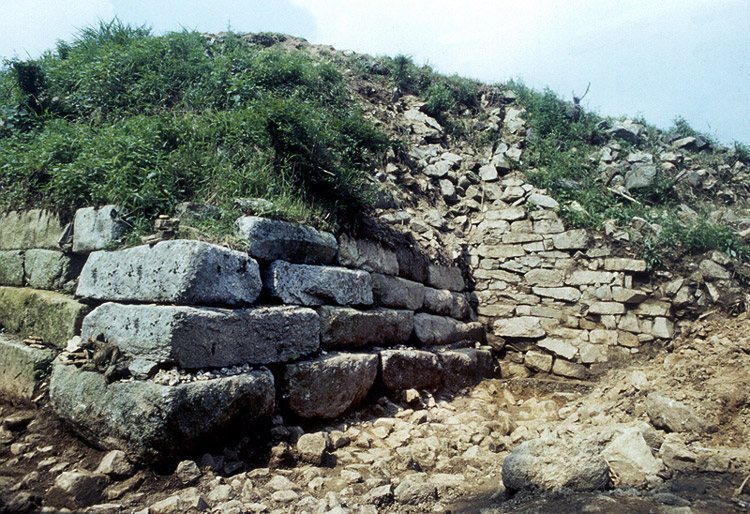
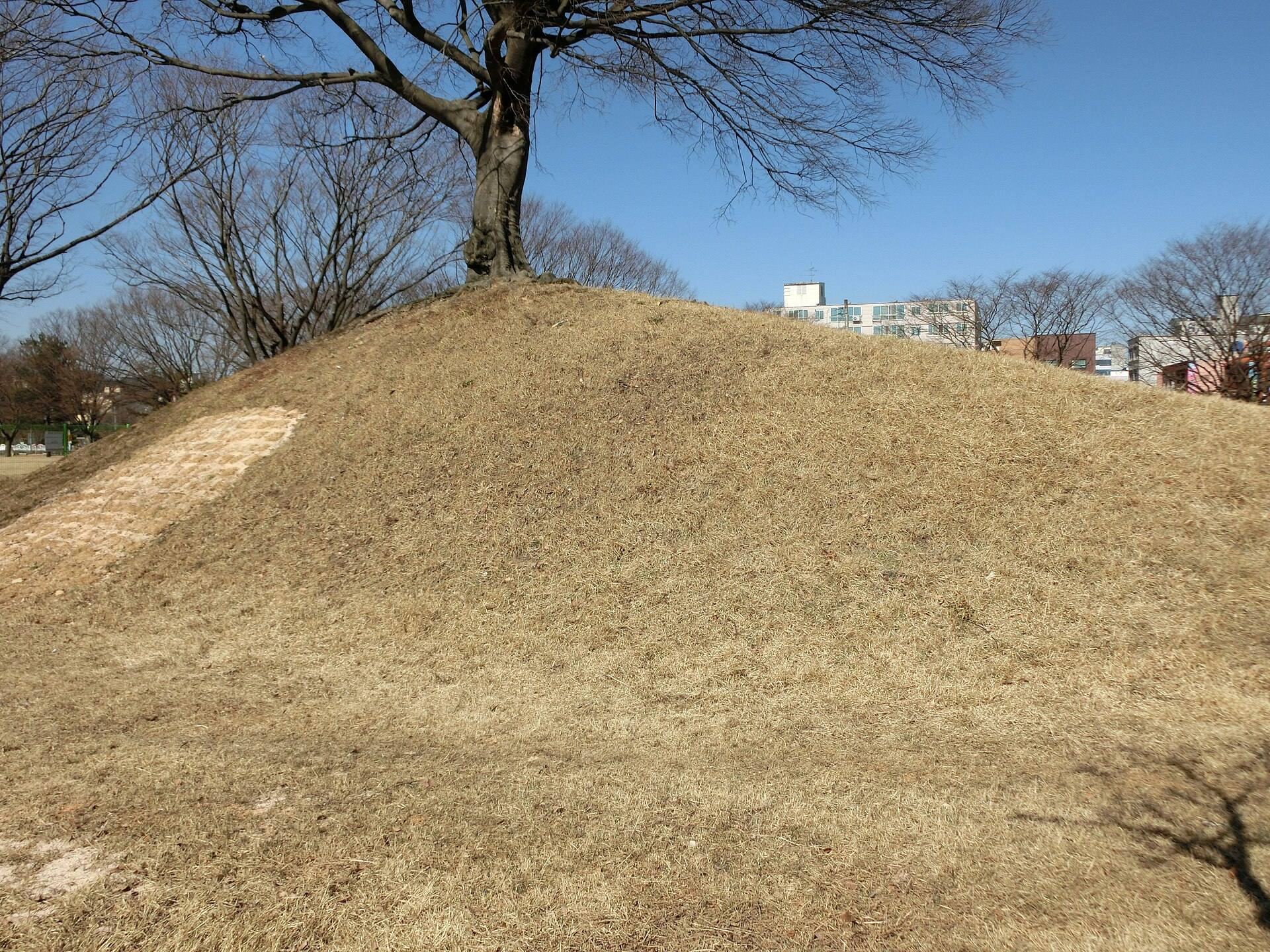
Gold Crown Tomb is a large Silla stone-mounded tomb, a burial form in which a wooden chamber was covered with a substantial mound of stones and earth. The single tumulus measures approximately 45 to 50 metres in diameter and stands about 12 to 13 metres high. Its structure is relatively simple and includes no separate chamber specially intended for grave goods. The burial used a wooden chamber and probably included a lacquered wooden coffin. The interior may also have received varnish and lacquer.
Burial goods and weapons
The burial assemblage included vessels made from gold, silver, bronze, and combinations of these materials, as well as four-cornered pots and stoneware. Cast-iron Korean-style cauldrons carried delicate engraved decoration. A bronze tripod pouring vessel may have been imported from China, while the four-cornered vessels and engraved cauldrons reflect cultural connections with Goguryeo.
Weapons and protective equipment included gold and silver swords, gold and bronze helmets, bronze armor, and gilt-bronze plate armor. One scabbard associated with the burial carried the inscription “King Isaji.” Gold earrings, necklaces, bracelets, rings, lacquerware, glass vessels, horse fittings, and further ornaments completed the group of objects placed in the tomb. Approximately 20,000 mainly blue Indo-Pacific beads were also recovered.
Crown and belt ornaments
The gold crown is the first Silla royal crown found in an excavated tomb and remains the largest Silla crown recovered archaeologically. Its openwork metal inner cap carries bird-wing imagery, which is associated with shamanistic practices involving relationships among people, spirits, animals, and the natural world. The ornament is relatively balanced in design, with heart-shaped, fish-scale, and diamond-shaped patterns. A diadem ornament shows a bird preparing to fly, while dragon designs decorate the crown’s wing elements.
The tomb also contained gold and silver belt ornaments made from thin bands and fitted with 17 pendants of varied forms. A golden girdle measured approximately two metres in length and consisted of 39 plaques, with several chains or charms hanging from its main belt. These objects form part of the material evidence for the rank and ceremonial presentation of the person buried within the mound.