Banwolseong: The Royal Palace Fortress of Silla in Gyeongju
Site at a Glance
- Rating
- 4.3
- Popularity
- Low
- Country
- South Korea
- Primary era
- Classical
- External website
- Open
- Eras represented
- Classical, Early Modern
- Civilizations
- Joseon, Silla
- Site type
- Domestic
- Remains
- Palace
On this page8 sections
History
Banwolseong was the royal palace and fortress of Silla in Gyeongju, South Korea, used from 57 BCE through 938 CE, including the period of Unified Silla, when Silla controlled most of the Korean Peninsula. Its name refers to the approximate crescent shape of its walls, and the site served as a royal and governmental centre for centuries.
Origins and archaeological evidence
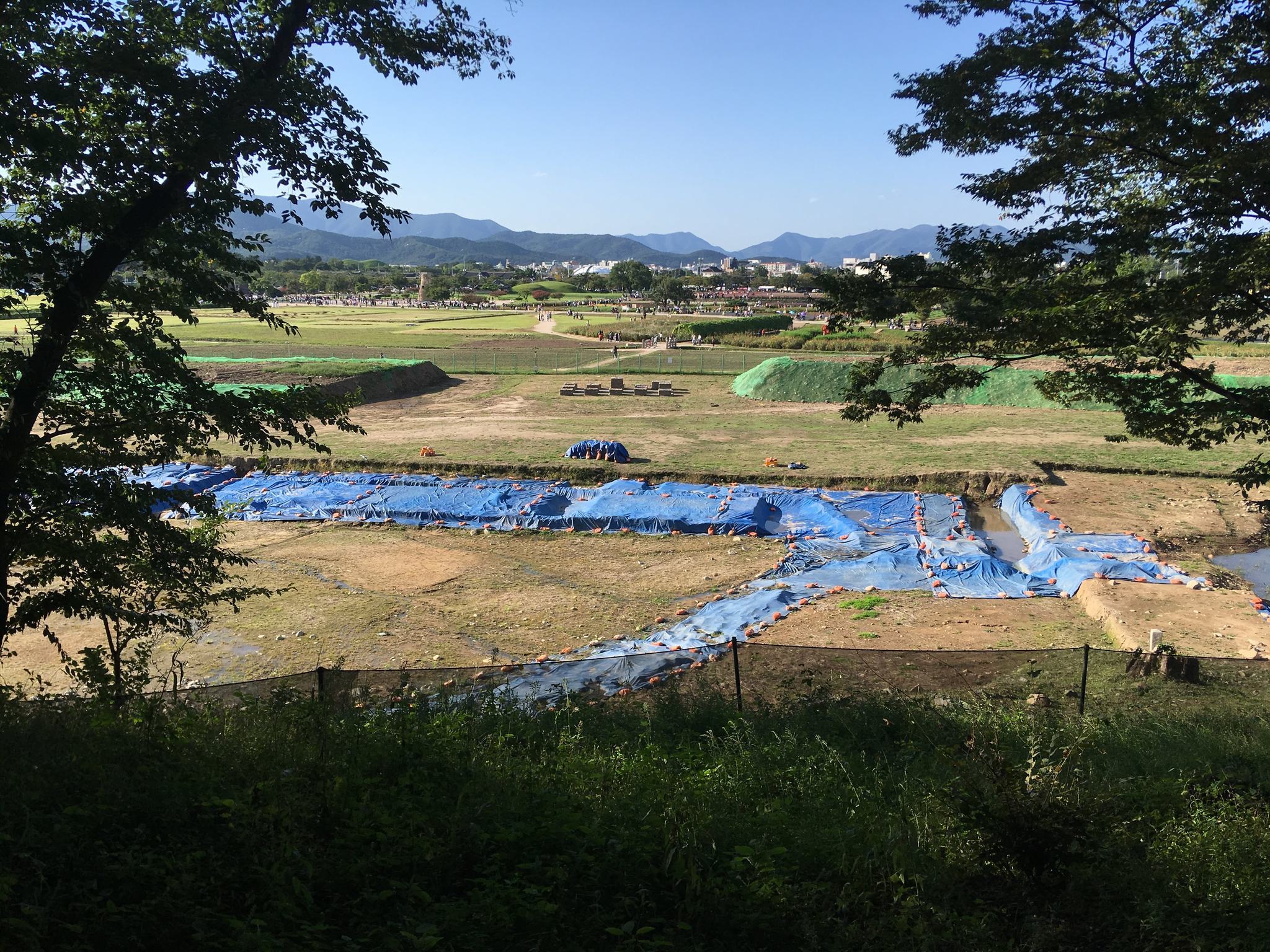
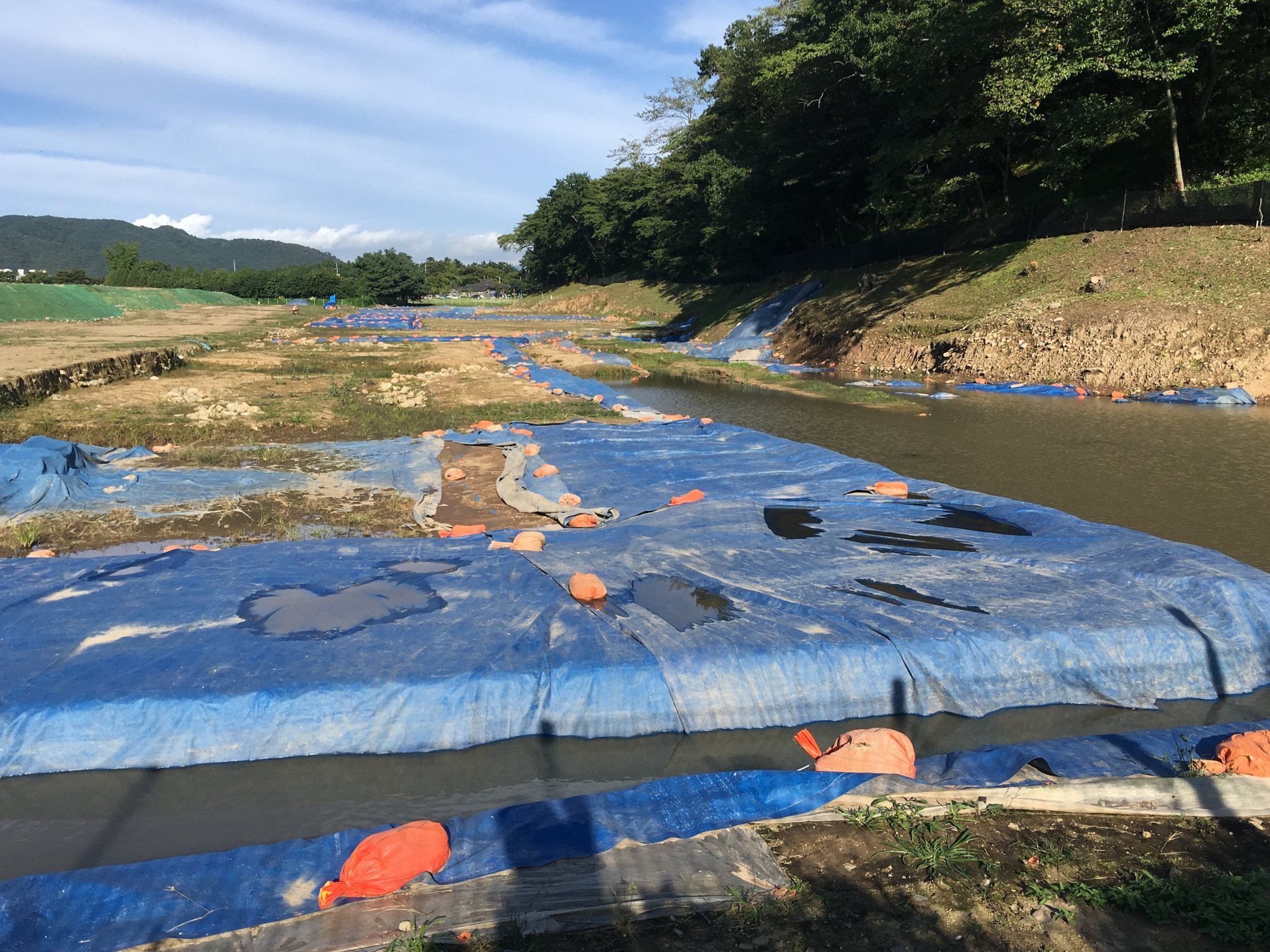
Tradition attributes the fortress to King Pasa, an early ruler of Silla. The Samguk Sagi, a twelfth-century chronicle of the early Korean kingdoms, says that he built it to protect the royal palace. Excavations carried out in the late 2010s and in 2021 instead indicate that the palace was more likely constructed during the fourth century.
Excavation at the main entrance revealed human remains and animal bones dating from the Silla period. Their placement suggests that rituals involving human sacrifice may have been performed to protect the construction. The skeleton of a woman who lived approximately 1,500 years ago was found with a necklace, a bracelet, and an earthen pot.
Legendary associations and later history
A traditional legend connects the site with Hogon, who lived on the land before the fortress was built. Talhae, described as a young man with magical powers, drove him away. King Namhae was impressed by Talhae’s account, made him his son-in-law, and Talhae later became king.
The palace remained in use through the end of Unified Silla in 938. Its later history also includes the relocation of Seokbinggo, an icehouse, to the Wolseong area in 1741 during the reign of King Yeongjo. The stone building replaced an earlier wooden ice storehouse. Icehouses of this type were already used during the Silla period, including one built in 505 under King Jijeung.
The palace ruins form part of the Gyeongju Historic Areas, which were inscribed on the UNESCO World Heritage List in 2000. South Korea also designated Banwolseong as Historic Site No. 16.
Remains
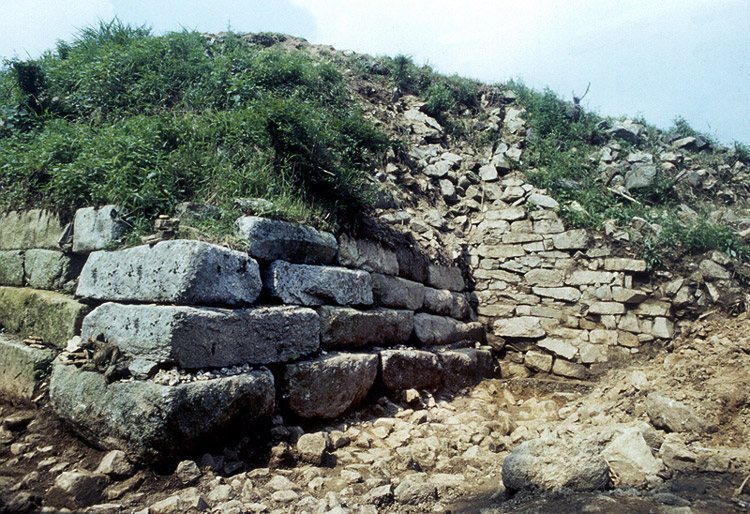
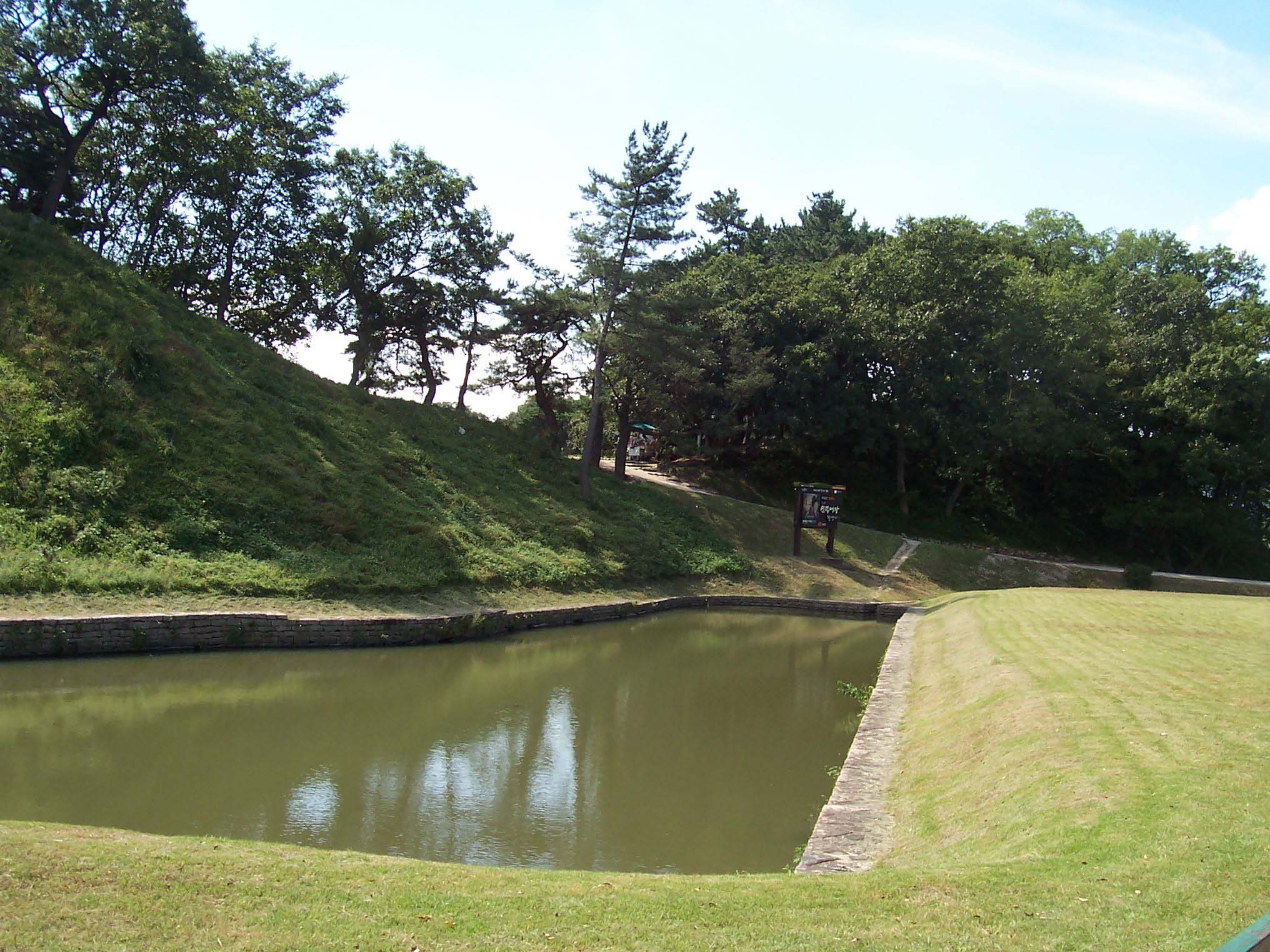
The surviving site is centred on extensive earthen ramparts, wooded grounds, ruins, and surrounding hills. The walls follow an approximately crescent-shaped plan. The Namcheon River ran along the southern wall and provided a natural defensive barrier, while palace buildings stood within and near the fortified area.
Fortifications and palace layout
Gates and named buildings
Banwolseong included northern and southern gates, together with structures named Guijeongmun, Hyeondeokmun, Mupyeongmun, Wolsangnu Pavilion, Mangeunnu, and Goru. Jowonjeon was the place where governmental affairs were discussed. Imhaejeon Hall and other buildings stood near the Namcheon River, beside the southern defensive line.
Earthen ramparts
The principal surviving defensive features are the earthen ramparts that define the palace enclosure. Their crescent-like outline gave the palace its name and remains central to the physical interpretation of the site. The ramparts, ruins, wooded grounds, and nearby hills together express the setting of the royal compound and its river-side defences.
Seokbinggo icehouse
Seokbinggo, an icehouse or purpose-built building for storing ice, stands near the northern castle turret. It was moved to its present position in 1741 after an earlier wooden storehouse was replaced by a stone structure. The building was originally described as being west of Wolseong.
The icehouse is an arched stone structure approximately 2.4 metres wide, 1.78 metres high, and 18.8 metres long. Its entrance opens on the south side, while three ventilation ducts pass through the arched roof. An inclined floor directs meltwater toward the lower end. Its large scale and construction technique are notable features of the surviving palace area.