Bunhwangsa: A Royal Silla Buddhist Temple in Gyeongju
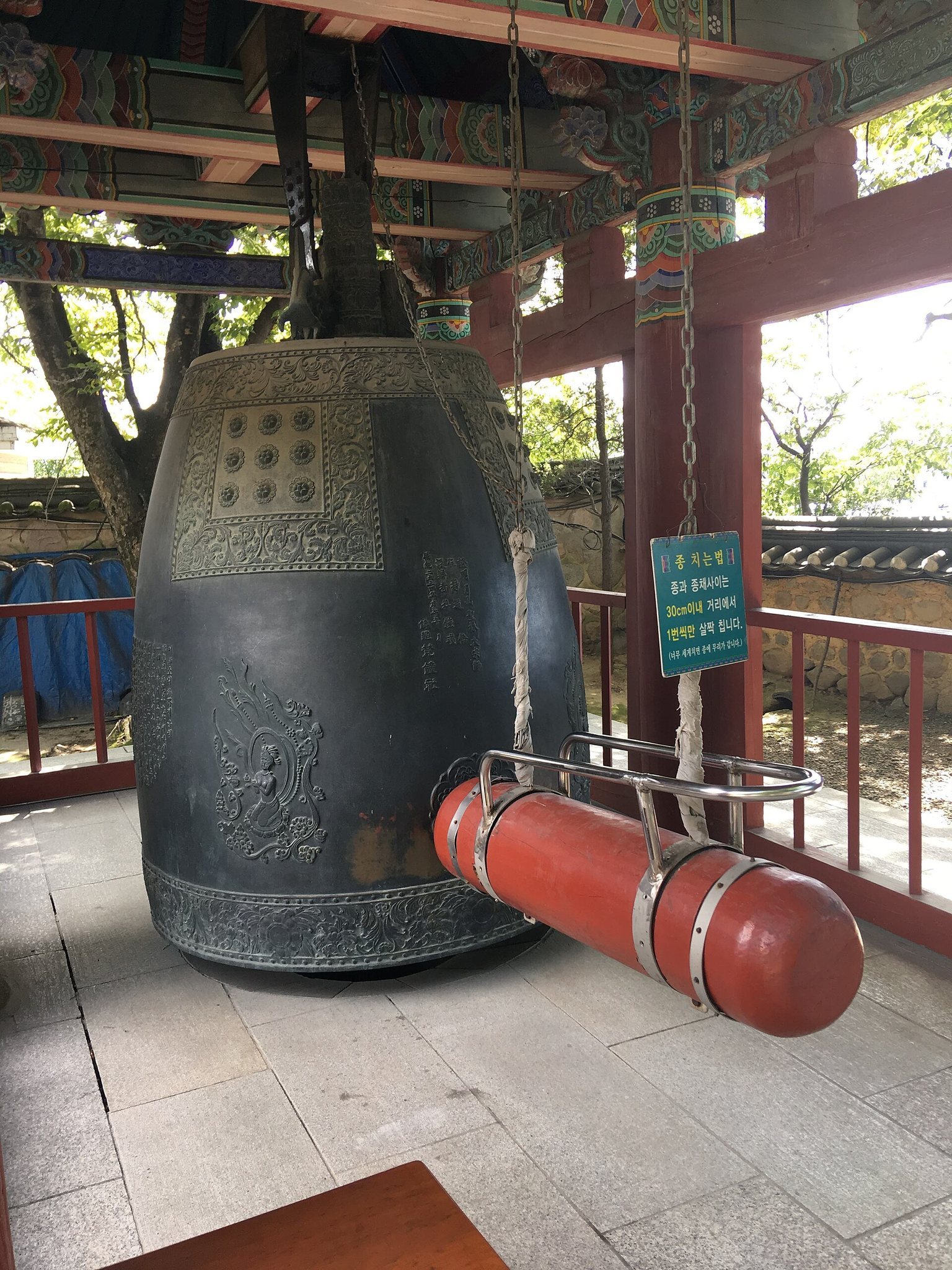
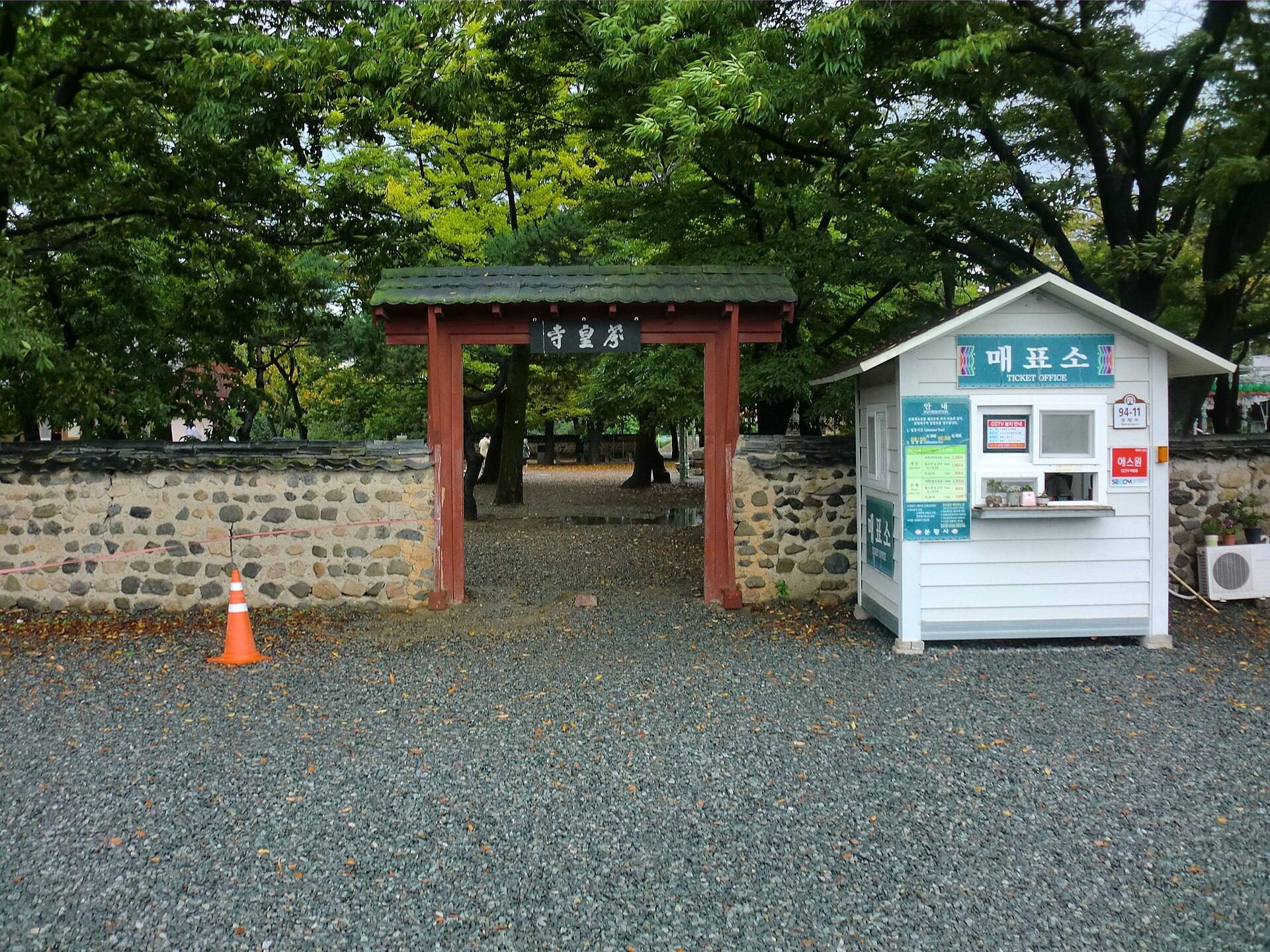
Site at a Glance
- Rating
- 4.3
- Popularity
- Medium
- Country
- South Korea
- Primary era
- Medieval
- External website
- Open
- Eras represented
- Medieval, Early Modern
- Civilizations
- Goryeo, Joseon, Silla
- Site type
- Religious
- Remains
- Monastery
On this page12 sections
History
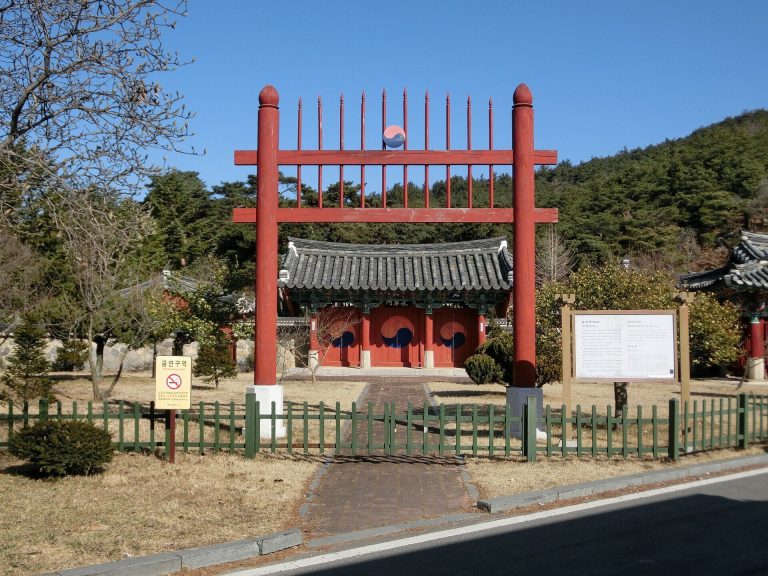
Bunhwangsa is a Buddhist temple complex in Gyeongju, South Korea, built by the Silla kingdom and completed in 634 during the reign of Queen Seondeok. It stood within the royal center of Silla and belonged to the state-supported group of major temples where prayers were offered for the Buddha’s protection of the kingdom. The temple was also known by the earlier name Wangbun-sa, meaning “Royal Fragrant Temple.”
Foundation and royal patronage
Construction may have begun during the later reign of King Jinpyeong, Queen Seondeok’s predecessor, before or around her accession. Queen Seondeok, Silla’s first queen, ruled from 632 to 647 and strongly supported Buddhism and the building of major temples. Bunhwangsa therefore developed as both a religious institution and a temple closely connected with the royal capital.
The monk Jajang lived at Bunhwangsa after returning from Tang China in 643 at the direction of the Silla court. The influential Buddhist thinker Wonhyo also resided and worked there, writing commentaries on texts including the Avatamsaka Sutra and the Vajra-samadhi Sutra. After his death, his son Seol Chong reportedly made a clay image from his remains and placed it at the temple. Wonhyo’s connection with Bunhwangsa later gave his Buddhist tradition the name Bunhwang school.
Images, legends, and destruction
A tradition preserved in the Samguk yusa tells of a blind child who regained his sight after praying before a Thousand-Armed Great Compassion image. The image stood on the north wall of the temple’s left hall during the reign of King Gyeongdeok. It has also been associated with a painting of Avalokitesvara, the bodhisattva of compassion, attributed to the Silla painter Solgeo.
In 775, during the fourteenth year of King Gyeongdeok’s reign, a large Medicine Buddha image was cast for Bunhwangsa from 306,700 units of copper. The Medicine Buddha is associated with healing and relief from suffering. The original image was later lost during the Japanese invasions, while other early buildings and objects disappeared amid the Mongol invasions and the Japanese invasions.
Wonhyo’s reputation continued at the temple during the Goryeo period. King Sukjong ordered a stele commemorating him as the “Master of Harmonizing Disputes” in 1101. The stele shaft was later destroyed, probably when the temple was burned in 1597, leaving its stone pedestal.
Archaeology and later religious identity
Investigations inside and outside the present precinct from 1990 or 1991 through 2014 clarified the earlier temple’s layout and construction history. Excavation in 2008 identified the central gate and confirmed the straight alignment of the gate, pagoda, and main hall. Bunhwangsa was designated Historic Site No. 548 in 2019 and forms part of the Gyeongju Historic Areas, a UNESCO World Heritage property inscribed in 2000.
The present temple is much smaller than the historical complex but remains in religious use by a small group of worshippers. It is associated with the Jogye Order of Korean Buddhism and functions as a branch temple of Bulguksa, the headquarters temple of the order’s eleventh district. Its current religious identity centers on the worship of the Medicine Buddha. The area between Bunhwangsa and the Hwangnyongsa temple site is understood to have once formed part of the temple precinct, partly because of the position of the surviving flagpole supports.
Remains
The surviving precinct preserves a three-tier stone pagoda, Bogwangjeon, a Medicine Buddha image, a Silla-period well, the pedestal of Wonhyo’s commemorative monument, and other archaeological remains. Excavated evidence shows that the original Silla temple followed a one-pagoda, three-main-hall plan. The pagoda stood in the center, with a main hall to the north and eastern and western halls arranged in a character-shaped configuration. This was the first layout of this kind identified at a Silla temple and was known earlier from Goguryeo temple sites.
Temple layout and building evidence
The central gate stood 30.65 meters south of the pagoda. It measured 12.63 meters in length, with three bays across the front and two bays in depth. The gate, pagoda, and main hall shared a straight north-south axis. Double corridors extended east and west from the gate, creating a double-gallery enclosure about 138.4 meters long.
The central hall was rebuilt around the middle of the eighth century, approximately 750. Repeated rebuilding eventually changed the arrangement to one pagoda and one main hall. More than 1,500 roof tiles recovered from the site reflect successive phases of construction and use. They include Goguryeo-style seven-petaled plain lotus tiles, tiles made from molds also used at nearby Hwangnyongsa, Baekje-style lotus designs, early double-petal lotus forms, and Unified Silla tiles dominated by honeysuckle-like floral patterns.
Pagoda
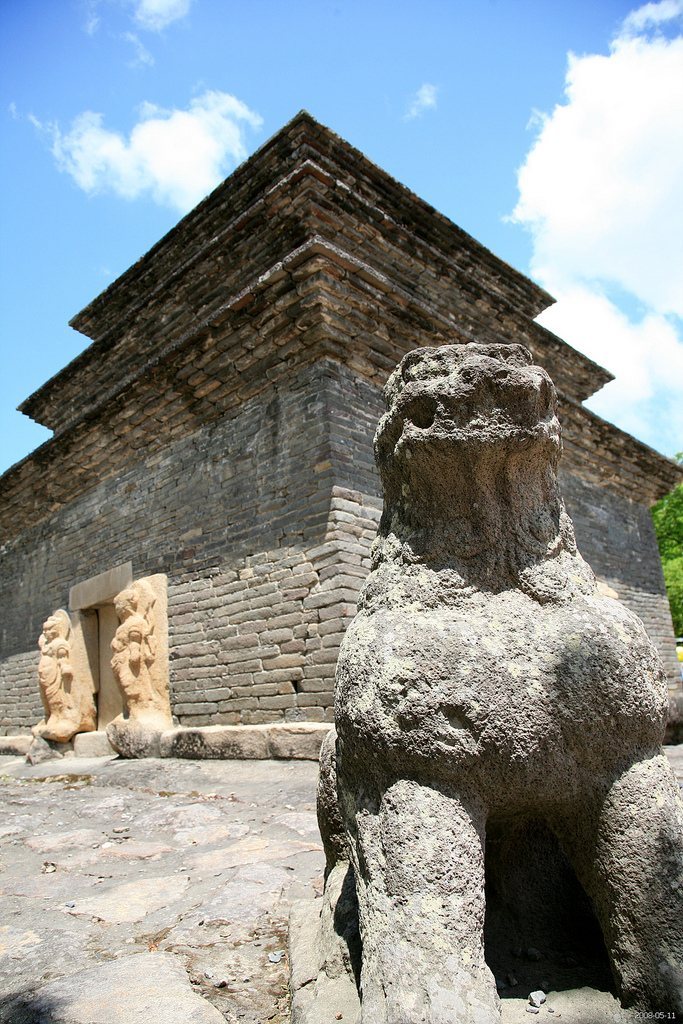
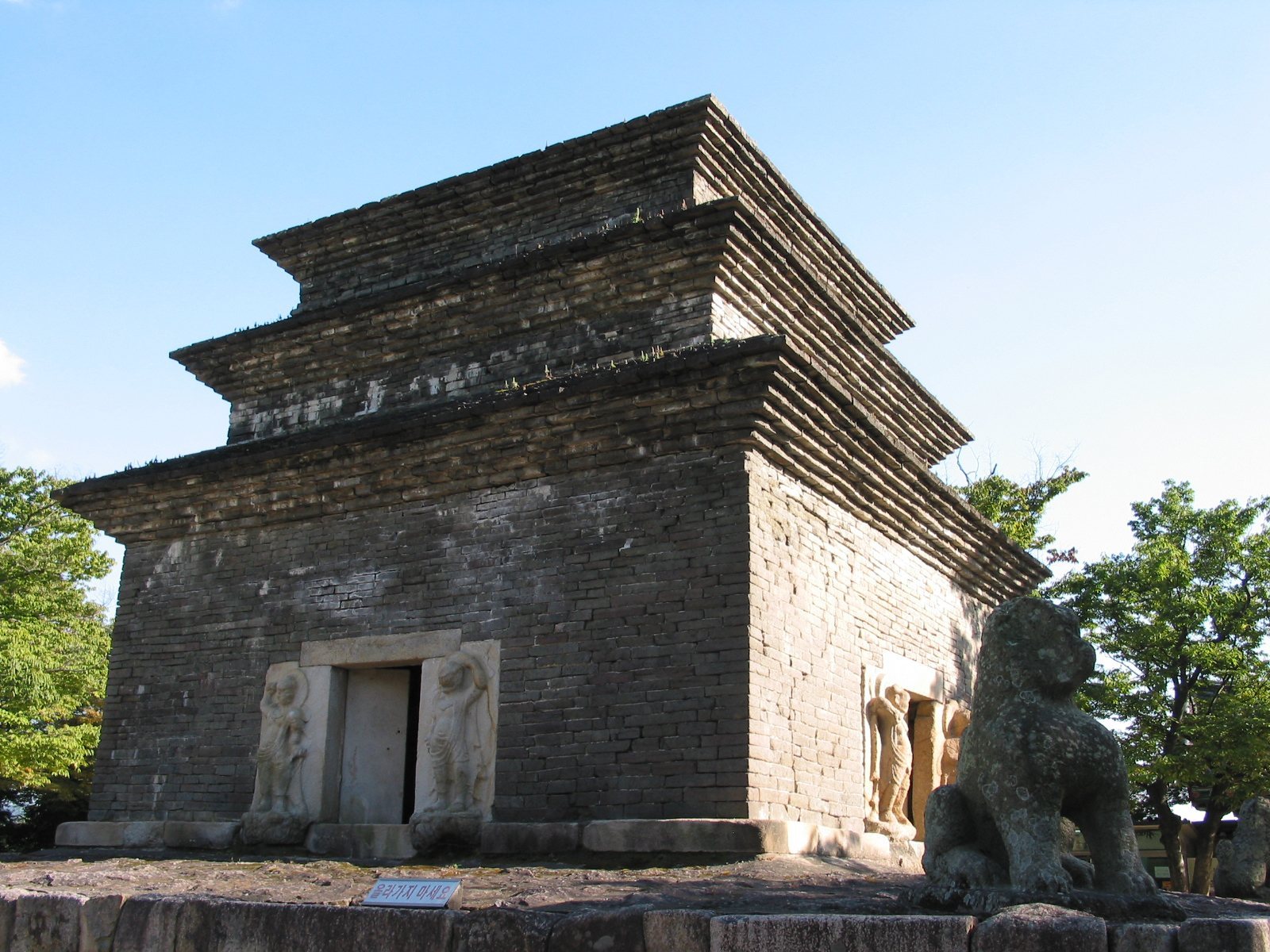
The Bunhwangsa Mojeonseoktap, a stone pagoda made from blocks shaped to imitate brickwork, rises about 9.3 meters. It is regarded as the oldest surviving Silla stone-pagoda monument and imitates Chinese brick pagodas. Dark gray-black andesite was cut into brick-like blocks, while each upper tier was made smaller than the one below. The roofs consist of stones laid in stepped courses.
Only three tiers survive, and debris from collapsed upper sections fills the pagoda’s formerly hollow center. Historical descriptions vary between five, seven, and nine tiers, although records specifically preserve a tradition that it had nine. Each side of the first tier has a niche flanked by two Nio, or vajra-warrior guardians, while guardian lions stand at the corners of the platform. Granite lotus forms also decorate the monument.
During repairs and investigation in 1915, a reliquary was found between the second and third tiers. The finds included objects associated with the original construction and later coins, as well as reported gold and stone ornaments, scissors, and a needle. The coins indicate that the pagoda was reconstructed or reopened after the Goryeo period. The reliquary and associated objects are preserved and displayed at the Gyeongju National Museum.
Later buildings and sacred features
Bogwangjeon and the Medicine Buddha
Bogwangjeon occupies a corner of the former central-hall site. Its predecessor was built in 1609, rebuilt in 1680, and dismantled and reconstructed in 1998. The present gilt-bronze standing Medicine Buddha image is about 3.5 meters high and holds a medicine jar. An inscription inside the lid dates the image to 1774, while records found during the 1998 rebuilding indicate that it was originally cast in 1609 from 5,360 units of copper.
Wonhyo’s monument pedestal
The stone pedestal of the “Master of Harmonizing Disputes” is a Goryeo-period base associated with the 1101 commemoration of Wonhyo. Its stele shaft was probably destroyed when the temple burned in 1597. The scholar and epigraphist Kim Jeong-hui later recorded inscriptions identifying the pedestal.
The Silla well
The temple well, called Samnyongbyeoneojeong or Hogukyongbyeoneojeong, is a Silla-period stone structure. Its cylindrical body rises about 0.7 meters above ground. The outside is octagonal, while the interior is circular, a form interpreted in connection with the Buddhist Eightfold Path and the idea of harmonious interpenetration.
The well is also linked to a legend about three dragons who protected Silla. According to the story, they were transformed into fish and taken to Tang China. After their wives appealed to the Silla king, the dragons were recovered and returned to the Bunhwangsa well.
Flagpole supports and excavated remains
Outside the present precinct, between Bunhwangsa and the Hwangnyongsa temple site, paired stone flagpole supports rise about 3.55 meters. A flagpole support is a stone post used with its partner to hold a ritual banner at a temple entrance. Their base stone is shaped like a turtle, and the supports are attributed to the early Unified Silla period.
A headless Buddhist statue excavated in 1965 from a well about 30 meters north of Bunhwangsa is displayed at the Gyeongju National Museum. Together with the pagoda discoveries, roof tiles, and structural remains, it contributes to the archaeological picture of the former royal temple.