Rumicolca: A Wari and Inca Gateway and Aqueduct
Site at a Glance
- Rating
- 4.6
- Popularity
- Low
- Country
- Peru
- Primary era
- Medieval
- Eras represented
- Medieval
- Civilizations
- Inca, Wari
- Site type
- Military
- Remains
- Gate
On this page6 sections
History
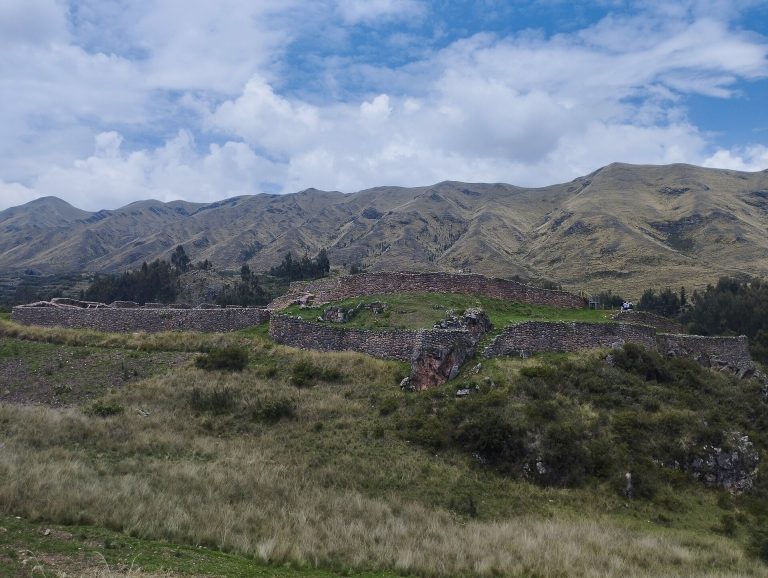
Rumicolca is an archaeological site in Peru’s Cusco Region, near Lake Huacarpay and about 31 kilometres southeast of Cusco. Probably first built during the Wari period, it was later adopted and improved by the Inca Empire. The monument is associated with the nearby Wari urban centre of Pikillaqta and is locally known as La Portada.
Wari origins and competing interpretations
The Wari were a major pre-Inca Andean civilization known for early state organization and urban settlement in the Peruvian highlands. Rumicolca’s original core is generally attributed to them, although its precise date and first function remain uncertain. One interpretation identifies it as a gate marking the edge of Wari territory. In this view, the Incas enlarged the structure over Wari foundations and used it as a boundary between Cusco and the southern region associated with Puno.
A second interpretation identifies the original monument as an aqueduct, a structure built to carry water across a break in the terrain. The Wari may have constructed it to bring water from Lake Huacarpay to Pikillaqta. Kenneth Wright, a specialist in ancient water systems, argued that the channel along or over the structure formed part of the original Wari design rather than being added later. Whether the monument also served as a gate remains uncertain.
Inca use and local tradition
The Incas incorporated Rumicolca into their empire and improved its construction. Its position beside the principal road between Cusco and the Puno region gave it a role in movement through the area. In the boundary interpretation, the gateway separated Cusco from the southeastern imperial region known as Collasuyo, one of the major administrative divisions, or suyus, of the Inca Empire. Travellers may have been required to pass through the monument and pay a toll.
A Cusco tradition presents a different explanation for the monument’s origin. It tells that, after the Wari occupied Pikillaqta, a leader offered his only daughter in marriage to whoever could provide the settlement with a continuous water supply. A man from Cusco and another from Puno competed for the task. The man from Cusco planned a canal from Lake Huacarpay, but the route crossed a large gap, so he built an aqueduct identified with La Portada de Rumicolca. The tradition also explains the two passageways as a way to carry water across the road without stopping movement along it. The name Rumicolca may derive from the Quechua words rumi, meaning stone, and qullqa or qulqa, meaning deposit or storehouse.
Remains
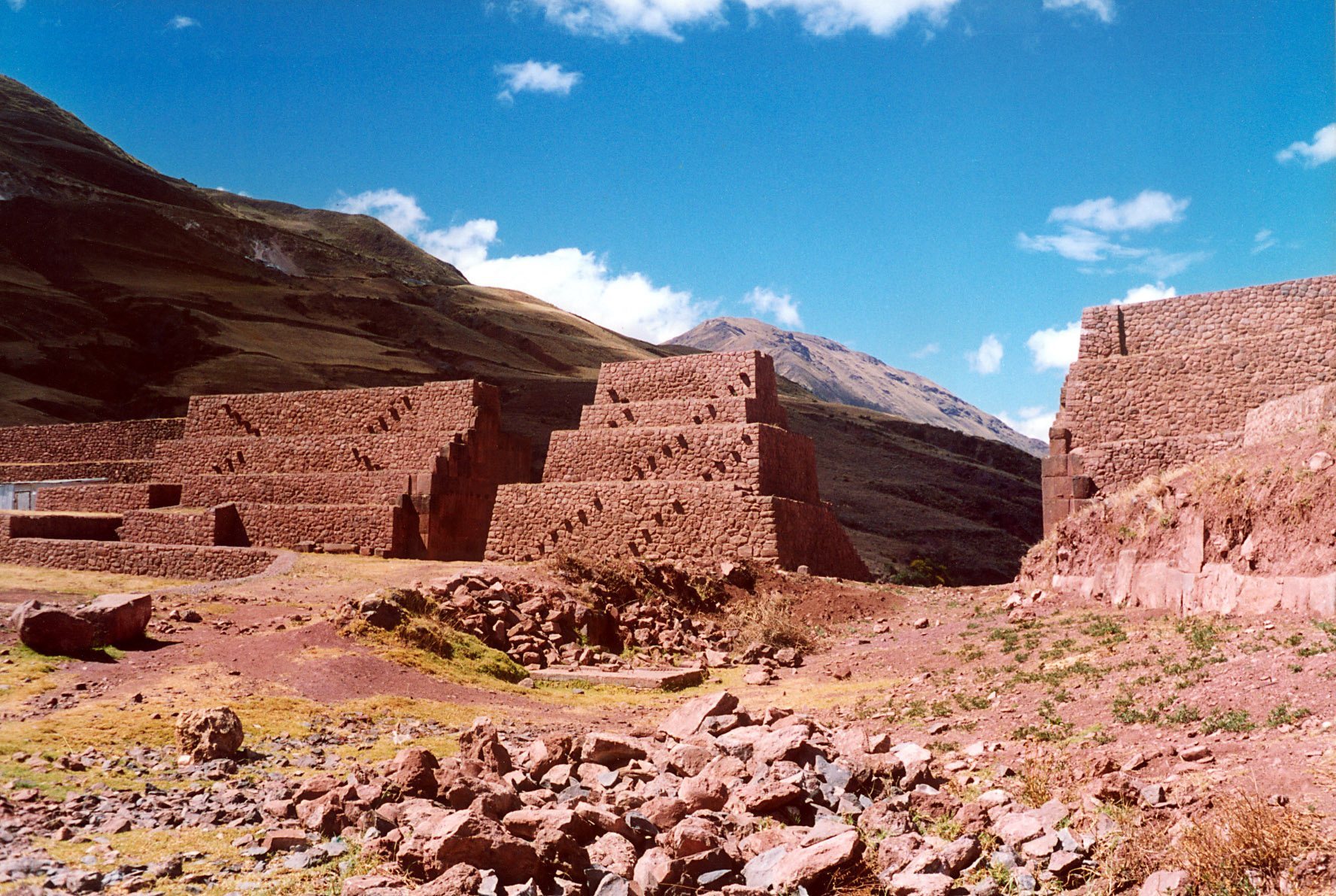
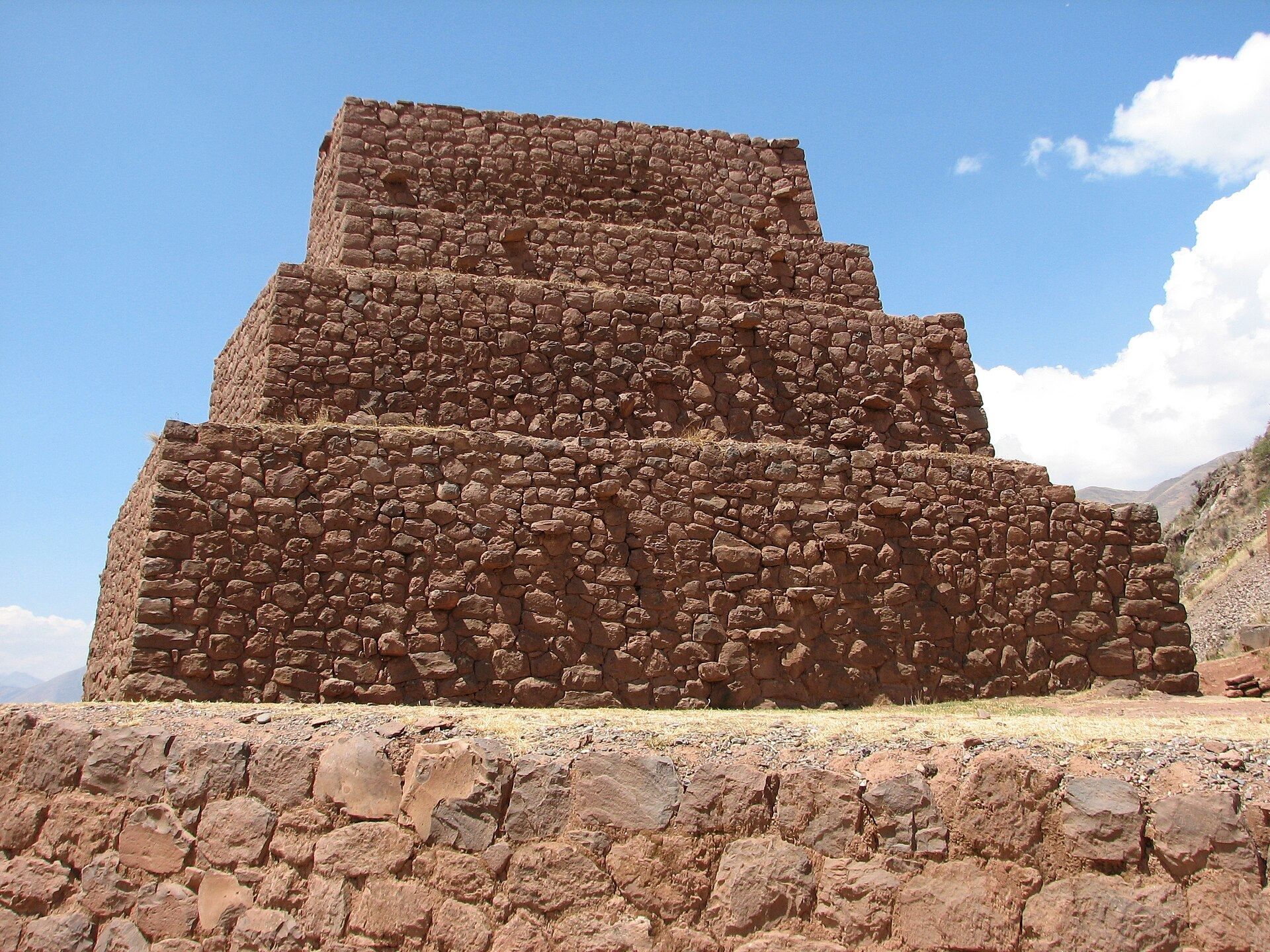
Rumicolca survives as a substantial wall or gateway with two openings, positioned beside the principal route between Cusco and the Puno region. A channel runs along or over the structure. The openings may have allowed water to cross the road while preserving a passage for travellers, although the precise relationship between the water system and the gateway remains debated.
Wari core and Inca facing
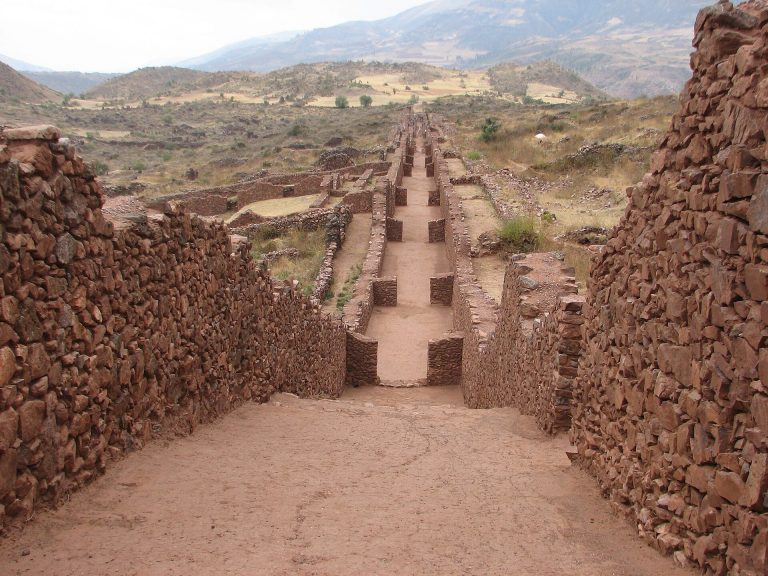
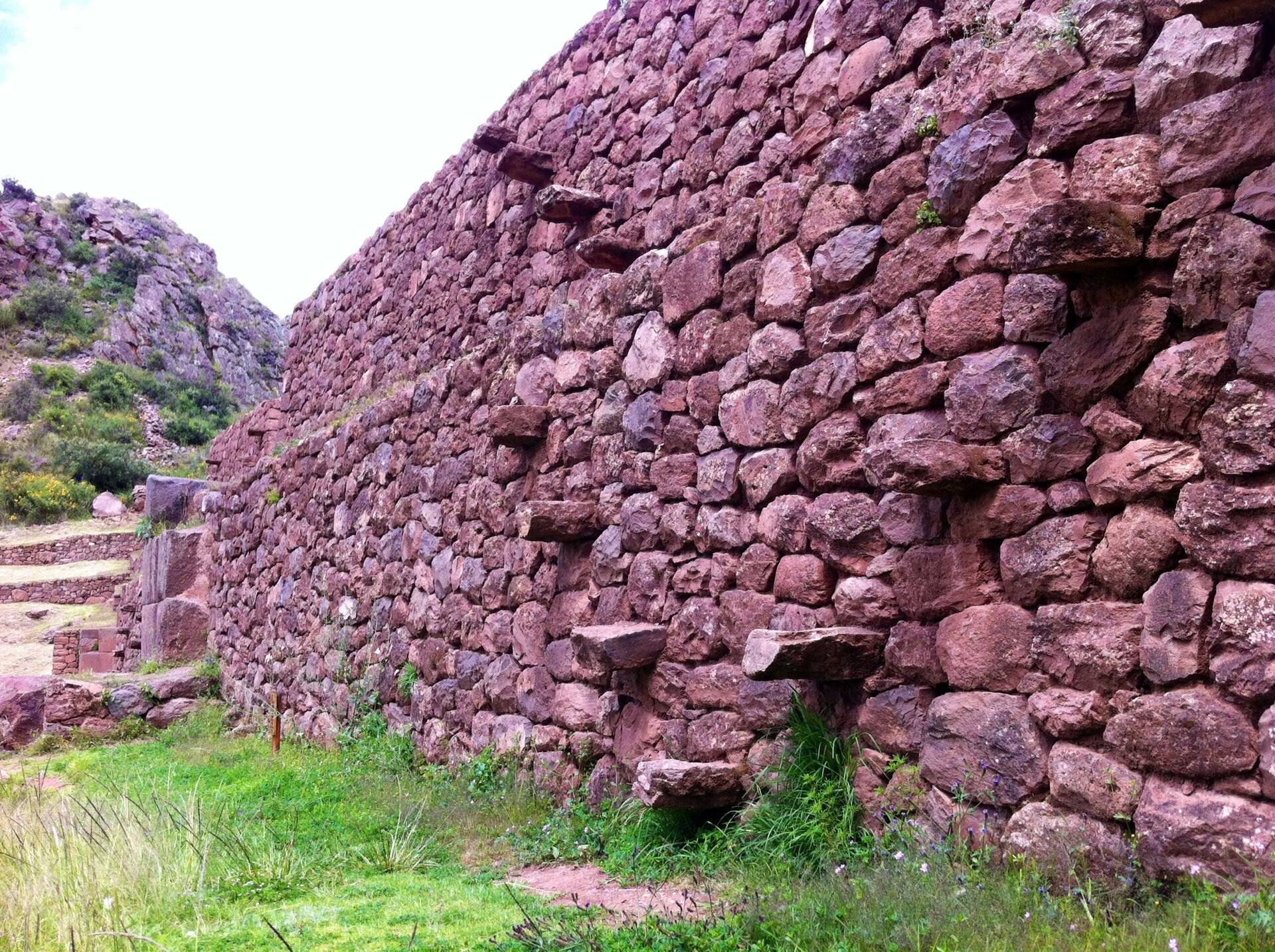
The monument’s original Wari core was built from rough or broken stones. During the Inca period, the structure was faced with finely carved and carefully polished stone blocks. This combination of a rougher inner construction and later dressed stonework reflects the monument’s development across the two building traditions. Its association with Pikillaqta and Lake Huacarpay connects the surviving structure with the proposed water route serving the Wari settlement.
Openings and projecting stones
Some stones on the inner sides of the openings have projecting elements whose purpose is not known. Similar features have been reported at Pisac and other Inca monuments. Victor Angles interpreted these projections as a form of ideographic writing, in which signs convey ideas or meanings rather than representing speech through alphabetic sounds. The projections remain part of the monument’s carved architectural detail, while their meaning and function are unresolved.