Walls of Jerusalem: The Fortifications of the Old City
Site at a Glance
- Rating
- 4.8
- Popularity
- High
- Country
- Israel
- Primary era
- Early Modern
- External website
- Open
- Eras represented
- Bronze Age, Iron Age, Classical, Medieval, Early Modern, Modern
- Civilizations
- Ayyubid, Byzantine, Canaanite, Crusader, Fatimid, Israelite, Kingdom of Jerusalem, Ottoman, Roman
- Site type
- Military
- Remains
- Wall
On this page26 sections
History
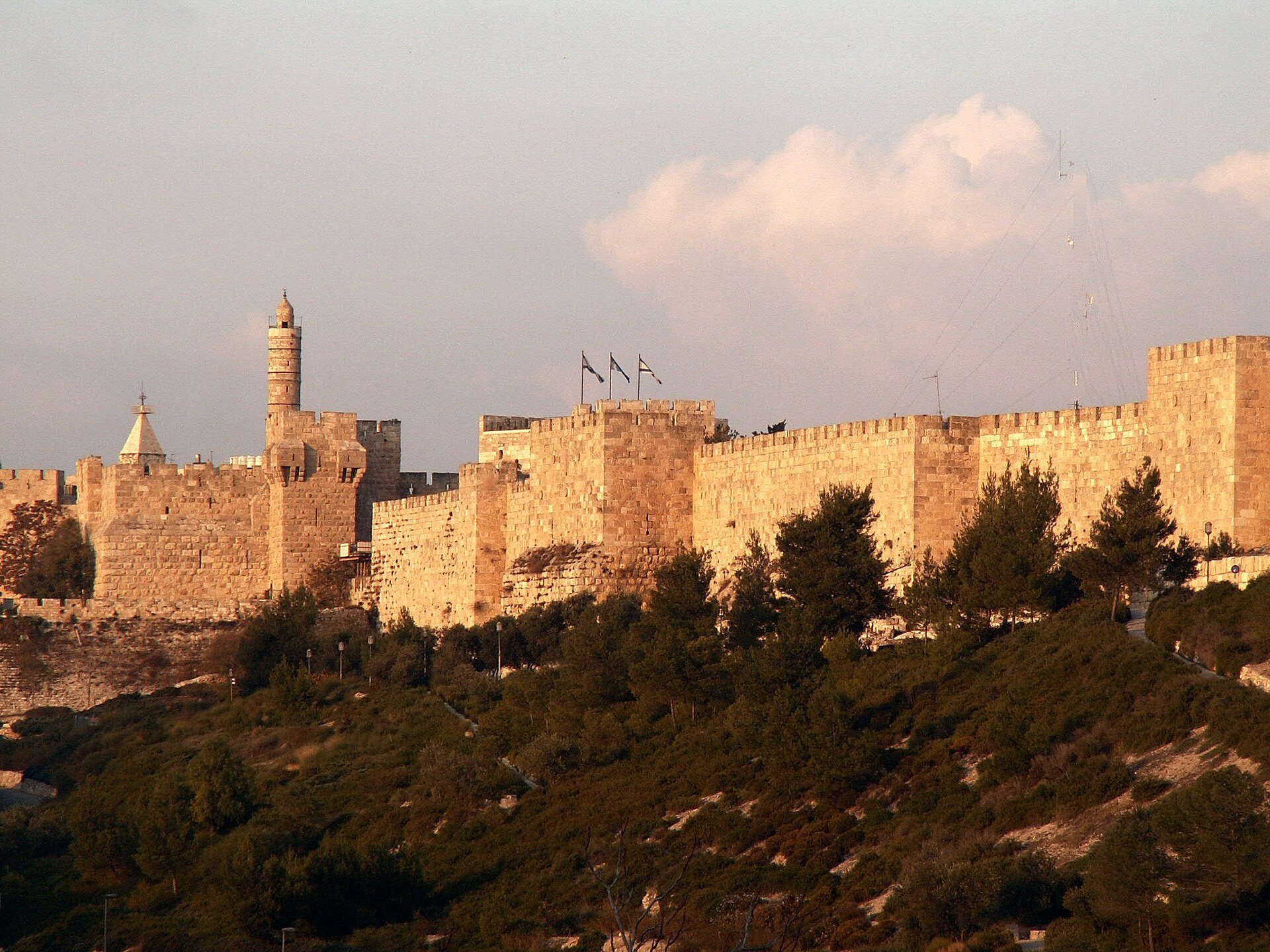
The Walls of Jerusalem are the defensive circuit surrounding the Old City in Jerusalem, Israel. Their surviving form was built by the Ottoman Empire between about 1537 and 1542, but the circuit incorporates earlier lines and masonry from many periods. Jerusalem has been enclosed by defensive walls for most of its history, and each conquest, destruction, and rebuilding left new layers in the city’s fortifications.
Jebus and the First Temple period
The earliest known defenses surrounded Jebus, the Canaanite settlement on the southeastern hill now called the City of David. Dating from the Middle Bronze Age more than 4,000 years ago, the settlement covered about 50,000 square meters. Its defenses included a wall, a watchtower, and probably a gate. According to biblical tradition, David conquered Jebus and made it the capital of the united Kingdom of Israel. The existing fortifications appear to have been retained and improved by the new rulers.
During the First Temple period, the era of the First Temple and the kingdoms of Israel and Judah before the Babylonian destruction, Jerusalem expanded northward to include the Temple Mount and its eastern hill. As the city grew onto the western hill during the late First Temple period, its defenses were extended again. A major wall traditionally attributed to King Hezekiah enclosed the enlarged settlement, running south and west of Mount Zion before joining the Temple Mount along the Transverse Valley. Remains attributed to King Manasseh, Hezekiah’s son, were later built at the foot of the City of David beside the Kidron Valley.
A 2024 archaeological study has challenged the traditional attribution of the eastern wall to Hezekiah. More than 100 radiocarbon dates from organic remains in four excavation areas were used to argue that Jerusalem had expanded toward Mount Zion as early as the ninth century BCE, during the reign of King Joash, before the Assyrian exile. The study attributes the eastern wall to King Uzziah instead. This interpretation places the city’s expansion within a more complex sequence of First Temple defenses.
Babylonian destruction and Persian restoration
Nebuchadnezzar II conquered Jerusalem in 587 or 586 BCE. The city’s walls were breached and burned, and the settlement entered a period of destruction and decline. After the Babylonian exile, Nehemiah, a Jewish leader serving under Persian rule, rebuilt the defenses with Persian approval. The work was completed within 52 days and appears to have focused mainly on the eastern hill. Only limited remains have been identified, and the attribution of some surviving sections to Nehemiah’s wall remains disputed.
Hasmonean and Herodian defenses
During the Hasmonean period, the second-century BCE era of the independent Jewish dynasty founded by the Hasmoneans, the western hill was brought within the fortified city. This circuit later became known as the First Wall in the account of Josephus, the first-century Jewish commander and historian who described Jerusalem’s defenses during the Roman siege. The wall followed much of the earlier Hezekian line and reused older remains. Its construction and completion are associated with the Hasmonean leaders Jonathan and Simon and with Simon’s son, John Hyrcanus I.
Herod the Great, who ruled Judea under Roman authority at the end of the first century BCE, strengthened and thickened the First Wall. He also added three large towers in the area now occupied by the Tower of David. These works formed part of Jerusalem’s defenses during the late Second Temple period, the era between the rebuilding of the Temple after the Babylonian exile and its destruction by the Romans in 70 CE.
The Second Wall was built during the first century BCE around expanding districts north and west of the Temple Mount. Its builder is uncertain. It has been attributed to Herod, Alexander Jannaeus, or John Hyrcanus II. The wall formed an arc toward the Temple Mount and joined the Hasmonean First Wall, but its exact course remains hypothetical in several places.
The Third Wall and the Roman destruction
Herod Agrippa I began the Third Wall in the 40s CE to protect northern neighborhoods that had grown beyond the earlier defenses. Emperor Claudius ordered the work stopped because a fortified Jerusalem might threaten Roman control. About 25 years later, as the city prepared for the First Jewish-Roman War, its inhabitants completed the wall in haste.
Josephus attributed approximately 90 towers to the Third Wall, although its hurried construction produced weaker work than originally intended. Roman siege engines eventually breached it during the destruction of Jerusalem in 70 CE. Sections of the wall were identified near the present Third Wall Street and in the area of the former Mandelbaum Gate, where they were investigated during the twentieth century.
Roman and Byzantine rebuilding
After the Roman destruction, Jerusalem’s walls were almost completely demolished, and the city remained largely ruined and unwalled for centuries. After the Bar Kokhba revolt, the emperor Hadrian rebuilt Jerusalem as the pagan Roman city of Aelia Capitolina. At first, the city had no defensive wall and relied mainly on the Roman Tenth Legion for protection.
A later Roman wall was probably built during the reign of Diocletian, roughly two centuries after the city’s earlier defenses had disappeared. Between 443 and 460, the Christian empress Aelia Eudocia extensively renewed and enlarged the fortifications. Her circuit enclosed the City of David, Mount Zion, and the area of today’s Old City.
The earthquake of 1033 severely damaged Eudocia’s wall, especially on the southern side. Fatimid authorities delayed rebuilding because resources were limited and they were preparing for a possible Seljuk invasion. In the eleventh century, Fatimid Caliph al-Mustansir reconstructed the defenses along a shorter southern line, leaving Mount Zion and the City of David outside the city. The new circuit reused earlier foundations and included a northern moat, a ditch intended to obstruct siege equipment. Its course became the basis of the present Old City walls.
Crusader, Ayyubid, and Mamluk periods
After capturing Jerusalem in 1099, the Crusaders repaired and strengthened the Fatimid defenses. During the twelfth century, they moved the western entrance later known as Jaffa Gate farther west, bringing the Citadel Valley inside the city and turning it into a moat. They also reinforced Damascus Gate with a barbican, an outer defensive structure projecting in front of a gate.
Saladin, the Ayyubid ruler, captured Jerusalem in 1187. He rendered much of the Crusader fortification system unusable because he wanted to prevent another Crusader reconquest and the consolidation of a hostile stronghold. His nephew, al-Mu’azzam Isa, ordered the walls rebuilt between approximately 1202 and 1212. In 1219, however, he ordered their demolition after most of the major towers had been constructed, fearing that Crusaders might exploit the defenses if they retook the city.
For roughly three centuries Jerusalem remained largely unwalled. The Mamluks generally chose not to restore the fortifications because they favored mobile cavalry warfare and feared that a fortified city would encourage another Crusade. The settlement consequently remained partly ruined and poorly defended until the Ottoman rebuilding.
The Ottoman walls and modern history
In the sixteenth century, Ottoman Sultan Suleiman I ordered a new circuit around Jerusalem. Construction took place between about 1537 and 1542, using local stone and earlier defensive lines. The project was supervised by Muhammad Çelebi al-Naqqash, a senior Ottoman official, while the architects are not securely identified. The decision to rebuild may have combined religious, defensive, political, and economic motives, including the enhancement of the holy city, protection from raiders, reinforcement of Ottoman control, and encouragement of settlement and commerce.
A tradition claims that two architects were executed because they left Mount Zion outside the circuit. Another version says they were killed to prevent other rulers from employing them. The story is an urban legend rather than established history. By the nineteenth century, Jerusalem had expanded beyond the walls and firearms had reduced their military value. The circuit increasingly served as a symbolic boundary around the Old City.
In 1898, a breach was made near Jaffa Gate for the entry of German Emperor Wilhelm II. During the British Mandate, the walls were treated as a major historical monument and were formally protected as antiquities under the Antiquities Ordinance of 1922. In the 1948 war, the Old City and its walls came under Jordanian administration. Some gates were restricted and limited restoration was undertaken. After 1967, archaeological research, stabilization, documentation, and conservation continued under Israeli administration.
The Old City and its walls were inscribed on the UNESCO World Heritage List in 1981 on Jordan’s proposal under criteria (ii), (iii), and (vi). In 1982, the property was placed on the List of World Heritage in Danger because of Jerusalem’s unresolved political status. The inscription does not assign sovereignty over Jerusalem to any state. The surviving walls remain a major symbol of the Old City and preserve evidence of the city’s changing defensive history.
Remains
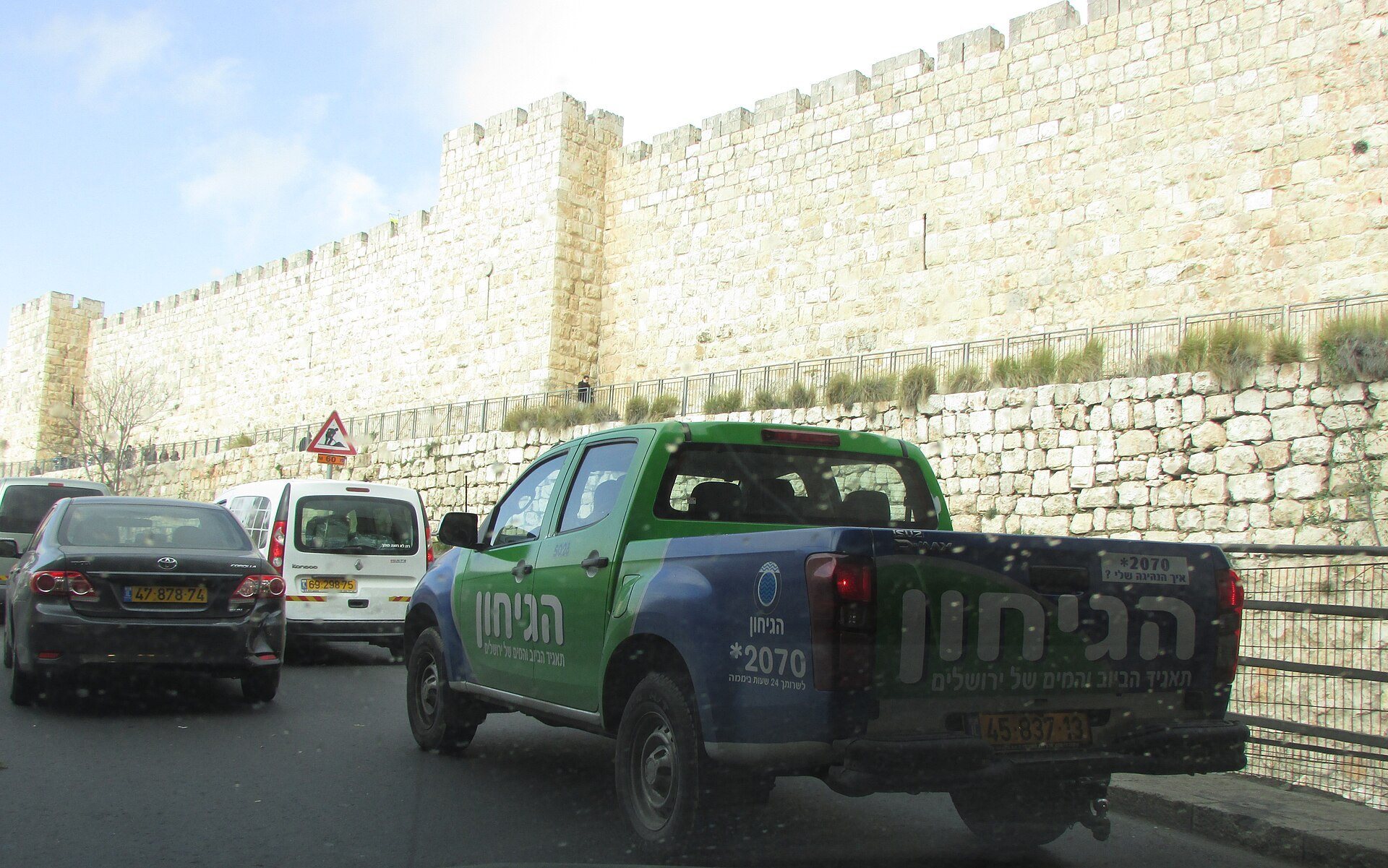
The present circuit encloses the Old City, an area of about one square kilometer. It is approximately 4,018 meters long, with an average height of about 10 to 12 meters and an average thickness of roughly 2.5 meters. The Ottoman wall incorporates earlier defensive lines and reused local masonry. About 34 watchtowers and eight gates form the circuit. The Temple Mount interrupts the southeastern line, where its southern and eastern retaining walls continue or substitute for the city wall. Mount Zion and the City of David lie outside the Ottoman enclosure.
Gates and Ottoman circuit
Jaffa Gate and the New Gate serve the west and northwest, while Damascus Gate and Herod’s Gate open through the northern wall. Lions’ Gate and the sealed Golden Gate are on the east, and Dung Gate and Zion Gate are on the south. The Huldah Gates in the southern wall were also sealed but remain identifiable. The New Gate was cut through the northwestern corner in 1887. The Golden Gate and Huldah Gates remain closed, while the other historic gates are recognizable within the circuit.
The gates preserve decorative stonework and reused architectural elements from earlier buildings. Zion Gate contains Crusader capitals and stylized firing slits that were originally church windows. Lions’ Gate displays paired leopards probably reused from a Mamluk building associated with Sultan Baybars. The inner arch of Jaffa Gate may have come from a Crusader church. The southern and western courses were altered as the modern city grew, and later buildings were attached to the walls before many were removed during conservation and urban improvement projects.
Bronze Age and First Temple remains
Jebusite defenses
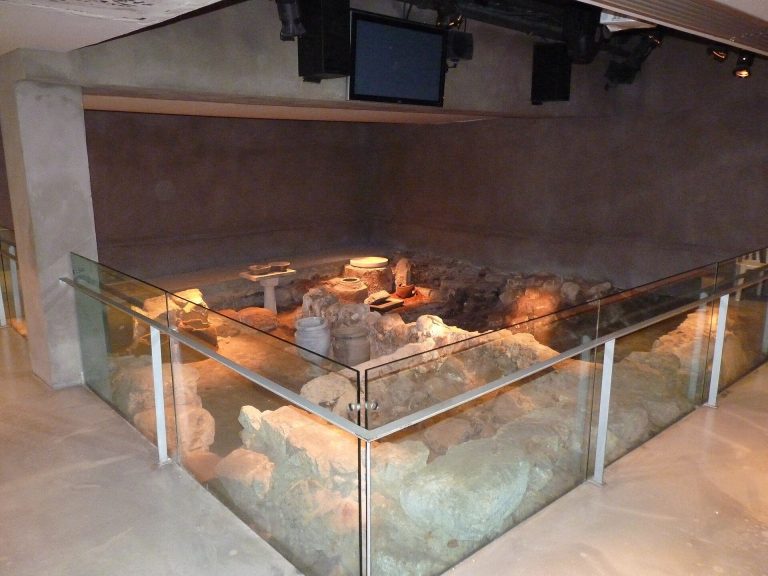
The earliest known fortifications of Jebus survive on the eastern slope of the City of David above Hezekiah’s Tunnel. They include an eighteenth-century BCE wall, a watchtower, and a probable gate. These remains belonged to the Middle Bronze Age settlement that formed the early core of Jerusalem.
First Temple-period walls
A wall segment from the First Temple period stands halfway up the slope above the Kidron Valley. Other northern defenses include walls and towers that were partly reused as foundations for later Hasmonean fortifications. The Broad Wall, associated with the late First Temple period, runs for approximately 40 meters through the Jewish Quarter and is about 7 meters wide. Demolished houses were found beneath it, while another section is visible in a deep vertical shaft beneath the Cardo. Fortifications attributed to Manasseh survive at the lower part of the City of David along the Kidron Valley.
Hasmonean and Herodian remains
The First Wall
Remains of the Hasmonean First Wall have been identified around Mount Zion, beside the modern wall near Jaffa Gate, and in the Cardo. A gate discovered in the Cardo has been identified with the Gennath Gate mentioned by Josephus, although that identification remains archaeological rather than certain.
Herodian towers
Herod’s improvements survive as thickened and reinforced sections of the First Wall and as three monumental towers in the area of the Tower of David. A large Second Temple-period tower base near the Russian Compound measures about 13 by 6.7 meters. A destruction layer and 79 ballista stones found there provide physical evidence connected with the Roman assault of 70 CE.
Second and Third Wall remains
The Second Wall
The Second Wall formed an arc from the northwestern area toward the Temple Mount before joining the Hasmonean First Wall. Its northern line may have used an earlier defensive ditch between the present Flower Gate and Damascus Gate. Possible remains near Damascus Gate have not been conclusively identified, and the wall’s exact course remains uncertain.
The Third Wall
The Third Wall enclosed Jerusalem’s northern expansion. It was designed as a long circuit with numerous towers, but hurried completion resulted in weaker construction. Surviving sections were found near the present Third Wall Street and near the former Mandelbaum Gate area. Their location preserves part of the defensive line breached during the Roman destruction of the city.
Late Roman and Byzantine remains
A section of Aelia Eudocia’s wall, approximately 20 meters long, survives near the southeastern corner of the Temple Mount at the edge of the Jerusalem Archaeological Park. Other remains have been identified on southwestern Mount Zion, near the Pool of Siloam, and along the northern wall near Damascus Gate and Flower Gate. Together, these fragments mark the enlarged late Roman and Byzantine circuit that enclosed areas later excluded from the Ottoman city.
Fatimid and medieval fortifications
The northern moat
The Fatimid and later medieval walls reused earlier foundations. The northern moat, created to obstruct battering rams and other siege equipment, remains visible near the present-day IDF Square and along the northern wall.
Qasr al-Jalud
A large tower known as Qasr al-Jalud, or Goliath’s Tower, stood near the northwestern corner of the present wall. Limited remains measure approximately 35 by 35 meters. The tower was probably first built during the Fatimid period in the eleventh century, captured by the Crusaders in 1099, and enlarged by the Ayyubids after Saladin’s reconquest. The Crusaders called it Tancred’s Tower. Its identification with the structure sometimes called the Tanners’ Gate is mistaken, and much of the fortification was destroyed before the Ottoman wall was built, probably during the Ayyubid demolition of 1219.
Ayyubid towers
A large Ayyubid tower survives at the southwestern corner of the Old City wall near Mount Zion and Mishkenot Sha’ananim. An Arabic inscription states that al-Mu’azzam Isa built it in 1212. The inscription was carved on a reused Herodian stone taken from the Temple Mount.
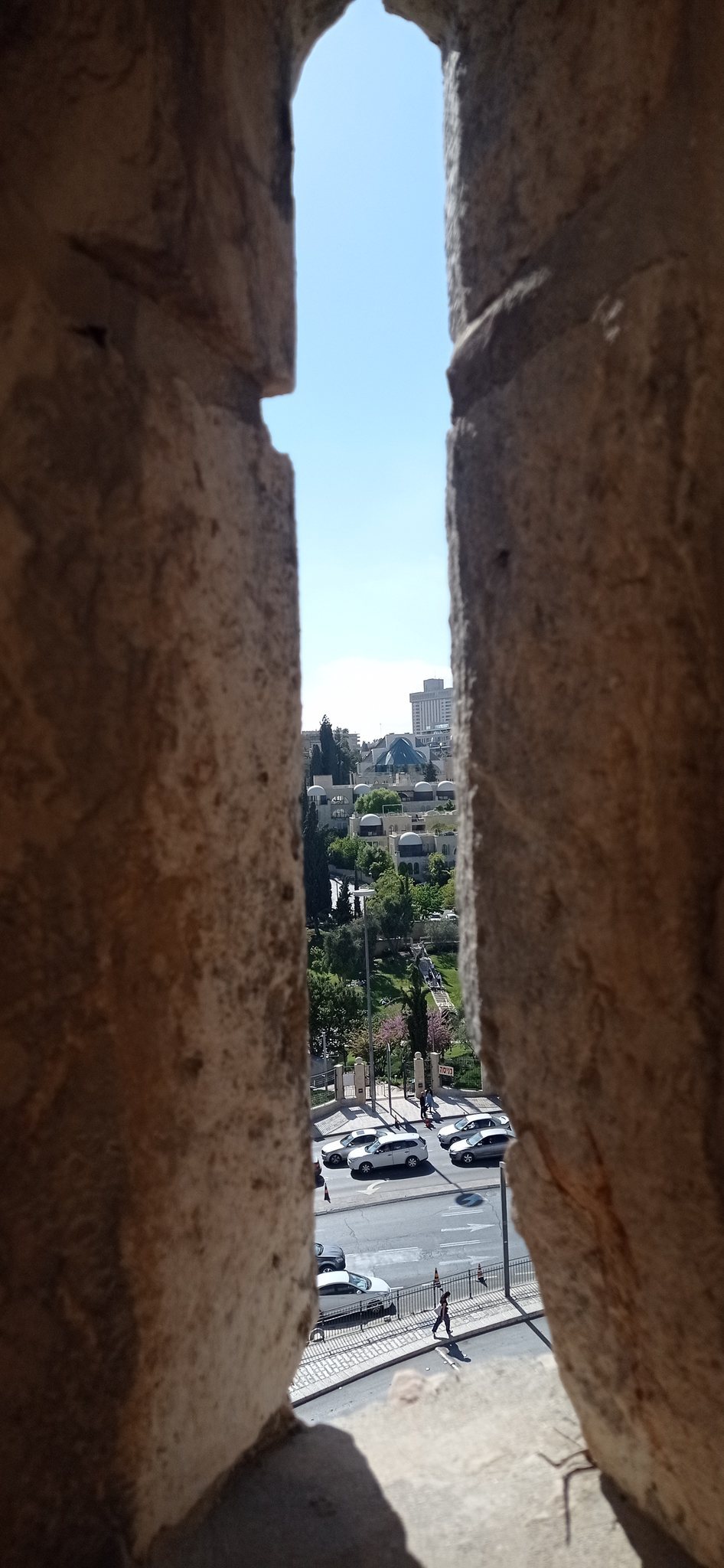
Lower courses of other Ayyubid towers survive at IDF Square, near Jaffa Gate, and along the southern wall. A tower near Dung Gate, incorrectly identified as the Tanners’ Gate, retains original defensive windows and arrow slits. The Ayyubid Zion Gate in the Gan HaTekumah area preserves arrow slits and sections of its roof vaults.
Crusader wall painting
Excavations near Jaffa Gate in the 1990s exposed a section of Saladin’s wall built with stones taken from two demolished Crusader buildings. Among the collapsed material was a dressed stone bearing a high-quality twelfth-century fresco of Mary and the infant Jesus in the Hodegetria type. Together with two fragments of angel paintings found at Gethsemane and near Damascus Gate, it forms one of three surviving examples identified as evidence of Crusader church wall decoration in Jerusalem.
Ottoman construction and later alterations
The Ottoman walls were built from local stone and reused ancient masonry. Eight openings were created in the circuit, although the number of gates open for regular traffic changed over time. The surviving fabric therefore combines sixteenth-century construction with earlier blocks, foundations, gate elements, and later modifications. The breach made near Jaffa Gate in 1898 remains an early modern alteration to the Ottoman fortifications.