Santa Cecilia Acatitlan: A Pre-Hispanic Ceremonial Center in Mexico
Site at a Glance
- Rating
- 4.7
- Popularity
- Low
- Country
- Mexico
- Primary era
- Medieval
- External website
- Open
- Eras represented
- Medieval
- Civilizations
- Aztec
- Site type
- Religious
- Remains
- Temple
On this page7 sections
History
Santa Cecilia Acatitlan is a pre-Hispanic archaeological site in Tlalnepantla, in the State of Mexico, Mexico. The settlement developed on the northwestern shore of Lake Texcoco near the lower slopes of Cerro de la Corona and Picacho de la Cruz, and became part of the early Mexica cultural sphere. Its name comes from Nahuatl and means “place among the reeds” or “reed bed.”
Early Settlement and Political Development
Acatitlan was probably established by Toltec or Chichimec groups. The Toltecs were a major Mesoamerican civilization associated with Tula, while “Chichimec” was a broad term for several peoples connected with migration traditions in northern and central Mexico. Acatitlan functioned as a minor altépetl, an Indigenous territorial and political community centered on a town and its ruling group, under the larger altépetl of Tenayuca.
Local settlement traditions connected its inhabitants with families who accompanied Xolotl, a Chichimec leader associated with migration and the settlement of central Mexico, and established communities on the plains and slopes of the Sierra de Guadalupe. Earlier occupation at nearby Rancho de la Cañada was later abandoned, possibly by people of Teotihuacan origin, between the first and ninth centuries. The early history of Acatitlan remains only partly known. The Annals of Cuauhtitlan nevertheless preserve a tradition that Quetzalcoatl, the Feathered Serpent and a major Mesoamerican religious figure, passed through the settlement while traveling eastward.
In 1299, the Tepanecs required the Mexica to conquer settlements for their dominion. Acatitlan was later incorporated, together with Tenayuca, into the interconnected communities and political systems that developed around the lakes and wetlands of the Valley of Mexico. By 1425, it had come under the authority of Tenochtitlan, the Mexica capital and the dominant power in the valley. This political relationship lasted until the arrival of the Spaniards in 1521.
Decline and Archaeological Recognition
Following the Spanish conquest, Acatitlan declined and its pre-Hispanic buildings were dismantled. Stone from the earlier structures was reused in churches, houses, and other later buildings, including the church beside the archaeological site. This reuse altered the surviving remains and contributed to the fragmentary condition in which the ceremonial center was later identified.
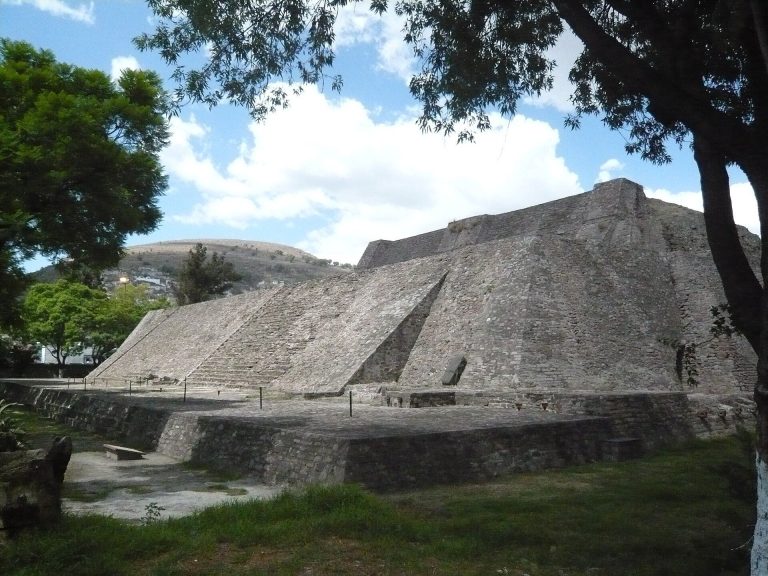
The earliest reports of the archaeological remains date to 1923 and 1924. In 1961, Mexico’s Directorate of Archaeology identified a stone-and-earth mound resembling the ceremonial centers associated with Tenochtitlan. The site museum was also inaugurated that year. In 1962, the architect and archaeologist Eduardo Pareyon Moreno consolidated and reconstructed the pyramid’s principal basement and rebuilt the temple on its summit. The work aimed to convey the probable pre-Hispanic appearance of a monument whose surviving evidence was considered too incomplete for presentation on its own. The reconstruction does not conform to current archaeological reconstruction standards.
The museum later reopened in 1994 and is operated by Mexico’s National Institute of Anthropology and History, the federal institution responsible for archaeological research, conservation, museums, and the protection of historic and pre-Hispanic heritage. It bears the name of archaeologist and former institute director Eusebio Dávalos Hurtado, who supported archaeological exploration at the site. The land containing the pyramid was purchased after efforts by a local civic improvement committee chaired by Jesús Baca Colín. Local residents and institute officials also worked to recover pre-Hispanic pieces that had entered private hands or been displayed elsewhere.
Archaeological remains indicate that settlement extended broadly around the ceremonial center, although the pyramid is the principal surviving monument. Santa Cecilia Acatitlan was designated a Barrio Mágico on September 27, 2024, a Mexican designation recognizing a locality for its cultural, historical, or touristic character.
Remains
The Pyramid and Ceremonial Platforms
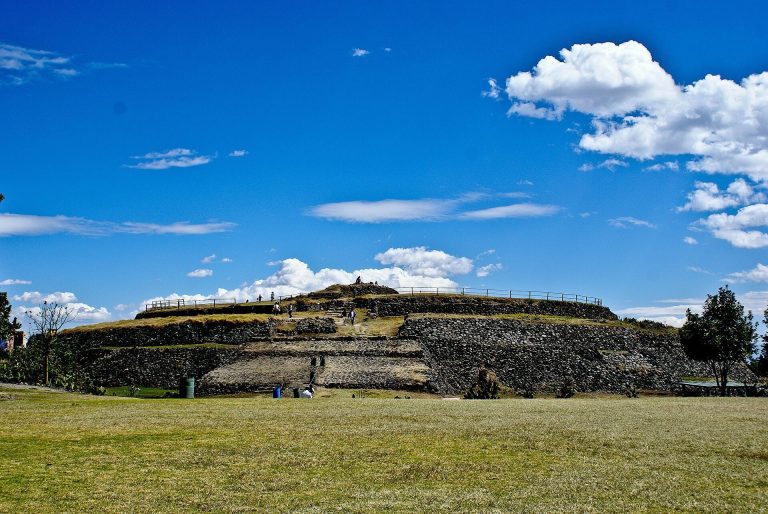
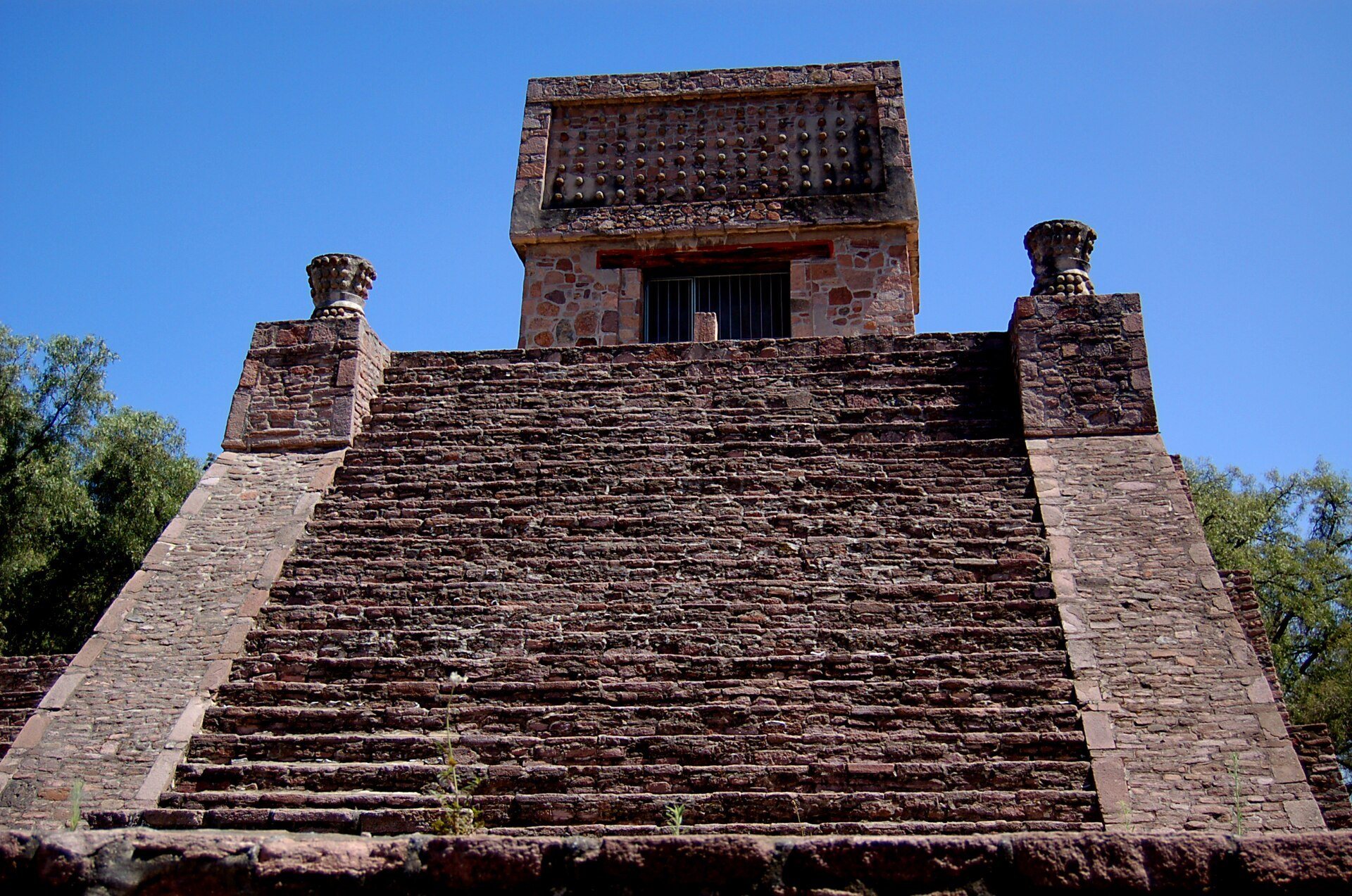
The surviving monument is a quadrangular pyramid basement measuring approximately 17 meters along its north and south sides and 27 meters along its east and west sides. It rises about 8 meters and has a broad principal staircase leading to a temple at the summit. The visible structure was built through successive superimposed phases, with at least eight construction stages identified. Its comparatively well-preserved inner structure remains within the reconstructed outer form.
The temple now standing above the basement was rebuilt to represent the probable form of the original sanctuary. The shrine is thought to have been dedicated to Huitzilopochtli, a Mexica deity associated with warfare and the sun, and Tlaloc, a deity associated with rain and agricultural fertility. Its upper chamber contained a place for sacrifices and the burning of incense. The roof was high and sloping, with rounded projecting stones understood as symbolic representations of stars.
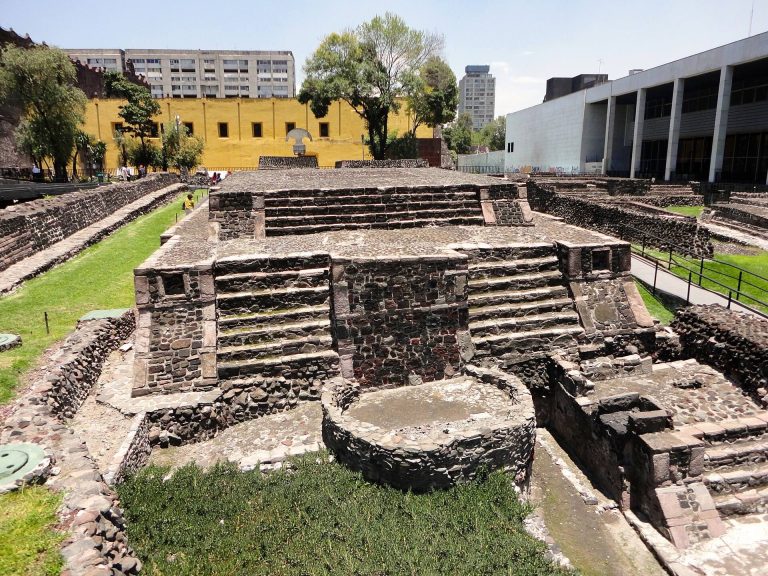
Superimposed construction can also be seen in the platforms in front of the pyramid. The arrangement has been compared with the Templo Mayor, although Acatitlan’s ceremonial complex is considered earlier than that monument. The outer structures were removed after the Spanish conquest, and many of their stones were reused in the adjacent Church of Santa Cecilia. The reconstructed pyramid presents the temple directly above the principal basement, making the probable relationship between sanctuary and pyramid visible.
The Church of Santa Cecilia
The adjacent Church of Santa Cecilia is a simple sixteenth-century Baroque building constructed from dressed stone blocks. Its fabric was remodeled from the eighteenth century onward, and the building incorporates stones taken from the dismantled pre-Hispanic structures. The entrance has a semicircular arch and columns with floral decoration on their bases and capitals. Above it, an upper frame rises toward an octagonal choir window, while a small slender bell tower contains one bell.
Inside, a wooden-beam roof covers the church, and a neoclassical main altar stands within a triumphal arch. The altar includes an image of Saint Cecilia and a fixed harp associated with her representation. The harp was formerly placed there during the patronal festival. Oil paintings of Our Lady of Guadalupe, Our Lady of Perpetual Help, and various saints occupy the side walls.
Oil paintings of Saint Valerian and Saint Tiburtius once stood beside the original image of Saint Cecilia. They were stolen during the 1960s and have not been located. Images of Christ of Mercy, Our Lady of Mount Carmel, Our Lady of Guadalupe, or Our Lady of Fatima have at times occupied the resulting spaces.
Site Museum and Associated Manuscript
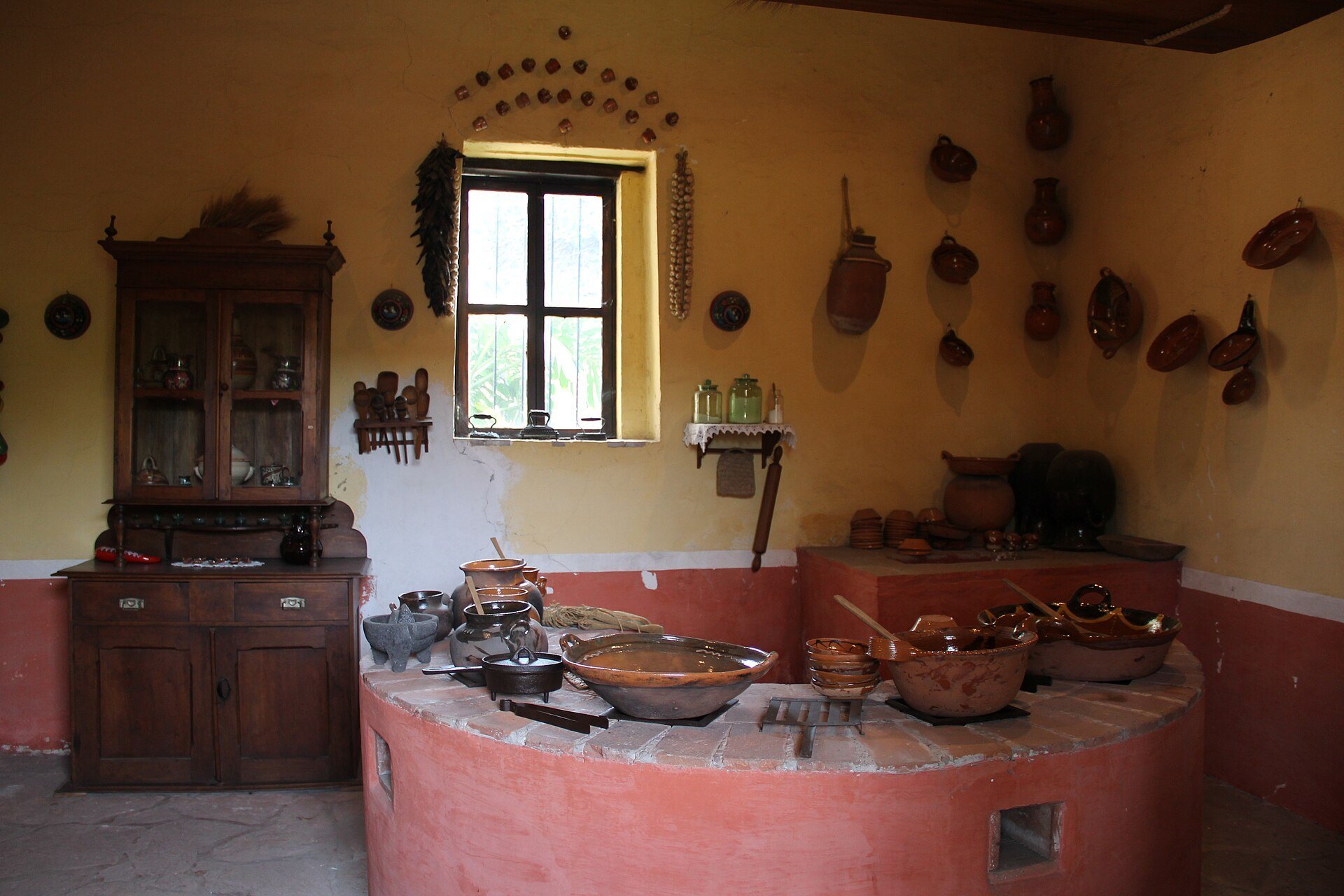
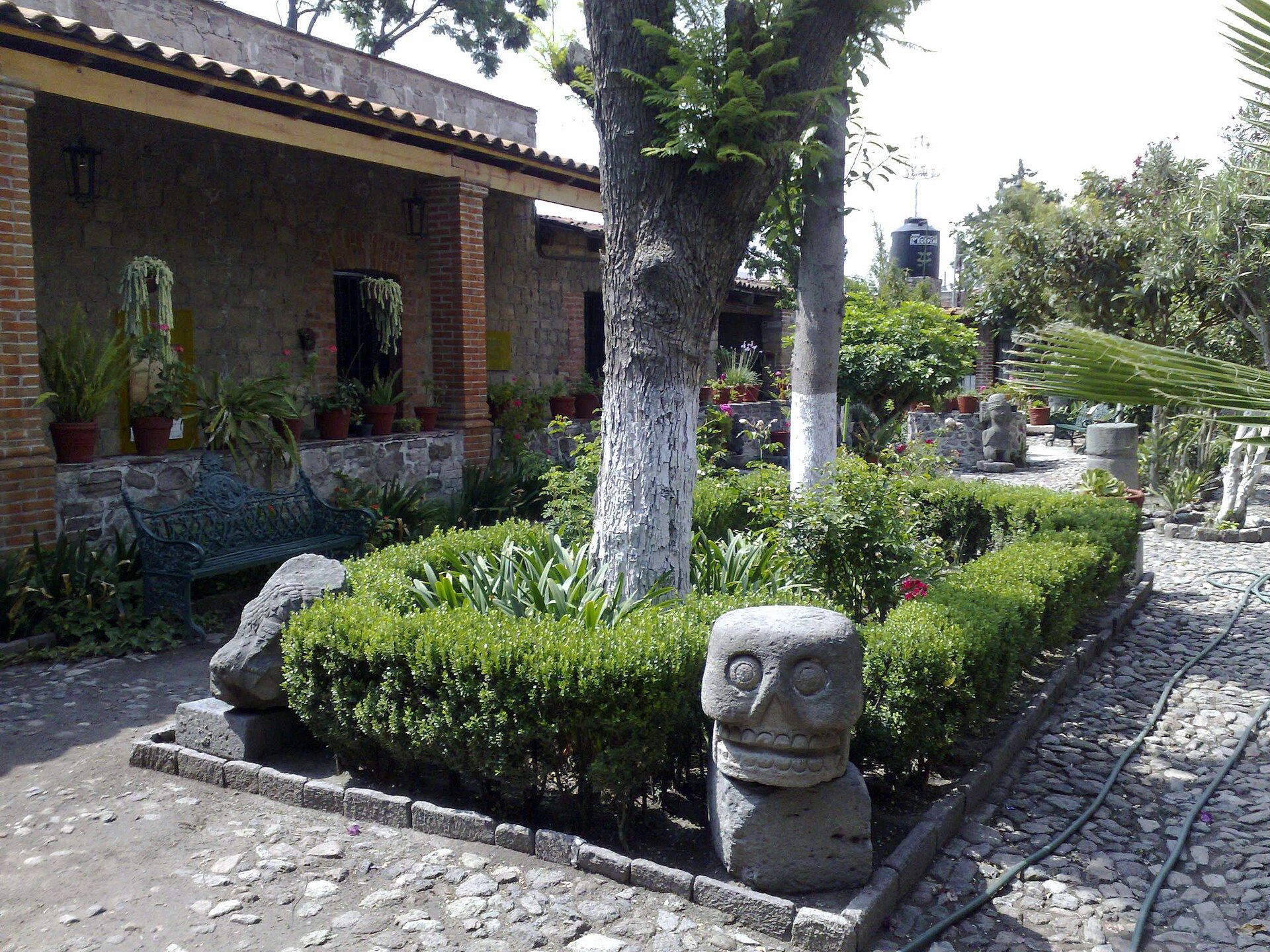
The site museum occupies an adobe house dated to 1832 and contains five exhibition rooms. Its collections include monoliths, sculptures, carved stones, and ceramic and stone materials from Santa Cecilia Acatitlan and other sites within the Mexica sphere of influence. The displays also include a period kitchen and living room intended to represent domestic life before the Mexican Revolution.
A codex associated with Santa Cecilia Acatitlan is held at the Regional Museum of Guadalajara rather than at the archaeological site. This manuscript, painted on native paper in four panels, depicts pre-Hispanic lords, houses, a church, and figures identified as Xolotl and his son Nopaltzin. It belongs to the Techialoyan group, a category of colonial-era Indigenous manuscripts that commonly preserved local community histories, land rights, genealogies, and traditions. The route by which the codex reached the Guadalajara museum is unknown.