Hirapur Dolmen: A Megalithic Burial and Worship Site
Site at a Glance
- Rating
- 4.3
- Popularity
- Very Low
- Country
- India
- Primary era
- Classical
- Eras represented
- Classical
- Civilizations
- Satavahana
- Site type
- Religious
- Remains
- Tomb
On this page9 sections
History
Origins and historical setting
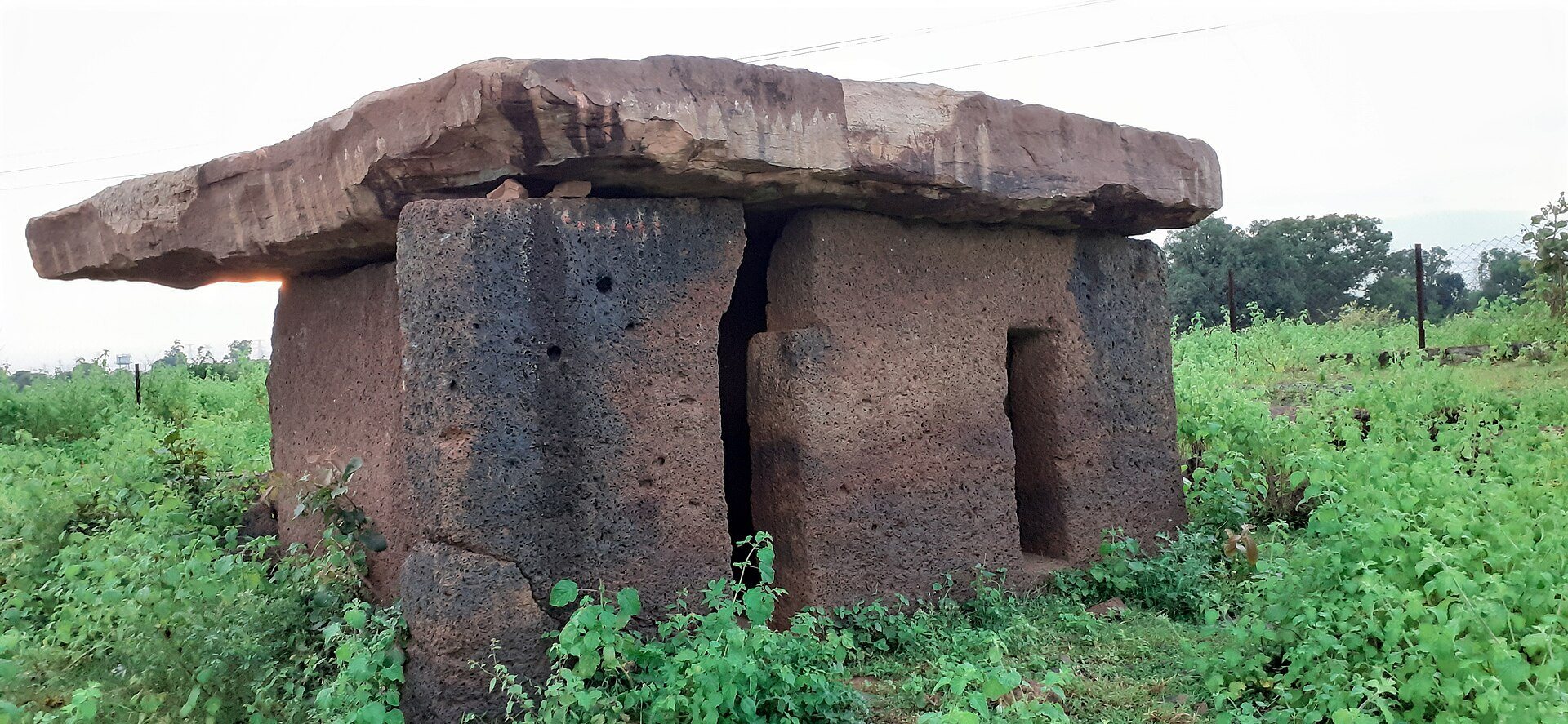
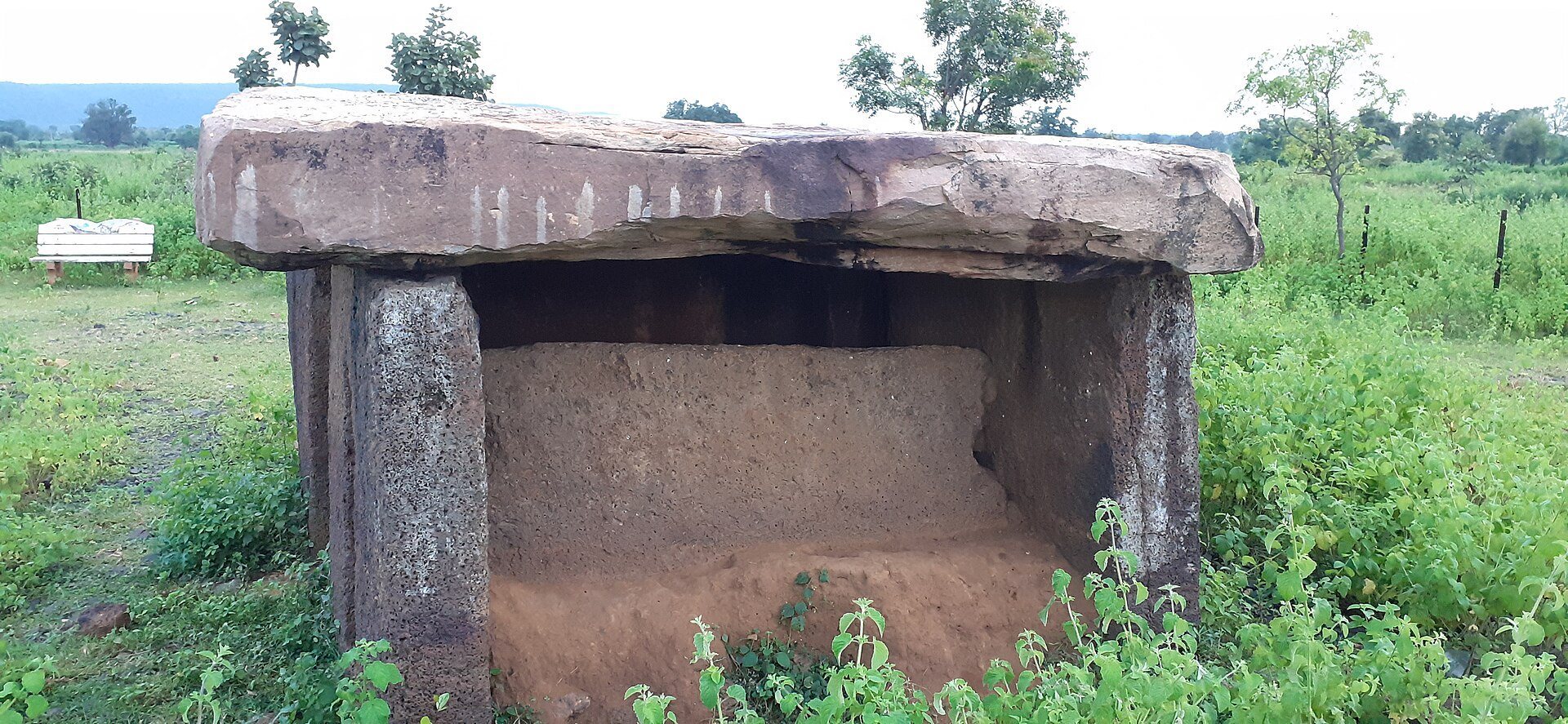
Hirapur dolmen is a group of four megalithic monuments near Hirapur in Maharashtra, India, dating to the second or third century BC. Their builders are uncertainly associated with either the Asmaka mahajanapada, one of the major states of ancient South Asia, or the Satavahana dynasty, which ruled parts of the Deccan during the ancient period. A dolmen is a monument formed by a large stone set over upright stones, often creating a burial chamber.
The site has been regarded as probably the largest dolmen in India. It has also been described as the first dolmen in the world found with evidence of iron and iron smelting, and as the first known dolmen in the region to combine worship with burial. The largest monument served for worship, while the other three were used as burial chambers. The careful selection and planning of the site indicate a strong reverence for the dead, and evidence from one burial has been interpreted as pointing to a possible royal interment.
Continuing ritual use
Hirapur dolmen remains part of local funerary practice. Residents of Hirapur and nearby villages continue to use the site as a cremation ground, maintaining the practice of performing last rites there over a period of thousands of years. A double-chambered dolmen is also worshipped by a tribal community, giving the ancient monuments an ongoing religious role.
Study and preservation
The site was first studied in 2012 by the Deccan College Post-Graduate and Research Institute under the supervision of assistant professor Kantikumar A. Pawar. Archaeologists have since called for protection and preservation because of its cultural and archaeological importance. In 2021, the site remained unprotected. Proposed measures included scientific study, mapping, fencing, guarding, and facilities for research and interpretation.
Remains
Layout and construction
The four dolmens lie north of the Muktabai Hills. One remains intact, while the other three are ruined or partly ruined. An approximately 11-metre-long U-shaped laterite hillock borders the northern side of the site, extending northward before turning west and then south. Laterite is an iron-rich stone commonly formed in tropical environments. The hillock creates a U-shaped protective enclosure around the monuments and forms part of the site’s carefully planned setting.
The largest worship dolmen
The largest dolmen is intact and was built from laterite and sandstone. Its standing stones rise about 10 feet, supporting a capstone measuring approximately 17 by 15 feet and weighing about 80 tons. A capstone is the large upper stone placed over a chamber or supporting structure.
This monument is non-sepulchral, meaning that it was not used for burial. It contains two separate chambers and large rectangular port-holes through which food and other offerings could be placed. These openings differ from the small circular openings often found in dolmens. A wall of laterite stone guards the structure.
Glass and copper bangles, a stone celt, and pottery sherds were found in association with the monument. A celt is a ground-stone tool, often shaped as an axe or adze head. Together, these objects have been interpreted as evidence that offerings were made at the dolmen.
The second and third dolmens
The second and third dolmens are smaller and partly ruined, although their capstones remain in place. Each contains two chambers. Iron ore, residue from iron smelting, and pottery sherds were found with them, providing evidence for iron-smelting activity in the area and contributing to the site’s unusual archaeological importance.
The fourth burial dolmen
The fourth dolmen has a single chamber and a floor formed from seven laterite stones arranged along an east-west axis. A large collection of ceramics was found in the western corner of the chamber above the dressed floor stones.
A punch-marked coin was found in the northeastern corner. Punch-marked coins were early Indian coins made by stamping symbols onto a metal blank. The coin bears a three-arched-hill design, a motif found on such coins. Its position and association with the burial were interpreted as indicating that the person buried there may have held royal status.