Shah Hamadan Mosque: A Historic Khanqah in Srinagar
Site at a Glance
- Rating
- 4.8
- Popularity
- Medium
- Country
- India
- Primary era
- Early Modern
- Eras represented
- Medieval, Early Modern
- Civilizations
- Mughal
- Site type
- Religious
- Remains
- Sufi Lodge
On this page6 sections
History
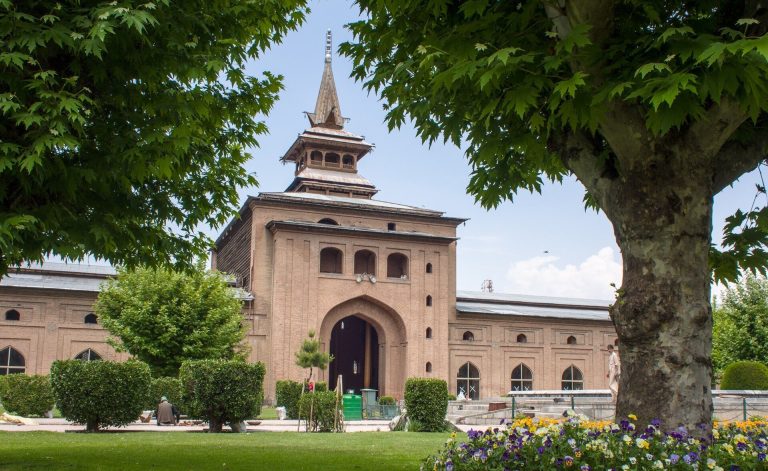
Shah Hamadan Mosque is an active Sunni mosque and khanqah in Zaina Kadal, Old Srinagar, India. A khanqah is a religious establishment associated with a Sufi saint or spiritual teacher, and the complex is linked to Mir Sayyid Ali Hamadani, a 14th-century Islamic preacher from Hamadan in Persia who helped spread Islam in Kashmir. Commissioned by Sultan Sikandar in 1395, the first structure is regarded as the first khanqah in the Kashmir Valley.
Foundation and rebuilding
The original shrine was destroyed by fire in 1480. Sultan Hassan Shah expanded the premises and rebuilt it. A second major fire destroyed the khanqah in 1731, after which Abdul Barkat Khan, identified as a Mughal governor, directed its reconstruction. The rebuilt structure was completed in 1732.
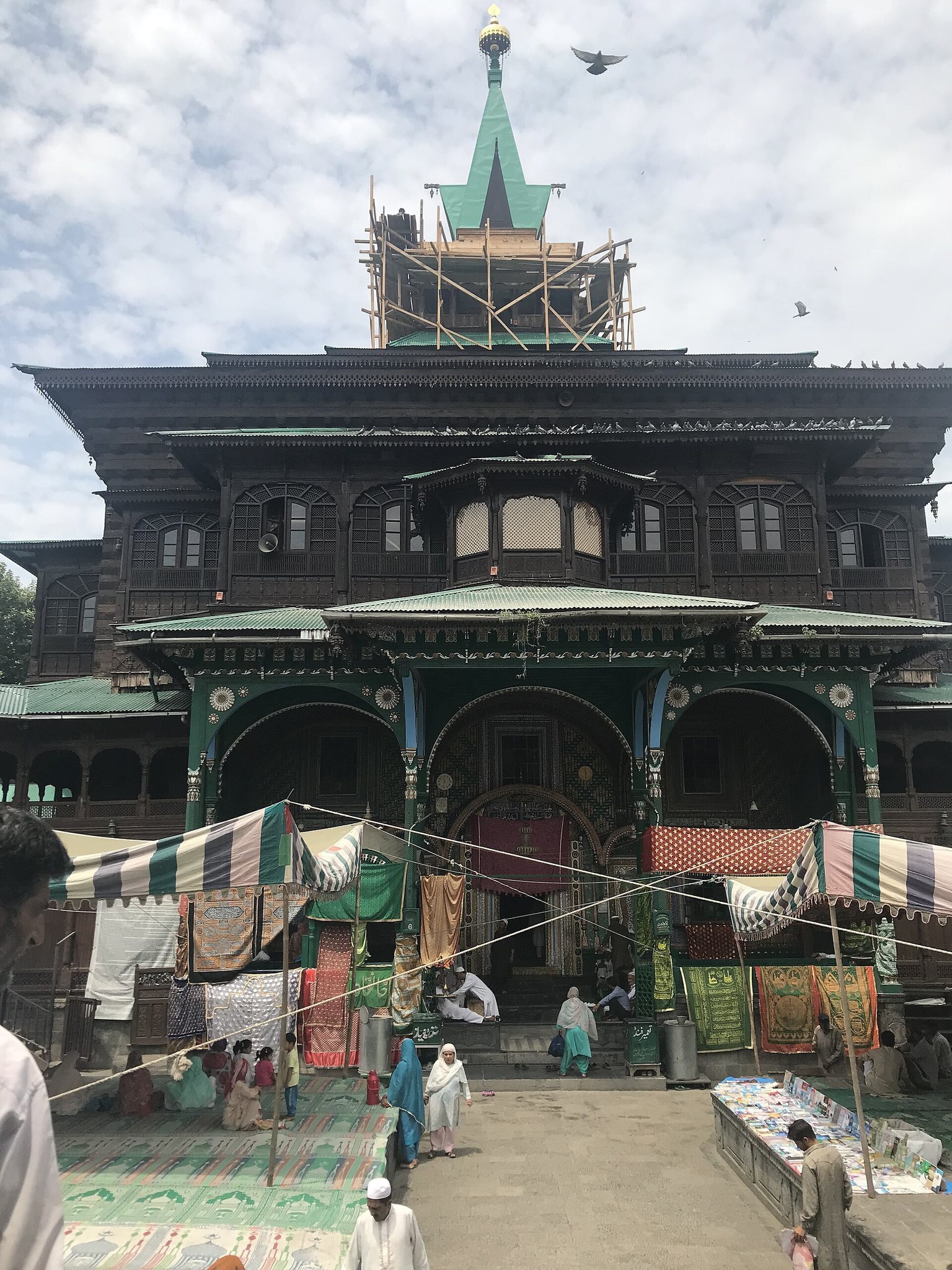
On 15 November 2017, fire damaged the building’s spire. Firefighters contained the blaze, and restoration began immediately. A refurbished crown was installed on the spire on 30 March 2018. The monument is officially designated a Monument of National Importance under the name “Khanqah of Shah Hamadan.”
Religious traditions and local dispute
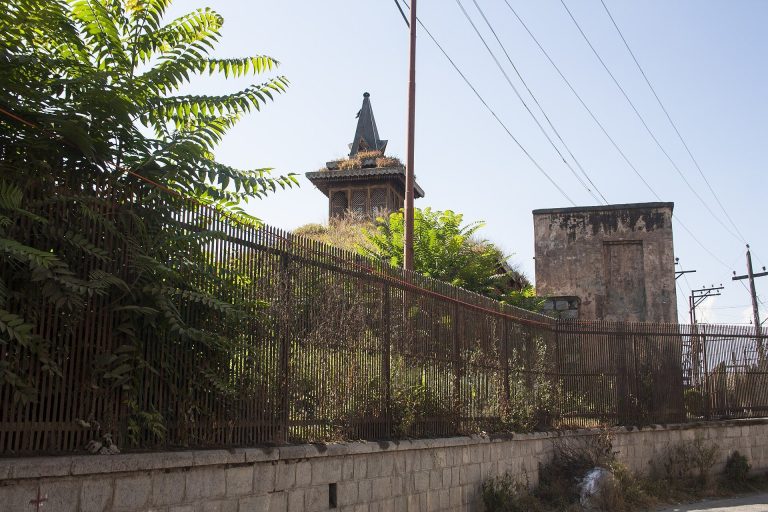
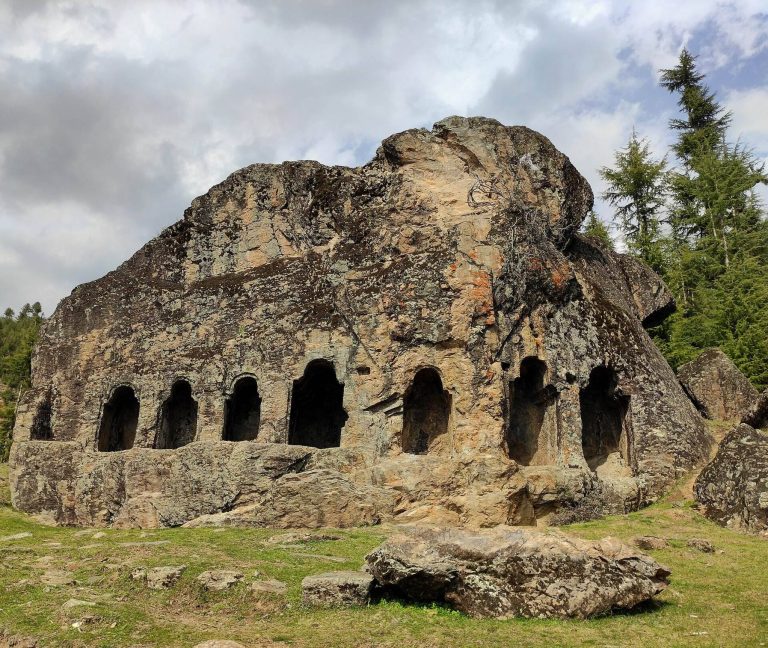
A twentieth-century oral tradition claims that the mosque replaced an earlier Hindu temple dedicated to the goddess Kali and that materials from the temple were reused in the mosque. This interpretation has been challenged and refuted through archaeological and historical arguments. Another interpretation holds that the Hindu religious site and the khanqah existed beside one another over time.
A separate Kali-associated shrine near the khanqah has traditionally been regarded as sacred by local Kashmiri Pandits, who offered prayers there. The two religious sites are said to have coexisted without dispute until 1990. In 1942, a dispute over the construction of a covered shrine near the Muslim shrine caused communal tensions and led Kashmiri Hindus to boycott Muslim-owned shops.
Remains
Wooden mosque and riverside setting
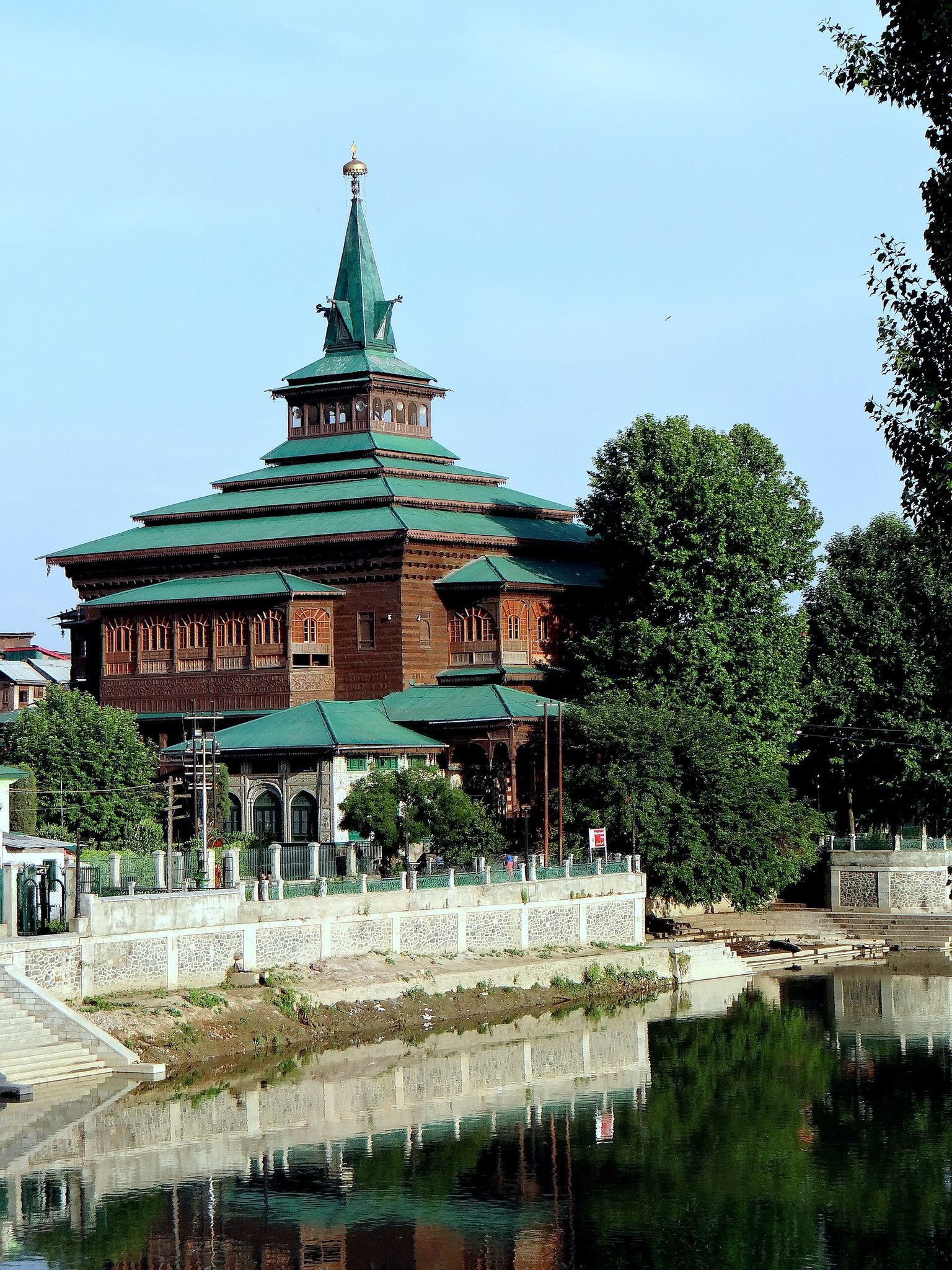
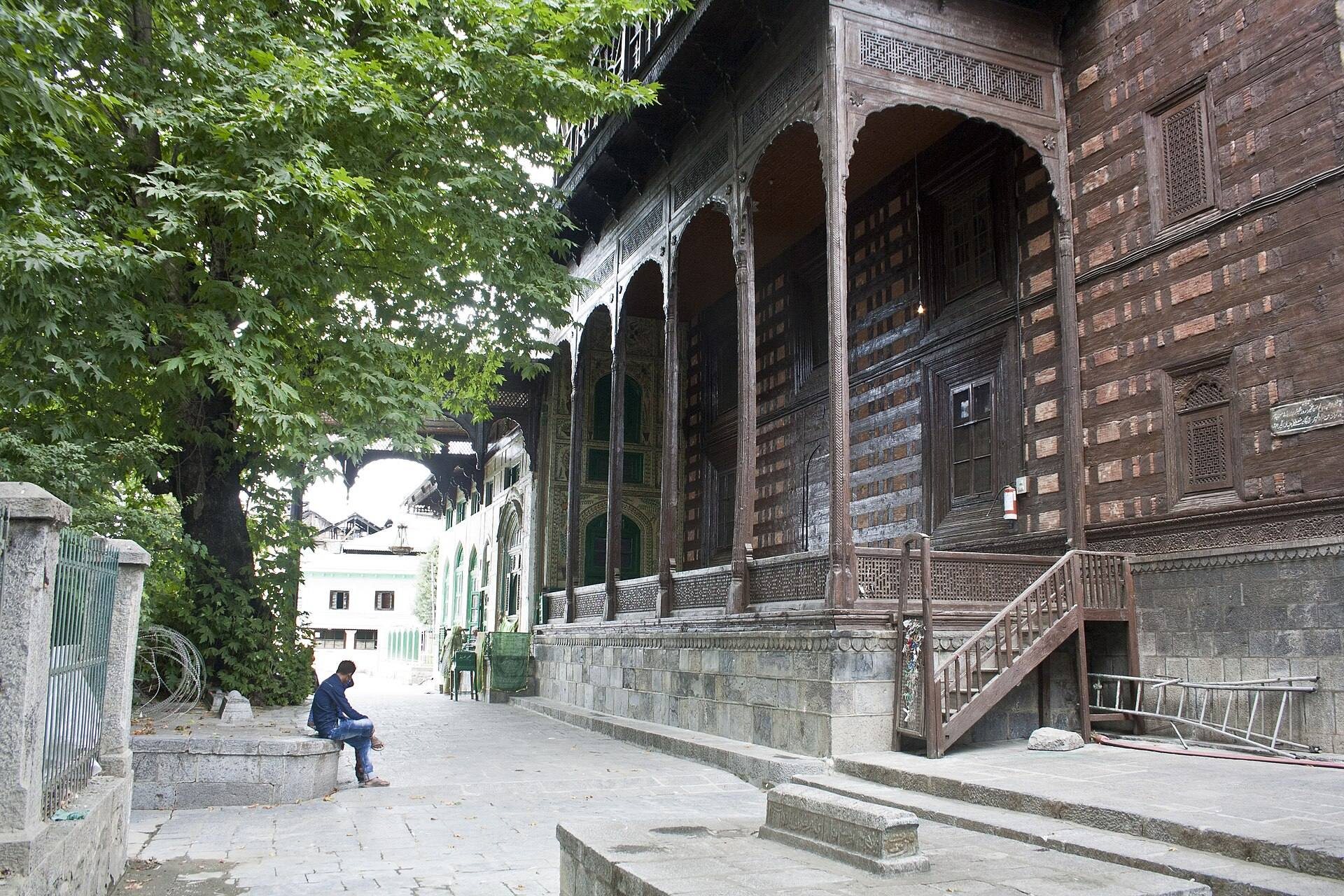
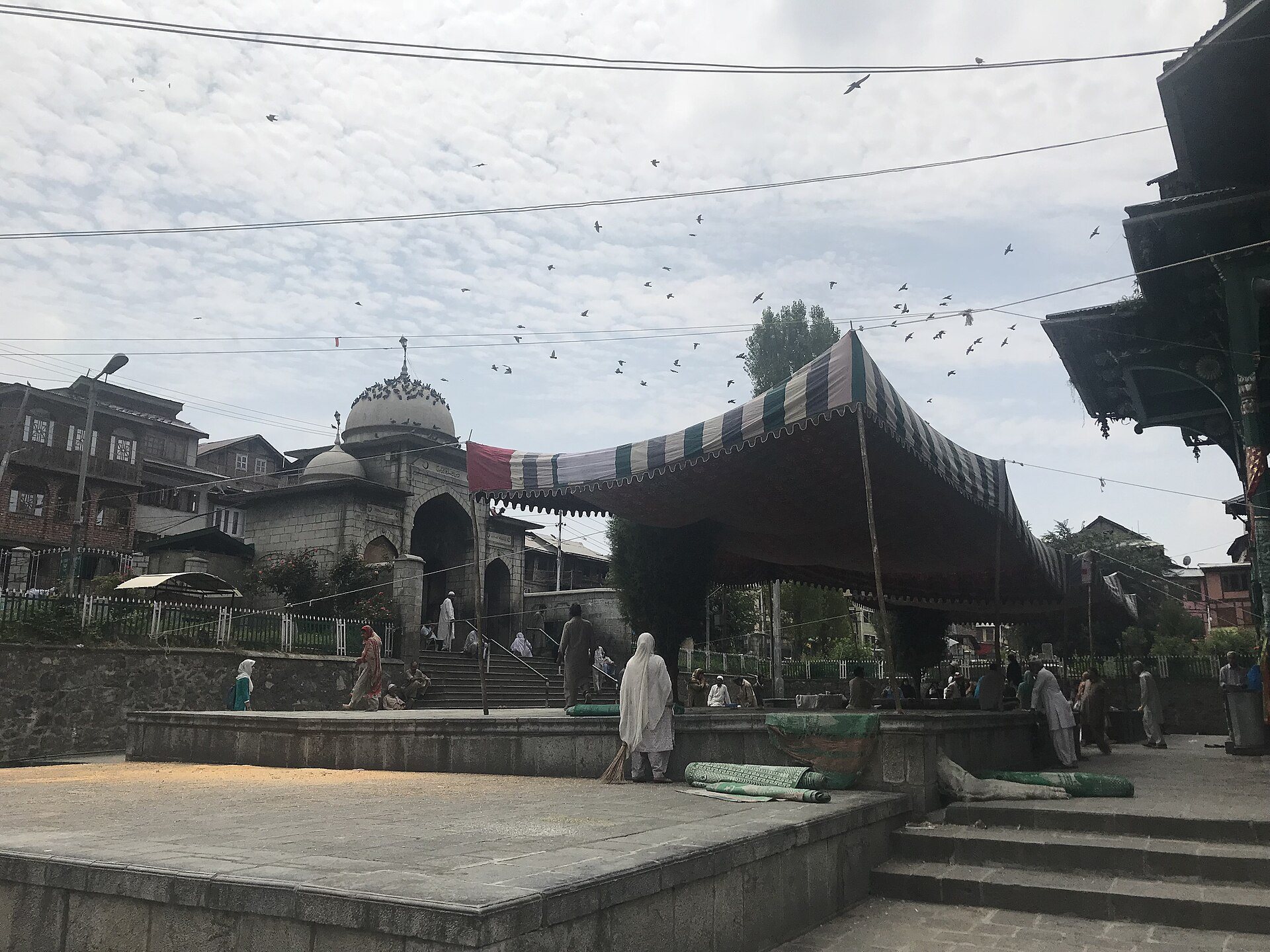
The mosque stands on the right bank of the Jhelum River in Srinagar’s Old City, between the Fateh Kadal and Zaina Kadal bridges, with its listed location at Zaina Kadal. It is a major example of Kashmiri wooden architecture and carries papier-mache decoration, a technique that applies layered paper-based material to a surface before adding painted or ornamental designs. The structure rises approximately 38 metres and has a single spire or turret. A spring is said to lie within the mosque complex.
Kali-associated shrine
Beside the Jhelum, a walled Kali-associated shrine or sacred area is marked by bright orange-red sindoor, a powder used in Hindu religious practice. Local Kashmiri Pandits offer prayers there. A stone near the complex’s railing is associated with the claimed foundations of the Kali shrine, although the historical meaning of that association remains disputed.