Hari Parbat Fort: A Mughal and Durrani Fortification in Srinagar
Site at a Glance
- Rating
- 4.4
- Popularity
- Medium
- Country
- India
- Primary era
- Early Modern
- Eras represented
- Early Modern, Modern
- Civilizations
- Durrani, Mughal
- Site type
- Military
- Remains
- Fort
On this page7 sections
History
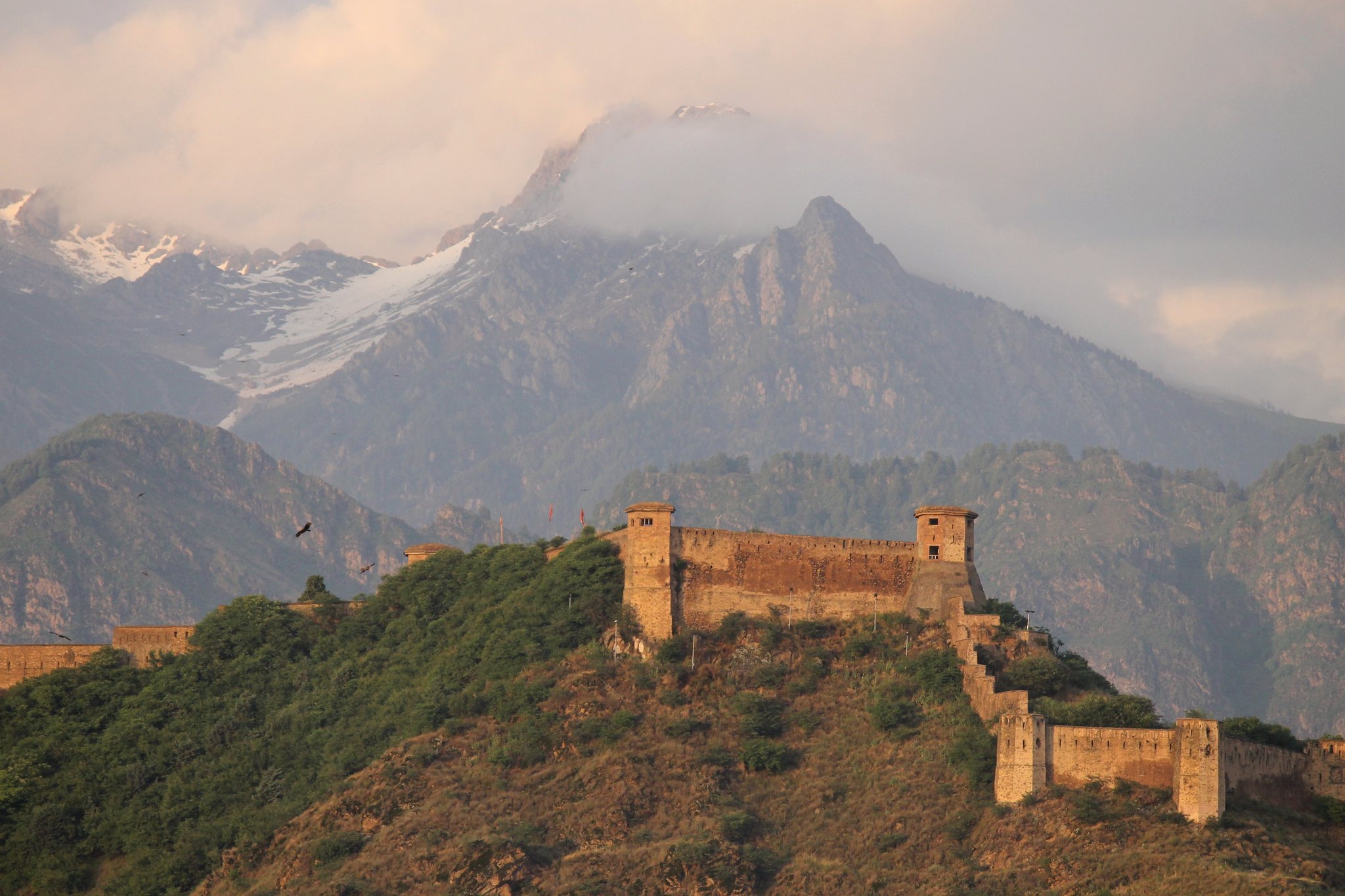
Hari Parbat Fort is a historic fortification in Srinagar, India, built through successive Mughal and Afghan phases on the summit of Hari Parbat hill. Emperor Akbar initiated the first fortress around 1597, after the Mughal conquest of Kashmir, as part of a walled city called Nagar Nagar that became the center of Mughal administration in the region.
Akbar’s Mughal Foundation
Akbar, the third Mughal emperor, brought 200 stonemasons from outside Kashmir for the project. Stonemasonry was considered foreign to the region, where indigenous building traditions were based on woodworking. The complex included a palace garden and palace buildings alongside its defensive works.
Akbar also established a garden at the fort. It is the only palace garden mentioned in the Tuzuk-i-Jahangiri, the memoirs of his son and successor, Jahangir. During Jahangir’s visit to Srinagar in 1620, he ordered unfinished parts of the fort to be completed and the garden and palace buildings to be renovated. Mutamad Khan carried out the work, and the renewed garden was named Nur Afza, meaning “light-increasing.” Shah Jahan, who succeeded Jahangir, admired the garden during a visit in 1640.
Afghan and Sikh Periods
The earlier Mughal enclosure was later enclosed by a new fortification built by Atta Mohammad Khan, the longest-serving governor of Kashmir under the Afghan Durrani Empire, an Afghan imperial state that ruled Kashmir at the time. He constructed the later fort between 1795 and 1806 as part of an effort to establish independent rule. The newer work was set within the earlier Mughal rampart.
Hari Parbat Fort subsequently passed to the Sikh Empire, the nineteenth-century state centered in Punjab that controlled Kashmir. After the British defeated the Sikhs, the 1846 Treaty of Lahore required several Sikh holdings, including the fort, to be ceded to Gulab Singh, who had supported the British victory. Gulab Singh’s forces occupied the fort, but Sheikh Imamuddin, the Sikh governor of Kashmir, resisted and besieged it. He later lifted the siege and surrendered on 23 October 1846, allowing Gulab Singh to take full possession of the fort and the province.
Modern Custody
As of 2021, the fort was occupied by the Central Reserve Police Force, an Indian federal paramilitary police organization, and maintained by the Archaeological Survey of India, the national institution responsible for archaeological research and monument protection.
Remains
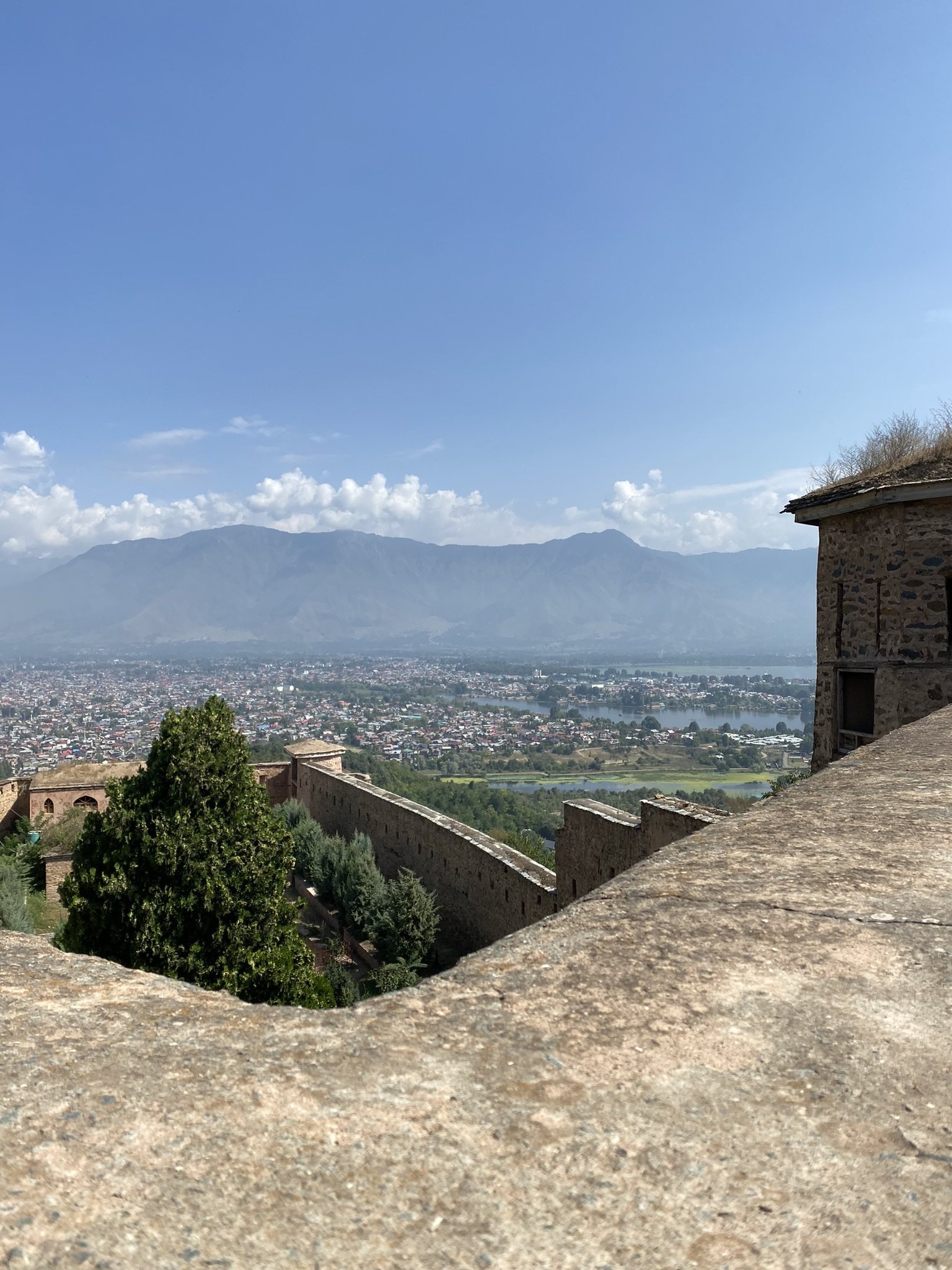
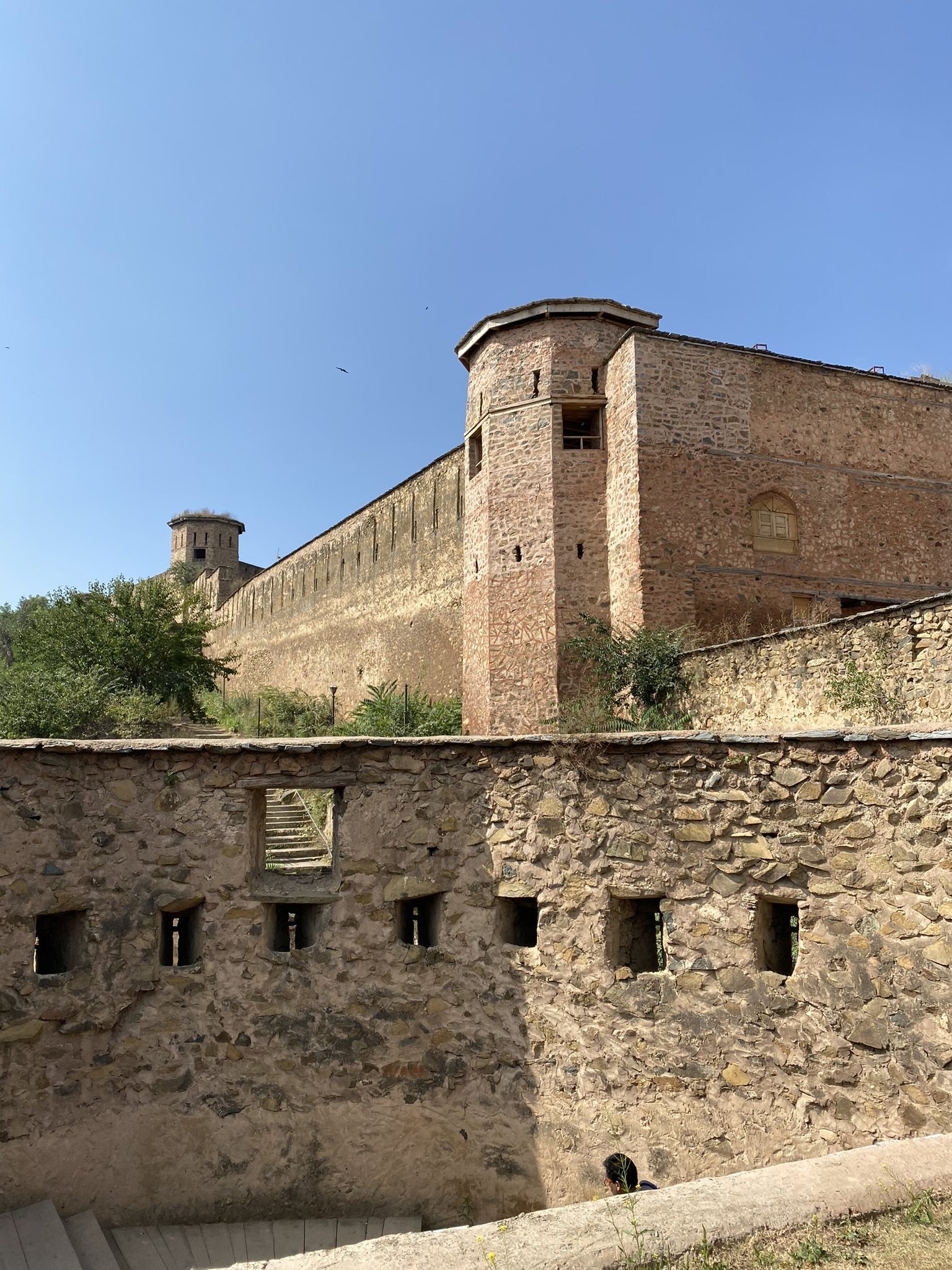
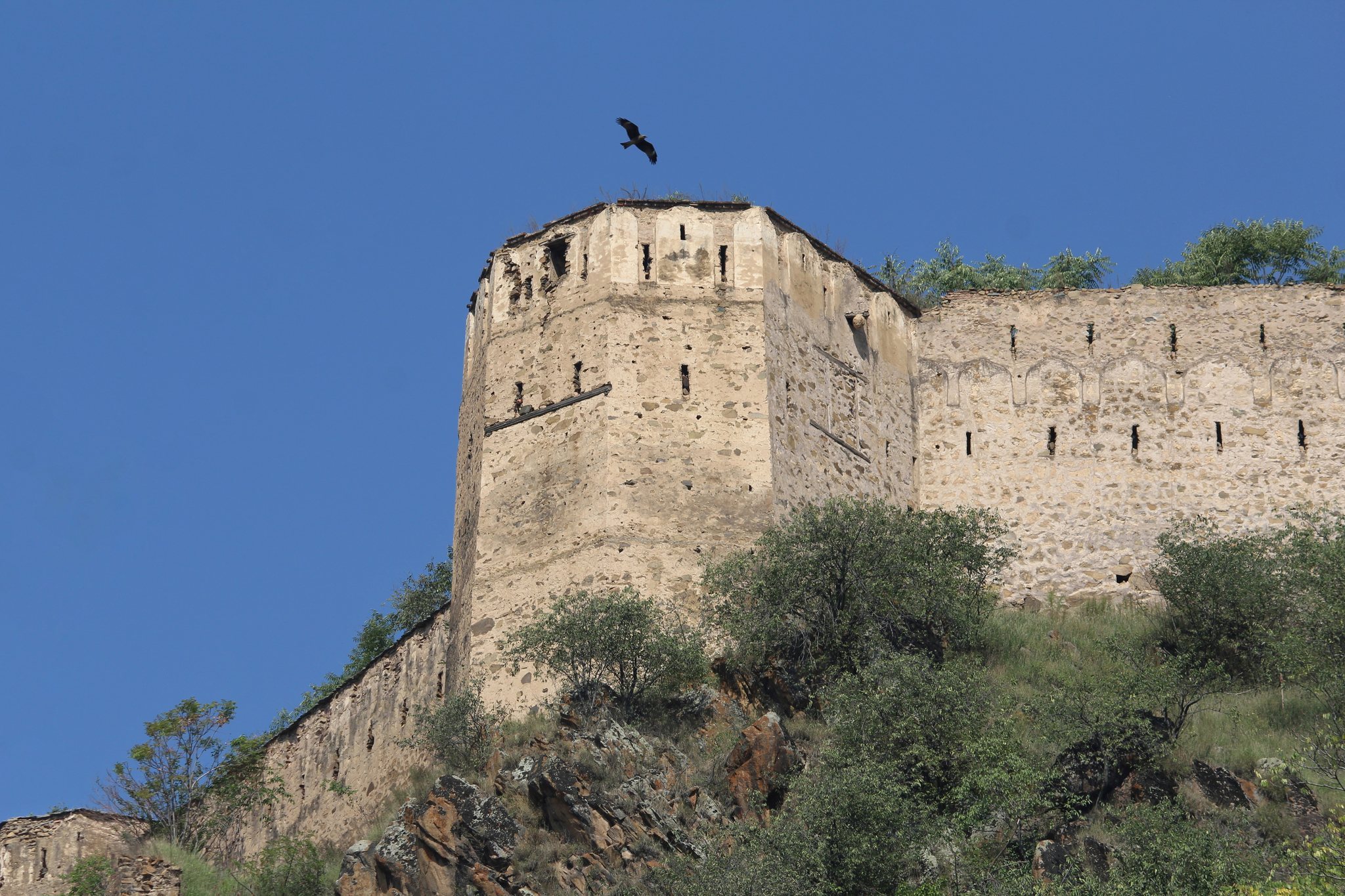
The fort occupies the summit of Hari Parbat hill and consists of a later Afghan fortification enclosed within the surviving remains of the earlier Mughal complex. The Mughal enclosure was a walled city, but its surviving physical elements are the late-sixteenth-century rampart and two gateways. The rampart is built of gray limestone, while the later fort uses stone-rubble masonry, the same construction method employed for the Akbar-era ramparts.
Mughal Rampart and Gateways
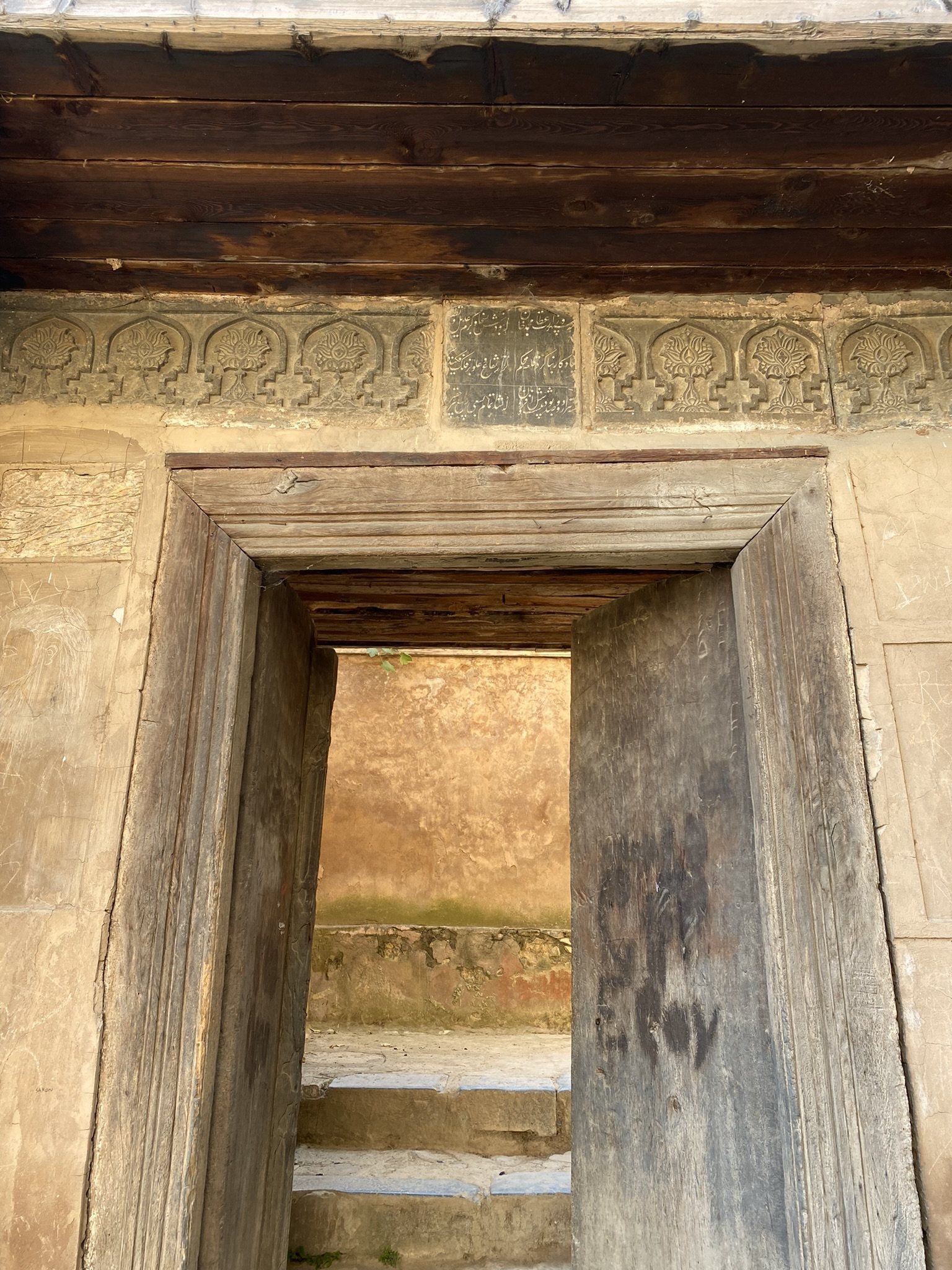
The surviving rampart belongs to the late sixteenth century and derives from Akbar’s earlier fortification, which no longer survives as a complete structure. Two gateways remain in the enclosure: the Sangeen Darwaza and the Kathi Darwaza. Together with the rampart, they represent the principal surviving elements of the Mughal walled city.
Later Afghan Fortification
Atta Mohammad Khan’s fortification stands within the earlier Mughal rampart. Built between 1795 and 1806, it was constructed in stone-rubble masonry. Its walls have been assessed as showing less strength and durability than the Mughal structures, possibly reflecting the turbulent and short-lived character of Afghan rule in Kashmir.