Kasuga Mukaiyama Kofun: A Seventh-Century Imperial Mausoleum Tradition
Site at a Glance
- Rating
- 3.5
- Popularity
- Very Low
- Country
- Japan
- Primary era
- Medieval
- External website
- Open
- Eras represented
- Medieval
- Civilizations
- Yamato
- Site type
- Burial
- Remains
- Burial Mound
On this page6 sections
History
Kasuga Mukaiyama Kofun is a large Japanese burial mound in Taishi, Japan, built during the first half of the seventh century near the end of the Kofun period. A kofun is a monumental Japanese burial mound, and this example forms part of the Shionodani Kofun Group in Kasuga, Osaka Prefecture. Its square form and scale reflect the importance of the person for whom it was constructed, although that individual has not been identified.
Imperial Identification
The Imperial Household Agency, the Japanese government institution responsible for imperial mausolea and related properties, designates Kasuga Mukaiyama Kofun as the mausoleum of Emperor Yomei, the traditionally recognized thirty-first emperor of Japan. Its official designation is Kawachi Shionagahara Mausoleum. This identification remains an official attribution rather than a confirmed determination of the tomb’s occupant.
The Nihon Shoki states that Emperor Yomei died probably in 587, was first buried at Iware-Ikegami, and was moved to Kawachi in 593. The Kojiki also places the later relocation of his tomb in the Kawachi area. The Engishiki, a tenth-century compilation of court regulations and rites, lists his mausoleum as a distant imperial mausoleum in Kawachi Province and records its prescribed boundary and guard arrangements. If the official identification is correct, Kasuga Mukaiyama Kofun would be the first square-shaped imperial mausoleum.
The Shionodani Mausolea
The Shionodani Valley contains other traditionally identified imperial mausolea, associated with Emperors Bidatsu, Suiko, and Kotoku, together with the tomb of Prince Shotoku. An imperial prince and regent linked with the spread of Buddhism in early Japan, Prince Shotoku is commemorated within the same group of monuments. Collectively, these tombs are known as the Umebachi Mausolea.
Kasuga Mukaiyama Kofun is managed by the Imperial Household Agency as an imperial mausoleum. This status has limited archaeological investigation, although a scholarly access survey was conducted in February 2012. Repairs and the creation of a worship area took place in 1864, followed by repairs to the mausoleum precinct in 1899. The mound’s construction has also been compared with Ishibutai Kofun in Nara Prefecture, which tradition associates with Soga no Umako, a powerful statesman of the Asuka period. The comparison includes the possibility that both tombs followed the same plan.
Remains
Mound and Enclosure
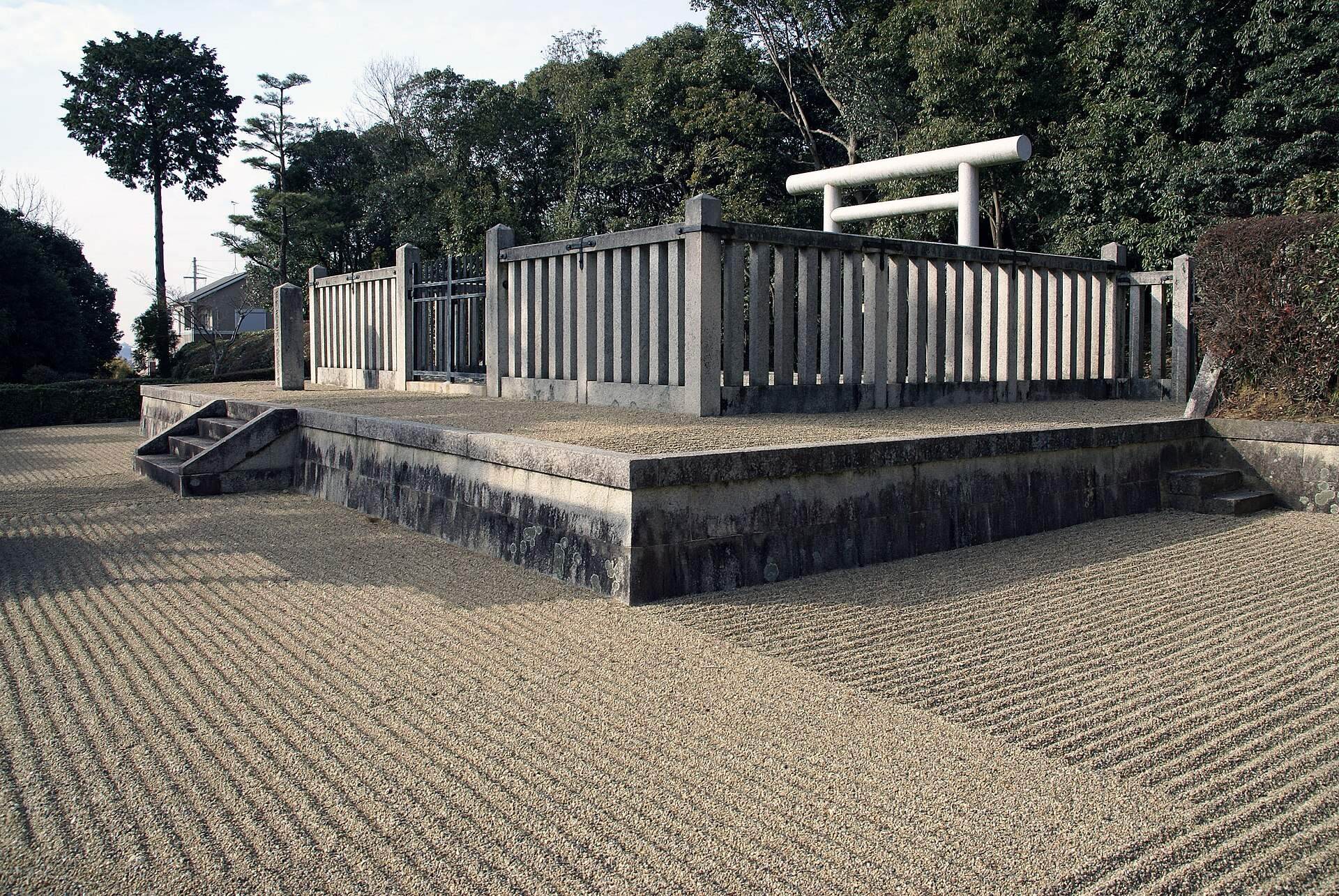
The tomb occupies a plateau at the southwestern edge of the Kasuga settlement, in the Shionodani Valley at the foot of Mount Nijo in southeastern Osaka. It faces south and consists of a large square mound measuring about 65 metres from east to west and 60 metres from north to south. The mound rises approximately 10 metres and is thought to have been built in three tiers.
A dry moat about 7 metres wide surrounds the mound. Beyond it, an outer embankment extends the entire complex to approximately 100 metres from east to west and 90 metres from north to south. No haniwa have been identified on the mound’s exterior. Haniwa are clay funerary objects, including cylinders, houses, animals, and human figures, that were placed on or around some Japanese burial mounds.
Burial Facility
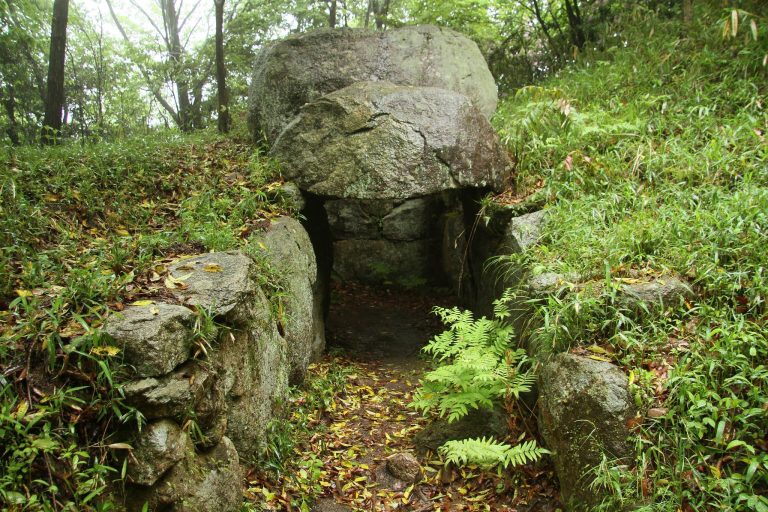
The burial facility remains unconfirmed. A document from 1725 raises the possibility that the mound contained a horizontal stone chamber, a burial chamber entered through a side passage rather than a vertical shaft. The text Byoryoki describes large stones exposed at the site, which may have belonged to such a chamber.