São Marcelo Fort: A Maritime Defense of Salvador
Site at a Glance
- Rating
- 4.6
- Popularity
- Low
- Country
- Brazil
- Primary era
- Early Modern
- Eras represented
- Early Modern
- Civilizations
- Portuguese
- Site type
- Military
- Remains
- Fort
On this page7 sections
History
São Marcelo Fort is a maritime fortress in Brazil, located off Salvador in the Bay of All Saints. Designed by the military engineer and architect Francisco Frias de Mesquita, it was built to protect Salvador, an important port city with the largest concentration of forts in colonial Brazil. Construction began in 1608, and the fort was completed in 1623 under Governor-General Diogo de Mendonça Furtado.
Construction and Dutch occupation
The earliest documentary evidence for the fort is a plan of Salvador from 1616. Its position on a reef made it an important part of the harbor’s defenses, and Dutch forces identified it as a primary objective during the capture of Bahia in 1624. São Marcelo was the first place in Bahia occupied by the Dutch. From the fort, they fired on Salvador and launched incendiary projectiles toward the city center, helping them take control of the city.
Portuguese forces recaptured Bahia in 1625, but the region remained threatened during Dutch rule in northeastern Brazil from 1630 to 1654. Between April and May 1638, the fort played a decisive defensive role during the attempted invasion led by Johan Maurits van Nassau-Siegen, a Dutch military commander and colonial administrator.
Reconstruction and expanded defenses
After the Portuguese Restoration War, the conflict from 1640 to 1668 in which Portugal regained and defended its independence from the Spanish Habsburg monarchy, Governor-General João Rodrigues de Vasconcelos e Sousa ordered the fort’s reconstruction in 1650. A second major reconstruction in 1728 added a wall around its perimeter. By 1759, the fort possessed 54 protective plates made of bronze and iron and formed part of the defensive chain south of Salvador, between the Small Fort of Our Lady of Monserrate and Fort Saint Peter with the São Paulo da Gamboa Battery.
Prison and heritage protection
During the nineteenth century, São Marcelo Fort became a political prison. It held members of the Federation of the Guanais, also called the Revolt of the Guanais, in 1833. Bento Gonçalves, a principal leader of the Ragamuffin War, a prolonged revolt in southern Brazil from 1835 to 1845, was transferred there on August 26, 1837, but escaped about a month later.
The fort later held participants in the Sabinada, a separatist and republican revolt centered in Bahia in 1837 and 1838. It also imprisoned approximately 200 participants in the 1835 Malê revolt, an uprising in Salvador involving enslaved and freed Africans, many of them Muslim, until their trials. Enslaved Africans and freedmen were subsequently executed, tortured, or deported to Africa.
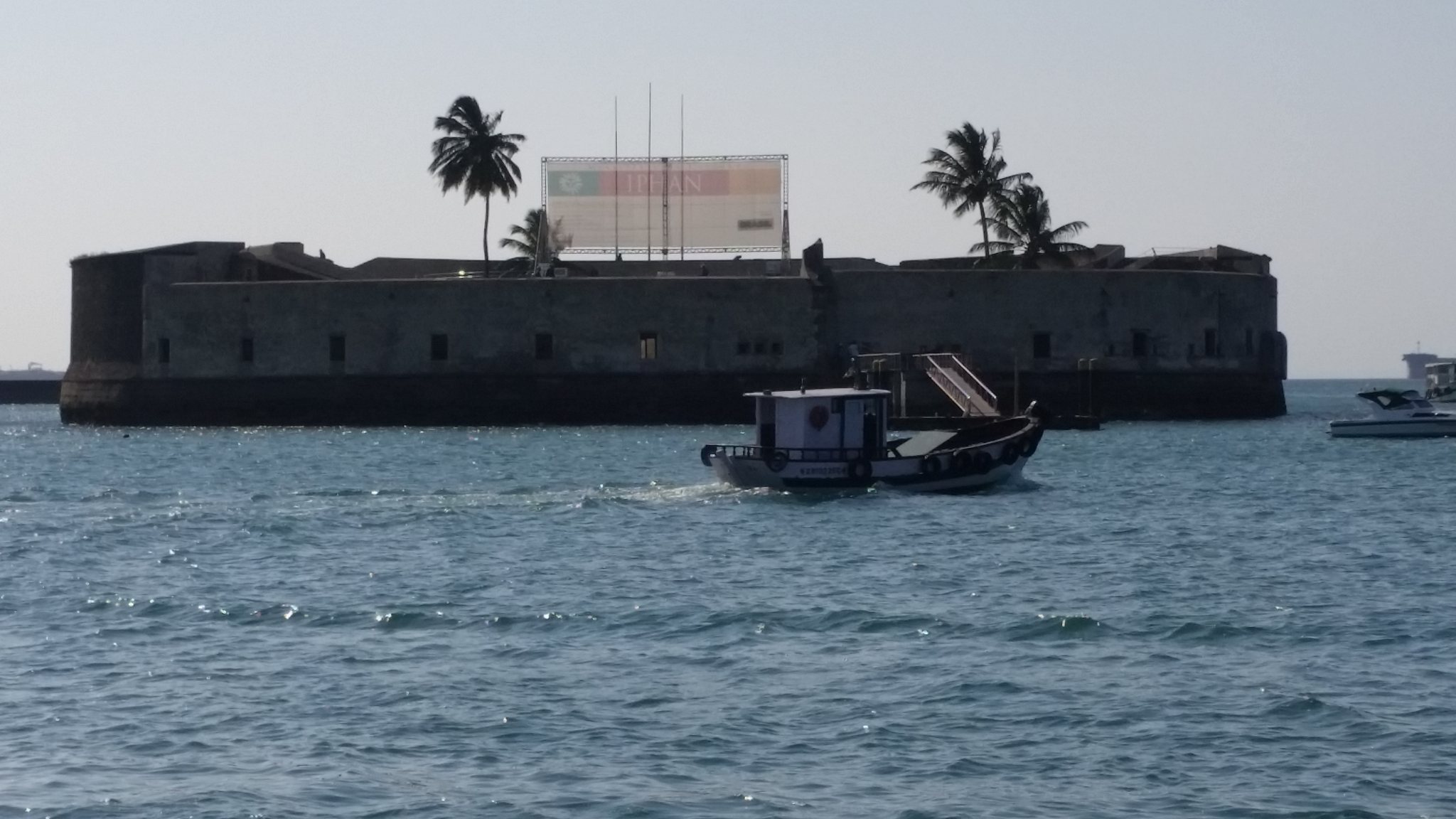
Brazil’s National Institute of Historic and Artistic Heritage, known as IPHAN, listed the fort as a historic structure on May 24, 1938. IPHAN is the federal institution responsible for protecting Brazil’s historic, artistic, archaeological, and cultural heritage. The registration covers the Book of Historical Works, inscription 49, and the Book of Fine Arts, inscription 273-A.
Remains
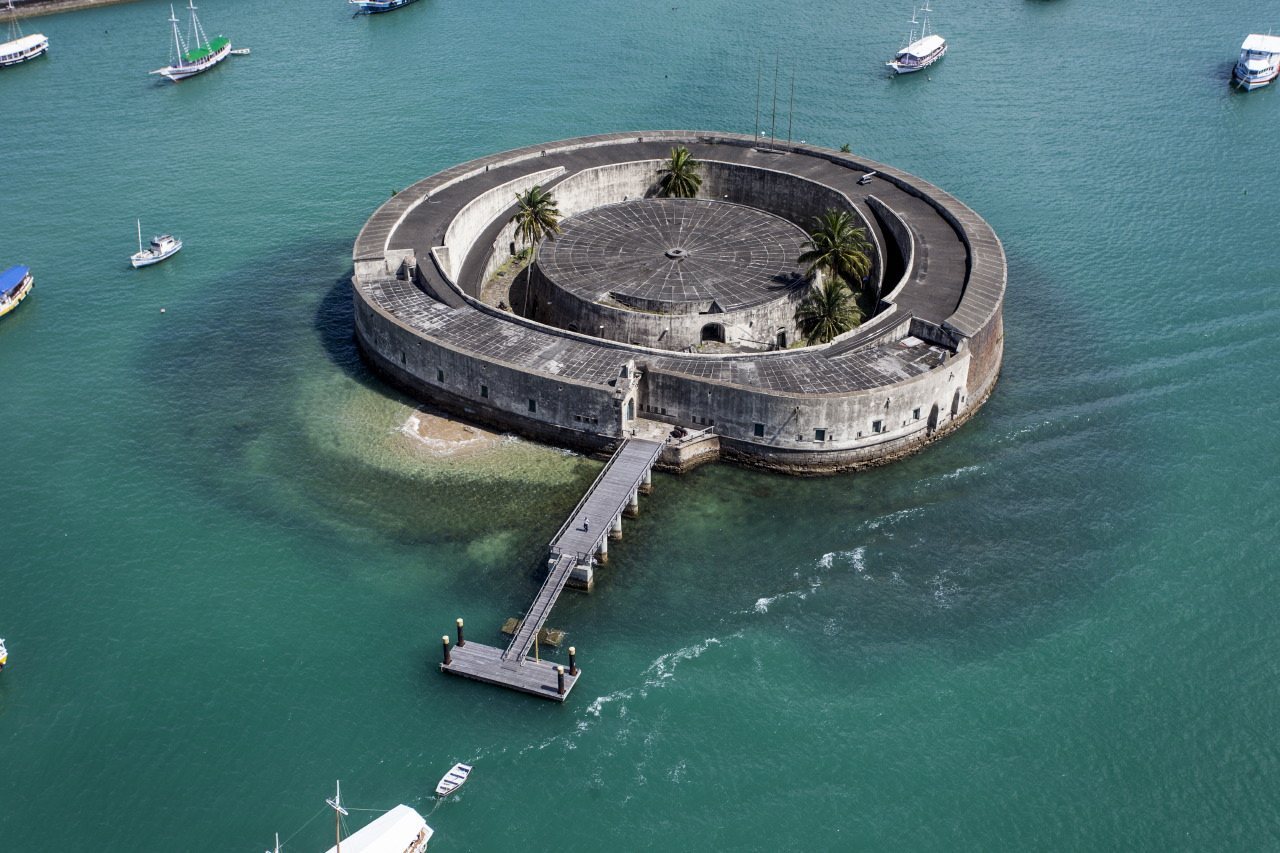
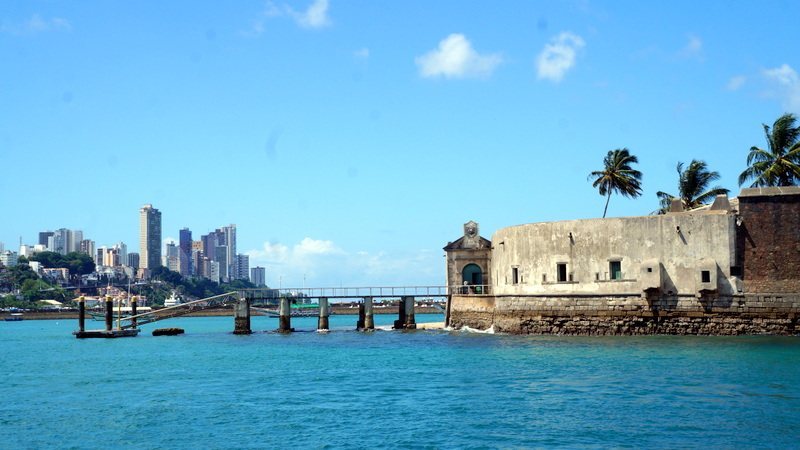
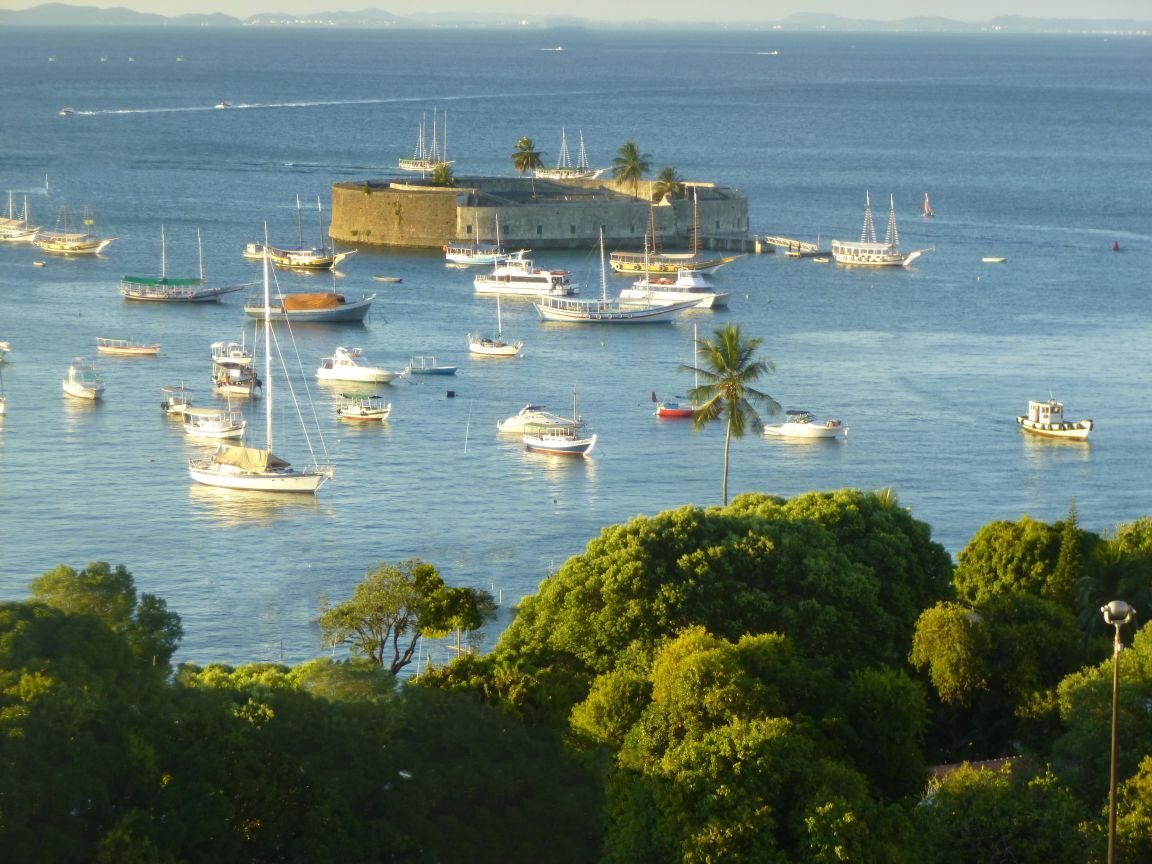
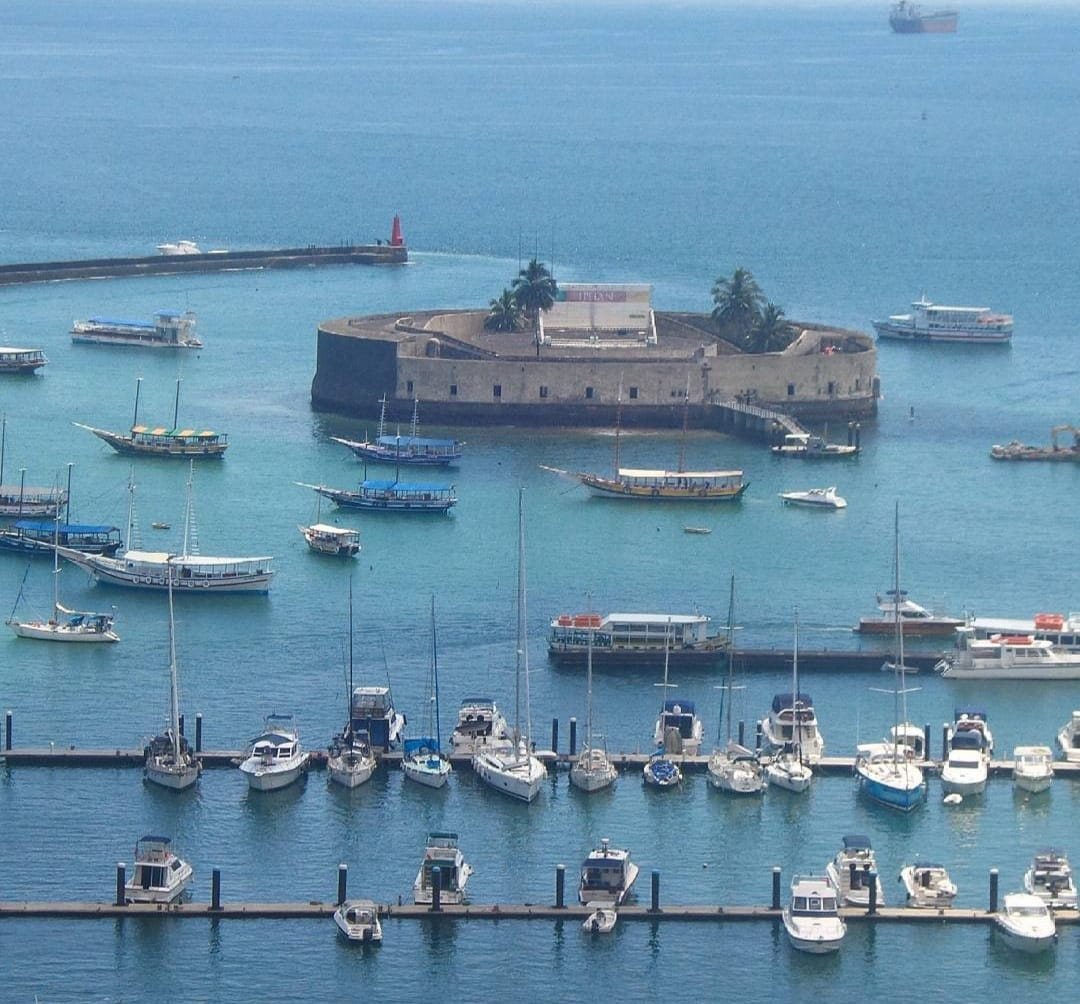
São Marcelo Fort occupies a small reef bank in the Bay of All Saints, approximately 300 metres from Salvador’s coast. Its isolated maritime position explains its popular name, the Fort of the Sea, and gives the structure a distinct defensive setting separated from the mainland by water.
Cylindrical fortress and maritime setting
São Marcelo is described as the only cylindrical fort in Brazil. Its design follows models associated with Castel Sant’Angelo in Italy and São Lourenço do Bugio Fort in Portugal. The fort is one of only two Brazilian forts separated from land by water, the other being Fort Tamandaré da Laje in Rio de Janeiro.
Turret, walls, and armament
The first fort, completed in 1623, was built entirely of wood and mounted 19 artillery pieces of different calibres. The 1650 reconstruction added a turret at the highest point of the sandbar, rising 15 metres. The later work of 1728 enclosed the fort with a perimeter wall, creating the form associated with its surviving defensive layout.