Santa Cruz Fort: Spanish Fortress Above Oran, Algeria
Site at a Glance
- Rating
- 4.6
- Popularity
- Very Low
- Country
- Algeria
- Primary era
- Early Modern
- Eras represented
- Early Modern
- Civilizations
- Ottoman, Spanish
- Site type
- Military
- Remains
- Fort
On this page9 sections
History
Ottoman and Spanish origins
Santa Cruz Fort is a Spanish fortress in Algeria, above Oran and Mers El Kébir, constructed between 1577 and 1604 as part of the Spanish defensive system. It stands on Mount Murdjadjo, also called the Peak of Aïdour, and became the highest of Oran’s three Spanish forts. An earlier fortress occupied the site under Ottoman control, while Spanish fortification activity on Mount Aïdour is also recorded from 1509, after Spanish forces defeated the Ottomans in the sixteenth century.
The Spanish expanded the position as they established and maintained control of Oran. The Ottoman Empire was a major power in North Africa, where its forces contested Spanish expansion. Santa Cruz, Fort de la Moune on the western side of the harbor, and Fort Saint-Philippe in central Oran formed the city’s principal defensive system. Fort Saint-Philippe replaced the earlier Castle of the Saints, known in Spanish as Castillo de los Santos.
Spanish rule and military pressure
Spain ruled Oran for approximately three centuries, until 1792. During this period, Santa Cruz sometimes served as a residence or hospitality center for the city’s governors. The growth of Oran also required the expansion of its urban walls, while repeated attacks led to continuing repairs, improvements, and extensions at the forts.
In 1707, Sultan Moulay Ismail of Morocco, an Alaouite ruler of the late seventeenth and early eighteenth centuries, attempted to advance within range of Oran’s defenses. His army was destroyed. The fortress system nevertheless continued to face military pressure, encouraging further strengthening of Santa Cruz and the expansion of its underground defenses.
Earthquake, occupation, and religious traditions
A major earthquake damaged most of Oran in 1791. The Spanish subsequently evacuated or left the city in 1792, and France occupied Oran and Santa Cruz in 1831. Under Spanish rule, Oran was predominantly Muslim and included many buildings with Moorish architectural character. After the French occupation, many Muslims moved into the interior of Algeria, although many later returned after the defeat of Abd al-Qadir, the Algerian religious and political leader who organized resistance to the French conquest.
Local religious traditions also shaped the hill around the fort. A marabout chapel, meaning a small shrine associated with a North African Islamic holy person, was built at a higher point opposite Santa Cruz. Its white dome was crowned with a crescent, symbolically expressing the superiority of the Crescent over the Cross.
Santa Cruz Chapel emerged from an event associated with a cholera epidemic in Oran in 1847. The Bishop of Oran led a procession carrying a statue of the Virgin Mary to the hill, while residents prayed for rain and protection. Rain followed, and the epidemic reportedly ended, leading to the chapel’s construction as a commemoration. The chapel became associated with the protection of Oran, and the event was commemorated each year on Ascension Day, the Christian feast traditionally observed forty days after Easter, when residents and people from surrounding areas made a pilgrimage along the mountain path.
Remains
Fortress and underground defenses
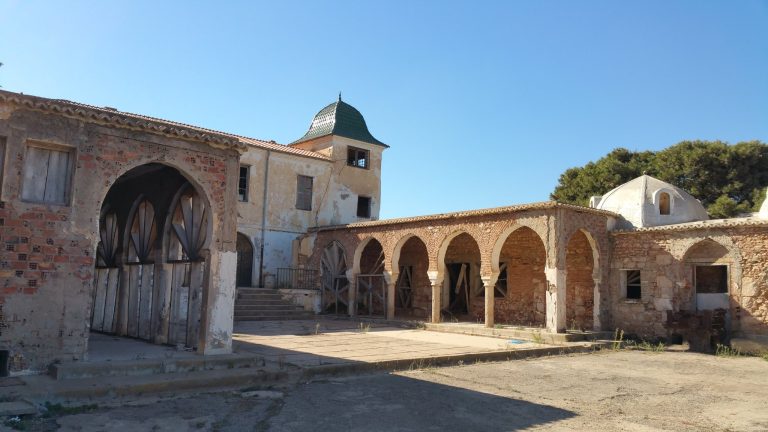
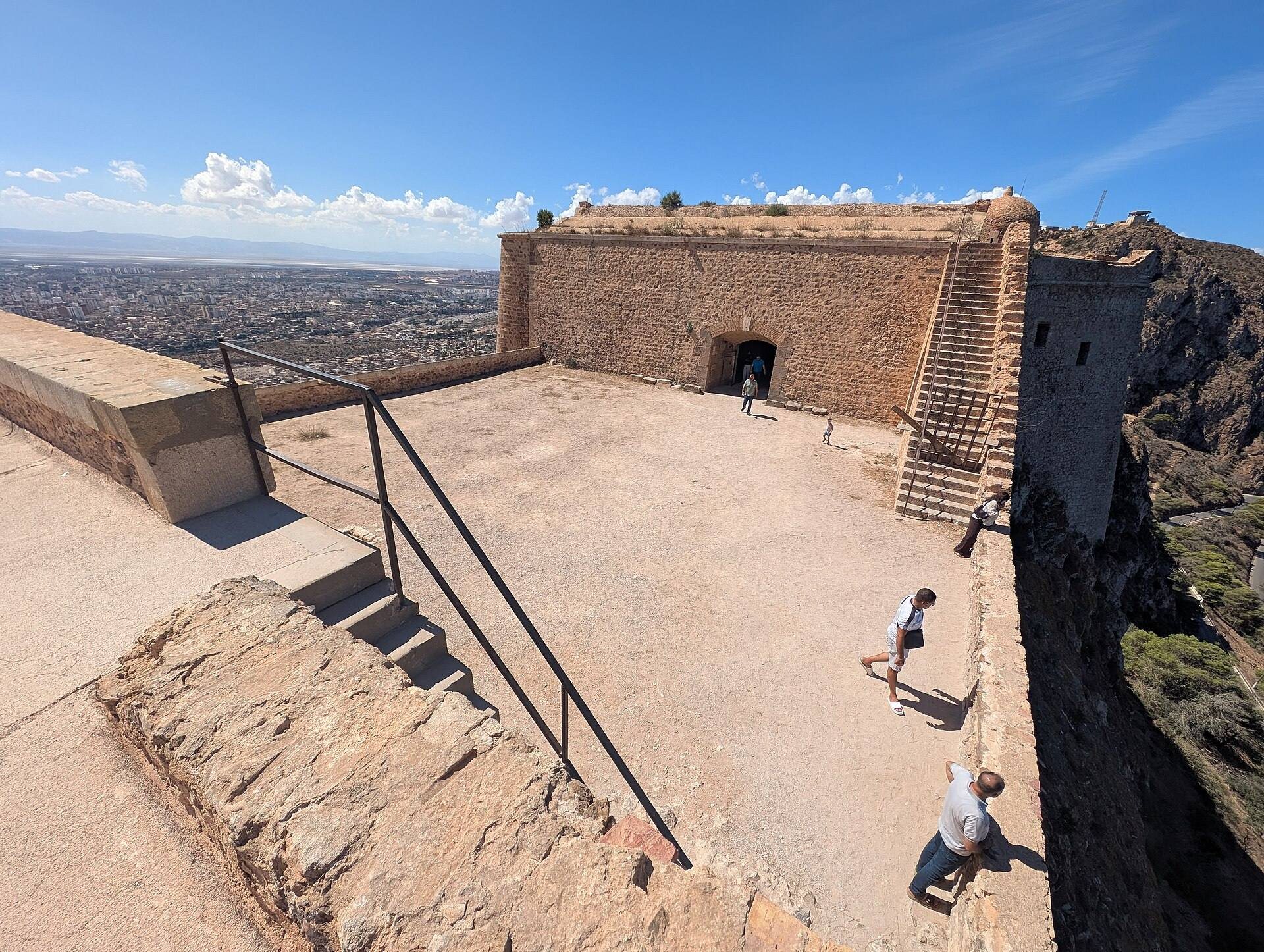
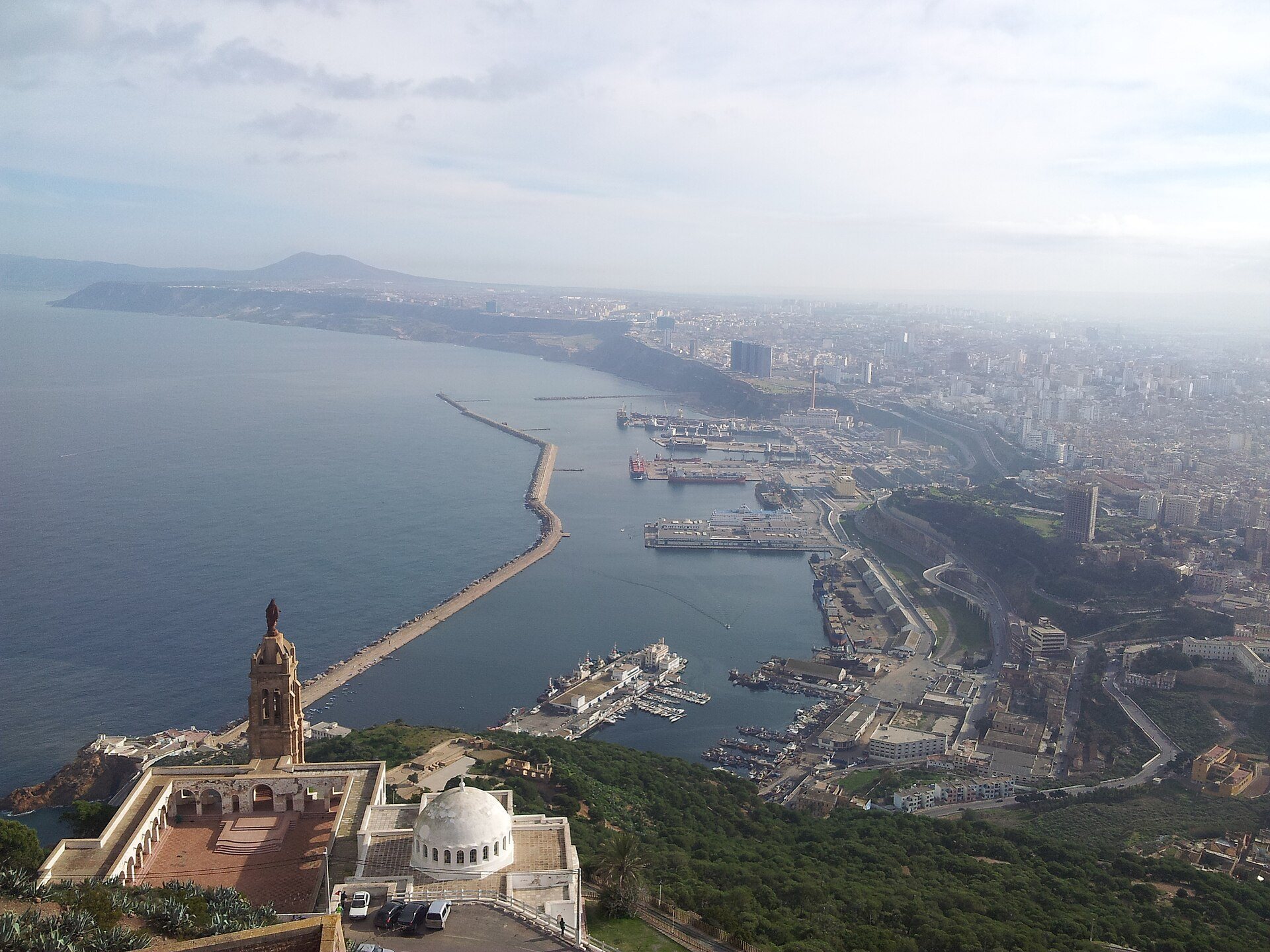
Santa Cruz occupies a strategic position at about 400 metres above sea level on Mount Murdjadjo, overlooking Mers El-Kébir, Oran’s military harbor, and much of the city. Its defenses comprise thick, continuous walls with a perimeter of approximately 2.5 kilometres, reinforced by substantial towers. A central castle, or kasbah, served as the Spanish headquarters and contained the governor’s headquarters. A kasbah is a fortified central stronghold that may include administrative offices or a governor’s residence.
Iron, wood, sand, lime, and water were used in the construction. Materials and water had to be carried up the mountain along difficult, winding routes, sometimes by ropes. Repeated attacks led to extensions into the depth of the hill, strengthening the defensive works. Underground passages connect Santa Cruz with the two other forts, while additional galleries run beneath the town and open at different points on the hillside. The fort also contains a rainwater-collection system, including a largest cistern with a capacity of 300,000 litres.
Chapels on the hillside
Santa Cruz Chapel
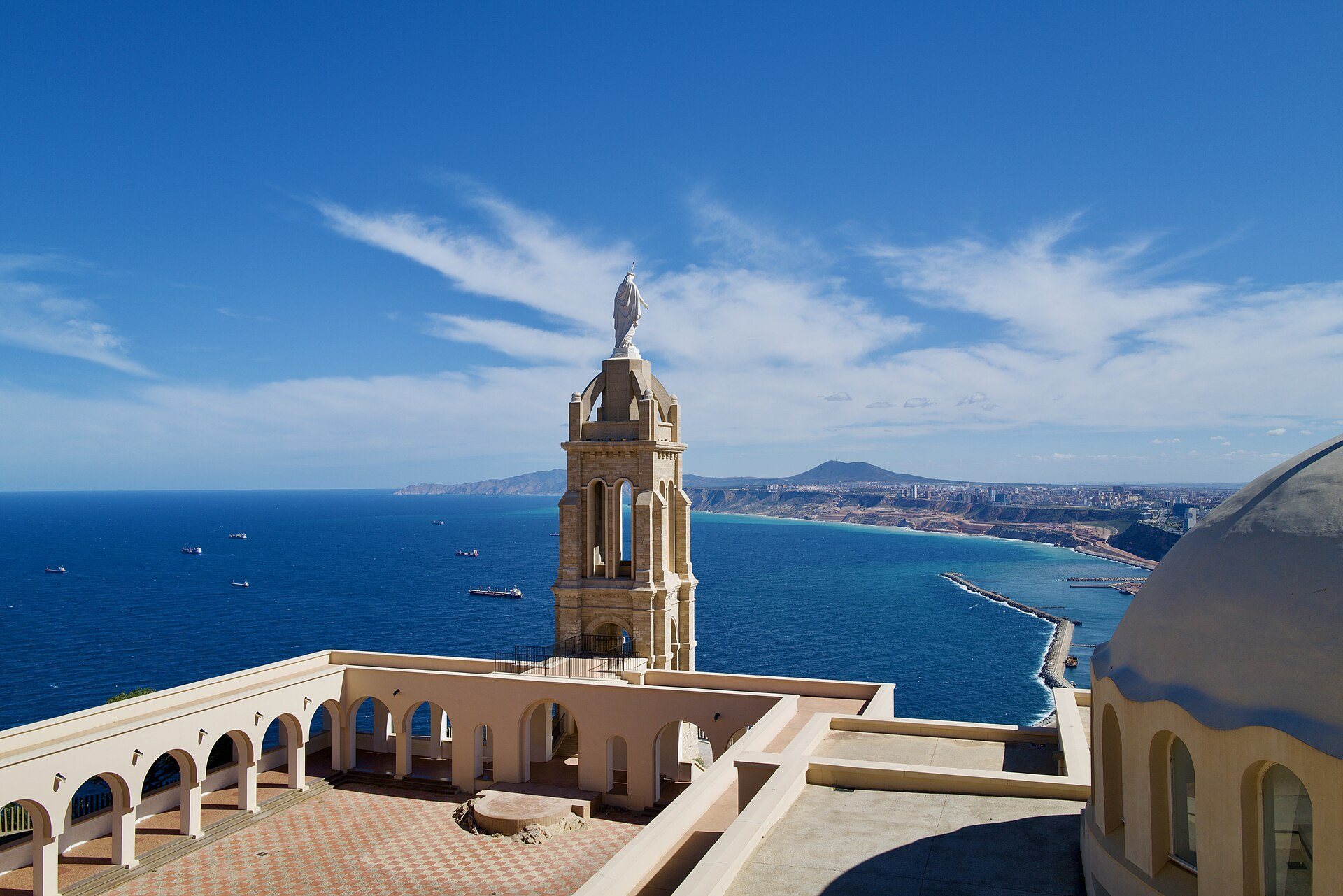
Santa Cruz Chapel stands near the fort on the hillside below it, at the foot of the fortress. It is a Catholic pilgrimage site associated with the 1847 procession and the protection of Oran. The chapel was restored together with a tower carrying a large statue of the Virgin Mary. The statue is described as a replica of the one at Notre-Dame de la Garde in Marseille, adapted in the style of Notre-Dame-du-Salut de Santa Cruz.
Marabout chapel
The marabout chapel occupies a higher point opposite the fort. Its white-domed structure is surmounted by a crescent, giving the small religious building a distinct position within the hilltop landscape and preserving the Islamic symbolism associated with its foundation.