Rathgall Hillfort: A Bronze Age Multivallate Fort in Ireland
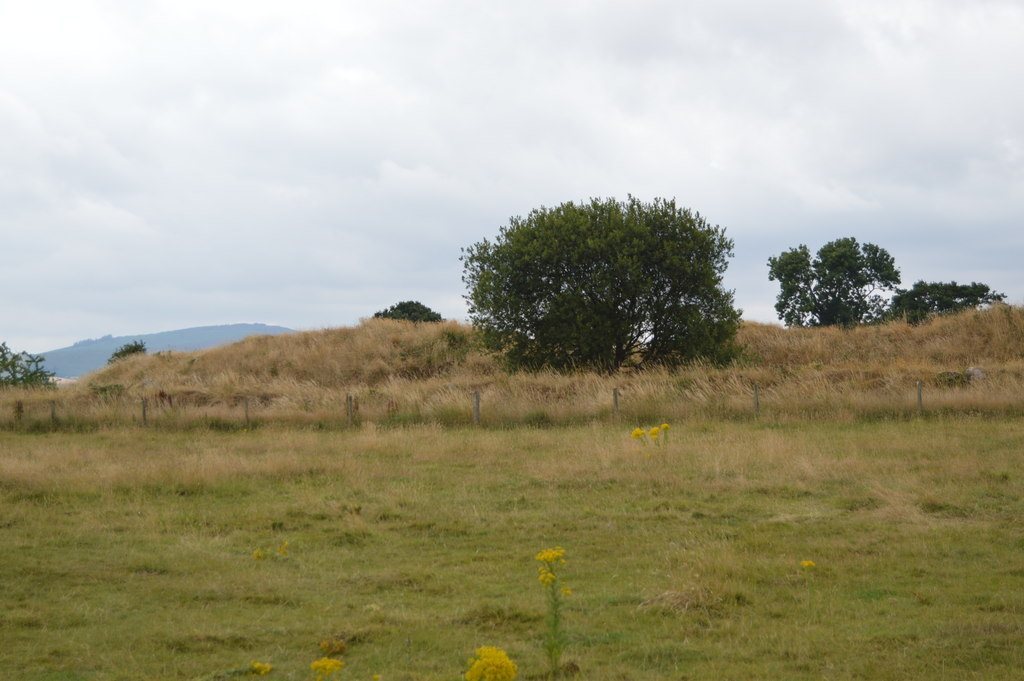
Site at a Glance
- Rating
- 4.6
- Popularity
- Low
- Country
- Ireland
- Primary era
- Bronze Age
- Eras represented
- Bronze Age, Iron Age, Medieval
- Civilizations
- Norman
- Site type
- Military
- Remains
- Fort
On this page12 sections
History
Rathgall Hillfort is a Bronze Age multivallate hillfort in Ireland, near Tullow in County Wicklow, generally dated to approximately 1200–900 BC. A multivallate hillfort is an elevated fortified enclosure surrounded by several concentric banks, walls, or ditches. Rathgall covers about 7.5 hectares and was used during the middle and later Bronze Age for domestic life, agriculture, metalworking, and apparently ritual activities. Burials and cremations also gave the site a funerary role beyond settlement and production.
Bronze Age settlement and production
The Bronze Age was the period when bronze became a major material for tools, weapons, ornaments, and other objects. At Rathgall, this phase included substantial activity within a large fortified setting. A workshop area produced evidence of bronze working, including slag, charcoal, bronze beads, spearheads, and swords. Numerous furnaces were present, with some possibly used for preparing food and others indicating smithing.
The site also contains evidence for burial and cremation during this broad prehistoric sequence. A circular area south of the metalworking zone held several Bronze Age cremation burials. These remains, together with the working areas and domestic evidence, show that Rathgall served several functions over time rather than operating solely as a defensive enclosure.
Iron Age and medieval activity
Activity continued into the Iron Age, the period when iron became an important material for tools and weapons after the Bronze Age. An early Iron Age iron-smelting furnace was found at Rathgall, adding iron production to the earlier evidence for bronze working.
The central enclosure was altered during the medieval period, or Middle Ages, the period conventionally placed between approximately the fifth and late fifteenth centuries. Its inner masonry wall belongs to this phase, and a medieval house also occupied the site. Coins of Edward I and Edward III, medieval kings of England, date this activity to the thirteenth and fourteenth centuries. Pottery and other remains further attest to medieval occupation.
Excavation and protection
Excavations directed by the Irish archaeologist Barry Raftery took place from 1969 to 1975. They revealed Bronze Age settlement and production, an early Iron Age furnace, medieval occupation, burials, and metalworking. Raftery also studied about 40 single- and multiple-enclosure sites in Ireland while developing a classification of hillforts. Rathgall is classified as a Class 2 hillfort, meaning a large, multiply enclosed fort on a hill or cliff.
Rathgall is a National Monument of Ireland and is in state care under the official designation Rathgall, reference number 422. Legends connected with the site include stories of fairies, while local tradition regards it as a pilgrimage place for childless couples.
Remains
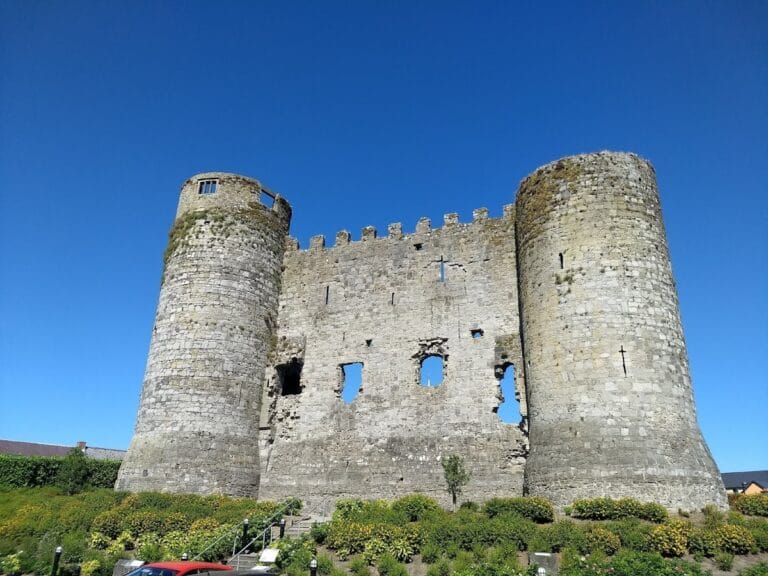
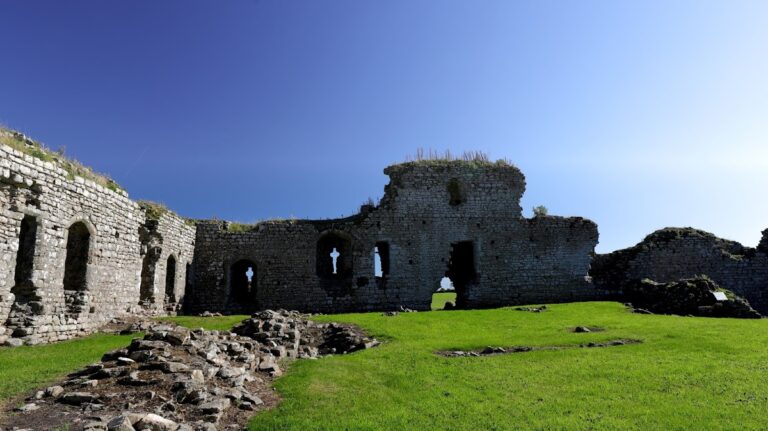
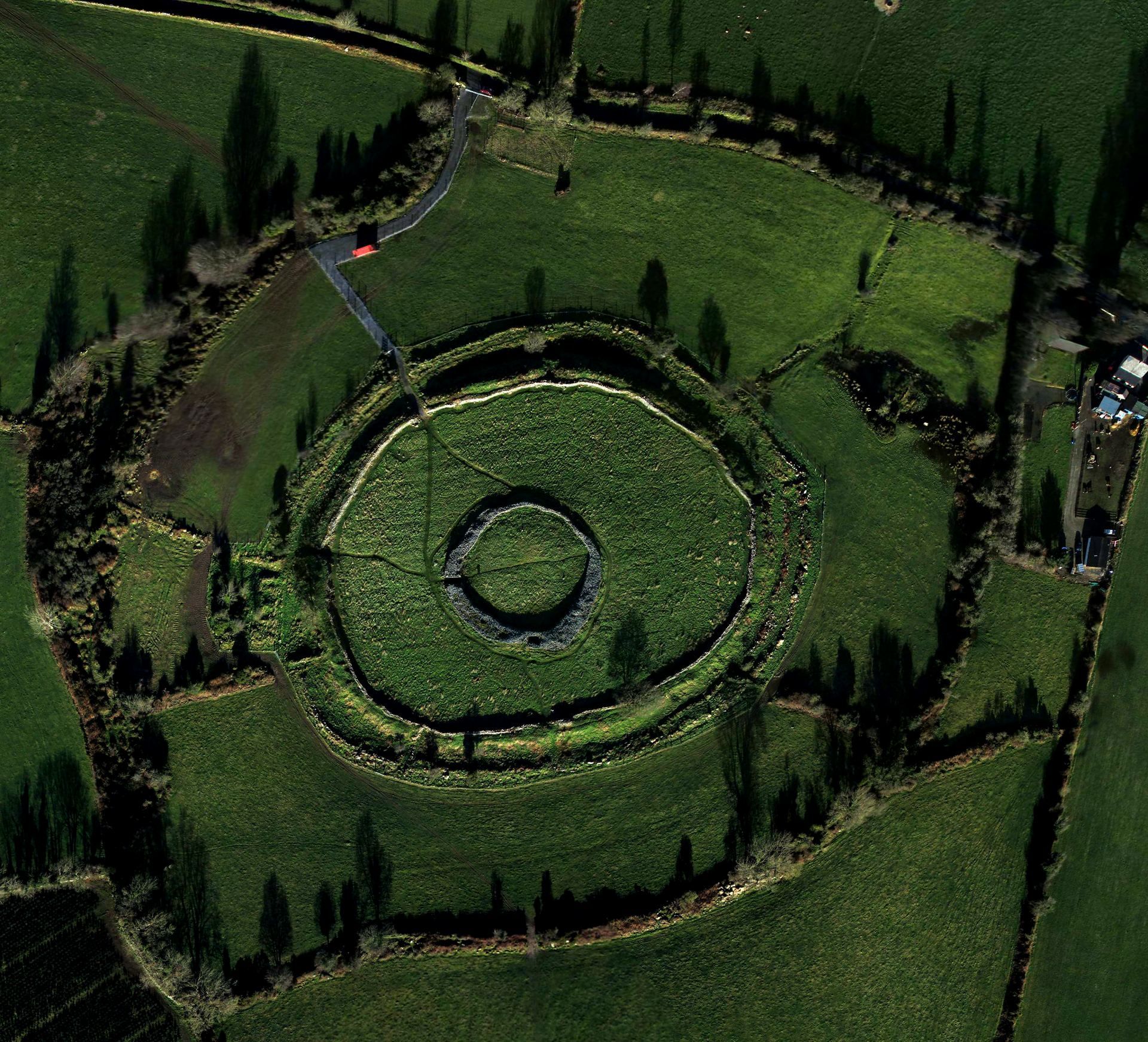
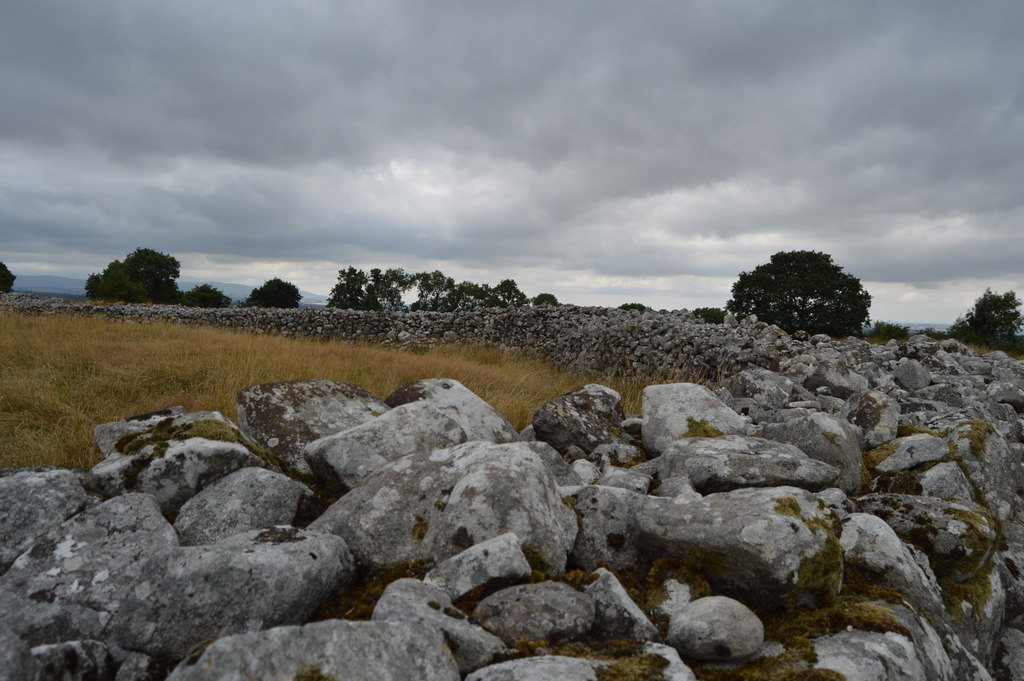
Rathgall stands at approximately 131 metres above sea level and is partially preserved. Its plan consists of four roughly circular, concentric enclosures covering approximately 7.5 hectares. The outer three are stone ramparts associated with the Bronze Age. At the centre, a medieval masonry wall forms an enclosure about 35 metres in diameter and stands on a Bronze Age cultural layer, a deposit of soil containing material remains from earlier human activity.
Enclosures and central settlement
Central masonry enclosure
The central enclosure is defined by the medieval masonry wall, which replaced or occupied the position of a Bronze Age inner enclosure. More than 4,000 pottery sherds from bowls and pots were found in the central area, along with tools, spindle whorls, and other artefacts. A spindle whorl is a weighted object used to help spin fibres into thread or yarn. These finds provide evidence for domestic activity within the fortified centre.
Post-built house
Within the fort was a large circular structure marked by postholes, the surviving traces of upright timber supports. It measured approximately 15 metres across and was interpreted by Barry Raftery as a post-built house. At its centre, a stone-lined grave contained a man and a gilded copper ring. The feature may have served as a burial or as a ritual deposit.
Burials and metalworking areas
Cremation burial zone
South of the metalworking area and adjoining the inner wall, a circular ditch approximately 16 metres in diameter enclosed several Bronze Age cremation burials. Cremation burial is a funerary practice in which the deceased is burned and the remains are placed in a grave or container. One burial contained the ashes of a woman and a child in a bucket-shaped vessel covered first by a stone slab and then by a boulder. Another grave included a gilded ring as a burial offering.
Bronze-working workshop
West of and adjoining the inner ring, a workshop area contained slag, charcoal, bronze beads, spearheads, and swords. Slag is the waste material produced during metalworking and smelting. The numerous furnaces in this zone reflect several activities, including possible food preparation and the working of bronze. Finds from the wider site include ceramic vessels, 96 glass beads, ornaments and other objects of gold, jet, amber, and lignite, as well as tools, a sword blade, spearheads, a socketed axe head, and gold pendants. A socketed axe head has a hollow socket into which a wooden haft was inserted.
Iron-smelting furnace and medieval remains
An early Iron Age iron-smelting furnace provides physical evidence for a later phase of metal production. The site also preserves remains associated with a medieval house, together with medieval pottery sherds and the coins that date the central masonry enclosure and its occupation to the thirteenth and fourteenth centuries.