Delgatie Castle: A Scottish Tower Complex and Historic Hay Residence
Site at a Glance
- Rating
- 4.6
- Popularity
- Low
- Country
- United Kingdom
- Primary era
- Early Modern
- External website
- Open
- Eras represented
- Early Modern, Modern
- Civilizations
- British, Kingdom of Scotland
- Site type
- Domestic
- Remains
- Castle
On this page10 sections
History
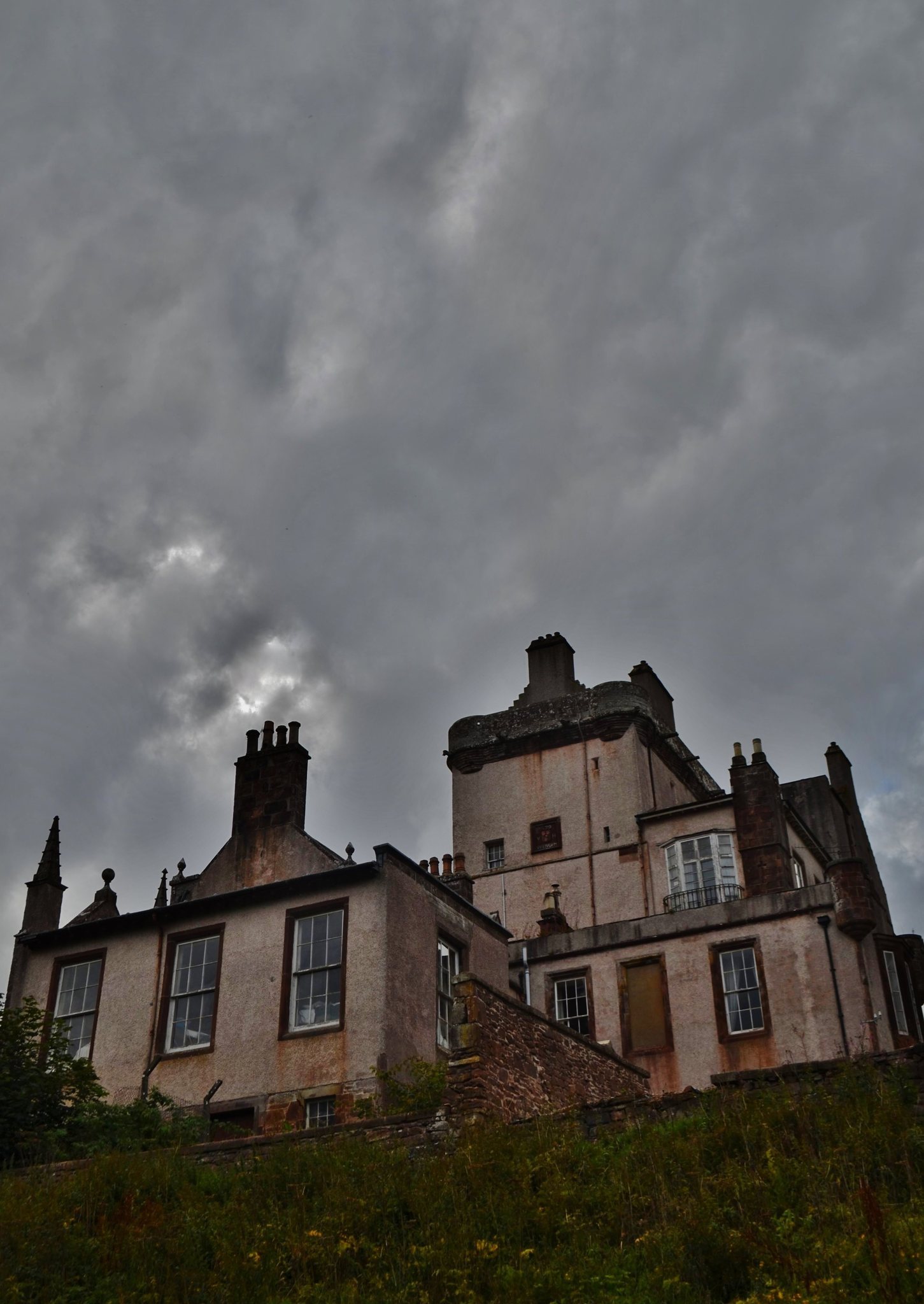
Delgatie Castle is a historic castle complex in the United Kingdom, near Turriff in Aberdeenshire. A castle stood here by the early eleventh century, with dates around 1030 and 1049 associated with its origins, while the earliest parts of the present building belong mainly to the sixteenth century, including a major phase from 1570 to 1579.
Medieval Origins and the Hay Family
The site was associated with Henry de Beaumont, Earl of Buchan, a medieval nobleman, until his lands were confiscated after the Battle of Bannockburn in 1314. Bannockburn was a major Scottish victory over the English. The property was then granted to Clan Hay, the Scottish noble family that later held the earldom of Erroll. Delgatie remained a Hay residence for almost seven centuries, a long connection reflected in the family arms displayed throughout the castle.
Sixteenth-Century Associations
Mary, Queen of Scots, traditionally stayed at Delgatie in 1562 after the Battle of Corrichie, a Scottish conflict fought that year. A room known as Queen Mary’s Bower is associated with the visit. The tradition has also contributed to suggestions that parts of the castle’s enlargement may predate the building phases generally assigned to the later sixteenth century.
Later Ownership and Preservation
James Hay, 15th Earl of Erroll, sold the estate to Peter Garden of Troup in 1762. It passed to the Duff family in 1798 and to the Ainsley family in 1868. During the Second World War, the castle was temporarily used as barracks for troops returning from Dunkirk.
Captain John Hay acquired the property in the early 1950s, when the castle had been abandoned and was in poor condition. Assessments judged it beyond repair, but preservation and restoration work eventually made it habitable. Captain Hay opened the castle to visitors on 9 July 1994. After his death in 1997, a private charitable trust managed the property and continued to oversee public access and visitor facilities. A memorial garden for animals that served and died in wartime opened in front of the castle in 2018.
Remains
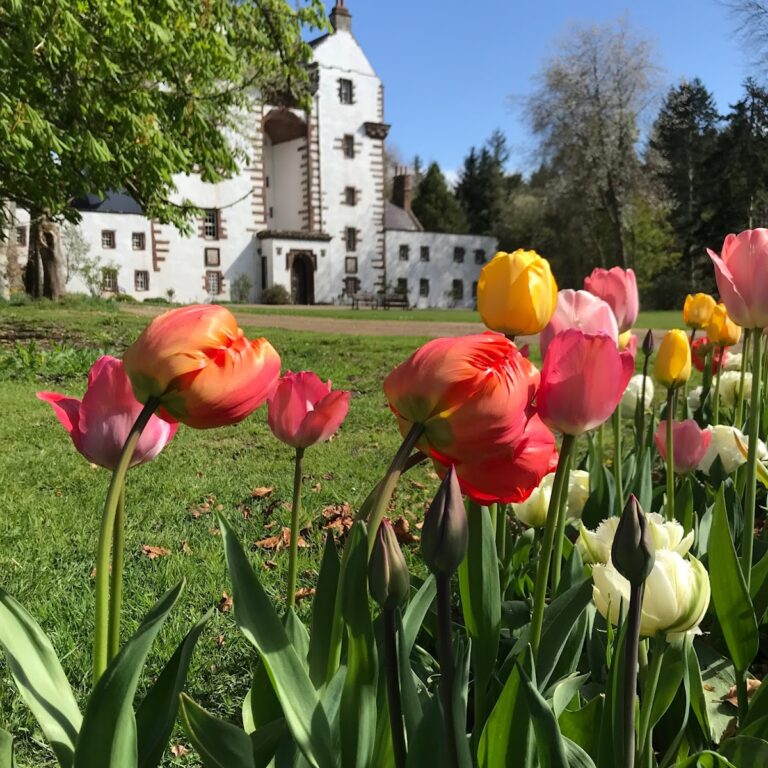
Delgatie Castle is a white-harled, five-storey tower complex. Harling is a roughcast or lime-based coating applied to masonry, giving the exterior its pale finish. The surviving property combines a principal tower or keep, an adjoining house, and two later wings, with estate cottages and a memorial garden within the grounds. A river crosses the property, beside which lies a fishing area.
Castle Buildings
Principal Tower
The principal tower incorporates an earlier tower and forms the central element of the surviving complex. Its earliest present fabric is generally assigned to the sixteenth century, including the building work of 1570 to 1579. Inside, a very wide turnpike stair, or spiral staircase arranged around a central axis, serves the tower. Hay family arms appear in several parts of the building.
East House
A house on the east side dates from around 1500 and is incorporated into the castle complex. Its relationship with the earlier tower reflects the gradual formation of the present group of buildings rather than a single construction campaign.
Western Building and Later Wings
A western building appears to have been intended as a chapel. Further wings and a chapel were added in 1743, while additional alterations continued during the eighteenth and nineteenth centuries. Some windows were probably enlarged during these later changes.
Interiors and Grounds
The interiors retain a domestic character, with period furnishings, family portraits, and works of art. Two rooms preserve painted ceilings dated 1592 and 1597. One room is traditionally identified as the chamber connected with Mary, Queen of Scots. Three cattle yokes included among the castle’s heraldic imagery recall a farmer and his two sons, who are associated with the defeat of a Danish raiding party at Cruden Bay.
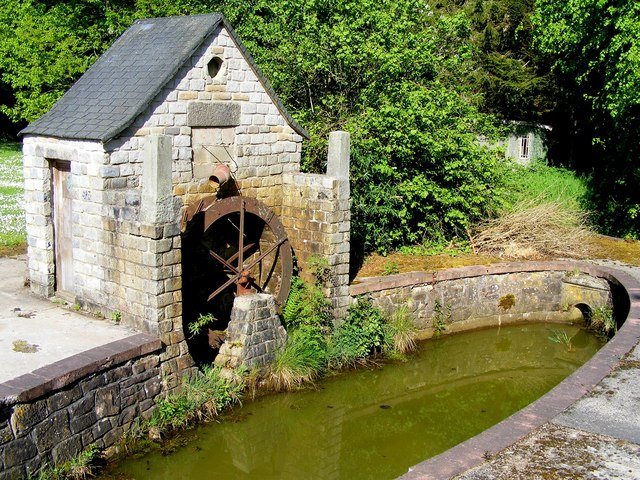
The grounds include the river, its associated fishing area, several estate cottages, and the memorial garden in front of the castle. Together with the tower, adjoining house, wings, and chapel building, these elements form the surviving estate setting of the historic residence.