Kashira Kremlin: A Fortress on the Oka River
Site at a Glance
- Rating
- 4.8
- Popularity
- Very Low
- Country
- Russia
- Primary era
- Early Modern
- External website
- Open
- Eras represented
- Early Modern
- Civilizations
- Russian
- Site type
- Military
- Remains
- Fort
On this page10 sections
History
Kashira Kremlin is a former fortress in Kashira, Russia, developed by the Russian state on the Oka River as part of its frontier defenses. Its first fortification was built under Ivan III, also known as Ivan the Great, in the late fifteenth century, and the new fortress completed in 1618 became the town’s principal stronghold during the early modern period.
The first fortress and the Bereg line
The earliest Kashira fortress stood in the village of Kashira on the left bank of the Oka, near the Kashirka River. It formed part of the Bereg, or “Bank,” defensive line along the river’s northern bank. This chain of fortifications was intended to block raiders advancing toward the central territories of the Russian state.
In 1480, when the army of Khan Akhmat approached, the first fortress was judged too weak to hold. It was abandoned and burned, then rebuilt after Akhmat’s withdrawal. The nearby Trinity Belopesotsky Monastery, an Orthodox foundation established in 1489, added protection to the Kashira section of the defensive line. During the reign of Vasily III, the old settlement was extensively rebuilt with substantial timber-and-earth defenses.
Destruction and relocation
Old Kashira’s fortifications suffered severe damage during the Crimean campaign of 1571 and again during the Time of Troubles, a period of dynastic crisis, famine, foreign intervention, and warfare around the beginning of the seventeenth century. Under Tsar Mikhail Fyodorovich, the authorities chose to establish a new fortress on the right bank of the Oka. The old position was cramped, its natural defenses were considered inadequate, and it stood too far from the river to control the fords effectively.
The new fortress was built on the high right bank approximately 5 km above the old town and was completed by 1618. In that year, a large force of Zaporozhian Cossacks led by Hetman Petro Konashevych-Sahaidachny captured the neighboring settlement and besieged the fortress. Voivode Fyodor Volkonsky, a senior military and administrative official, led a sortie that drove the attackers from the settlement and pursued them, causing considerable losses.
Seventeenth-century strengthening
Voivode Boris Koltovsky rebuilt the fortifications in 1629. During the Smolensk War, the Russo-Polish conflict of 1632–1634, Crimean Tatars attacked Kashira but failed to take the fortress, although they devastated the surrounding district.
A second defensive line was added along the northern side of the Kremlin in 1661–1662 to protect springs emerging at the foot of the hill. In 1678, the German engineer Gabriel von Turner, also known as Gavrila Furtuner, directed the construction of a larger earthwork fortress outside the wooden walls. By that time, the timber defenses of the Kremlin were already seriously dilapidated, and they were completely destroyed by the beginning of the eighteenth century. After Kashira lost its military importance, the fortifications were not renewed.
Remains
Old Kashira earthworks
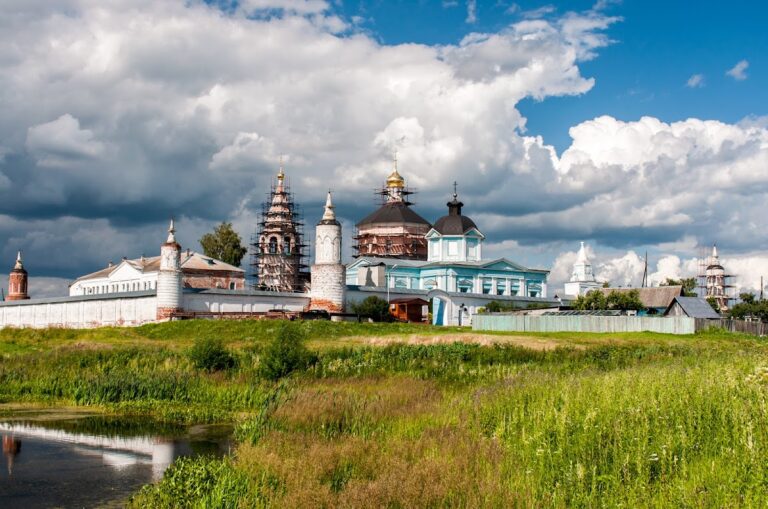
Old Kashira occupied the left bank of the Oka near the Kashirka River. Its archaeological settlement retains high, relatively well-preserved ramparts. Under Vasily III, the settlement was enclosed by rectangular timber-and-earth defenses, which belonged to the earlier phase of Kashira’s frontier history. Remnants of the northern and southern earthworks survive as parts of the town’s former defensive system.
The new Kremlin site
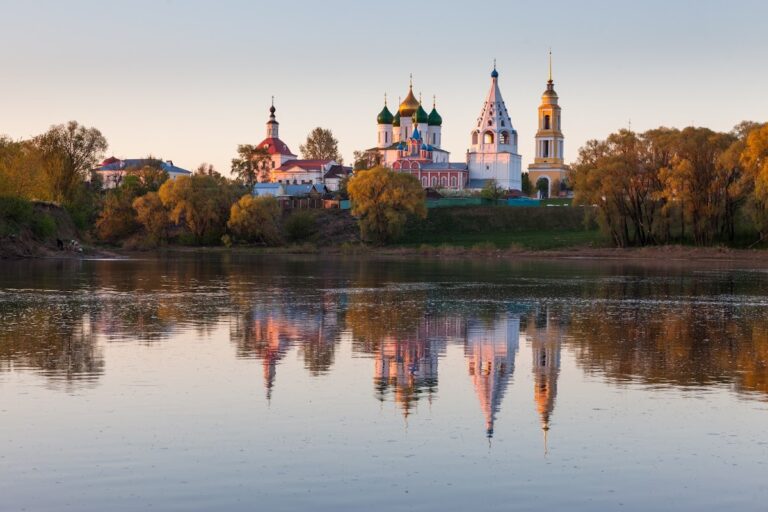
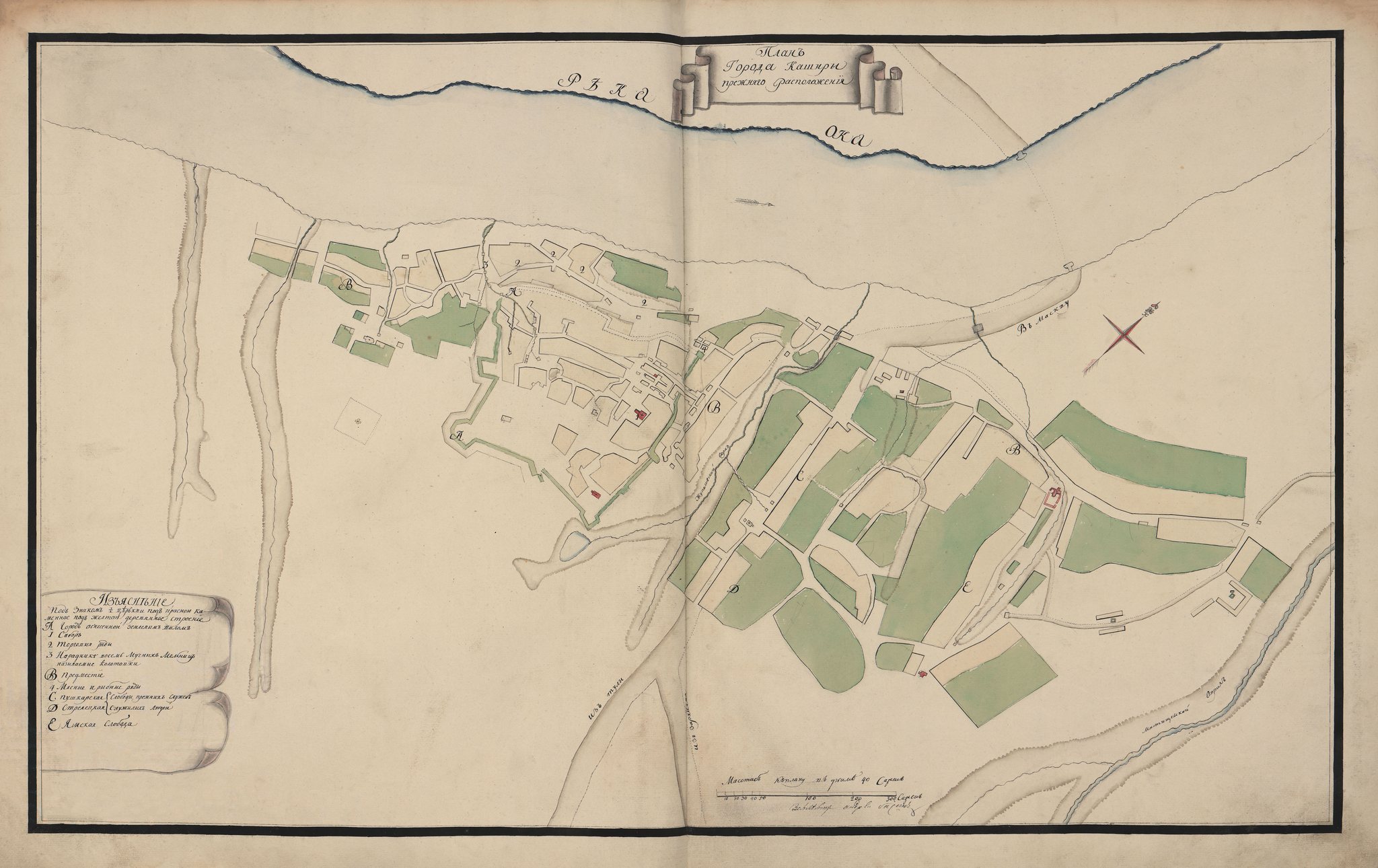
The new Kashira Kremlin stood on a high right-bank position, about 5 km above Old Kashira. Its irregular quadrilateral plan extended along the Oka. A steep riverbank defended the northern side, while deep ravines protected the western and eastern sides. The more vulnerable southern approach was secured by a ditch and rampart.
Timber walls and gates
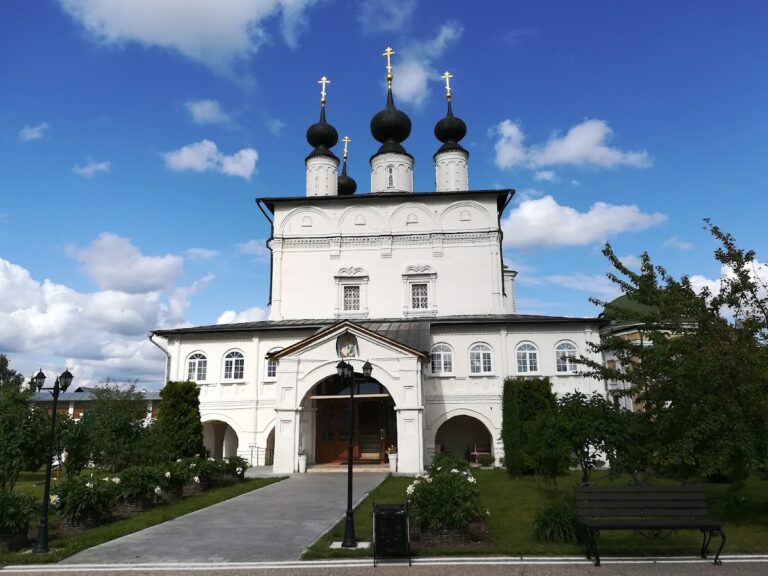
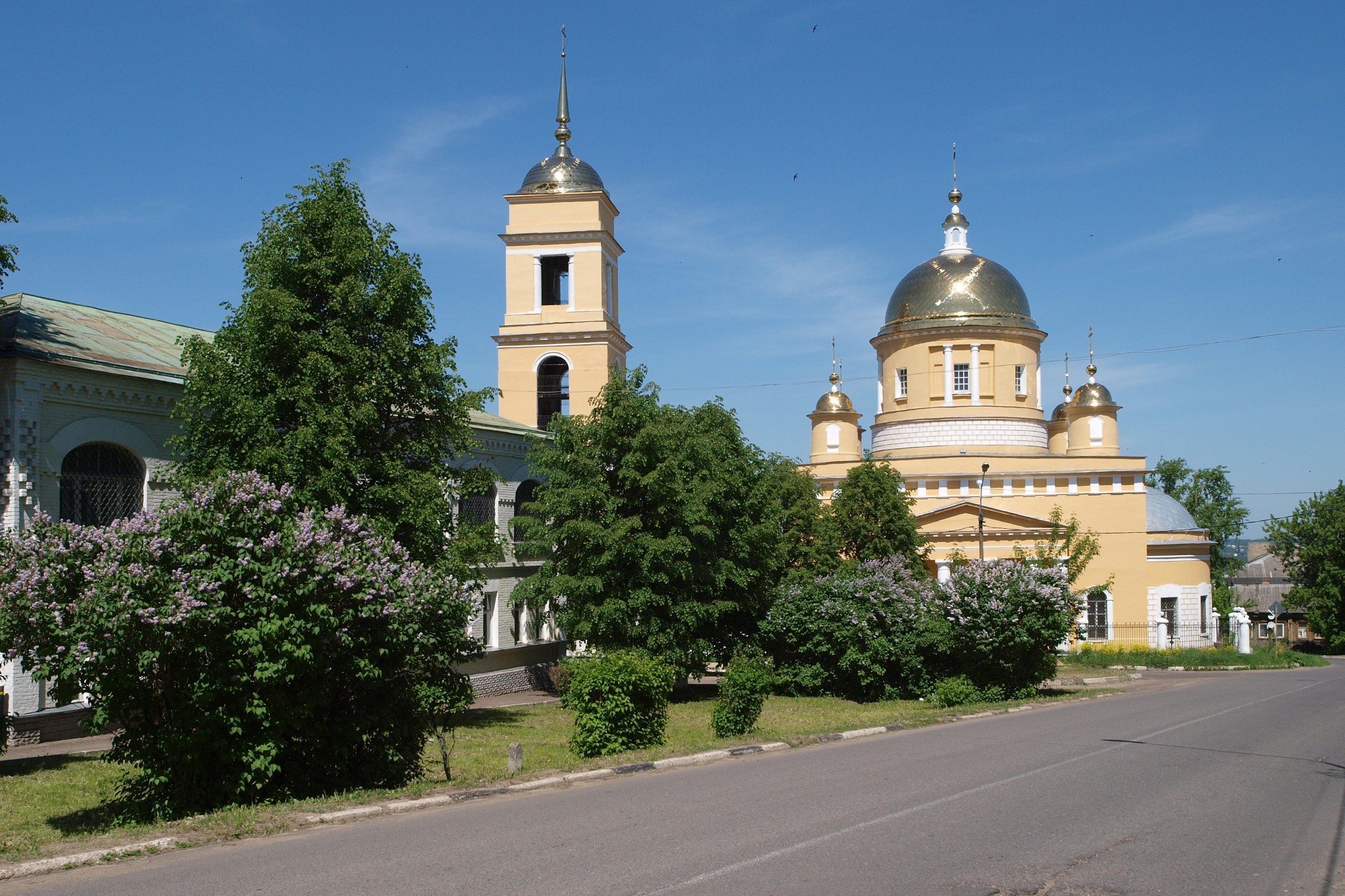
The main fortress was enclosed by a timber wall approximately 865 m long and strengthened by nine towers. Two towers contained passage gates: the Trinity Gates on the northern side and the Prechistensky Gates on the southern side. A palisade of sharpened stakes and wooden anti-cavalry obstacles stood in front of the wall. A stone Assumption Cathedral occupied the interior of the fortress, and the nineteenth-century Assumption Cathedral now stands on the former Kremlin site.
The northern defensive line
The second defensive line, added in 1661–1662, was an ostrog, a fortified enclosure protected mainly by timber defenses. Approximately 745.5 m long, it ran along the Kremlin’s northern side and included three passage towers. Its purpose was to protect the springs at the foot of the hill.
Earthwork fortress and surrounding settlement
In 1678, an extensive earthwork fortress was built in front of the wooden Kremlin walls. It had six bastions, projecting earthwork platforms designed to provide flanking fire along the defenses, and a ditch on the landward side. The fortress stood near a marketplace and five settlements occupied by service-class people and townspeople. The wooden fortifications later disappeared, while parts of the northern and southern earthworks remain around the former Kremlin area.