Náměšť na Hané Castle: A Medieval Fortress in Czechia
Site at a Glance
- Rating
- 4.3
- Popularity
- Very Low
- Country
- Czechia
- Primary era
- Medieval
- External website
- Open
- Eras represented
- Medieval
- Civilizations
- Holy Roman Empire
- Site type
- Military
- Remains
- Castle
On this page7 sections
History
Náměšť na Hané Castle is a medieval castle in Czechia, on the southwestern edge of the present-day town of Náměšť na Hané. Náměšť was first mentioned in 1141 as property of the Bishopric of Olomouc, a major ecclesiastical lordship in medieval Moravia whose bishops administered and pledged landed estates. Part of the estate later passed into secular hands. The castle probably protected the estate and stood beside a village called Kapounov, in an area still known as “Na hradě.”
Medieval origins and estate ownership
No written foundation record survives. Všebor, son of Idík of Švábenice, was associated with Náměšť in 1276 and is traditionally credited with founding the castle. Půta of Holštejn acquired it in 1371. In 1388, Bishop Nicholas of Rýzmburk, bishop of Olomouc from 1388 to 1397, pawned the Náměšť estate to Margrave Jobst. At the beginning of the fifteenth century, the castle was probably held by the lesser nobles of Obora.
The Hussite Wars
During the Hussite Wars, the religious and political conflicts in Bohemia and Moravia that followed the condemnation and execution of Jan Hus in 1415, Ctibor of Cimburk occupied the castle with a Hussite garrison. In May 1423, forces of Bishop John the Iron of Olomouc besieged it under the command of Peter of Strážnice of Kravaře and Václav of Dubá, Moravian noble captains who supported Emperor Sigismund. The garrison offered little resistance, and the castle was probably damaged. On 13 May, Ctibor capitulated and swore loyalty and obedience to Sigismund. He also promised to assist against Sigismund’s enemies, except for his brother Jan Tovačovský of Cimburk, who supported the Utraquist party, a Hussite movement that advocated Communion in both bread and wine.
Decline and later history
The castle was mentioned again in 1480 and 1482. After the Hussite Wars, it returned to its earlier owners and was taken over by Alena of Náměšť, daughter of Artleb of Náměšť. It was probably abandoned during the sixteenth century because its small size made it inconvenient. The castle ceased to exist during the Bohemian-Hungarian Wars, late-fifteenth-century conflicts involving the Bohemian crown and the Kingdom of Hungary. A fortified residence on the site of the Lower Chateau then assumed the role of noble residence and administrative center for the Náměšť estate.
Ruins remained in the eighteenth century, but local inhabitants gradually removed the surviving walls for building material. Archaeological investigations began in the nineteenth century, and the castle has been protected as a cultural monument since 1964.
Remains
Layout and defenses
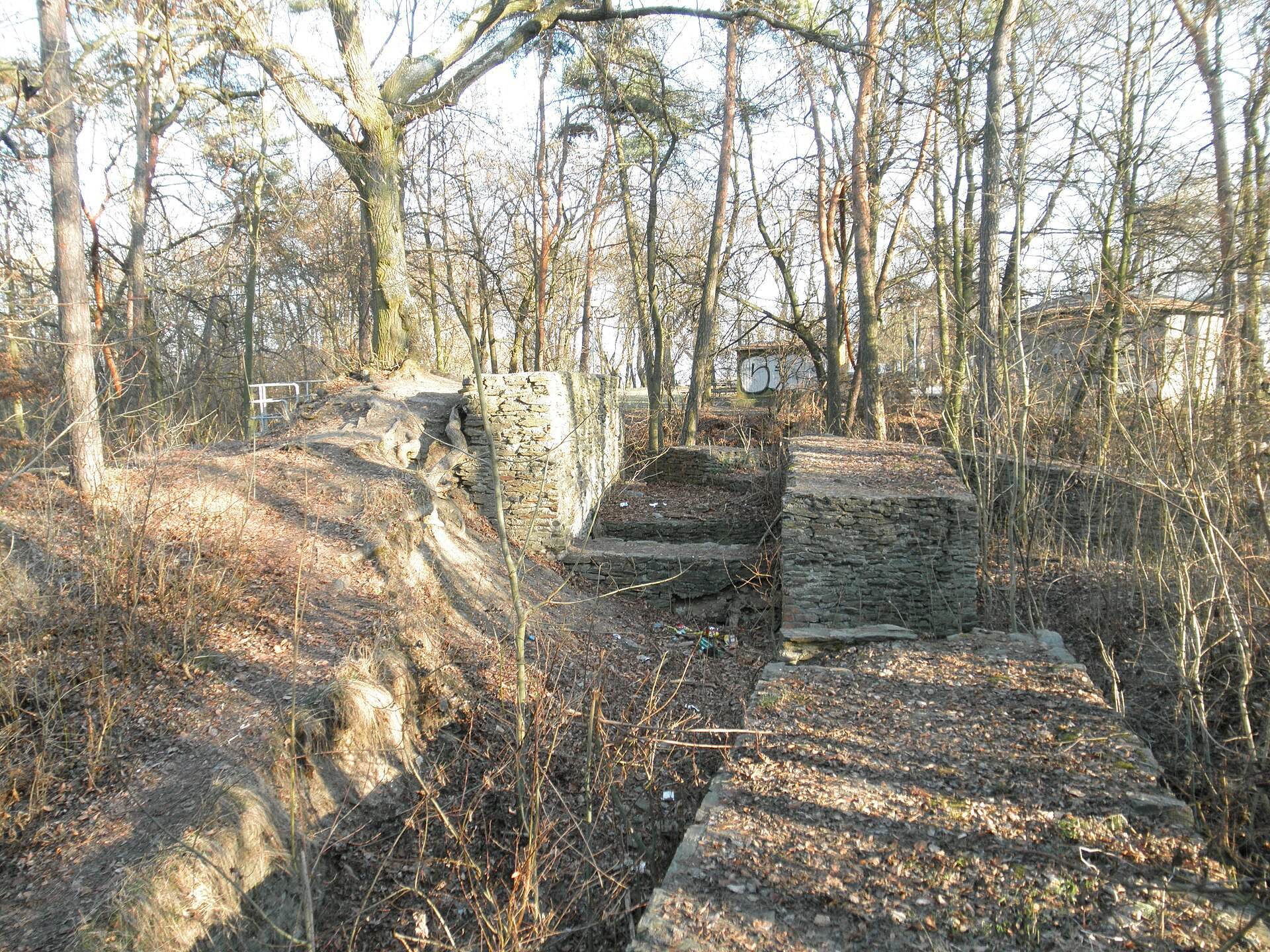
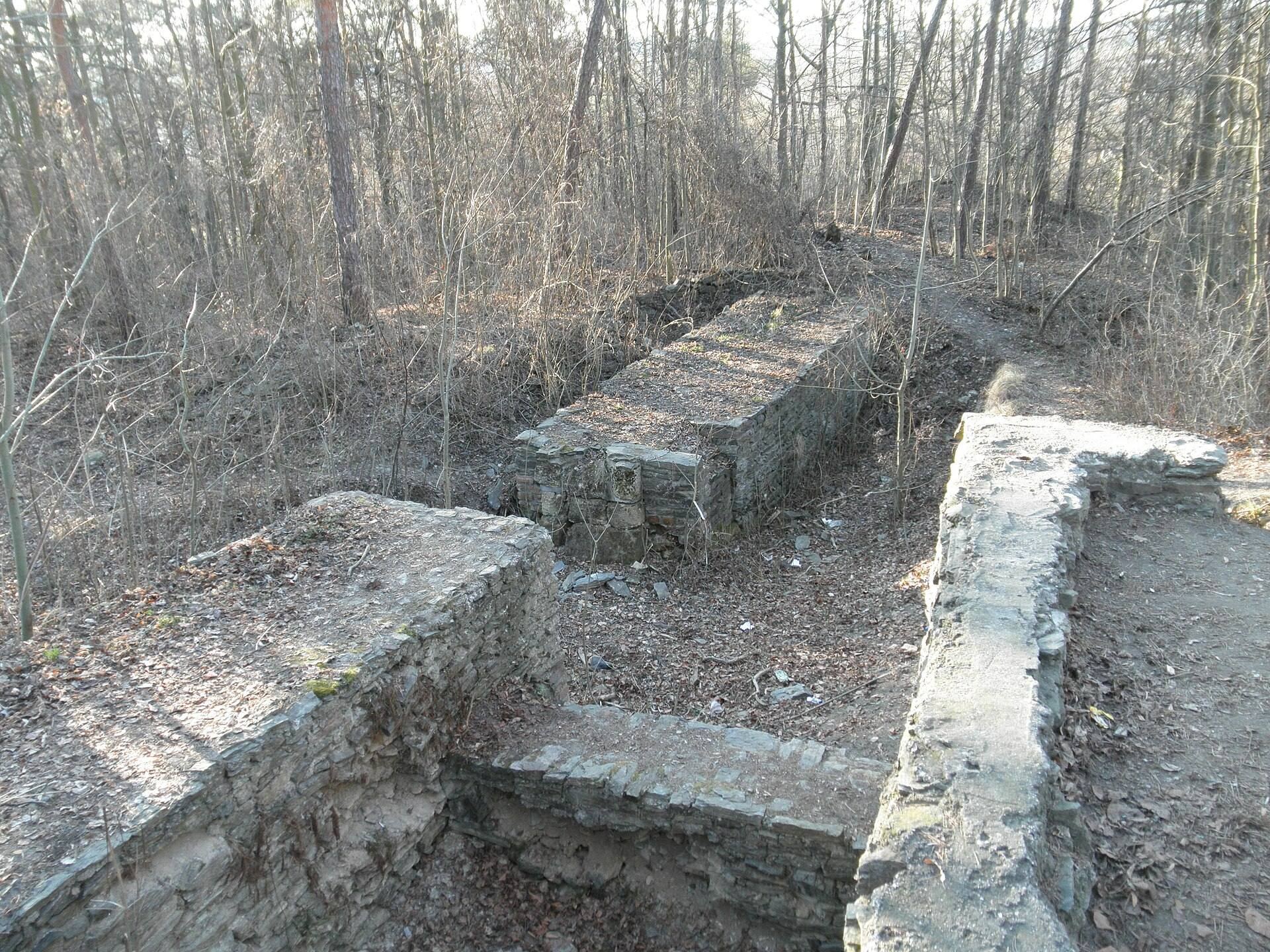
The castle occupied a spur above the right bank of the Šumice stream. Its perimeter measured approximately 150 metres. Ditches protected the central fortified area in a broad arc from the southwest to the southeast, while roughly half of the perimeter was defended by a ditch partly cut into the rock. The surviving ditch is approximately 3.5 metres deep. The castle had two sections arranged on an irregular rhomboidal plan measuring about 60 by 30 metres. The smaller western section served as the outer bailey, and the eastern section contained the castle core.
Castle core and tower
A curtain wall divided the outer bailey from the castle core. Near this wall stood a square tower measuring approximately 7.5 by 7.5 metres. It probably functioned as a bergfried, a strong tower intended mainly for defense and final refuge, although it may also have provided living accommodation. Nineteenth-century archaeological investigations recovered medieval pottery dating from the fourteenth and fifteenth centuries.