Ōmori Katsuyama Site: A Final Jōmon Stone-Circle Settlement in Japan
Site at a Glance
- Rating
- 3.8
- Popularity
- Low
- Country
- Japan
- Primary era
- Bronze Age
- External website
- Open
- Eras represented
- Bronze Age
- Civilizations
- Jomon
- Site type
- Religious
- Remains
- Sanctuary
On this page10 sections
History
The Ōmori Katsuyama Site is a settlement of the Final Jōmon period in Hirosaki, Japan, built by the prehistoric Jōmon culture around 2,000–1,500 BC. The Jōmon period was Japan’s hunter-gatherer era, known for cord-marked pottery, long-term settlements, ritual objects, and stone-circle monuments. Ōmori Katsuyama continued in use from the early to the middle part of the Final Jōmon period and is regarded as especially important because it is the latest known Jōmon stone circle.
Settlement and Stone-Circle Construction
The monument was constructed after the hilltop had been leveled. The ground was then raised to form a circular embankment, and groups of stones were arranged around its edge. This sequence has helped clarify how the stone circle was made. Hearths, buried pottery, pits, areas of burned soil, many postholes, and a pottery-disposal area show that people occupied the area around the monument for a sustained period.
The settlement also included a large pit dwelling, a house built partly below ground with a roof supported over an excavated floor. No other pit dwellings or raised-floor buildings have been confirmed, although the surviving remains demonstrate continued habitation around the stone circle.
Discovery and Preservation
The site came to light in 1959 during development work around the foot of Mount Iwaki. Six excavations carried out by the Hirosaki City Board of Education between 1959 and 1961 identified the stone circle and the large pit dwelling. The site was acquired for preservation in 1961.
Further investigations from 2006 to 2008 defined the area requiring protection and clarified the sequence of construction. These studies also strengthened understanding of the site’s relationship to the large stone circles of southern Hokkaido and northern Tōhoku. Ōmori Katsuyama became a National Historic Site of Japan in 2012. In 2021, it formed part of the Jōmon Prehistoric Sites in Northern Japan, a UNESCO World Heritage property.
Remains
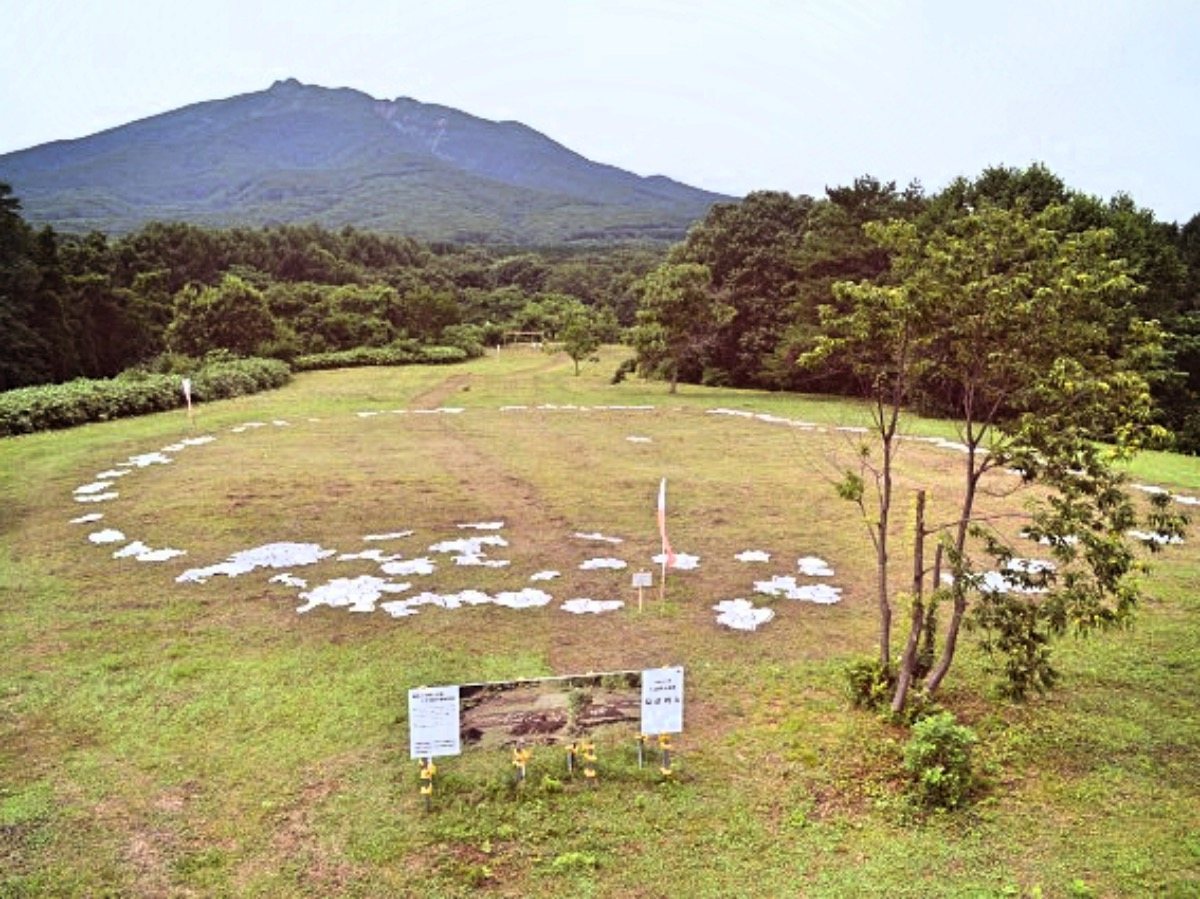
Ōmori Katsuyama covers approximately 85,154.8 square meters at the tip of a tongue-shaped hill, about 143–145 meters above sea level. The hill extends northeast from the 1,625-meter summit of Mount Iwaki, a prominent volcano in Aomori Prefecture. The principal remains consist of a raised circular area, stone assemblies placed around its perimeter, a large dwelling to the southwest, and occupation features distributed around the monument.
Stone Circle and Hilltop Monument
Raised Circle and Stone Assemblies
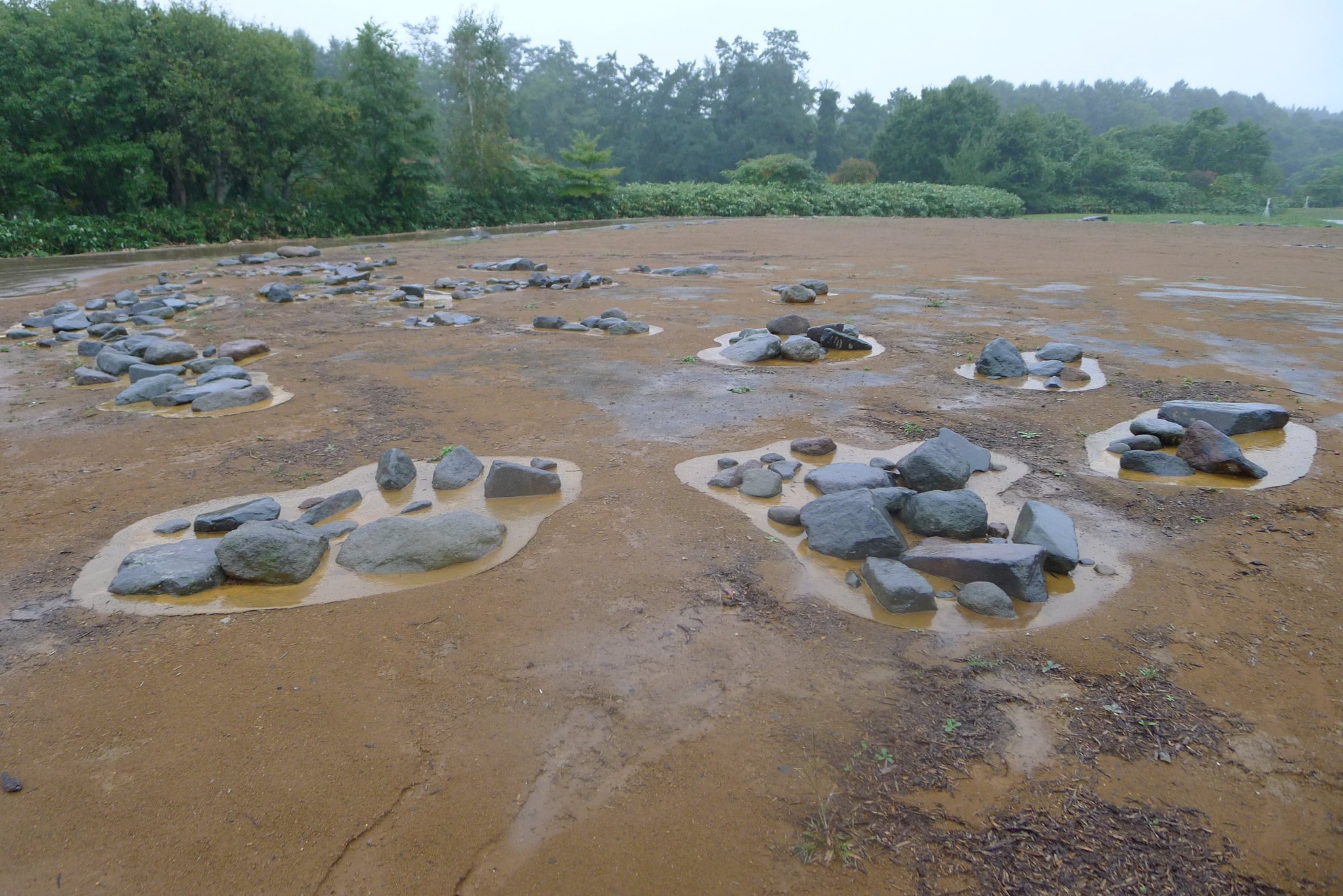
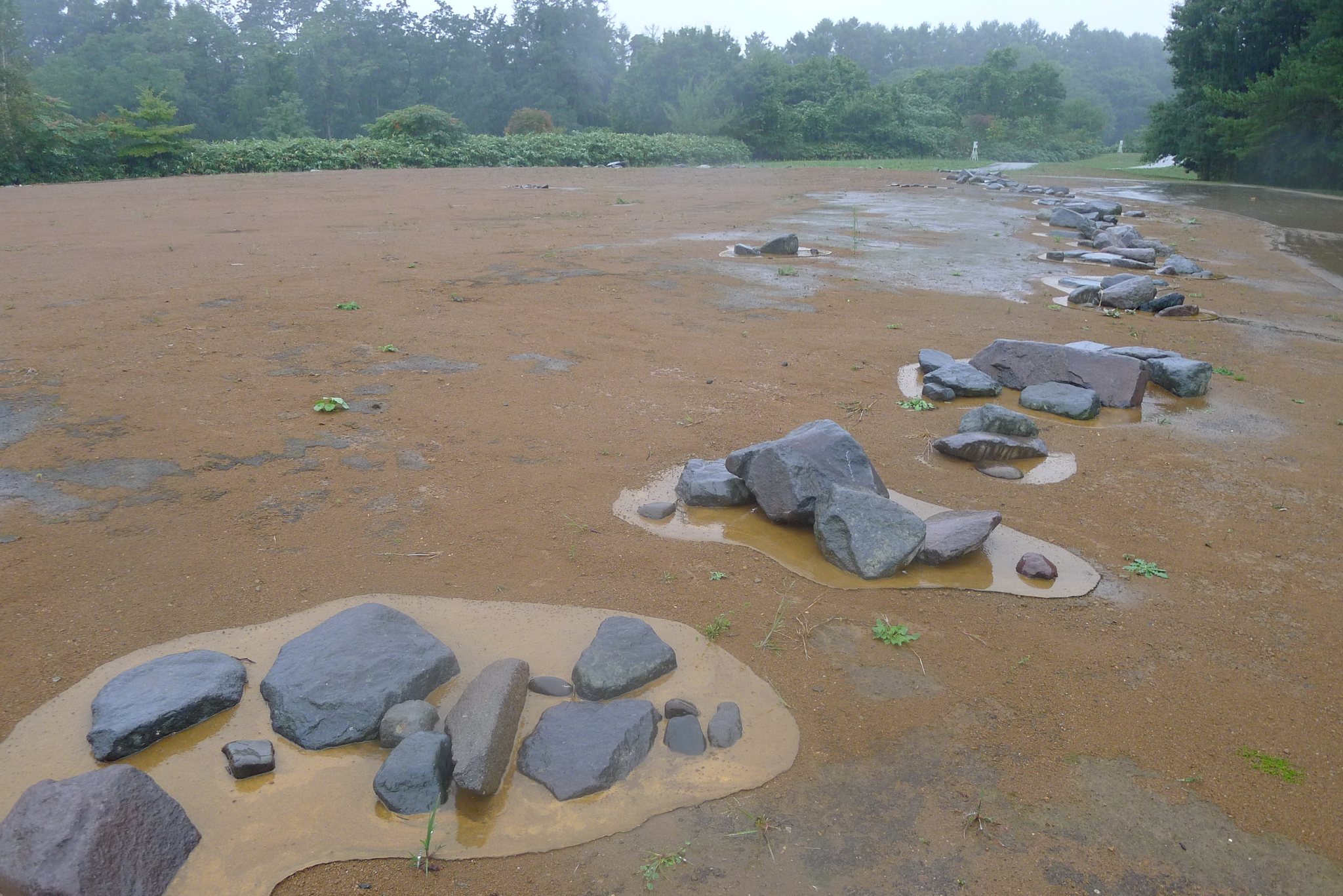
The stone circle is slightly elliptical, measuring approximately 48.5 meters along its major axis and 39.1 meters along its minor axis. It contains 77 stone assemblies set around the edge of an embankment created by raising the ground by as much as about 40 centimeters across a roughly 40-meter circular area. A stone circle is a monument made by arranging stones in a circular or broadly circular plan. At Ōmori Katsuyama, the stones mark the boundary of a deliberately raised surface.
The assemblies contain approximately 1,200 pyroxene-andesite stones, a volcanic stone containing pyroxene minerals. Most were collected from nearby riverbeds. The groups are generally irregular and clustered within areas about 1–3 meters across, while some form radial, circular, or rectangular patterns. Several assemblies rest in shallow hollows made to hold the stones. The stones are aligned so that the sunset over the summit of Mount Iwaki can be observed at the winter solstice.
Large Pit Dwelling
About 100 meters southwest of the stone circle stood a large, nearly circular pit dwelling. It measured approximately 13.77 meters by 12.8 meters, had walls about 51.5 centimeters high, and contained a central hearth. Its position forms part of the settlement evidence associated with the monument.
Occupation Features and Finds
Hearths and Settlement Traces
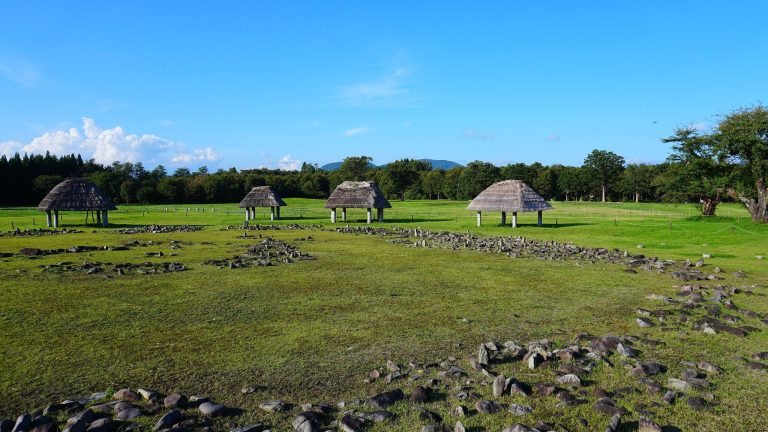
Features around the stone circle include stone-built hearths, buried pottery, pits, burned-soil areas, and numerous postholes. A pottery-disposal area was located at the tip of the hill. Together, these remains provide physical evidence for repeated activity and habitation around the monument during the Final Jōmon period.
Pottery and Stone Objects
Excavated objects include Jōmon pottery, stone arrowheads, knives, axes, plates, pounders, and grinding stones. Clay figurines and stone rods were also recovered. Approximately 250 disk-shaped stone objects, about 5–10 centimeters in diameter, were made from the same pyroxene andesite used for the stone-circle assemblies. Their possible association with ritual activity at the circle has been considered in interpreting the site.
Some pottery and clay objects carry designs comparable to material from the Kamegaoka Stone Age Site. Certain stone blades and burins resemble artifacts from the Tarukishi Site. These comparisons place the finds within broader archaeological relationships among sites in northern Japan.