Komakino Site: A Late Jomon Stone-Circle Settlement in Japan


Site at a Glance
- Rating
- 4.2
- Popularity
- Low
- Country
- Japan
- Primary era
- Bronze Age
- External website
- Open
- Eras represented
- Bronze Age
- Civilizations
- Jomon
- Site type
- Religious
- Remains
- Sanctuary
On this page9 sections
History
The Komakino Site is an archaeological settlement in Japan, near Aomori City, built by communities of the Jomon period during the early part of the Late Jomon phase, approximately 2000–1500 BC. The Jomon period was Japan’s prehistoric hunter-gatherer era, known for its cord-marked pottery. Komakino is especially associated with its large concentric stone circles and the evidence they provide for organized communal activity.
Early investigations
The site was known locally for many years, but systematic investigation began in the early 1980s. A teacher at Aomori Yamada High School excavated at Komakino and recovered objects associated with the Epi-Jomon period, an archaeological tradition centered mainly in Hokkaido that retained Jomon elements while incorporating new influences. In 1985, the Aomori City Board of Education carried out further excavation while preparing a history of a local village and recovered pottery.
Excavation of the stone circles
In 1989, the archaeology club of Aomori Yamada High School excavated the stone circles. From 1990, the Aomori City Board of Education continued the investigation, identifying remains of pit dwellings, a spring-related feature, burials, and a road-like feature. The scale of the circles and their position on a slope that had been partly leveled indicate that their construction demanded a large labor force and an extended period of work.
Protection and recognition
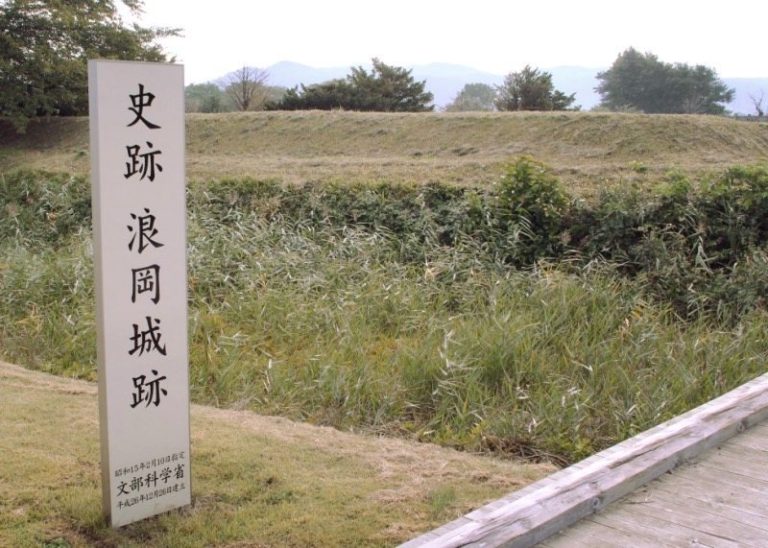
Komakino was designated a National Historic Site of Japan on March 17, 1995, and its protected area was expanded on August 13, 2001. In 2021, it became one of the geographically separate component sites within the UNESCO World Heritage serial property Jomon Prehistoric Sites in Northern Japan. Sixty-seven Late Jomon objects and one Epi-Jomon pottery item from the site became Aomori City tangible cultural properties in 2013. They are kept at the Komakino Site Protection Center.
The former Nozawa Elementary School, located about 1.5 kilometers from Komakino, closed in 2012 and was renovated in 2015 as the Aomori City Komakino Site Protection Center. Also known as Jomon Learning School Komakino House, it displays finds from Komakino and from other excavations in Aomori City.
Remains
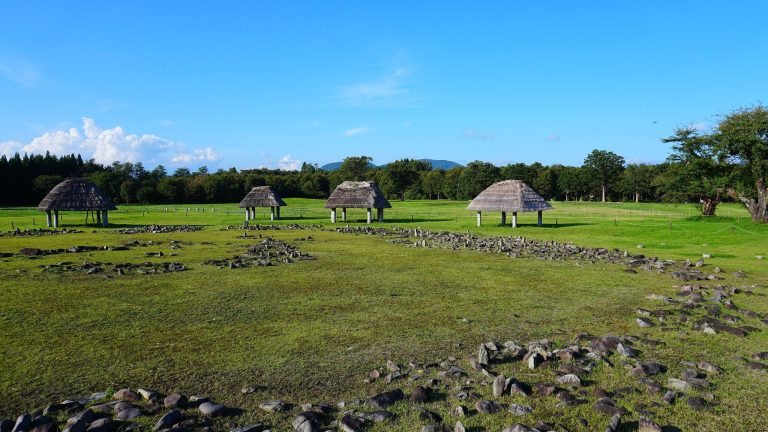
Komakino occupies an artificially flattened plateau between the Arakawa and Nyunai rivers, in the western foothills of the Hakkoda Mountains, overlooking the Aomori Plain. The wider site lies at elevations of approximately 80 to 160 meters, while the principal area is around 145 meters above sea level. Its remains include a large stone-circle complex, burial areas on the adjoining slope, settlement features, a spring, and objects connected with ritual activity.
Concentric stone circles
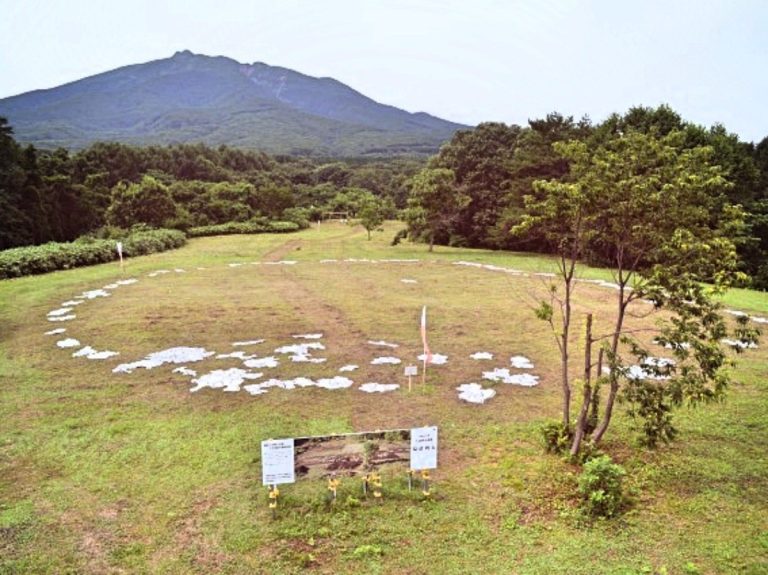
The central monument is a complex of concentric stone circles extending to about 55 meters in diameter. A central ring measures approximately 2.5 meters across, a middle ring about 29 meters, and an outer ring about 35 to 35.5 meters. Parts of a fourth ring survive, together with curved and straight stone alignments and smaller stone circles outside the main complex, some reaching about 4 meters in diameter.
Stones thought to have been brought from the Arakawa were set upright. Flat stones were placed horizontally beside them in several courses, with further upright stones arranged along the outer edges. This wall-like construction was repeated in three rings and, in some places, four. The arrangement is known as the “Komakino style.” A large jar-shaped pottery coffin lies within the stone arrangements.
Settlement and water features
The site also contains pit-dwelling remains, refuse deposits, pillar holes interpreted as traces of former buildings, a spring feature, and a road-like archaeological feature. Water still emerges from the spring. Local traditions describe the spring as the dwelling place of a dragon deity, while another story tells of a person being eaten by a large serpent after going there to drink. These traditions prompted investigation of the spring area.
Burials and ritual objects
More than 100 earth-pit graves occupy the gentle eastern slope adjoining the stone circles. They include burial pits and pottery coffins, and some contain objects resembling gravestones. Their forms vary considerably, with many displaying individual characteristics. Miniature pottery and clay figures shaped as animals and humans occur among the objects associated with the graves.
Large quantities of pottery were recovered around the graves. Some sherds show influence from the Jomon culture of Hokkaido, while other vessels may belong to the Epi-Jomon culture. More than 400 triangular stone plates, apparently used for ritual purposes, were found alongside circular stone plates also thought to have had ritual uses.
The upper part of the slope along the route used to reach the graves contains the stone circles. This arrangement has led to the suggestion that distinctions in social rank may already have existed during the Jomon period. A stone near the spring bears an inscription reading “Horse-Headed Kannon.” Kannon is a Buddhist figure associated with compassion, and its horse-headed manifestation is traditionally connected with protection for horses and animals. The inscription suggests that the area may have been treated as a place of religious belief.
Relationship with other Jomon sites
Similar remains have been identified at the Sannai-Maruyama Site to the north, a major Jomon-period archaeological site in Aomori Prefecture. Their similarity suggests that the two sites may have been related.