Tipu Sultan’s Summer Palace: A Mysorean Royal Residence in India
Site at a Glance
- Rating
- 3.9
- Popularity
- Very High
- Country
- India
- Primary era
- Early Modern
- External website
- Open
- Eras represented
- Early Modern
- Civilizations
- Unclassified
- Site type
- Domestic
- Remains
- Palace
On this page7 sections
History
Tipu Sultan’s Summer Palace is an Indo-Islamic royal residence in Bengaluru, India, built for the rulers of Mysore within Bangalore Fort between 1781 and 1791. Hyder Ali, the Mysorean ruler and military leader who preceded his son Tipu Sultan, began the palace in 1781, and construction was completed during Tipu Sultan’s reign. A Persian inscription inside the building refers to the laying of its foundations and the completion of its painting in 1791.
The Mysorean Court
Tipu Sultan ruled the Kingdom of Mysore from 1782 until his death in 1799. The palace served as his summer residence and included spaces associated with royal audiences and household life. Tipu Sultan, also known as the Tiger of Mysore, planned a throne on which he reportedly vowed not to sit until he had completely defeated the British army.
Tipu Sultan died during the Fourth Anglo-Mysore War, the final conflict between Mysore and the British East India Company and its allies. After his death, the British dismantled the planned throne and sold its parts at auction because the complete object was too costly for one purchaser. A representation of the intended throne is now displayed at the palace.
British Administration and Museum Use
Following Tipu Sultan’s death, the British administration used the palace as a secretariat. Its offices remained there until the administration moved to Attara Kacheri in 1868.
The building now functions as a museum presenting Tipu Sultan’s achievements and administration, the luxurious lifestyle of the royal family, and aspects of the period through scenes, portraits, clothing, weapons, and related objects. Government authorities maintain the palace, which is recognized as a monument of national importance. The wider Bangalore Fort area also contains a temple dedicated to Ganesh from 1790 and an art gallery with paintings, photographs, and sculptures.
Remains
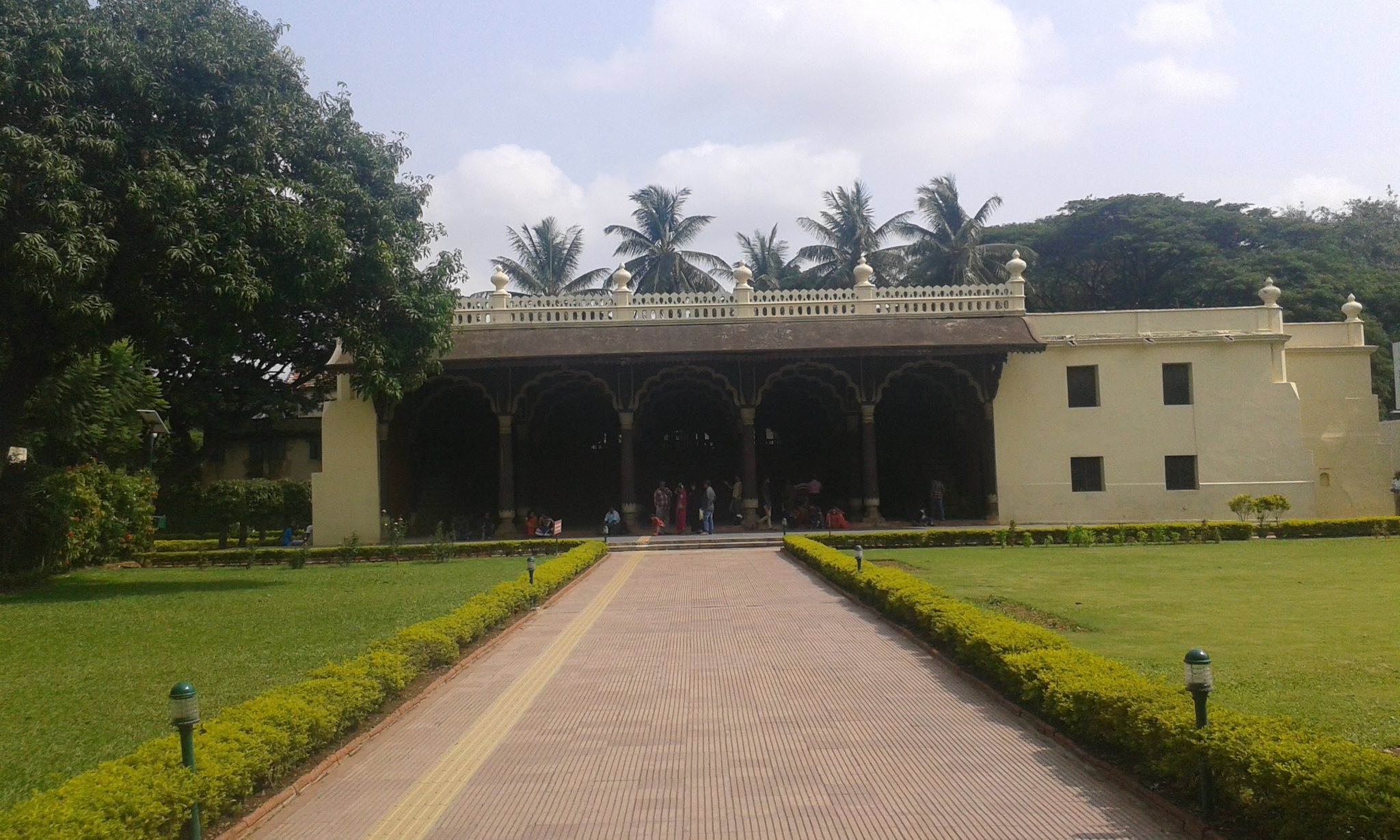
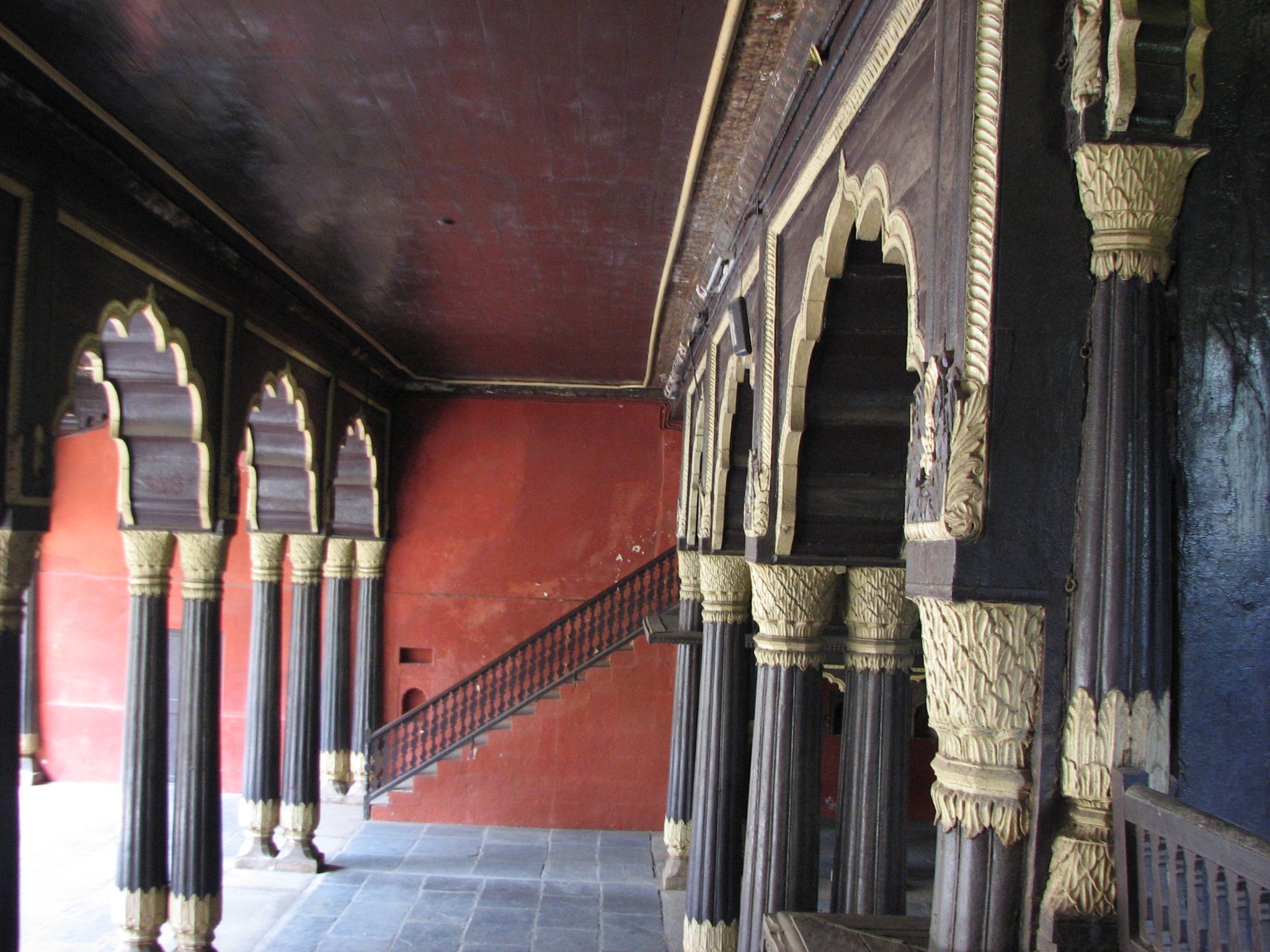
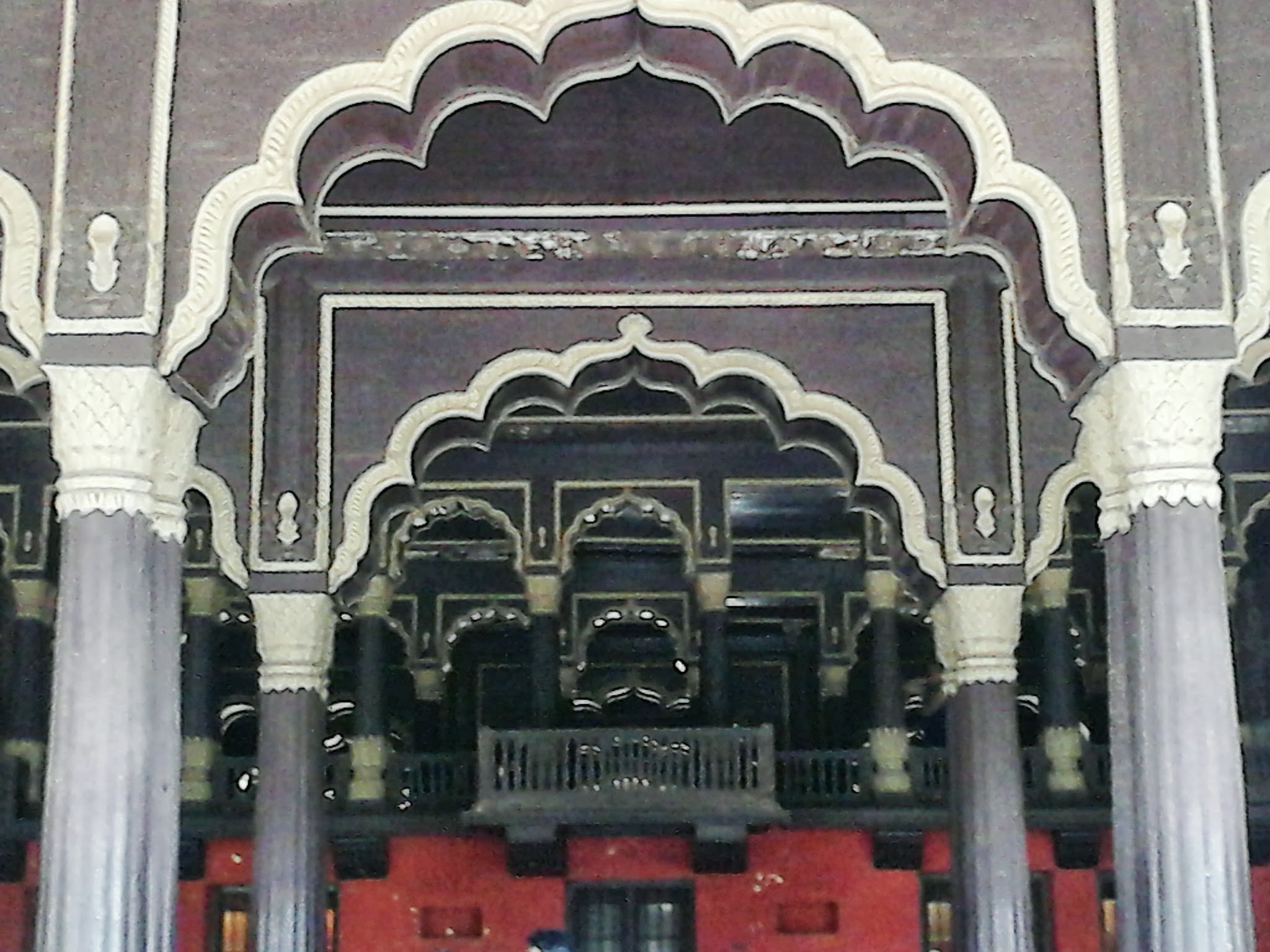
The palace is a two-storey Indo-Islamic building raised on a stone base. Its construction combines teak, other wood, stone, mortar, and plaster, with the principal structure formed of teak. Finely carved wooden pillars support the two levels, whose arches and balconies organize the building around an upper floor with projecting eastern and western balconies.
Royal Residence and Court Spaces
Four staircases lead to a large rectangular hall, four corner rooms, and the two projecting balconies. Tipu Sultan is believed to have conducted his durbar, or formal court and audience assembly, from the eastern and western balconies. The four smaller rooms at the upper-floor corners served as zenana quarters, the secluded residential rooms traditionally used by women of a South Asian royal household.
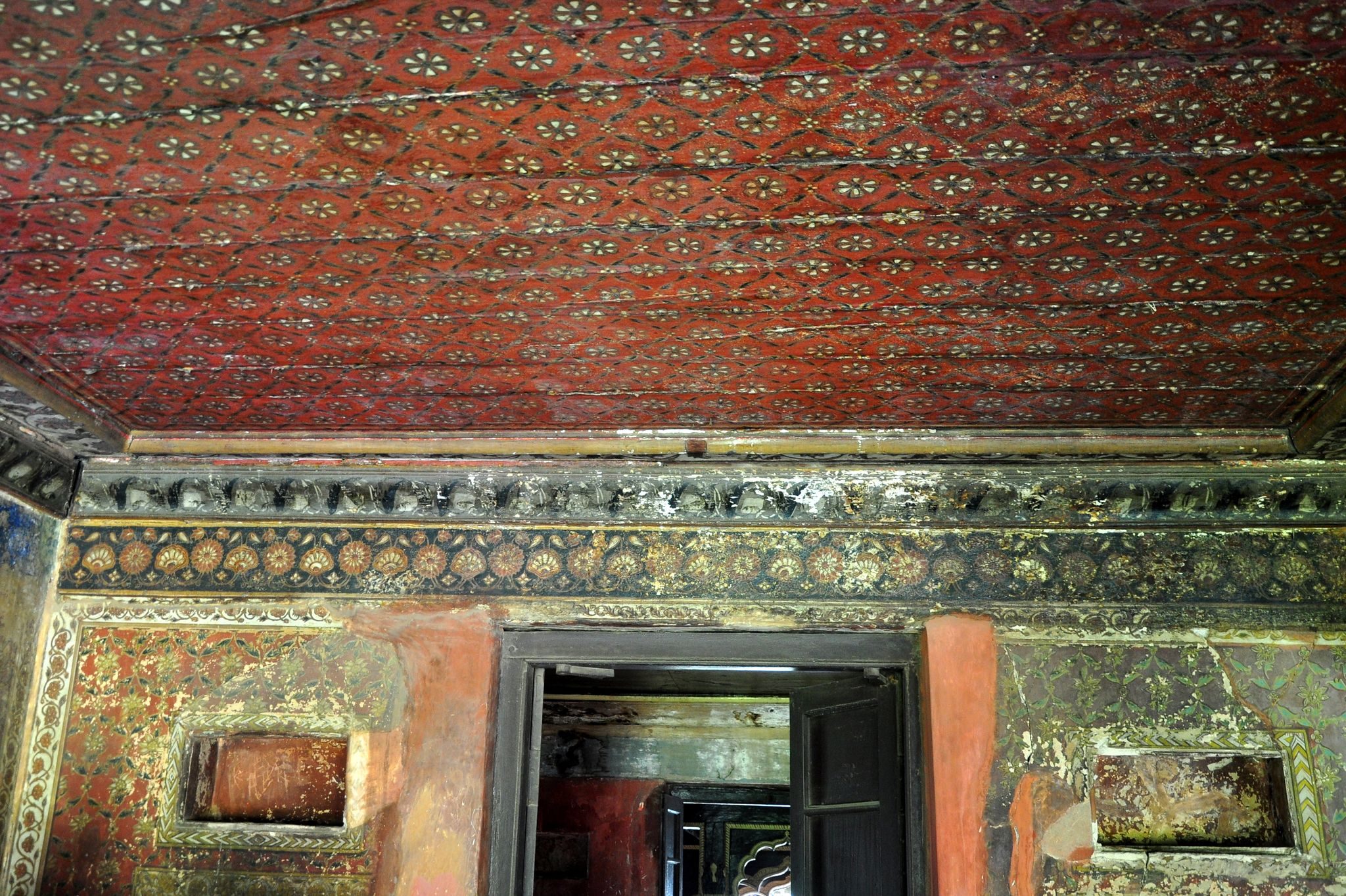
Massive paired teak pillars carry large dark-wood beams through carved brackets and finely carved, many-lobed arches. The arches and brackets were painted in two colors, while floral carvings at the pillar bases were designed to make the supports appear to emerge from flowers. Floral motifs also decorate the walls and ceilings.
Inscription and Museum Rooms
A Persian inscription carved on an interior panel praises the palace as a lofty “house of happiness.” Its poem encodes the dates 1781 and 1791 through Zar, a calculation system devised by Tipu Sultan that used letter values to express dates. The inscription also invokes Khizir, a revered Islamic and Persianate prophetic figure associated with wisdom and immortality.
Four ground-floor rooms have been converted into museum galleries. Their displays include explanatory panels, paintings of period scenes, portraits, weapons and armor, Tipu Sultan’s gold- and silver-inlaid clothing, and his crown set on silver and gold pedestals. Silver vessels presented by a general to Hyder Ali are also displayed.
The collections include a replica of Tipu Sultan’s Tiger, a musical automaton whose original is held by the Victoria and Albert Museum in London. The representation of Tipu Sultan’s intended throne is shown as a teak structure covered with gold leaf and inlaid with emeralds.
Garden Setting
A garden and lawn extend on both sides of the entrance path in front of the palace. Flowering shrubs from the Rubiaceae family, including Mussaenda and Ixora, form part of the planted grounds.