Kraton Kacirebonan: A Cirebon Royal Palace in Indonesia
Site at a Glance
- Rating
- 4.6
- Popularity
- Medium
- Country
- Indonesia
- Primary era
- Modern
- External website
- Open
- Eras represented
- Modern
- Civilizations
- Unclassified
- Site type
- Domestic
- Remains
- Palace
On this page8 sections
History
Kraton Kacirebonan is a royal palace in Cirebon, Indonesia, associated with the Cirebon court and the early nineteenth-century establishment of the Kacirebonan Sultanate. Its architecture and court traditions reflect the meeting of Sundanese and Javanese cultures, as well as Islamic, Chinese, Dutch, and broader European influences.
The Cirebon Sultanate
The Cirebon Sultanate existed from 1522 to 1677 and maintained close connections with the Demak Sultanate, an influential early Islamic state in Java. Cirebon was established as a sultanate in 1552 by a commander of Demak. Its principal founder is also identified with Sunan Gunung Jati, an Islamic religious leader and ruler associated with the early Islamic states of western Java, including Cirebon and Banten.
During its early formation, the Cirebon court promoted Islam beyond the coast by sending Muslim religious scholars, or ulama, into inland West Java. Cirebon, together with Banten, contributed to the Islamization of Sundanese communities in West Java and of coastal Java. The sultanate’s position between Javanese and Sundanese cultural regions shaped its language, arts, and architecture, while its port encouraged contact with Chinese, Arab-Islamic, and European communities.
The divisions of the royal house
The first division of the Cirebon Sultanate took place in 1677, when the three sons of Panembahan Girilaya were installed as rulers. Their offices created the Kasepuhan, Kanoman, and Kaprabonan branches, ruled respectively by Sultan Sepuh, Sultan Anom, and Panembahan Cirebon. A panembahan was a Javanese court title used by a ruler or high-ranking noble.
The second division occurred in 1807 during the reign of Sultan Anom IV. His son, Prince Raja Kanoman, sought to establish a separate sultanate. A decree from the Governor-General of the Dutch East Indies, the colonial administration governing the Indonesian archipelago, recognized him as Sultan of Kacirebonan. The decree restricted his sons and successors to the title of prince rather than sultan.
Prince Raja Kanoman and the palace’s foundation
Prince Raja Kanoman had resisted colonial taxation and was arrested by the Dutch. He was held at Victoria Fortress in Ambon, stripped of his title, and deprived of his rights to the Kanoman Sultanate. The Dutch later returned him to Cirebon in an effort to end the continuing resistance. His aristocratic status was restored, but his dynastic rights were not.
Prince Raja Kanoman returned to Cirebon in 1808 and lived within the palace complex. He adopted the title Sultan Kacirebonan Amiril Mukminin Sultan Muhammad Khaeruddin, also called Sultan Carbon. He did not initially possess a palace and rejected a Dutch pension until his death in 1814. The palace dates from the early nineteenth century, and its construction is associated with the second division of the sultanate.
After Sultan Kacirebonan I died in 1814, his consort, Queen Resminingpuri, continued the construction of the palace. She used pension money from the Dutch that the sultan had previously refused. At the time, she was living in the Taman Sari cave area of Sunyaragi with her five-year-old son, Prince Raja Madenda Hidayat, who later became Sultan Kacirebonan II.
Continuing cultural role
The former Cirebon sultanate palaces, including Kasepuhan, Kanoman, Kaprabonan, and Kacirebonan, continue to function as cultural institutions. They preserve Cirebon heritage, maintain traditional ceremonies, and support regional arts, although the Cirebon royal lineage no longer exercises effective political power. The four palace complexes were identified as requiring protection, with local police guards assigned at each palace.
Remains
Layout and court buildings
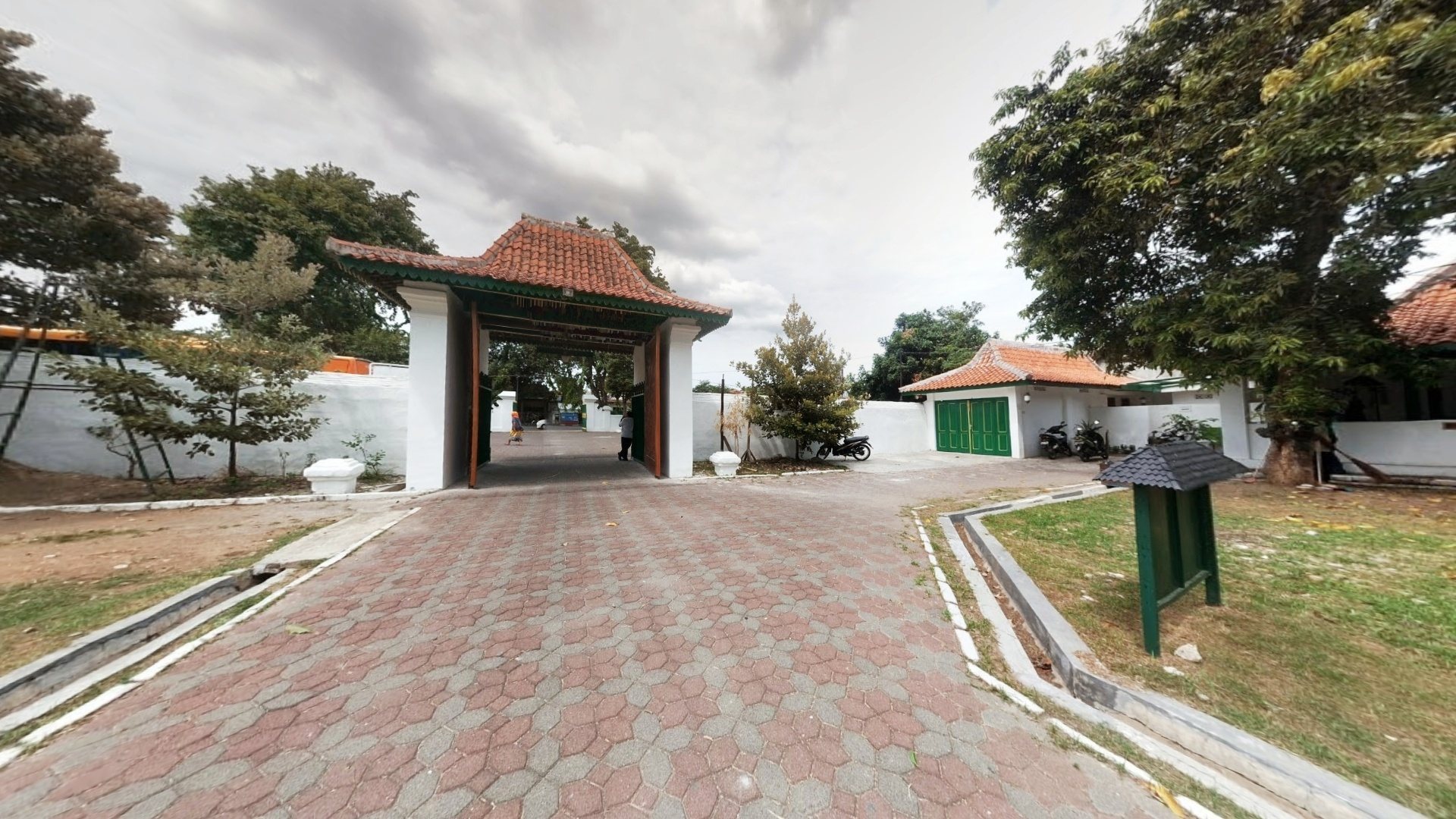
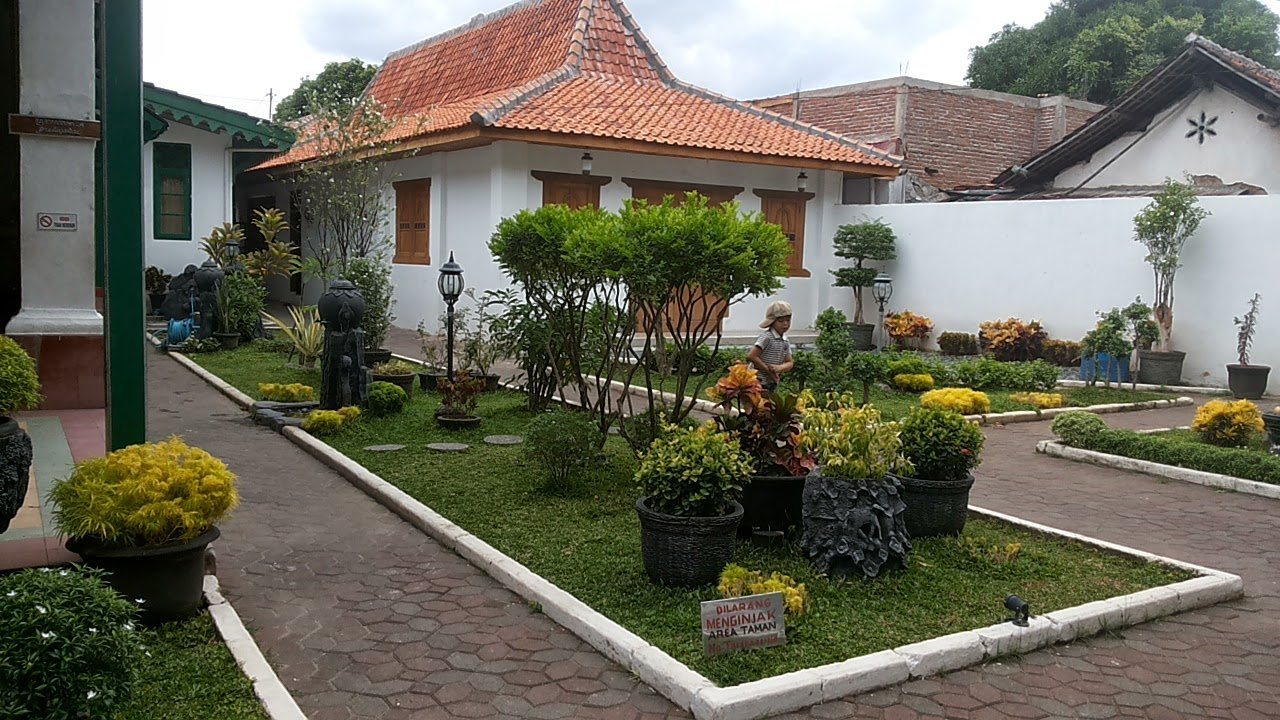
Kraton Kacirebonan stands in Pulasaren, Pekalipan, Cirebon, about one kilometre southwest of Kasepuhan Palace and approximately 500 metres south of Kraton Kanoman. The complex covers about 46,500 square metres and follows a north-south orientation, as do the other Cirebon palaces. Its architectural character combines Sundanese, Javanese, Islamic, Chinese, Dutch, and wider European elements, reflecting the cultural exchanges that shaped Cirebon.
During the early construction stages, Queen Resminingpuri built the palace’s main building, the Paseban, together with a mosque. A paseban is a reception or audience building in a Javanese court complex. These buildings formed part of the palace’s early court setting and belong to the construction associated with the Kacirebonan branch’s establishment.
Objects and artistic traditions
The palace has housed historical objects including keris, wayang puppets, military equipment, and gamelan instruments. A keris is a distinctive asymmetrical Indonesian or Malay dagger, while wayang refers to Indonesian puppet theatre. Gamelan is an ensemble of tuned percussion and other instruments central to many Indonesian musical traditions.
Cirebon’s artistic environment also preserves influences from Majapahit red-brick masonry and Javanese Mataram court culture, alongside Chinese and local traditions. These influences are visible in Cirebon batik, particularly the Megamendung cloud motif. The former Cirebon sultanate flag, Macan Ali, uses Arabic calligraphy arranged in the form of a panther or tiger. Its imagery expresses Islamic influence and recalls the tiger banner associated with Siliwangi, the Sundanese Hindu ruler of Pakuan Pajajaran.
Macan Ali, Singa Barong, and Paksi Naga Liman recur as motifs in Cirebon batik. Singa Barong and Paksi Naga Liman are royal carriages associated with the Kasepuhan and Kanoman palaces. Each combines forms resembling an eagle, elephant, and dragon, bringing together Indian Hindu, Arab-Islamic, and Chinese references. Another major regional tradition is Topeng Cirebon, a mask dance inspired by the Javanese Panji cycles, the literary and performance traditions centred on the adventures of the hero Panji and his relationships with other royal figures.