Aukštadvaris Hillfort: A Medieval Fortified Settlement in Lithuania
Site at a Glance
- Rating
- 4.7
- Popularity
- Very Low
- Country
- Lithuania
- Primary era
- Medieval
- Eras represented
- Iron Age, Classical, Medieval, Early Modern
- Civilizations
- Grand Duchy of Lithuania
- Site type
- Military
- Remains
- Castle
On this page10 sections
History
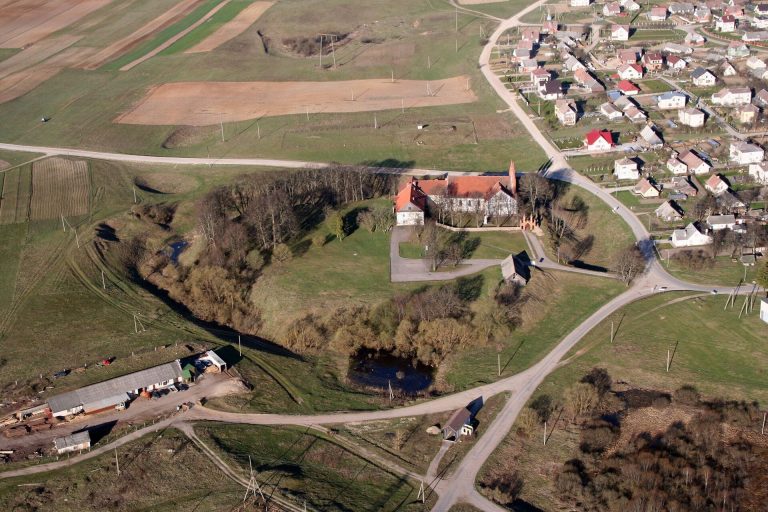
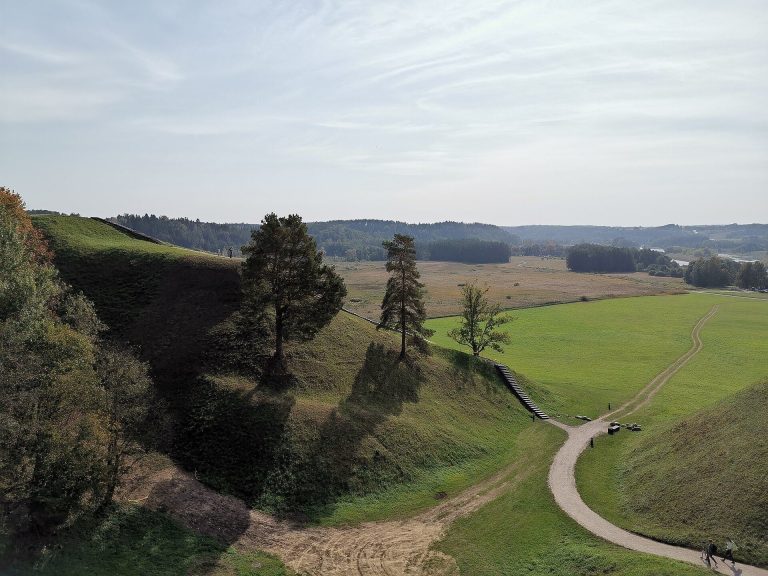
Aukštadvaris hillfort is a fortified settlement and castle site in Lithuania, on the southwestern edge of Aukštadvaris beside the left bank of the Verknė. A wooden castle stood here from the tenth to the fourteenth century, when the hillfort formed the defensive centre of the old part of the town and its associated settlement. After its military importance declined, the site became an estate of the Grand Duke, the supreme ruler of the medieval Lithuanian state.
Navinpilio Castle
The castle on the hillfort was known as Navinpilio. On 14 February 1381, Crusader forces attacked it with cannon. The castle surrendered and was burned, but the Lithuanians rebuilt it soon afterwards. Navinpilio appears again in references from January 1382 and from 1384, showing that the site remained involved in the conflicts of the period.
In the second half of the first millennium, people living in the settlement below apparently used the hillfort mainly as a refuge when danger threatened. From the tenth to the fourteenth century, its defensive installations were strengthened. Later wooden estate buildings were erected on the plateau between the fifteenth and seventeenth centuries. They probably belonged to I. Liacki, a nobleman who had fled Moscow in the sixteenth century.
Archaeological investigation
Petras Tarasenka described the hillfort in 1928. Between 1957 and 1960, the Lithuanian Institute of History investigated 958 square metres in the western and southwestern parts of the plateau under Vytautas Daugudis. Institute archaeologists led by A. Bernotaitė-Gerdvilienė examined about 2,400 square metres of the settlement below the hillfort in 1957 and 1958.
The earliest investigated occupation dates from the second to the first century BC. The lower settlement developed from the third century to the fourteenth century, while the hilltop was occupied or used during several later phases. The excavations yielded about 1,800 artefacts and approximately 19,000 pottery sherds, now held by the Lithuanian National Museum.
A local legend tells of the castle ruler’s daughter, who drowned in Pilaitė Lake after frightened horses dragged her ornate carriage, drawn by four horses, into the water. The carriage supposedly held a chest of money and a small dog. The story says that people later saw the chest floating on the lake before sunrise, with the dog sitting on it.
Remains
Hilltop defenses and buildings
Plateau and rampart
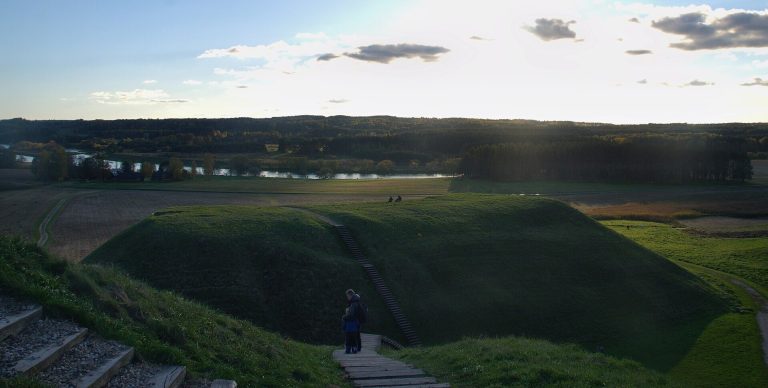
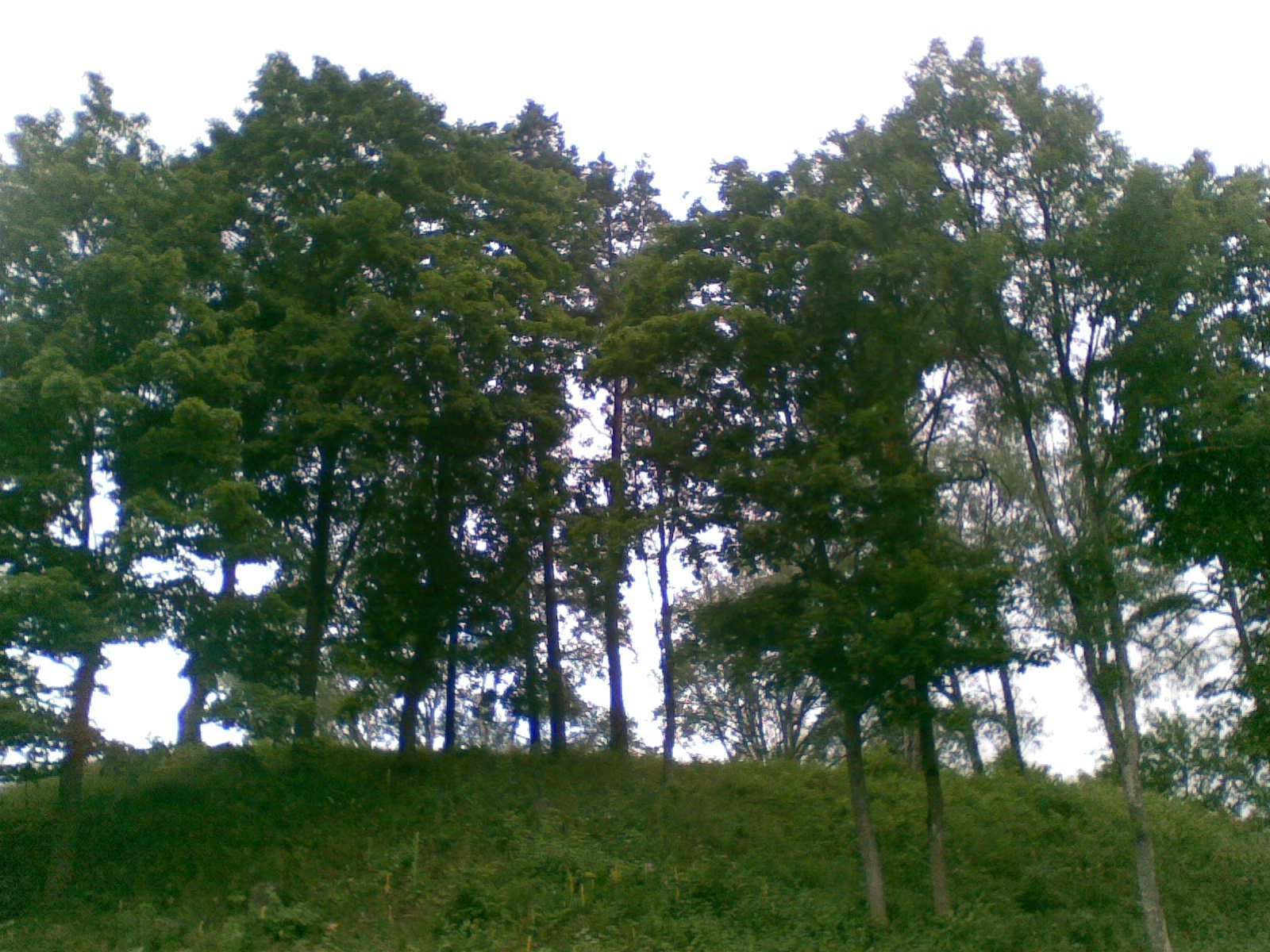
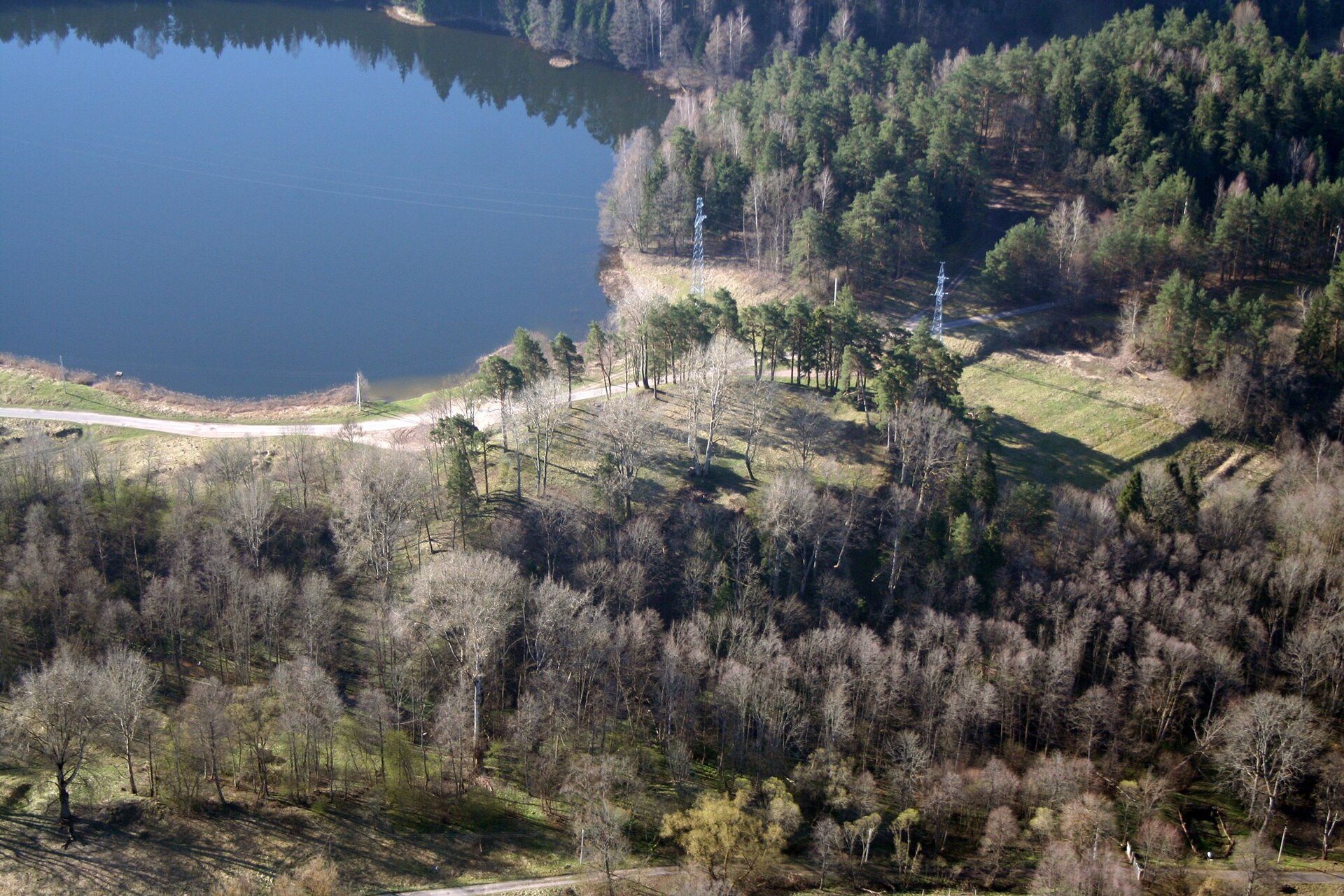
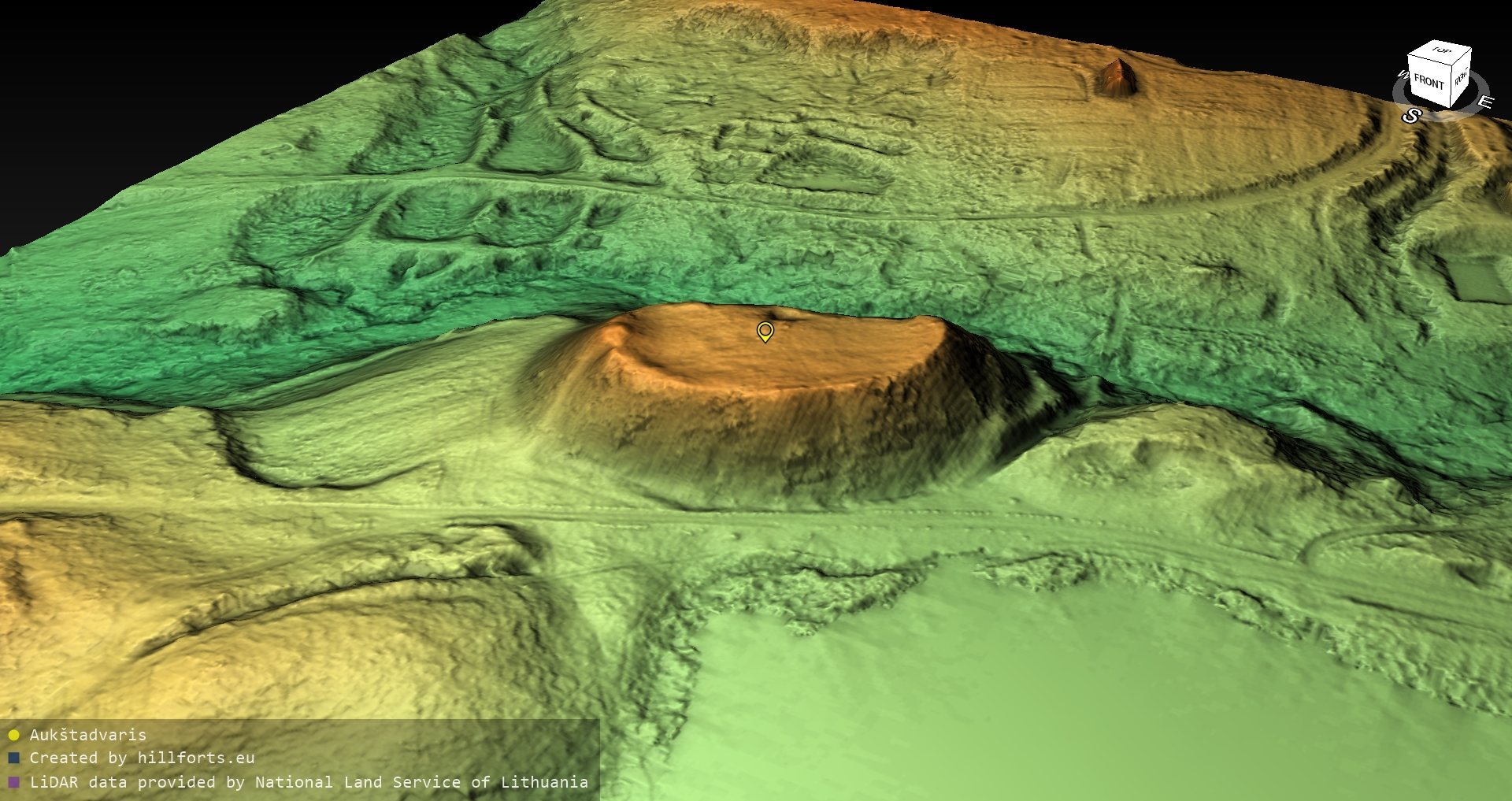
The hillfort rises above steep slopes between 9 and 15 metres high. Its oval plateau measures about 80 by 50 metres and follows an east-west axis. A surviving rampart, an artificial bank forming part of a fortification, was approximately 14 metres wide and between 0.6 and 2 metres high. Pilaitė Lake, also called Zomkelio Lake, lies southeast of the hillfort and is now part of the Verknė Reservoir.
Wooden buildings
Six log-built residential and farm buildings were found inside the rampart and date from the tenth to the fourteenth century. A log-built structure is a building made from horizontally laid logs joined at the corners. The associated remains include metal artefacts, pottery, bones of hunted and domestic animals, and charred grains of cereals and legumes. The upper cultural layer, an accumulation of soil containing remains from human occupation, also contained wooden estate buildings from the fifteenth to seventeenth centuries.
Lower settlement
Early occupation
The settlement occupied about two hectares on the eastern, southern, and western lower slopes. Its earliest excavated phase, dating from the second to the first century BC, included wooden defensive barriers, houses, and farm buildings. Stone axes, grinding stones, bone awls, pins, iron slag, and hand-built pottery with faintly brushed surfaces were found with these remains.
Settlement from the first to fourteenth centuries
The first- to fourth-century cultural layer contained the remains of a long post-built structure associated with the Baltic tribes, historically related Indo-European peoples of the eastern Baltic region. It also produced metal artefacts, half of a Dyakovo-type weight, and hand-built pottery with brushed and smoothed surfaces. Later occupation included wooden buildings, artefacts comparable to those from the hillfort, and small furnaces used for smelting metal. The settlement’s cultural layer was heavily disturbed, but its surviving remains preserve evidence of domestic activity, craft production, and the site’s long occupation.