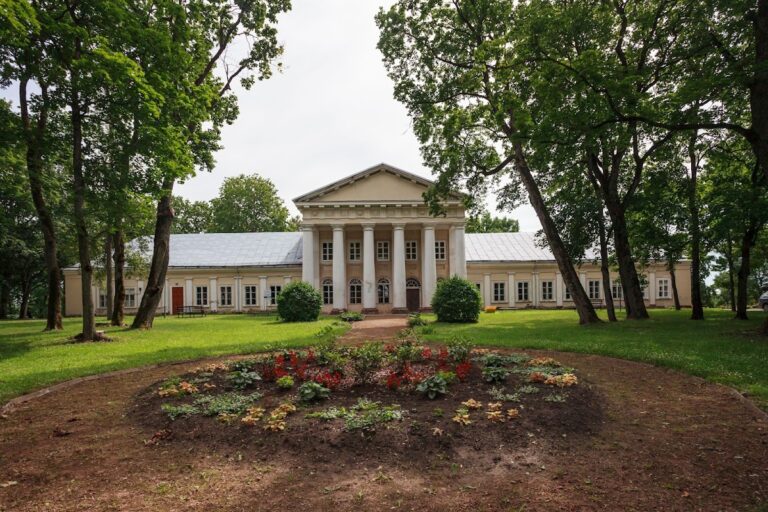
Šeimyniškėliai Hillfort: A Medieval Lithuanian Castle Site
Site at a Glance
- Rating
- 4.7
- Popularity
- Low
- Country
- Lithuania
- Primary era
- Medieval
- Eras represented
- Medieval, Modern
- Civilizations
- Grand Duchy of Lithuania
- Site type
- Military
- Remains
- Castle
On this page11 sections
History
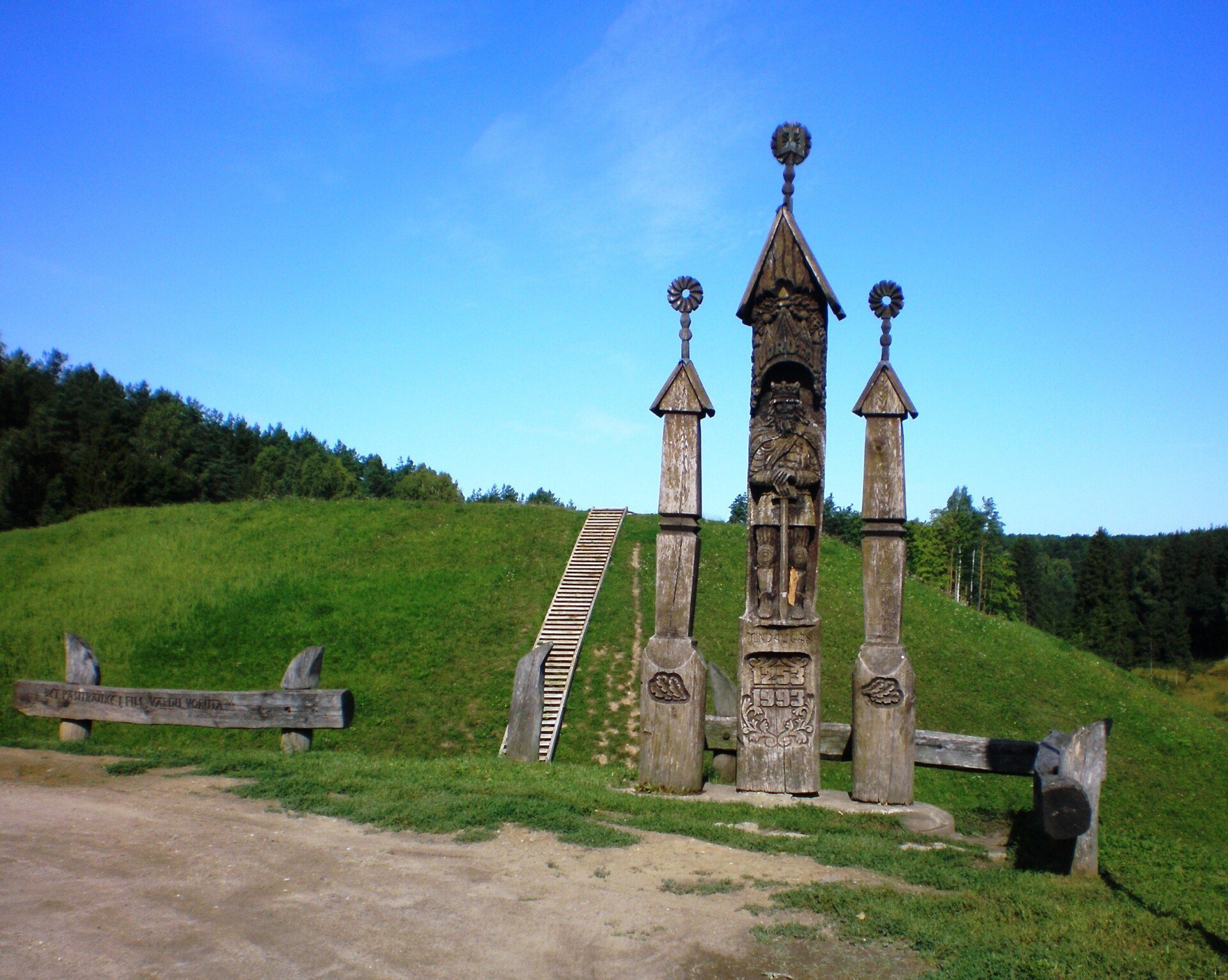
Šeimyniškėliai hillfort is a medieval Lithuanian stronghold in Anykščiai, Lithuania, constructed in 1232 during the consolidation of the Lithuanian state. Also known as Voruta, it is associated with the only known castle of Mindaugas, the first and only crowned king of medieval Lithuania.
The castle of Voruta
A powerful wooden castle was established in the thirteenth century on a previously uninhabited site. Dendrochronology, the dating of wood through its annual growth rings, places the hillfort’s construction in 1232. The castle was rebuilt in the fourteenth century, when the site continued to be used as a fortified settlement.
In 1251, Mindaugas defended himself at Voruta against an assault by his rival, the Lithuanian prince Tautvilas. The Livonian Order, a Catholic military-religious order active in the medieval eastern Baltic, supported Mindaugas during the conflict. This episode connects the hillfort with the political struggles surrounding the formation of medieval Lithuania.
Archaeological investigation and modern care
Between 1990 and 2005, archaeologist Gintautas Zabiela investigated the entire hillfort platform and cut sections through both ramparts and the slopes. The work revealed fortification and building remains, hearths, wheel-thrown pottery, animal bones, and other finds from the thirteenth and fourteenth centuries. Šeimyniškėliai is the only completely investigated hillfort in Lithuania and is among the most extensively investigated in the eastern Baltic.
The hillfort was widely known in Lithuania and attracted excursions until the mid-twentieth century. The writer Antanas Vienuolis, who lived in Anykščiai, organized visits to the site. After his death in 1957, interest declined, and the hillfort became overgrown. This neglect was partly related to Soviet ideological hostility toward hillforts connected with Lithuanian statehood.
Near the end of the twentieth century, history teacher Saulius Nefas began efforts to clear and manage the site, including work parties that removed trees and shrubs. From 1997, the mayors of Anykščiai district pursued plans to build a wooden Voruta Castle within the hillfort area. Declarations supporting the project were adopted in 1999 and 2004, with the latter also signed by President Valdas Adamkus. A technical project followed in 2006.
Remains
Hillfort layout and medieval archaeological remains
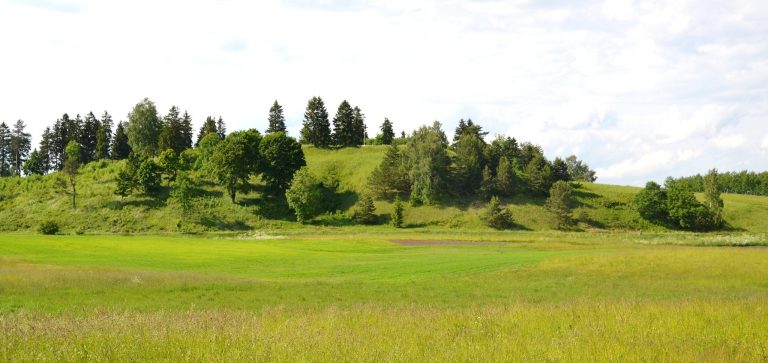
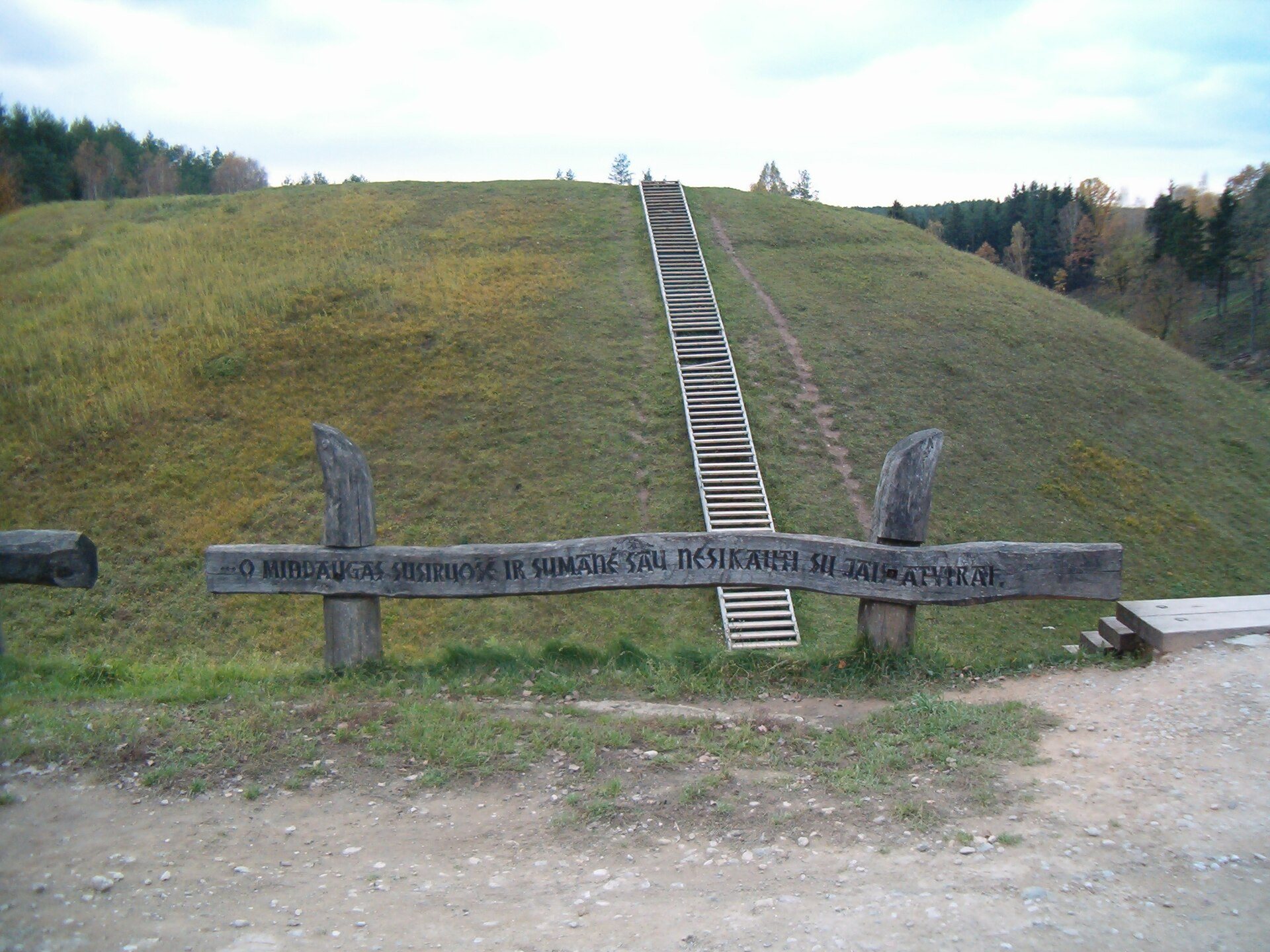
The hillfort occupies a raised promontory on the northern outskirts of Anykščiai, between Šeimyniškėliai and Naujieji Elmininkai. The Varelis runs along its northwestern foot, while the Volupis borders its southeastern side. The central platform is about 80 metres long, 35 metres wide at the southeastern end, and 23 metres wide at the northwestern end. It covers approximately 3,000 square metres.
Ramparts and ditches
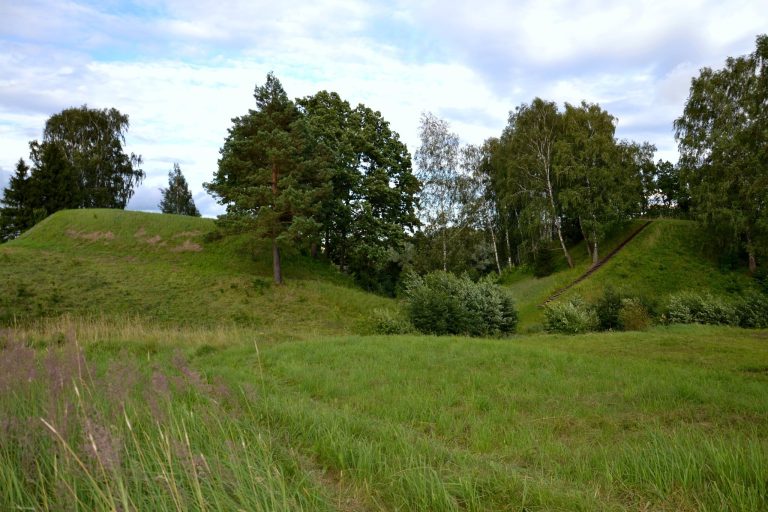
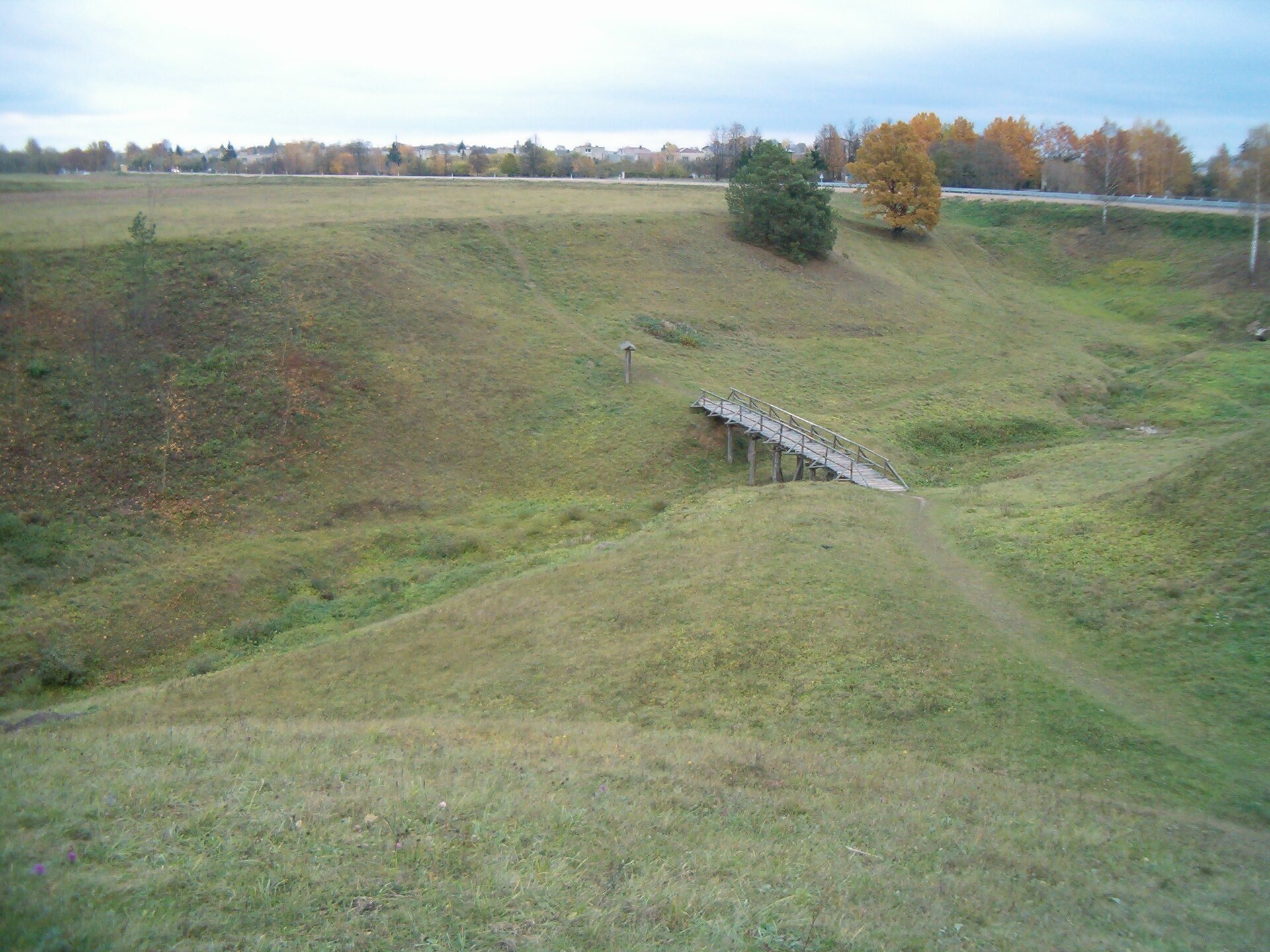
A southeastern rampart rises about 5 metres and measures 15 metres across. A second rampart on the opposite side of the platform is approximately 2 metres high and 12 metres wide. Ditches separate the hillfort from the surrounding higher ground at both ramparts, with outer fortified areas beyond them. The slopes are steep and range from 12 to 15 metres in height.
Wooden castle remains
Excavation exposed remains of a wooden castle, its defensive works, associated buildings, and hearths. The recovered material belongs mainly to the thirteenth and fourteenth centuries and includes wheel-thrown pottery and animal bones. Together, these remains indicate the organization of a fortified medieval settlement on the central platform.
Settlement and burial ground
A settlement covering approximately 2 hectares lies west of the hillfort. It dates from the thirteenth and fourteenth centuries. Beyond the settlement is a burial ground used from the thirteenth through the eighteenth century, extending the archaeological landscape beyond the fortified platform.
Wooden structures associated with Voruta
Bridge across the Varelis
A wooden bridge crossing the Varelis was built in 2000 as the first structure of the planned wooden-castle complex. It forms part of the modern reconstruction project associated with Voruta.
Observation tower
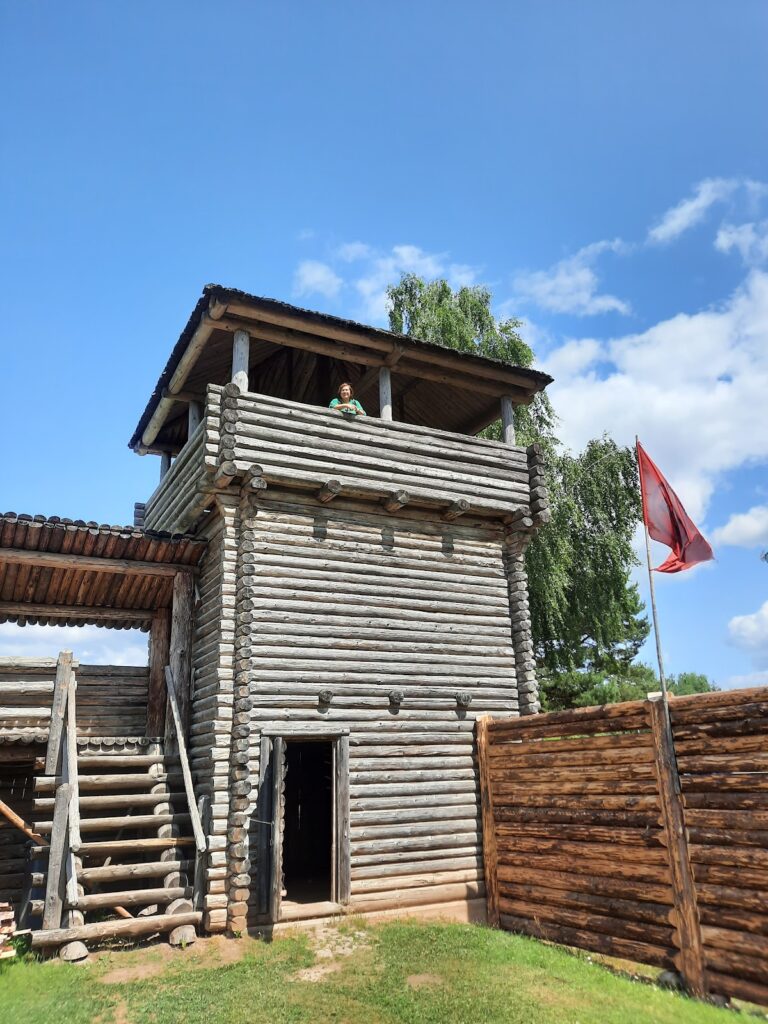
A wooden observation tower was erected beside the hillfort in summer 2004 for educational activities connected with the former castle. It provides a place to view a model of the castle and archaeological finds from the site.