Günterstal Convent: A Cistercian Nunnery in Freiburg, Germany
Site at a Glance
- Rating
- 5
- Popularity
- Very Low
- Country
- Germany
- Primary era
- Modern
- External website
- Open
- Eras represented
- Early Modern, Modern
- Civilizations
- Grand Duchy of Baden, Habsburg, Holy Roman Empire
- Site type
- Religious
- Remains
- Monastery
On this page10 sections
History
Günterstal Convent was a Cistercian nunnery in present-day Günterstal, Freiburg im Breisgau, Germany, that existed from 1221 to 1806. The Cistercian Order was a Catholic monastic tradition emphasizing communal worship and agricultural self-sufficiency. The year 1221 appears in later presentations of the convent, while the first surviving reference dates to 15 September 1224, when Konrad II of Tegerfelden, Bishop of Constance, consecrated an altar in its unfinished chapel. The community was probably admitted to the Cistercian Order soon afterward.
Foundation and medieval development
Tradition attributes the foundation to a nobleman from Kybfelsen Castle, who established the convent for his daughters Adelheid and Berta. Other women joined them, and the new community soon came into contact with Tennenbach Abbey, a Cistercian monastery. The abbot of Tennenbach became Günterstal’s pater immediatus, the supervising abbot responsible for visitations and for overseeing the election and installation of the abbess.
Pope Gregory IX confirmed the convent’s possessions in 1233. The community moved to Oberried in 1238 and returned to Günterstal six years later. In 1246 Pope Innocent IV confirmed its enlarged possessions and rights, including the Günterstal estate acquired from St Peter’s Abbey in exchange for a farm at Scherzingen. By 1344, the convent held property in as many as 90 settlements. Its possessions included an estate at Mundenhof, now the site of a municipal animal enclosure and park, while Günterstal itself contained about 25 houses.
The convent’s community included aristocratic nuns, lay sisters, and servants. Tennenbach supplied its chaplain and confessor, while the nuns participated in agricultural expansion through forest clearance. Noble families such as the Küchlin, Geben, Schnewlin, Falkenstein, and Blumegg supported the institution with donations and provided its secular advocates, or Vögte, who represented and protected ecclesiastical interests. Women who entered Günterstal transferred their property to the convent, and its abbesses held seats and votes in the estates of Further Austria, the Habsburg-ruled territory in the Upper Rhine and southwestern German regions.
War, reform, and rebuilding
A flood damaged the convent in 1486, and warfare brought repeated plundering. During the Peasants’ War, a major rural uprising in 1525, Abbess Agnes von Tusslingen fled to Freiburg in May. She later died there, while the convent claimed 2,118 gulden in compensation for its losses. In 1632 the nuns escaped the Swedish army by fleeing to Rheinau Abbey.
Under Abbess Agnes von Greuth, the convent released its subjects from serfdom in 1674. After its finances improved, the community decided in 1727 to replace the old buildings. From 1728, under Abbess Maria Franziska Cajetana von Zurthannen, a completely new Baroque complex was built to designs by Peter Thumb. The Baroque style used elaborate spatial planning, monumental forms, and richly composed decoration. The rebuilding included a new convent church.
Günterstal survived the Josephine reforms of the 1780s, which restricted or dissolved religious institutions considered insufficiently useful for pastoral or social purposes. The Electorate of Baden abolished the Breisgau religious houses on 30 January 1806 and formally took possession of Günterstal Convent on 3 February. The abbess and nuns received state pensions and left before 25 October. The last abbess, Maria Francisca von Thurn und Valsassina, held office from 1770 until the dissolution. The final surviving member of the community died in 1843.
Industrial and social reuse
On 5 September 1812, Friedrich Mez & Co. bought the convent buildings, ancillary buildings, and land for 8,000 gulden. The company established a cotton mill, which was auctioned at a loss in 1817. Under Benedikt and Marquard von Hermann, the mill employed mainly children aged 12 to 14.
A fire during the night of 3 to 4 April 1829 almost completely destroyed the mill. The south and west wings of the former convent were lost, while the other two wings burned down to the first floor. Suspicion of arson led to a reward for information. The surviving wings were rebuilt. A brewery replaced the former mill, and a weaving mill operated in an ancillary building.
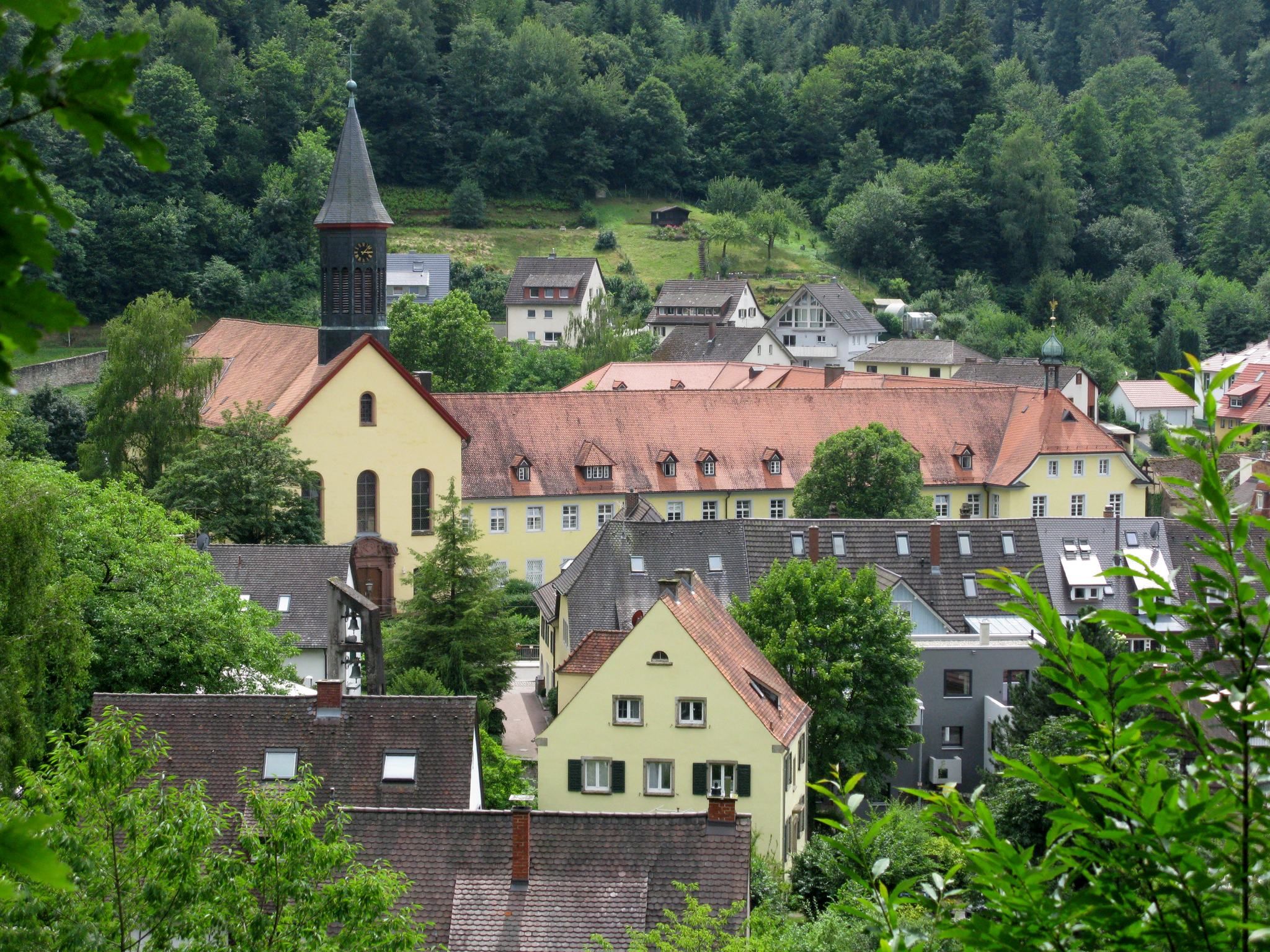
The brewery changed hands in 1845, while the von Hermann family continued the weaving enterprise. From 1859 it operated as Mechanische Baumwoll-Weberei Güntersthal until the Swiss shareholder Gottlieb Siebenmann took full control. The Freiburg Catholic Orphanage Foundation acquired the brewery in 1892 and established an orphanage there, then purchased the former convent buildings in 1896. The rebuilt complex now accommodates the boarding house of the Deutsch-Französisches Gymnasium Freiburg, a kindergarten, and other social facilities.
Remains
Former convent complex
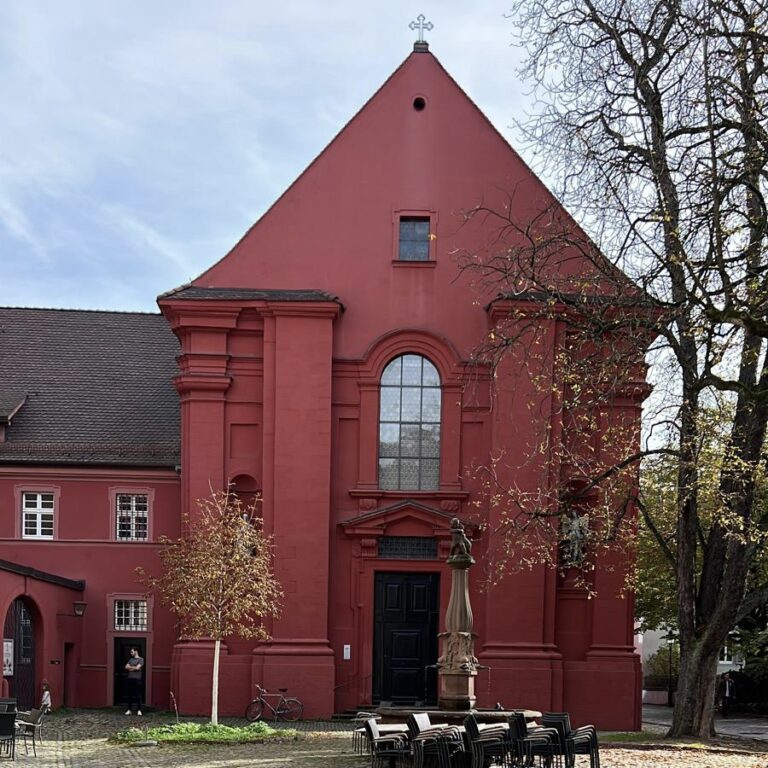
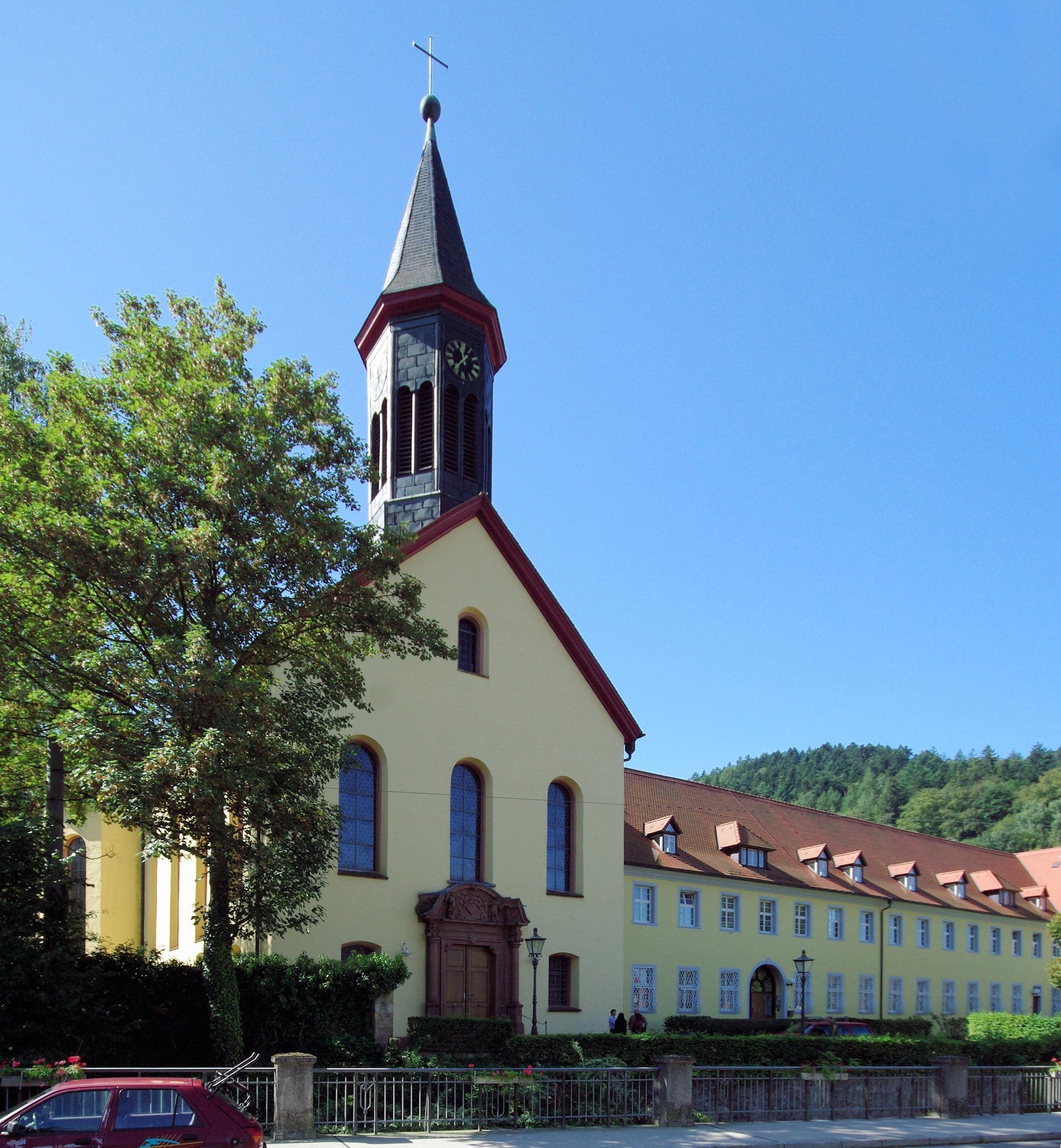
The eighteenth-century convent was arranged as a Baroque complex with a church, conventual wings, ancillary buildings, and associated land. The 1829 fire destroyed the south and west wings and reduced the other two wings to the first floor. Those surviving parts were rebuilt, and the former ancillary buildings included the structure later used by the weaving mill.
Liebfrauenkirche
Church building
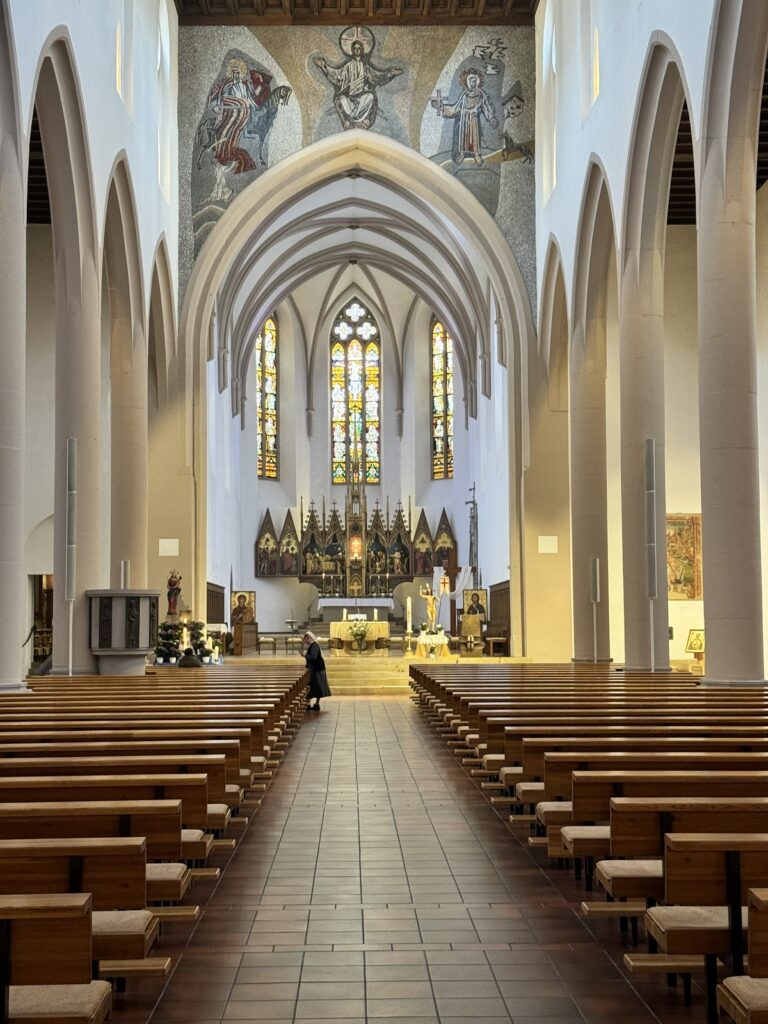
The former convent church, now called the Liebfrauenkirche, belonged to the rebuilding begun in 1728. The fire of 1829 destroyed it, and the Baden state rebuilt the church in 1833 and 1834 according to plans by Gottlieb Lumpp, reusing parts of the earlier facade. Its original furnishings were lost. Renovations took place in 1898 and 1971, followed by work from 1998 to 2002 that restored the interior as far as possible toward its earlier arrangement. The church is used by the Catholic pastoral-care unit of Freiburg-Wiehre-Günterstal.
Altars and votive panel
Three altars from the demolished Tennenbach Abbey were brought to Günterstal. The present high altar retains the altar mensa and the tabernacle structure from this group. A votive panel dated 1506 and associated with Günterstal is preserved in Freiburg’s Augustinermuseum.
Organs and bells
The main organ stands on the gallery above the entrance. Fischer & Krämer of Endingen installed it in 1973, replacing an older instrument from 1871. That earlier organ was later restored and installed at St Hilarius in Bollschweil. The present instrument has 38 stops on three manuals and pedals and was renovated by its makers in 2009. A one-manual organ positive with five stops, made by the English organ builder Peter Collins, was installed in the altar area in 1995.
A wooden tower rises from the ridge of the nave and holds three bells. The two larger bells were cast in 1952 by Friedrich Wilhelm Schilling of Heidelberg, supplementing a bell cast in 1920 by the Grüninger bell foundry. Their diameters and weights are 830 millimetres and 380 kilograms, 700 millimetres and 230 kilograms, and 570 millimetres and 120 kilograms. Their tones are a′+6, c″+6, and e″+6.