Forte Duque de Caxias: A Historic Coastal Fort in Rio de Janeiro
Site at a Glance
- Rating
- 4.8
- Popularity
- Medium
- Country
- Brazil
- Primary era
- Modern
- External website
- Open
- Eras represented
- Early Modern, Modern
- Civilizations
- Portuguese
- Site type
- Military
- Remains
- Fort
On this page10 sections
History
Portuguese Coastal Defense
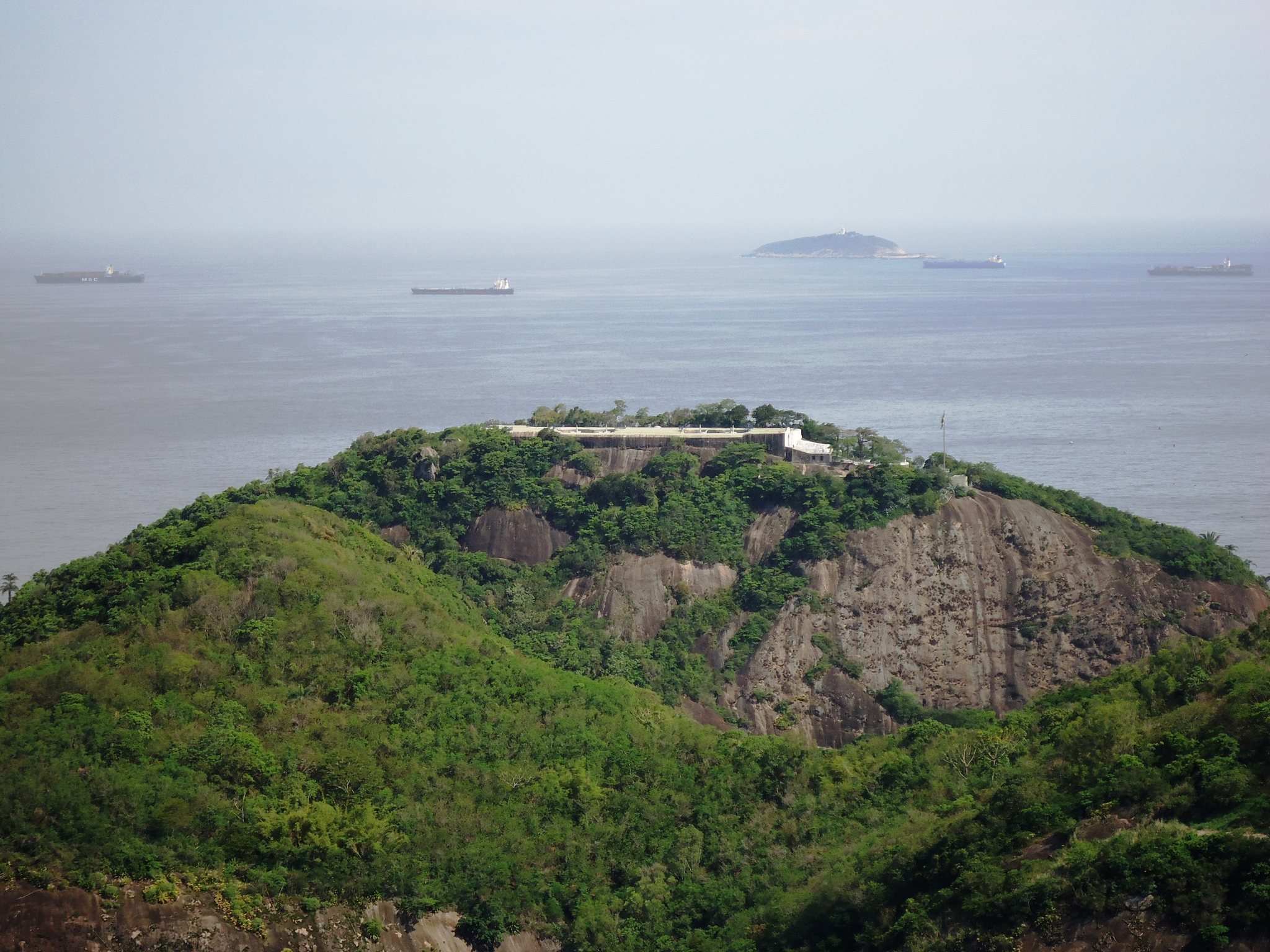
Forte Duque de Caxias is a historic coastal fort in Brazil, situated on Morro do Leme in Rio de Janeiro’s Leme district. Its origins probably lie soon after the Battle of Rio de Janeiro in 1711, when a military observation post with an artillery gun was established on the cape to detect approaching enemies and warn the city. The position formed part of the Portuguese viceregal system of coastal defenses protecting Rio de Janeiro and the entrance to Guanabara Bay.
Under Viceroy Luís de Almeida, the simple post was developed into a fort between 1776 and 1779. In 1789, Joaquim José da Silva Xavier, commonly known as Tiradentes, served there as an ensign. Tiradentes later became associated with the Inconfidência Mineira, an unsuccessful movement against Portuguese colonial rule.
Financial pressures led to the withdrawal of the garrison in 1791. The fort regained military importance during the Brazilian independence movement in the 1820s, when it was reoccupied and armed with five guns. Prince Adalbert of Prussia, who took a particular interest in naval affairs, noted its strategic importance during his journey through Brazil in 1842. During the blockade of Rio de Janeiro in 1863, the position was strengthened again and mapped as part of the Fortifications of Copacabana.
Modernization and Military Action
In 1913, President Hermes da Fonseca ordered the modernization of the then-called Fort do Leme to improve the defense of the capital. Colonel-engineer Augusto Tasso Fragoso was assigned the project under the coordination of Captain Arnaldo Pais de Andrade. Following the model of the nearly completed Copacabana Fort, the older position was to be adapted to modern military standards.
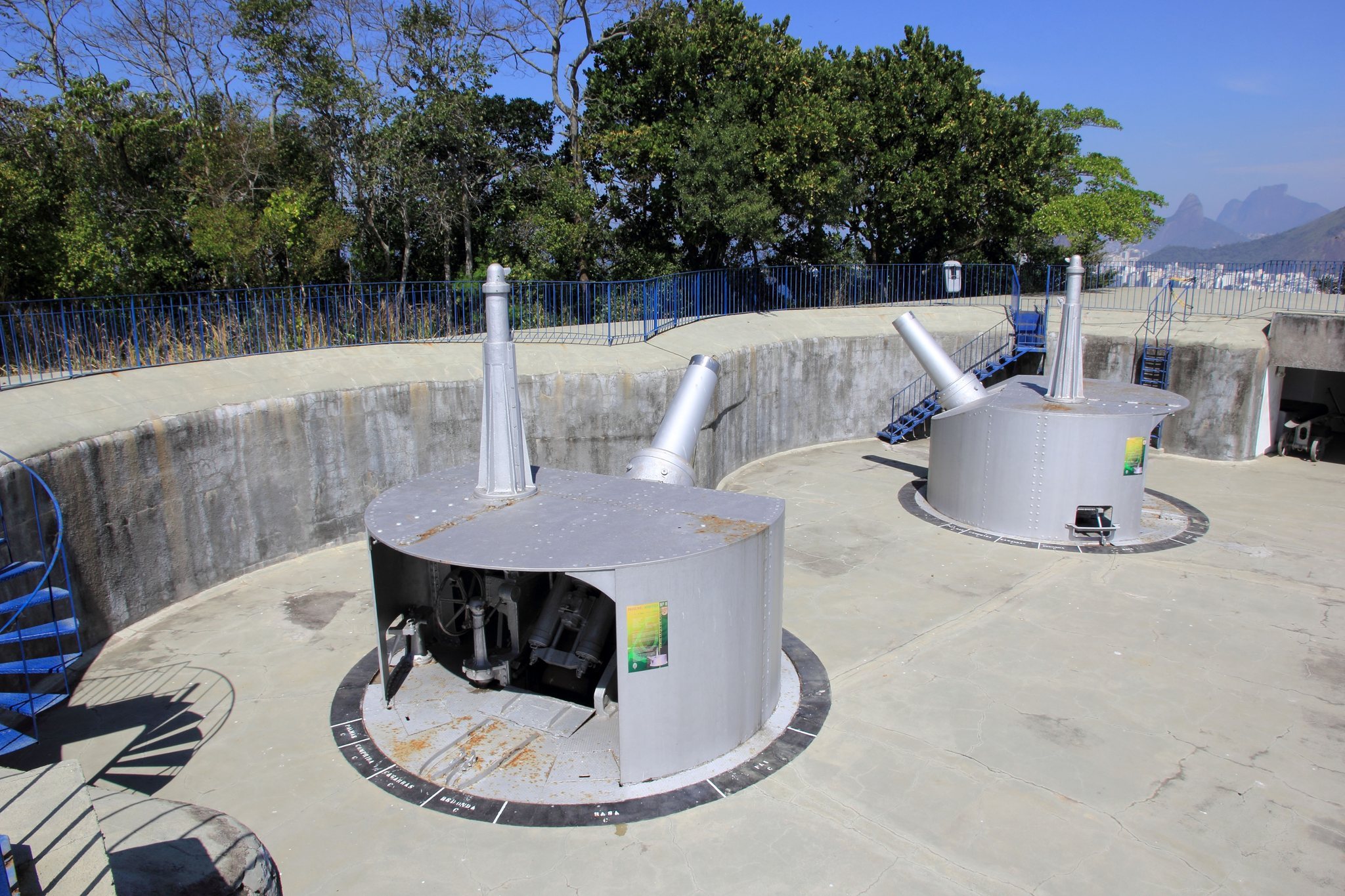
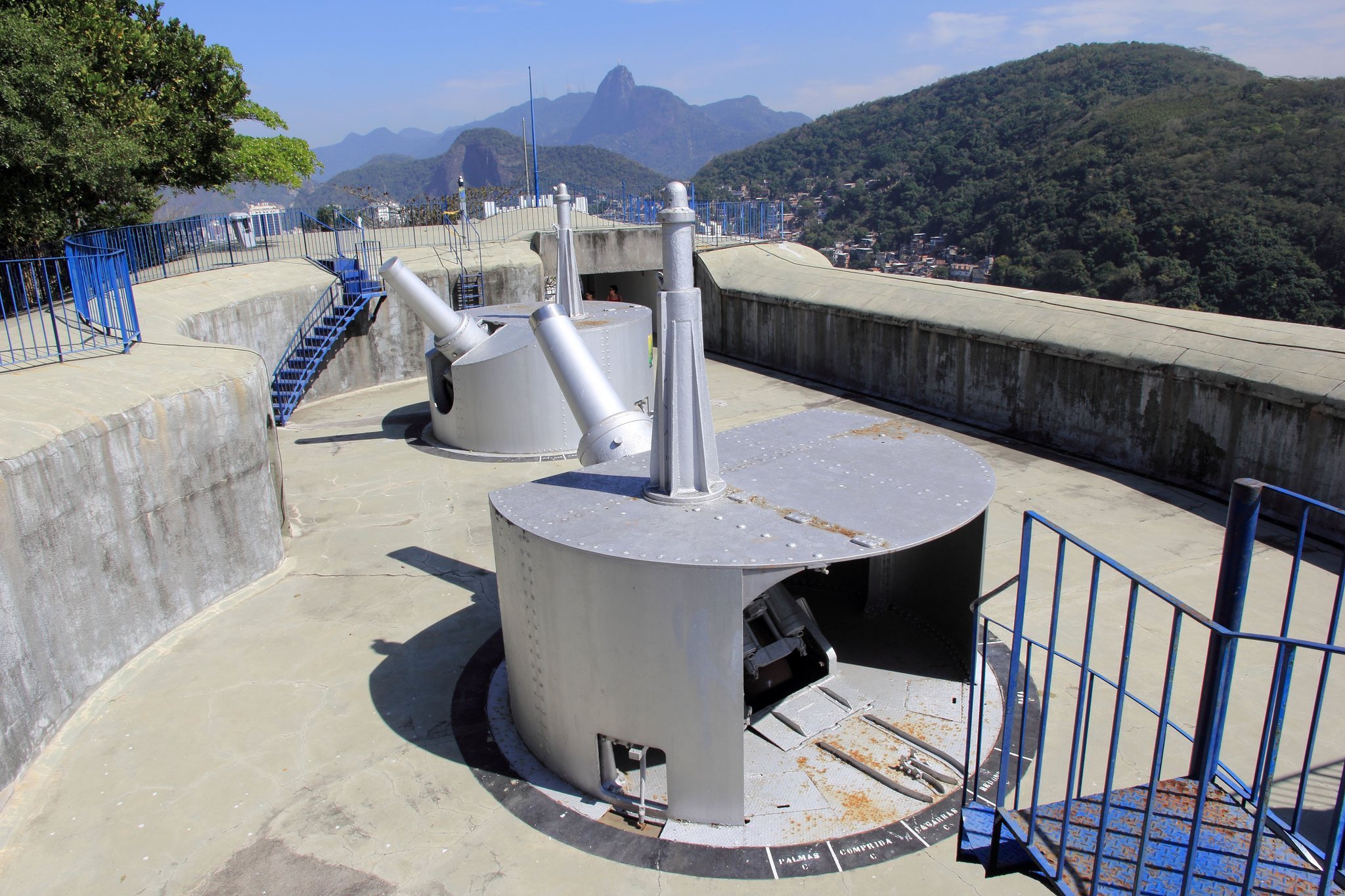
The project called for four 120-millimeter howitzers made by Friedrich Krupp AG of Essen and electrical equipment supplied by AEG of Berlin. German engineers designed concrete casemates, protected chambers for artillery, with recessed gun positions that sheltered the weapons from enemy fire. The first construction phase continued until May 1917. After German naval forces sank Brazilian merchant ships during the First World War, including the merchant vessel Macau, Brazil declared war on Germany on 26 October 1917. The German engineers withdrew during the submarine war but resumed their work in 1918.
The modernized fort was inaugurated on 9 January 1919. Its new armament comprised four 280-millimeter Krupp rotating howitzers with an effective range of 12 kilometers. A small barracks at the foot of Morro do Leme also became part of the complex.
The guns were used during the Tenentist movement in 1924, a military-political challenge to the First Brazilian Republic led particularly by junior army officers. The fort shelled the mutiny-controlled Brazilian battleship São Paulo as it left Guanabara Bay. On 24 October 1930, it also fired on the German passenger ship Baden after the vessel attempted to leave the bay despite cannon and flag signals. The ship was carrying mainly Spanish tourists. Twenty-eight Spanish passengers died, and 39 seriously injured people were taken to hospitals in Rio de Janeiro.
Renaming, Deactivation, and Heritage Protection
On 22 July 1935, President Getúlio Vargas renamed the fort after Luís Alves de Lima e Silva, Duke of Caxias, a nineteenth-century Brazilian marshal whose military career included service during Brazil’s intervention in the Uruguayan Civil War, the La Plata War, and the War of the Triple Alliance. The Duke of Caxias became the patron of the Brazilian Army on 13 March 1962.
After Brazil declared war on Germany and Italy on 22 August 1942, following attacks on Brazilian merchant shipping, Rio de Janeiro’s coastal defenses were placed on alert against possible German attacks. In February 1943, an alarm concerning supposedly sighted submarines led the coastal forts of Rio de Janeiro and Niterói to open fire. The objects were later identified as passing whales.
The fort fired its last shots on 11 November 1955, under orders from the Brazilian military and the command of Marshal Teixeira Lott. Its target was the unarmed cruiser Tamandaré, carrying the deposed President Carlos Luz, several ministers, and their allies toward Santos. The fort fired for twenty minutes but did not hit the departing ship.
In 1964, the howitzers received 105-millimeter reducing tubes, and the fort was deactivated on 24 April 1965. The Brazilian Armed Forces continued to maintain the site as part of their institutional history and cared for it as a cultural monument. A Brazilian Army professional training center moved into the barracks at the foot of Morro do Leme in 1965. Now known as the Centro de Estudos de Pessoal e Forte Duque de Caxias, it assumed the fort’s name as the cultural-site operator in 2008.
The fort entered the World Heritage property Rio de Janeiro: Carioca Landscapes between the Mountain and the Sea in 2012. It had been under provisional protection since 1987 and received definitive protection as a historic monument in 2015. These measures preserved the fort as both a coastal defense site and a place within Brazil’s military history.
Remains
Fort and Artillery Positions
Forte Duque de Caxias occupies the cape of Morro do Leme, the elevated position that first held the observation post established to watch the approach to Guanabara Bay. The modern complex retained the historic entrance portal while adding concrete casemates with recessed artillery positions. These protected chambers formed the principal defensive addition of the 1913 to 1919 modernization.
Rotating Howitzers
The modern artillery consisted of four 280-millimeter Krupp rotating howitzers. Designed to fire shells at relatively high angles, the howitzers had an effective range of 12 kilometers. Their intended field of fire covered the entrance to Guanabara Bay and extended for kilometers along Leme and Copacabana beaches. The guns received 105-millimeter reducing tubes in 1964, before the artillery was deactivated the following year.
Historic Entrance Portal
The older entrance portal survives within the modern fort complex. Its retention connects the twentieth-century concrete defenses with the earlier fort that developed from the Portuguese observation post and was constructed between 1776 and 1779.
Associated Barracks
Foot of Morro do Leme
A small barracks stands below the fort at the foot of Morro do Leme. It became part of the complex during the early twentieth-century modernization and has housed the Brazilian Army’s personnel-training institution since 1965. The institution now operates under the name Centro de Estudos de Pessoal e Forte Duque de Caxias.