Fort Copacabana: A Coastal Artillery Fortress in Rio de Janeiro
Site at a Glance
- Rating
- 4.8
- Popularity
- Very High
- Country
- Brazil
- Primary era
- Modern
- External website
- Open
- Eras represented
- Early Modern, Modern
- Civilizations
- Portuguese
- Site type
- Military
- Remains
- Fort
On this page14 sections
History
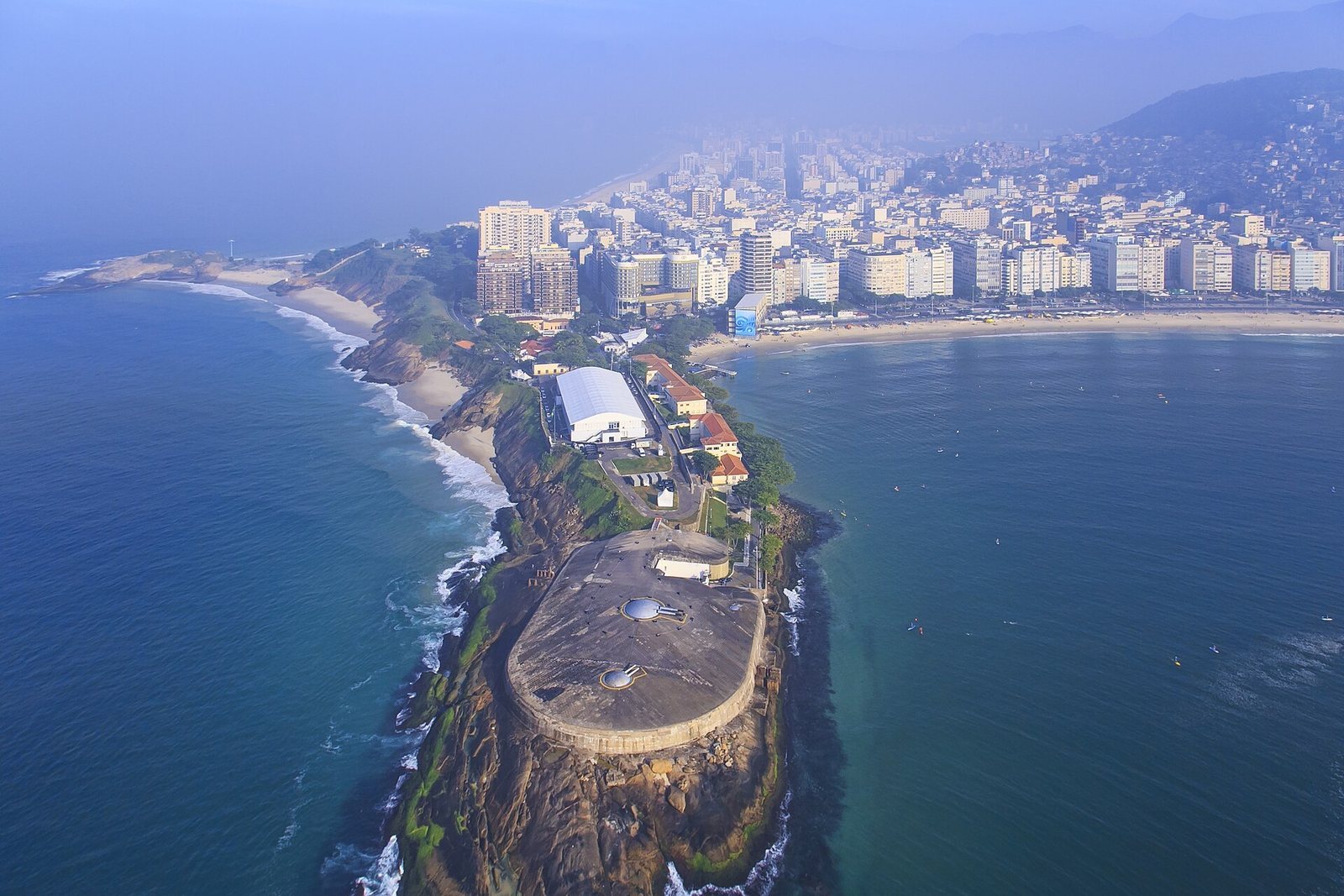
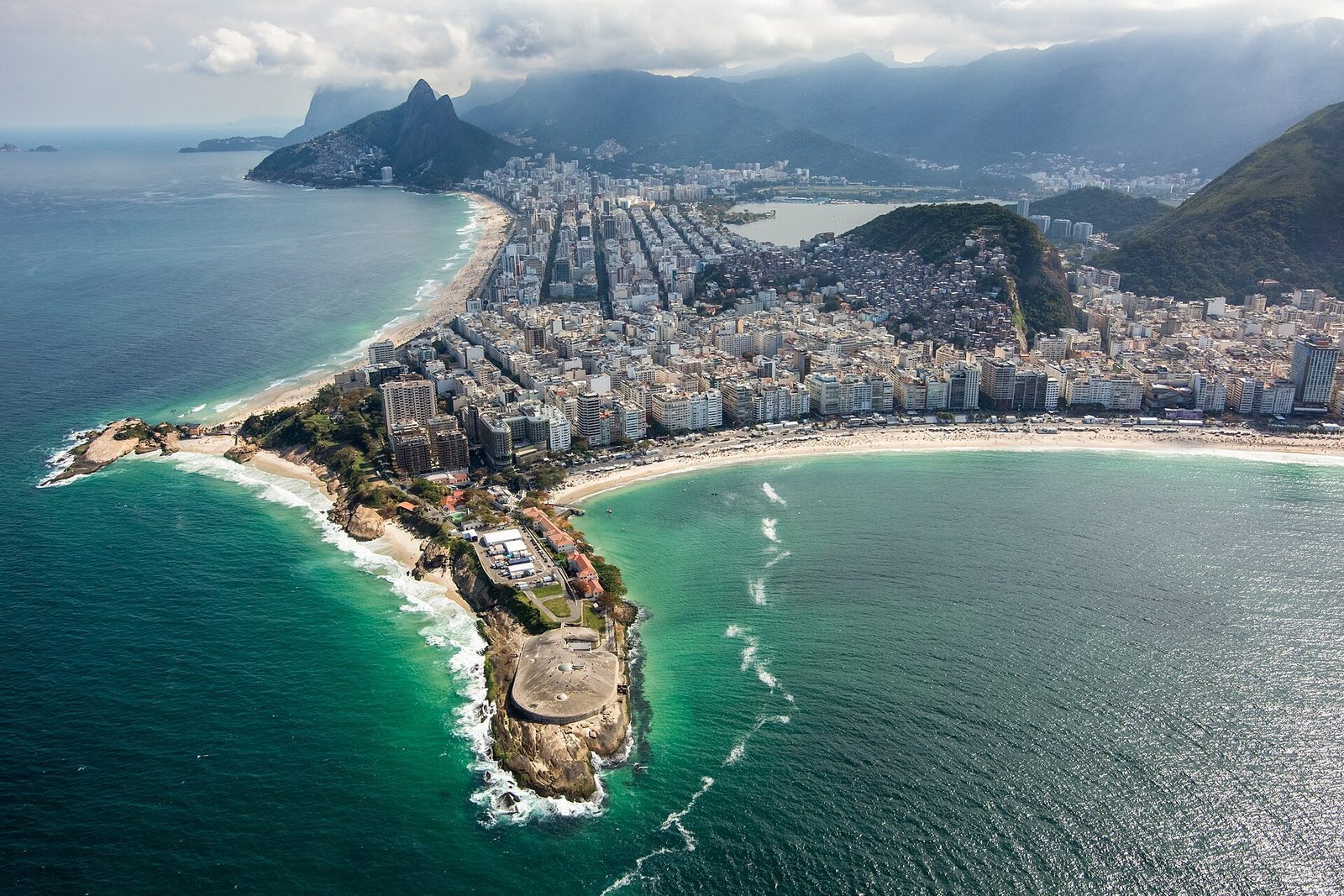
Fort Copacabana is a coastal artillery fortress on the rocky southern end of Copacabana Beach in Rio de Janeiro, Brazil. Brazil’s modern fort was built from 1908 to 1914 to defend the beach, Guanabara Bay, and the city and port. At its completion, it was South America’s most powerful fortress and most modern military structure, as well as a landmark of military engineering.
Early coastal defenses and unfinished projects
Portugal began establishing coastal defenses around Rio de Janeiro Bay in the mid-sixteenth century. A battery was built on the Copacabana promontory in the eighteenth century, but it carried only a few small guns. A proposed fort for the area dates to 1763, when Brazil’s colonial capital moved from Salvador to Rio. Construction began in 1776 under Viceroy Luís de Almeida Portugal, but the project was never finished, probably because of the Spanish invasion of 1777.
After the Portuguese court moved to Brazil in 1808, King John VI initiated another fort project at the site. Portuguese forces attacked it with artillery in 1823 during Brazil’s War of Independence. The fort was decommissioned in 1834, along with other Brazilian fortifications.
Modernization and construction
The position was reactivated in 1893 during the Navy Revolt, an armed rebellion by naval forces against Brazil’s republican government. It could not prevent ships from leaving Guanabara Bay. A border dispute with Argentina prompted the army’s general staff to commission Major Augusto Tasso Fragoso to design a modern fort with six long-range guns. After the dispute was settled diplomatically in 1895, the plan was shelved.
Later changes in naval warfare renewed the need for long-range coastal guns around Rio de Janeiro. The earlier project was revived, but the German arms supplier Krupp persuaded President and Marshal Hermes Rodrigues da Fonseca to select rapid-firing, long-range guns rather than howitzers. Major Eugênio Luís Franco-Filho was assigned to build the new fort on 16 December 1907. Work began on 5 January 1908 under Major Arnaldo Pais de Andrade. President Afonso Pena and Hermes da Fonseca, then minister of war, attended the laying of its cornerstone.
The guns were operational by the end of 1913, although the fort officially entered service on 28 September 1914, when Hermes da Fonseca was president. Major Antônio Carlos Brasil, appointed in 1912 while construction was still under way, became its first commander. From 1912 to 1958, the fort served a succession of artillery formations, including the 6th Independent Position Artillery Battery, the 5th Battery of the 2nd Position Artillery Battalion, the 12th Battery of the 4th Coastal Artillery Group, the 1st Independent Coastal Artillery Battery, the 1st Battery of the 6th Coastal Artillery Group, and the 3rd Coastal Artillery Group.
In 1919 the surrounding land was acquired, and a nearby eighteenth-century church was demolished. The De Paz Barracks was completed in October 1920.
Revolts and political crises
On 5 July 1922, junior army officers associated with tenentism, a movement challenging Brazil’s political order, seized the fort. The uprising, known as the Revolt of the Eighteen, opposed President Epitácio Pessoa and his presumed successor, Artur Bernardes. The rebels turned the guns toward Rio de Janeiro, but the revolt was suppressed with the involvement of aircraft and the government battleships São Paulo and Minas Gerais.
In 1924 the fort fought on the government’s side in an artillery duel with the battleship São Paulo, then under the control of tenentist rebels. The government sought to stop the ship from escaping to São Paulo state. During the 1930 revolution, former president Washington Luís was imprisoned at the fort before being exiled to Europe. Antônio da Silva Prado Júnior, prefect of the Federal District, was also detained there before his exile after Getúlio Vargas took power.
The fort remained on alert during the Second World War. On 11 November 1955, loyalist troops under Marshal Henrique Teixeira Lott fired its last artillery rounds at the cruiser Tamandaré. The ship was carrying President Carlos Luz, ministers, and their allies toward Santos. Twelve rounds were fired over 20 minutes, but none hit the cruiser, which was unarmed and operating on only one propeller.
In 1964 the fort’s commander, Lieutenant Colonel Arídio Brasil, joined the coup that brought military rule, and the fort became a meeting place for the revolutionary command. The seizure of the nearby Coastal Artillery headquarters on 1 April is sometimes confused with the capture of the fort. That headquarters was occupied by 19 men from the Army Command and General Staff School led by Colonels César Montagna de Souza and Dickson Melges Grael, while Fort Copacabana itself was not the site seized. The fort was later used as a political prison during Brazil’s 1964 to 1985 military dictatorship.
From military position to museum
After Brazil dissolved its coastal artillery units, the fort lost its defensive role. An army order dated 19 December 1986 established the Army History Museum there. The fort was decommissioned on 4 May 1987 and converted into a museum of the Brazilian Army and artillery. In 2012 part of the Army-owned grounds was leased to private operators, and construction of the Aqueloo beach club began in 2013.
Remains
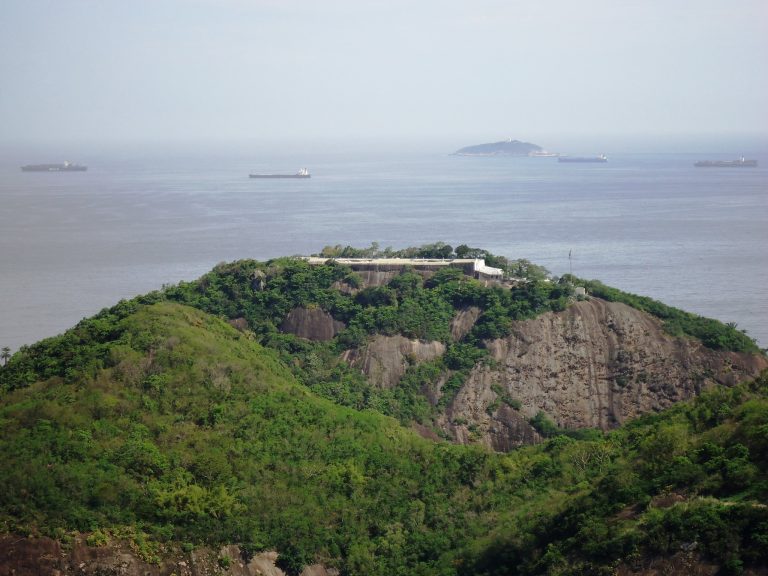
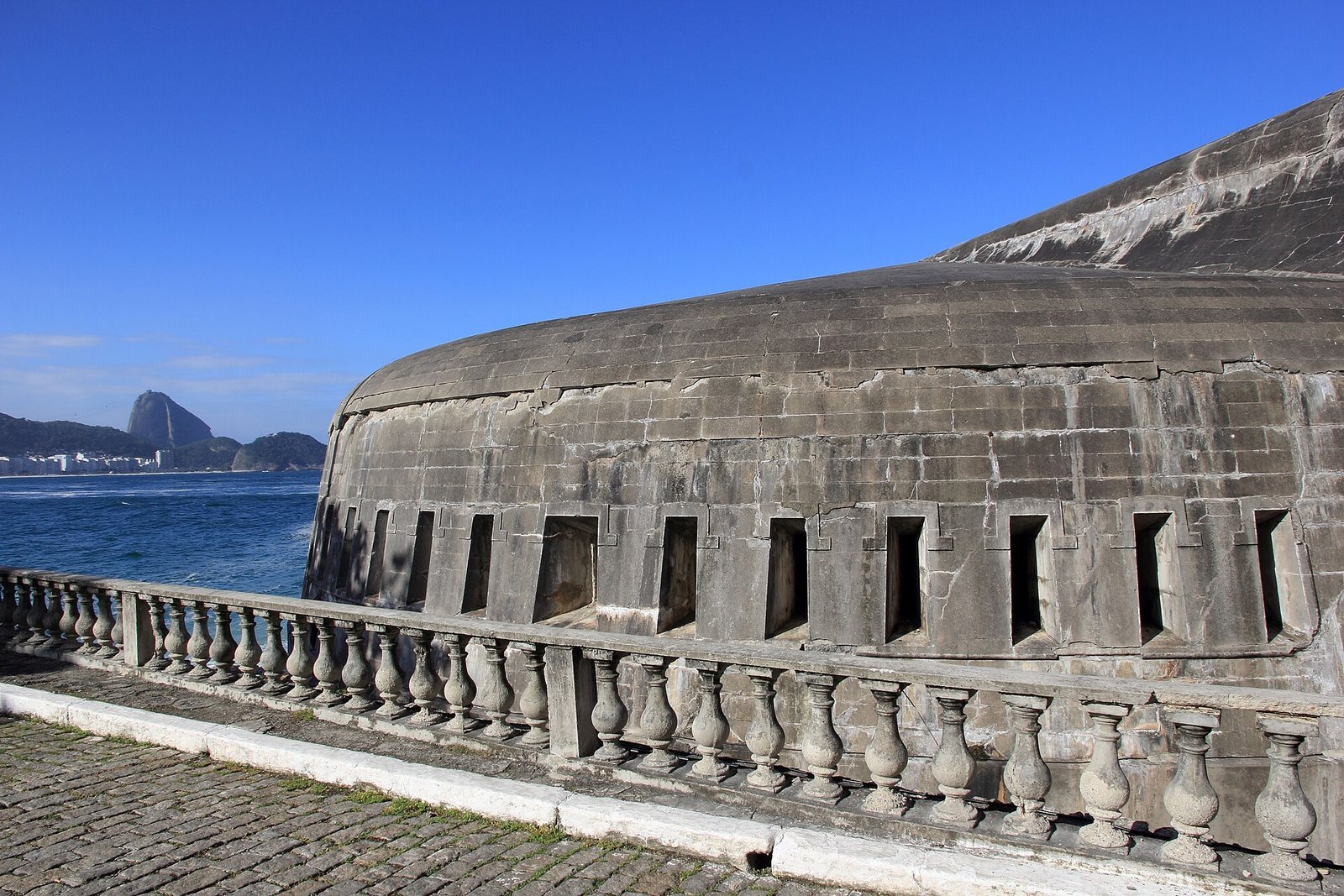
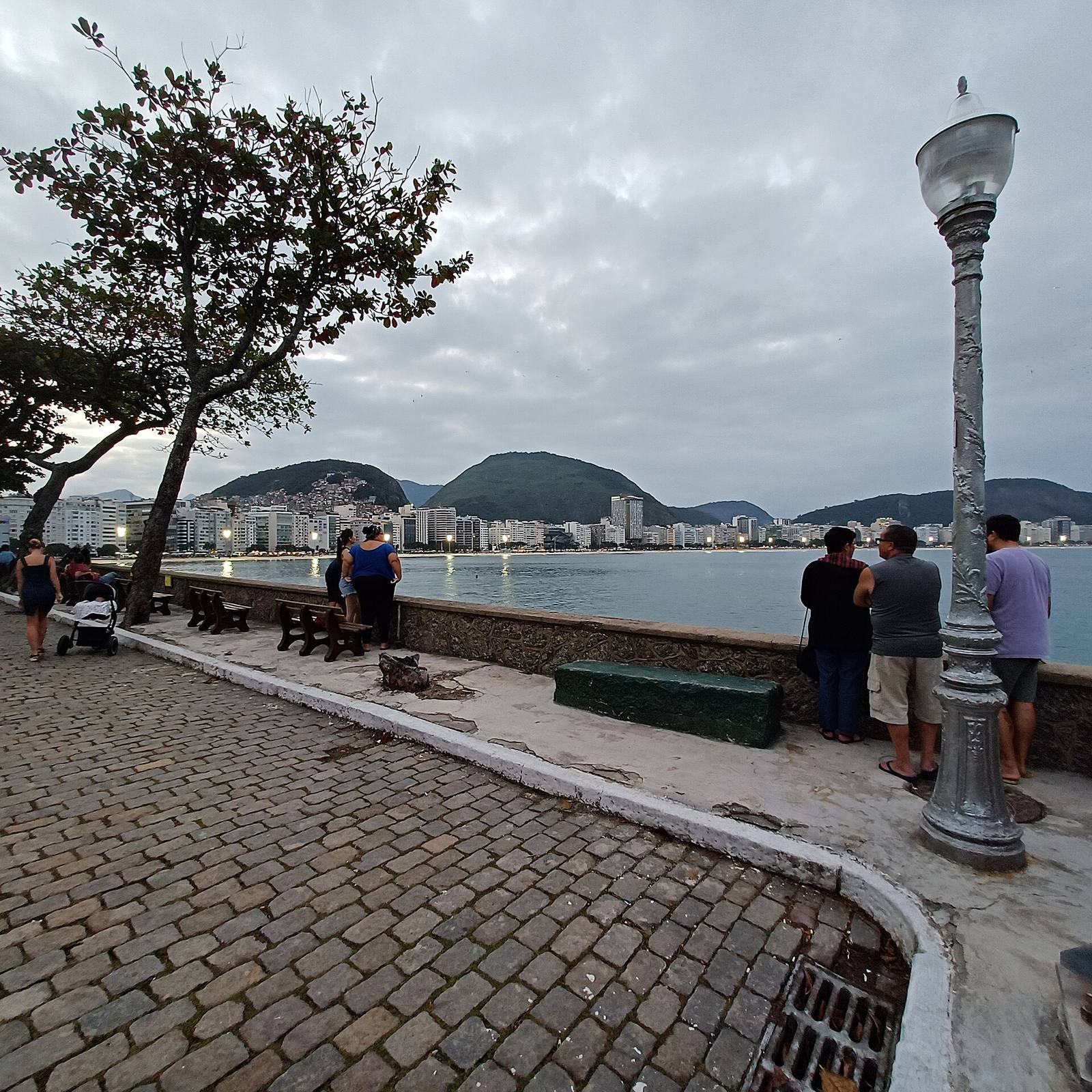
The fort occupies a rocky promontory at the southern end of Copacabana Beach, near the entrance to Guanabara Bay. Its position and shape suited long-range coastal artillery intended to protect the beach, bay, and Rio de Janeiro’s city and port. The site covers 114,169 square metres, including a 40,000-square-metre complex of casemates, fortified enclosed chambers used as gun positions. Its walls are 12 metres thick, and the fort was designed to accommodate up to 2,239 people.
Artillery positions
Duke of Caxias turret
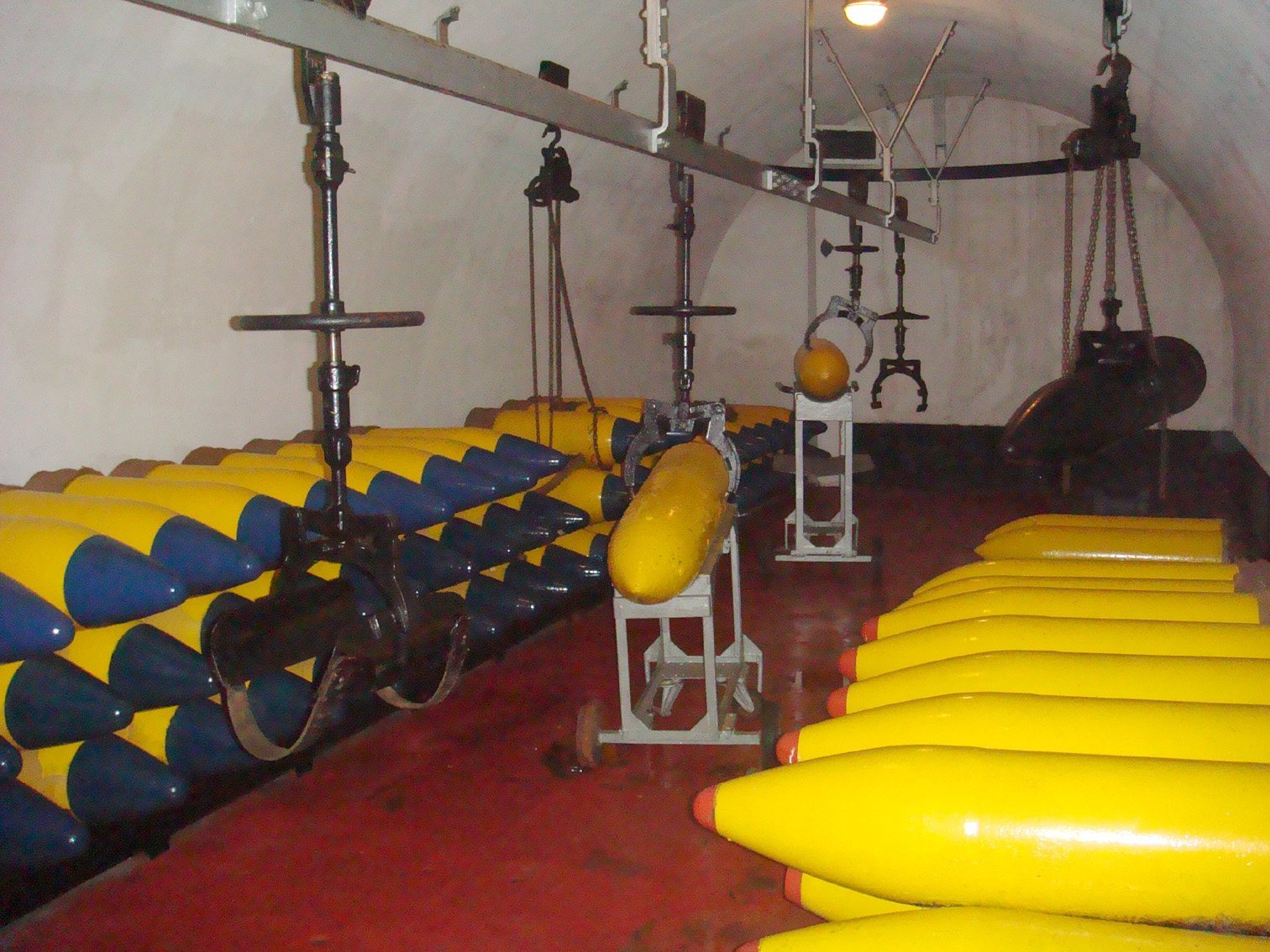
The main battery occupies the Duke of Caxias turret and contains two Krupp 305-millimetre guns, named Barroso and Osorio. They could fire 400-kilogram shells to a range of up to 23 kilometres. The two main turret batteries could each turn through 360 degrees and had a room for calculating firing data.
André Vidal turret
The André Vidal turret housed two 190-millimetre guns with a range of up to 18 kilometres. Like the Duke of Caxias battery, it could rotate through a full circle and had a room for working out firing calculations.
Side casemates
The Antônio João and Ricardo Franco side casemates held rapid-firing 75-millimetre guns. These positions could rotate through 180 degrees and had a range of up to 7 kilometres.
Support buildings and museum spaces
De Paz Barracks
The De Paz Barracks has an entrance portico. The fort’s name appears at the centre of its façade, while the side facing the fortress bears the Latin inscription Si vis pacem, para bellum, meaning “If you want peace, prepare for war.”
Service rooms and stores
The fort’s service and living areas included barracks, an observation post, a telegraph station, a water cistern, kitchens, a dining room, living quarters, a changing room, and an infirmary. Storage included ammunition, food, and a shell magazine. Two diesel generator sets made by AEG of Berlin formed part of its equipment.
Exhibitions and artillery displays
Restoration adapted the fort for use as a museum and cultural centre. The permanent exhibition ‘Formation of the Nation and the Army’ has been there since 1996. It covers Brazil’s exploration and colonization, territorial expansion, and conflicts including the 1648 Battle of Guararapes, independence, and the War of the Triple Alliance, a major nineteenth-century South American war. Its central figures include Marshal Luís Alves de Lima e Silva, Duke of Caxias, and Deodoro da Fonseca, the first president of republican Brazil. The Hall of the Republic presents the army during the republican period, including the Navy Revolt of 1893 to 1894, the Canudos War of the 1890s, and Marshal Cândido Rondon’s work to strengthen national unity, with relics from negotiations with Amazonian Indigenous peoples. It also has sections on the 1922 revolt at the fort and the Brazilian Expeditionary Force in the Second World War. The Hall of Presidents contains collections related to Brazil’s presidents. Artillery displays include the fort’s 305-, 190-, and 75-millimetre guns, a six-inch Vickers Mk XIX coastal-defense gun, a five-barrel 37-millimetre Hotchkiss revolver cannon, and a Bofors C28 Model 1926 75-millimetre mountain gun.