Laranjeiras Palace: A Presidential and State Governor’s Residence in Rio de Janeiro
Site at a Glance
- Rating
- 4.3
- Popularity
- Medium
- Country
- Brazil
- Primary era
- Modern
- External website
- Open
- Eras represented
- Modern
- Civilizations
- Unclassified
- Site type
- Domestic
- Remains
- Palace
On this page10 sections
History
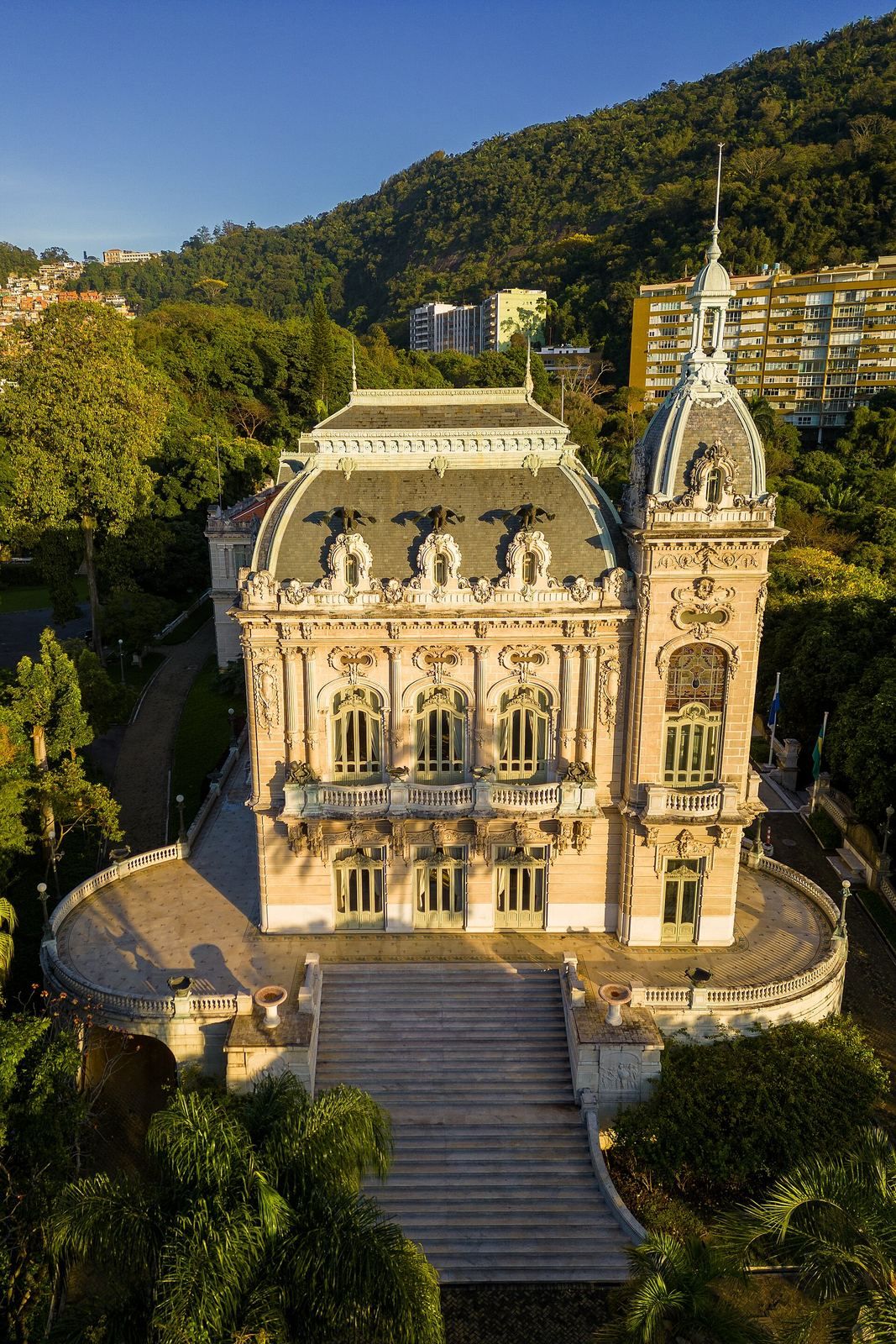
Laranjeiras Palace is a residence in Rio de Janeiro, Brazil, built for the Guinle family in an eclectic style that combines elements from different architectural traditions. Construction began in 1909, and the palace is dated to 1914.
From private mansion to presidential residence
In the late nineteenth century, the estate belonged to the Portuguese aristocrat Count Sebastião Pinho. An earlier mansion on the property was later demolished to make way for the new palace, first known as the Eduardo Guinle Mansion.
In 1926, President Washington Luís designated the palace as an official presidential residence. After the 1930 Revolution, President Getúlio Vargas chose Catete Palace as his home instead. The federal government assumed responsibility for Laranjeiras Palace in 1940 and purchased it in 1947, during President Eurico Gaspar Dutra’s government.
From the Vargas era to the move to Brasília
President Juscelino Kubitschek began using Laranjeiras as his main residence in 1956. Following Getúlio Vargas’s suicide in 1954, Kubitschek avoided living at Catete Palace. The opening of Alvorada Palace, the official presidential residence in Brasília, in 1958, followed by the transfer of Brazil’s capital to Brasília in 1960, marked the shift away from Laranjeiras as Kubitschek’s principal home.
Presidential role after the capital moved
After 1960, Laranjeiras remained an official presidential residence and workplace during visits to Rio until its transfer to the state in 1974. Presidential visits were frequent in the 1960s: foreign embassies remained in Rio, many services had yet to be established in Brasília, and important government acts took place at the palace. In 1969, it served as the federal government’s seat under the military government.
On December 13, 1968, the National Security Council, a senior body concerned with national security, approved Institutional Act No. 5 (AI-5) at a meeting chaired by Marshal Artur da Costa e Silva. AI-5 expanded the military government’s powers and restricted civil liberties. Costa e Silva signed the measure in the palace library.
State residence and preservation
In 1974, after the states of Guanabara and Rio de Janeiro merged, the federal government transferred the palace to the State of Rio de Janeiro. It became the governor’s official residence in 1975, although some governors preferred the residence at Gávea Pequena. Laranjeiras also hosted presidential stays in Rio and diplomatic receptions. Guanabara Palace, previously the home and workplace of the governors of the former State of Guanabara, was retained solely as the governor’s workplace.
In 1983, the National Institute of Historic and Artistic Heritage (IPHAN) declared Laranjeiras Palace a heritage site. It is cared for by IPHAN and the State of Rio de Janeiro’s cultural heritage institute, INEPAC. A major renovation in 2001 involved restorers, historians, museum specialists, and researchers.
Remains
Architecture and interiors
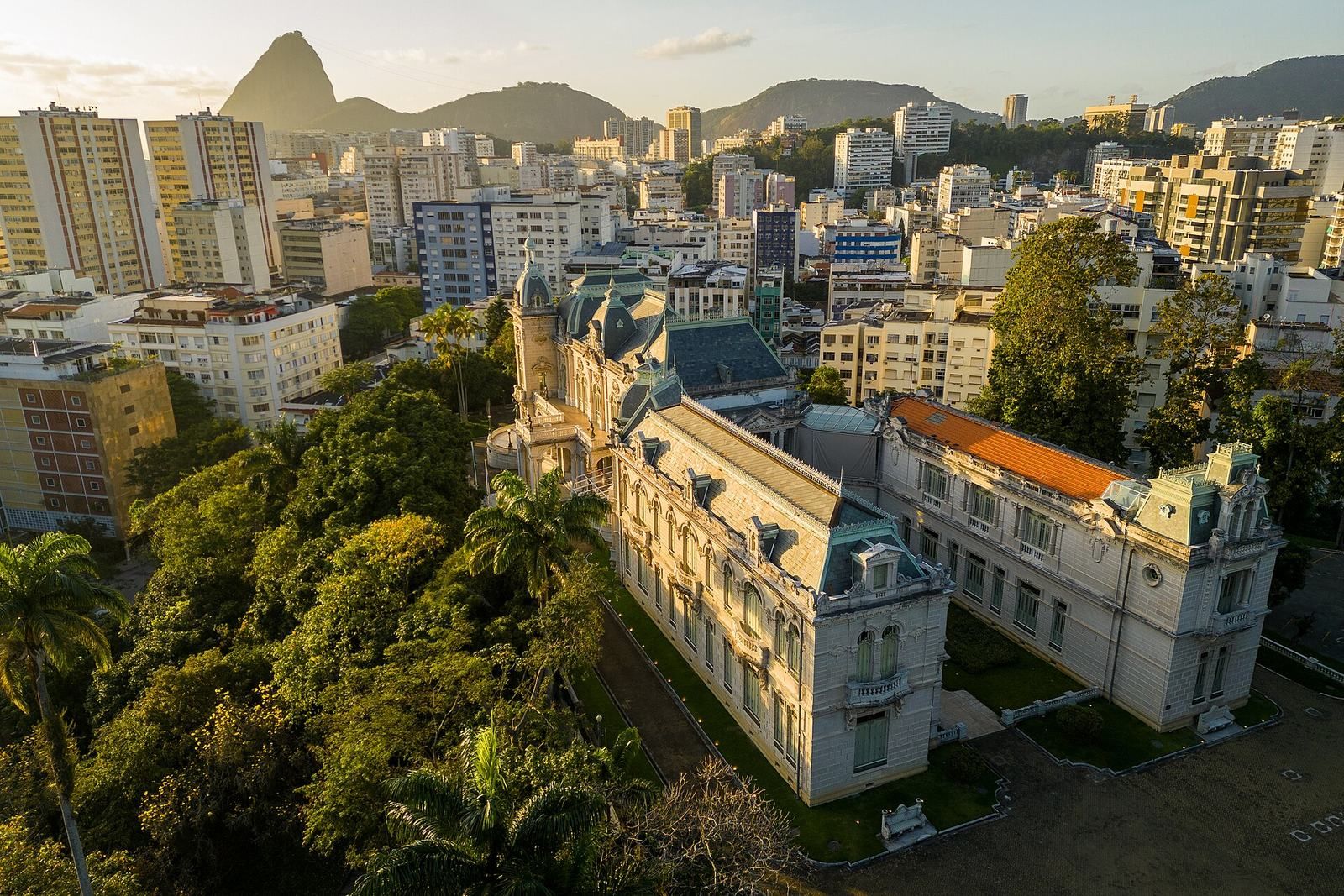
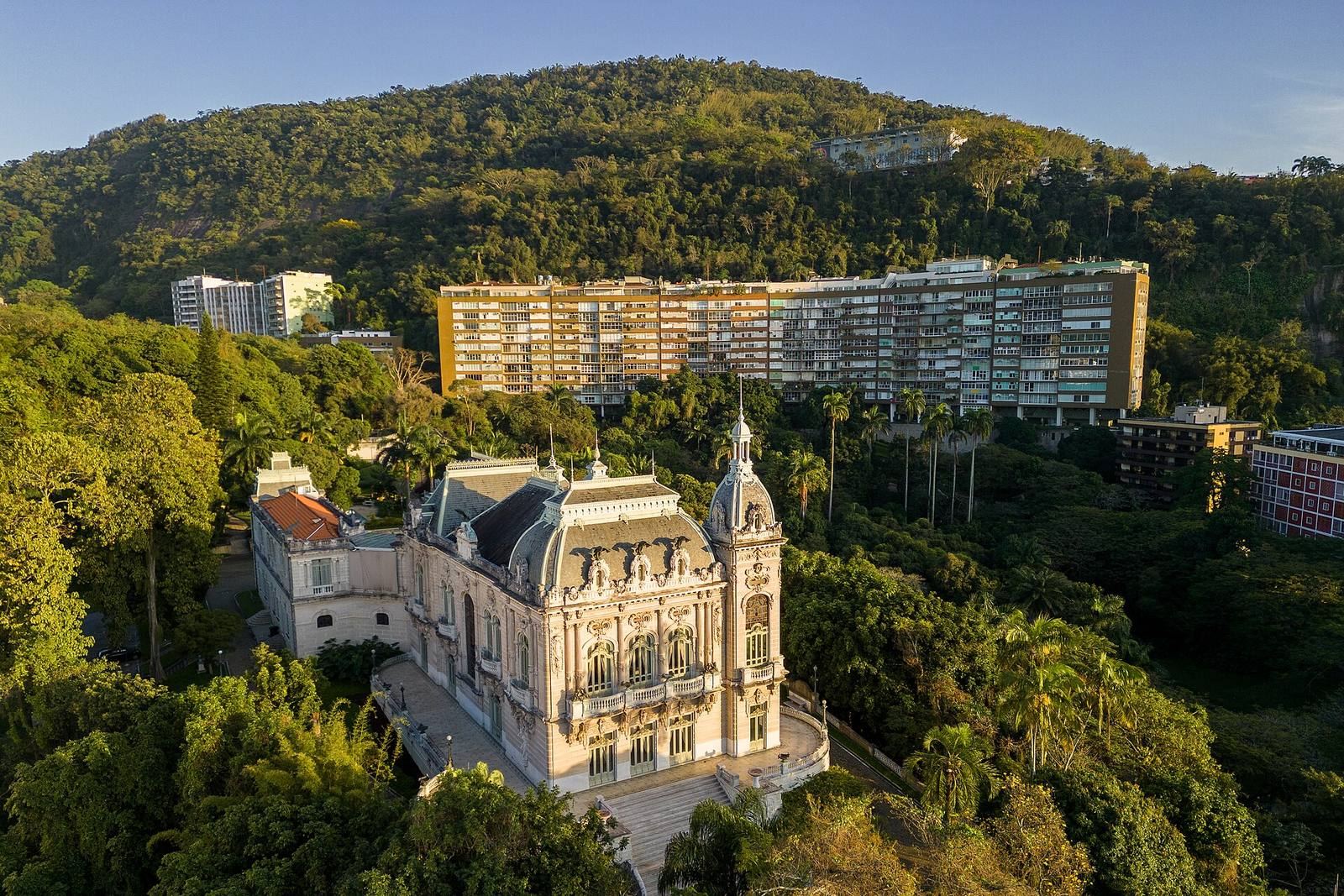
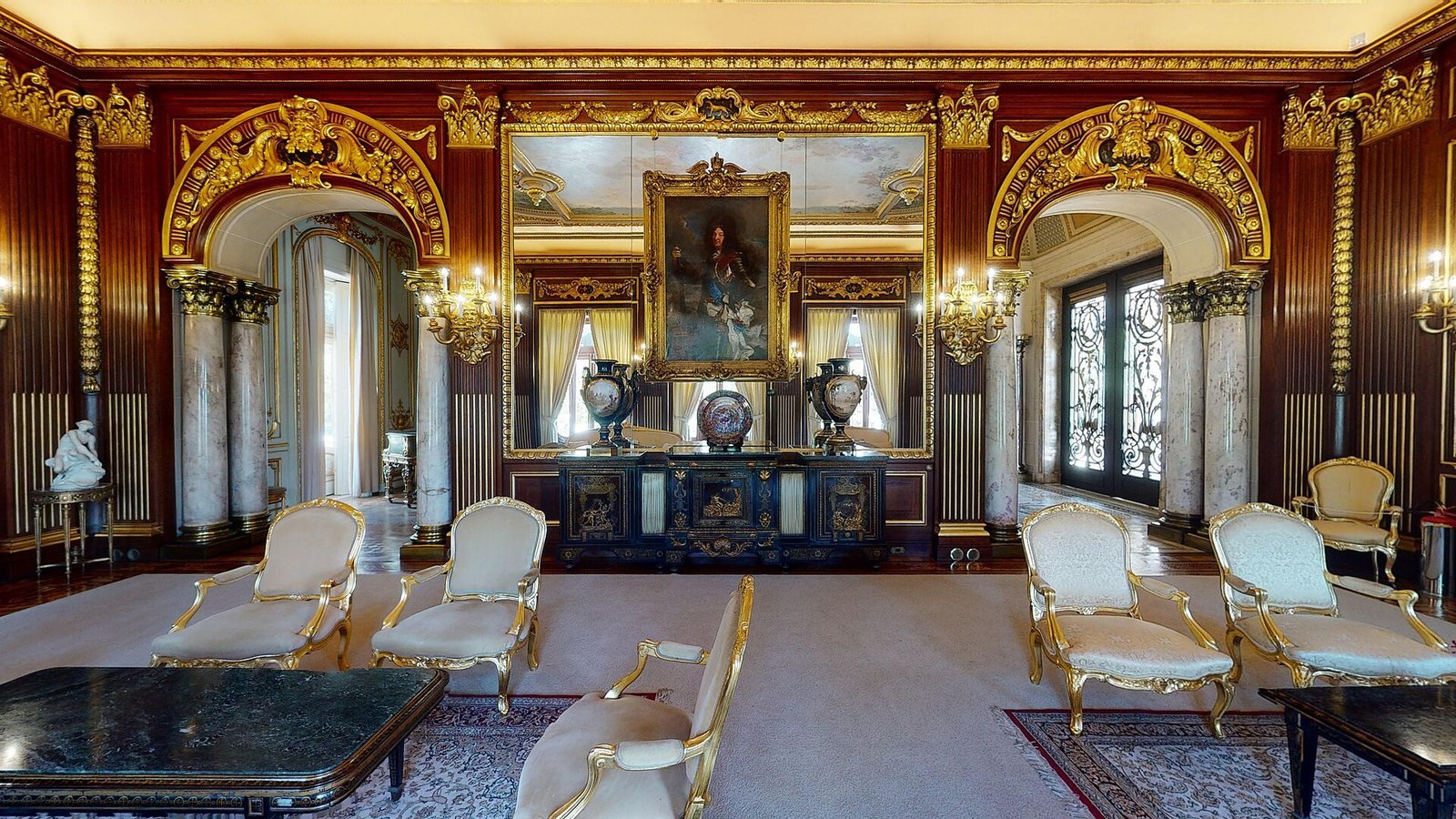
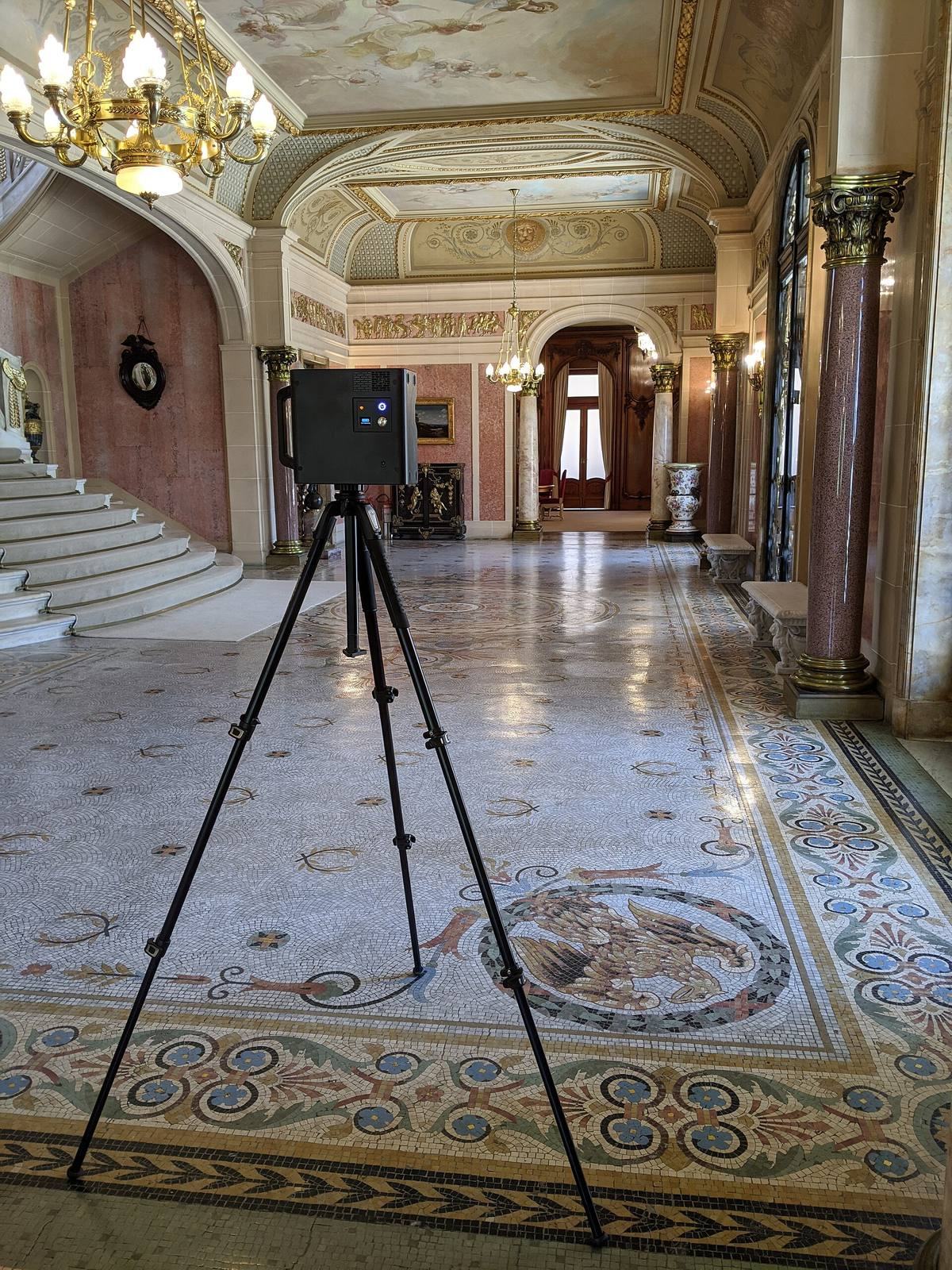
The palace stands within Eduardo Guinle Park, in Rio de Janeiro’s Laranjeiras neighborhood. Its eclectic architecture combines elements from different styles, and its interior features include mosaic decoration, a library, paintings, and furnishings.
Mosaics
The mosaics combine marble and ceramic, with applications of 24-karat gold.
Library and collection
The palace library is a named room within the building. The collection includes paintings by Dutch artist Frans Post, a replica of a piano that belonged to Queen Marie Antoinette, sculptures, and fine furniture.
Restored interiors
The 2001 renovation restored paintings, floors, and decorative elements.