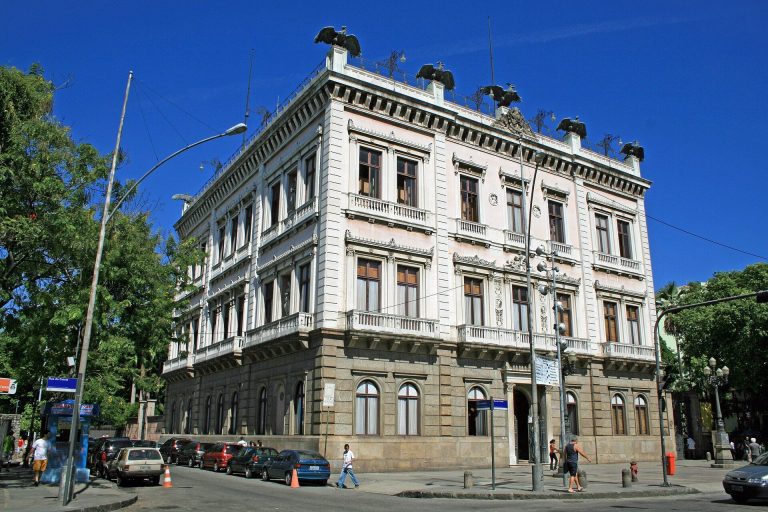
Paço Imperial: A Portuguese Colonial and Imperial Palace in Rio de Janeiro
Site at a Glance
- Rating
- 4.7
- Popularity
- Medium
- Country
- Brazil
- Primary era
- Early Modern
- External website
- Open
- Eras represented
- Early Modern, Modern
- Civilizations
- Portuguese
- Site type
- Civic
- Remains
- Palace
On this page12 sections
History
Colonial Governors’ House
Paço Imperial is an eighteenth-century Portuguese Colonial building in Rio de Janeiro, Brazil, with Baroque characteristics. Construction began around 1738 after Gomes Freire de Andrade, Count of Bobadela and governor of the Captaincy of Rio de Janeiro, obtained authorization from King John V of Portugal to establish a government residence. The Portuguese military engineer José Fernandes Pinto Alpoim directed the work, which was completed in 1743. The building became known as the Governors’ House and served as the residence of the colony’s governors.
Alpoim enlarged earlier buildings on the site, including the Royal Storage House and the Royal Mint. These institutions continued to operate on the ground floor until 1808. The building’s original plain Baroque form retained much of the character of the present palace, while its upper floors introduced windows, small balconies, and curved surrounds that were considered novel in Brazil at the time.
Viceroys’ and Royal Palace
In 1763, the colonial government of Brazil moved from Salvador to Rio de Janeiro. The building then became the Viceroys’ Palace, serving as the administrative center of the viceroyalty. A viceroy was the Portuguese Crown’s highest representative in a major overseas territory, with both political and administrative authority.
The palace’s role changed sharply in 1808, when the Portuguese royal court came to Rio de Janeiro after the French invasion of Portugal. It became the Royal Palace and housed the government office of the prince regent, the future King John VI. It also served as a royal residence while other facilities were being prepared. A throne room was established for the hand-kissing ceremony, a formal act of royal homage, and an elevated passage connected the palace with the Carmelite Convent, where Queen Mary I was housed.
A monumental annex called the Varanda was constructed between the palace and the convent for the king’s acclamation. The structure was also used for the coronation ceremonies of Pedro I and Pedro II before it was demolished during the Second Reign, the period of Pedro II’s rule from 1840 to 1889.
Imperial Palace
After Brazilian independence in 1822, the building became the Imperial Palace. Under Pedro I, Brazil’s first emperor, and Pedro II, his successor, it functioned mainly as an administrative center, formal court seat, and workplace rather than as the emperors’ principal residence.
On 9 January 1822, Pedro I announced from a palace balcony that he would remain in Brazil instead of returning to Portugal. Known as the Dia do Fico, or Day of Staying, the declaration became an important episode in the process leading to Brazilian independence. The palace, the adjoining square, and the chapel also served for the ceremonies associated with John VI, Pedro I, and Pedro II, as well as for other public occasions.
In 1888, Princess Isabel signed the Lei Áurea in one of the palace rooms. This law abolished slavery in Brazil, and Isabel was acting as regent for Pedro II when she signed it.
Republican Transformation and Restoration
Following the proclamation of the Brazilian Republic in 1889, the imperial family’s property was confiscated and auctioned. The palace was converted into Rio de Janeiro’s Central Post and Telegraph Office. Its interior decoration was dispersed or destroyed, while the façades and internal arrangement underwent substantial changes.
The building was registered as architectural heritage in 1938. A major restoration in the early 1980s used extensive visual documentation from the eighteenth and nineteenth centuries to recover an appearance associated with 1818. Since 1984, Paço Imperial has functioned as a cultural center for exhibitions and events involving painting, photography, sculpture, cinema, and music. It also houses the Paulo Santos Library, which specializes in art, architecture, and engineering and contains rare books from the sixteenth to the eighteenth centuries. The palace is regarded as one of Brazil’s important colonial civil buildings because of its historical and architectural importance.
Remains
Palace Structure and Interior Features
Façades and Entrance
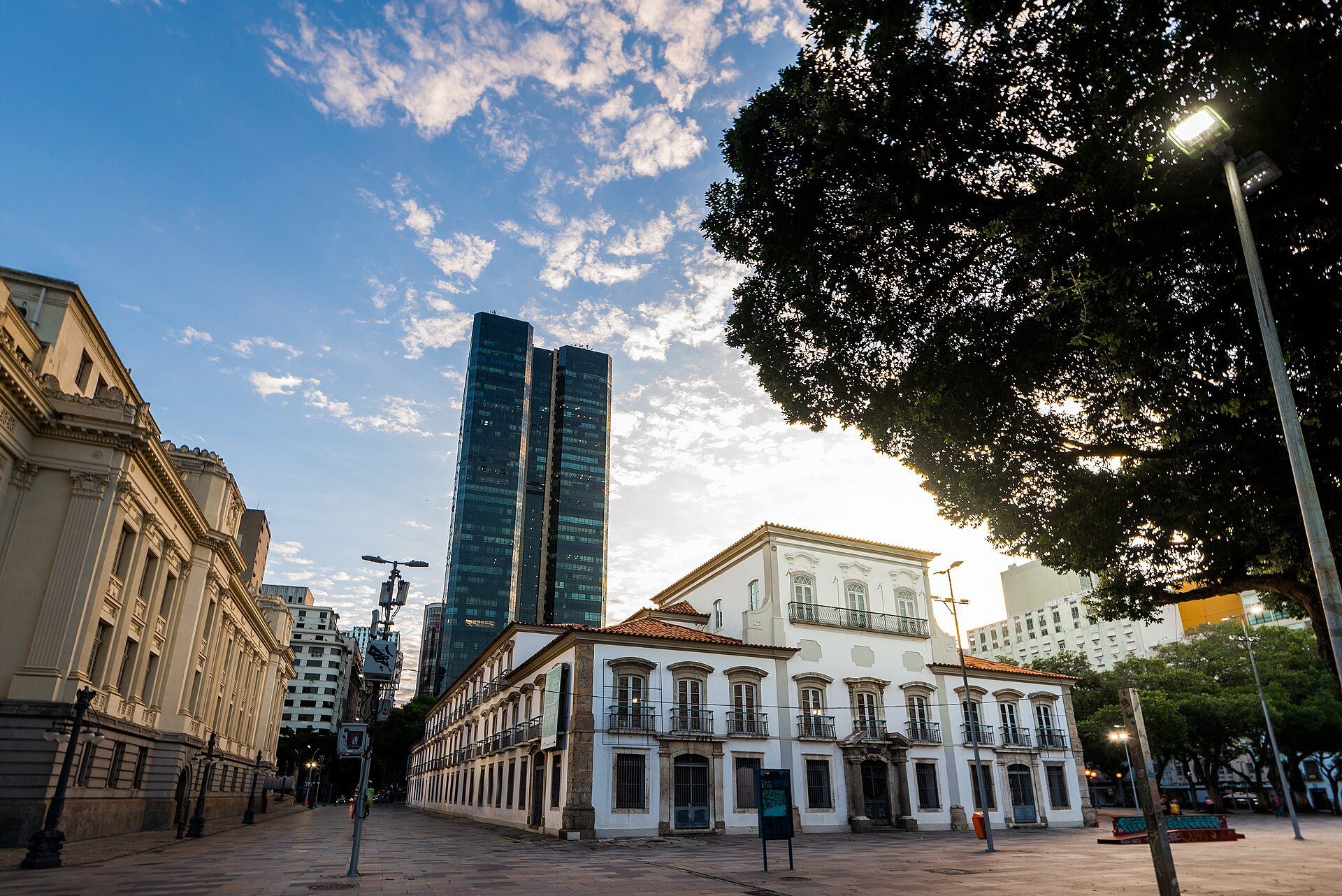
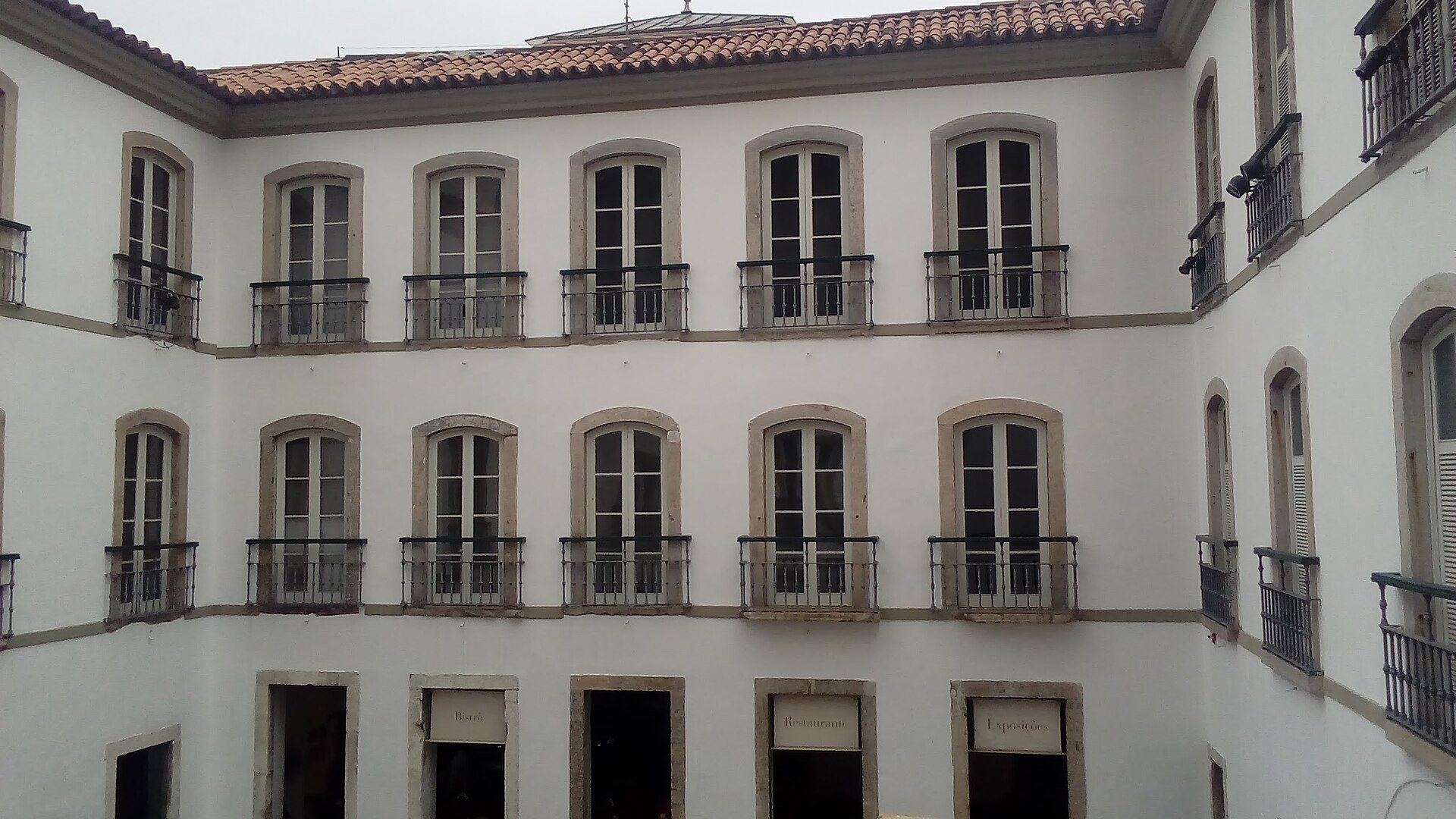
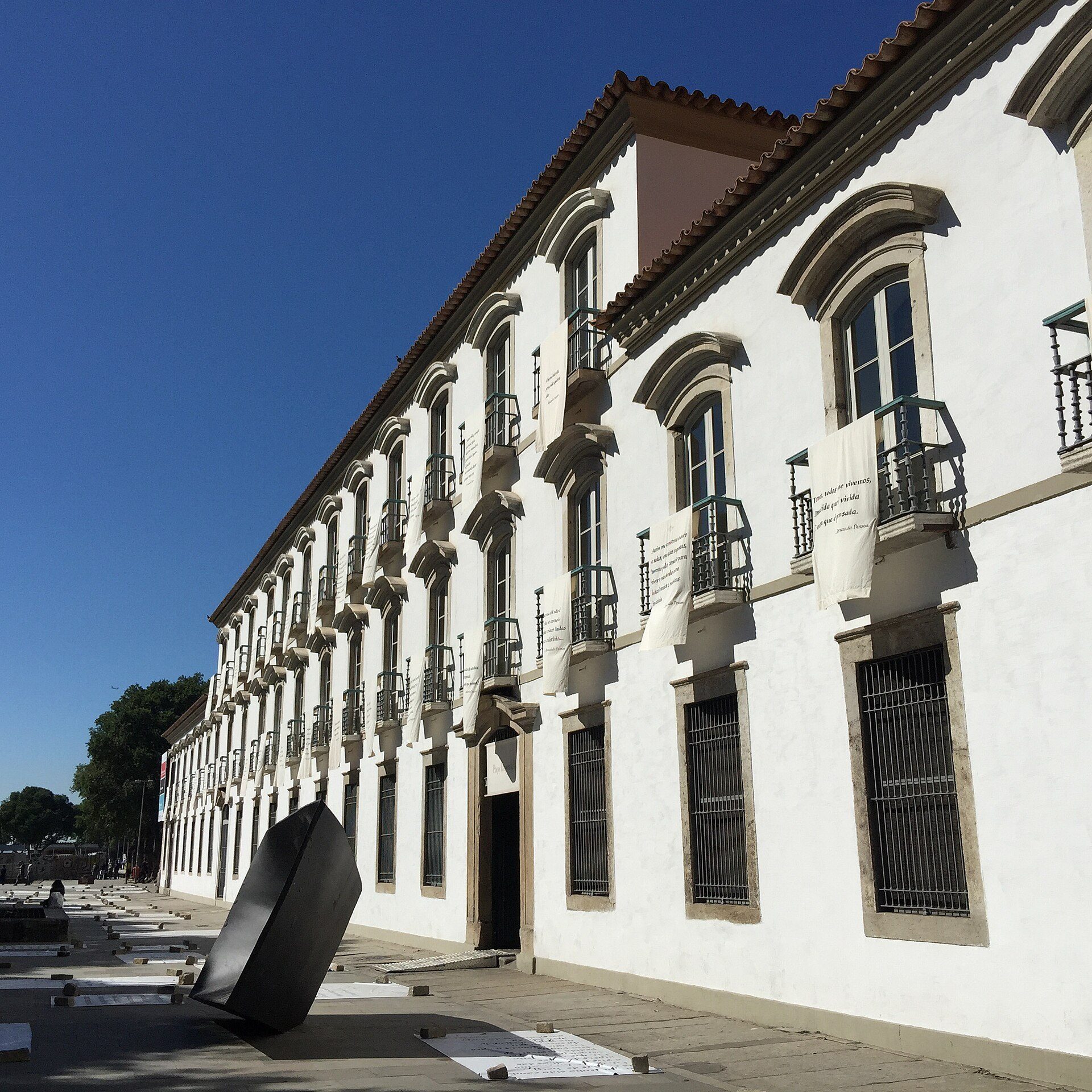
Paço Imperial stands on Praça XV de Novembro in Rio de Janeiro’s historic center. Its eighteenth-century Portuguese Colonial design has Baroque characteristics. A portal made from Portuguese lioz marble forms the principal entrance. The building includes several internal courtyards used for circulation and a staircase leading to the upper floors.
The central section of the façade facing Guanabara Bay received a third floor during the royal period. A throne room was arranged on the second floor, while an elevated passage at the rear linked the palace with the Carmelite Convent. During the imperial period, a parapet was placed around the third floor to conceal the roof.
Courtyards and Present Arrangement
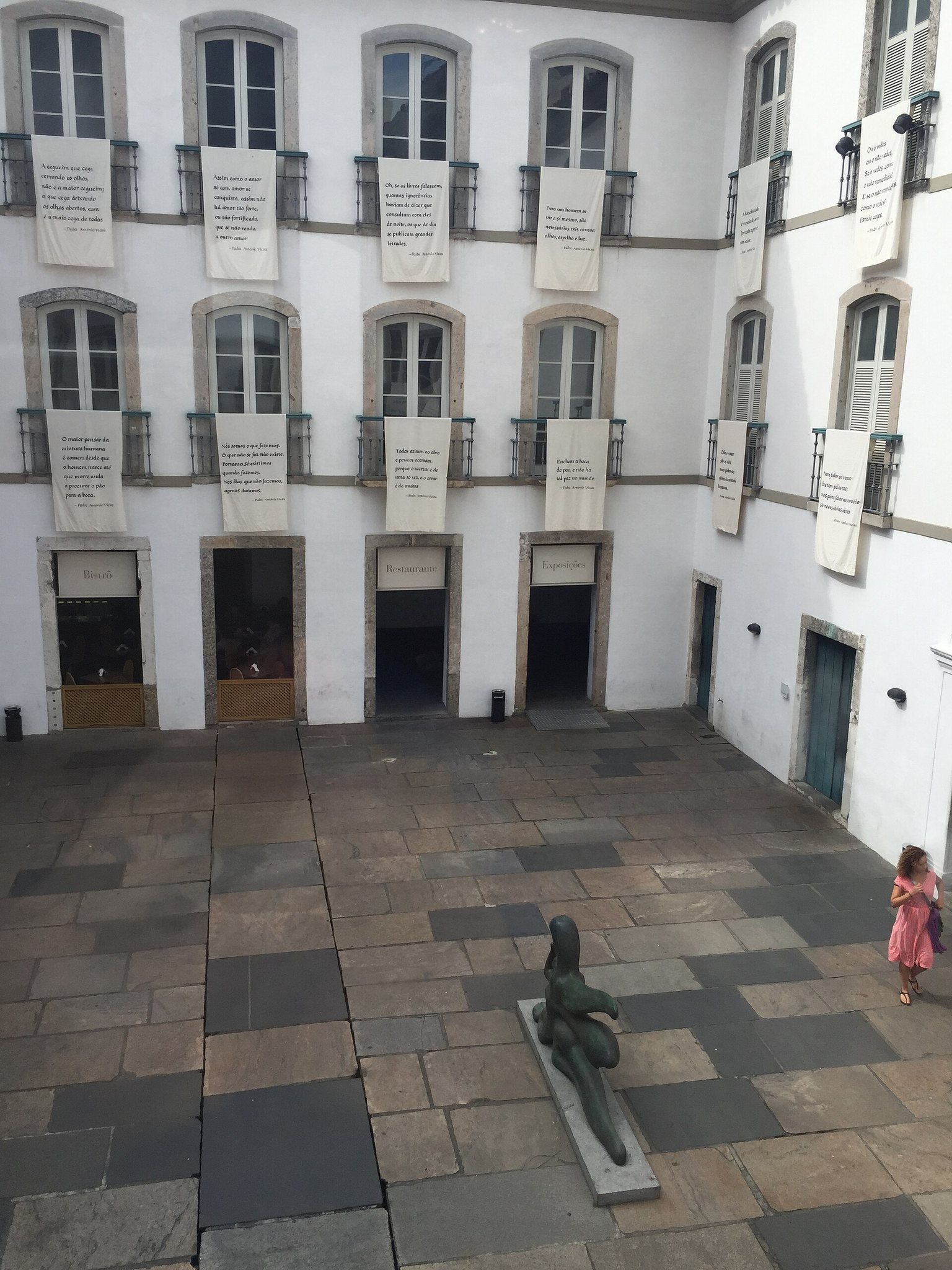
The Courtyard of the Archers retains original stucco decoration from the 1840s. After 1889, the parapet was removed when the third floor was extended across the entire building. The central courtyard was then occupied, and the façade was altered with neo-colonial pediments.
The early 1980s restoration returned the palace to a form based on its documented appearance around 1818. The building is now arranged as a cultural center with exhibition spaces, the Paulo Santos Library, a bookshop, a music shop, and a restaurant.
Square and Waterfront Features
Praça XV de Novembro
Urban works connected with the palace included the remodelling of the adjoining square and the installation of a marble fountain brought from Lisbon. A stone quay was later added beside the square, extending the group of civic features associated with the palace and its setting.
Mestre Valentim Fountain
The Mestre Valentim Fountain was also added beside the square and still survives. It forms part of the historic urban works associated with Paço Imperial and Praça XV de Novembro.