Tamandaré da Laje Fort: A Coastal Fortress in Guanabara Bay
Site at a Glance
- Country
- Brazil
- Primary era
- Early Modern
- Eras represented
- Early Modern, Modern
- Civilizations
- Portuguese
- Site type
- Military
- Remains
- Fort
On this page10 sections
History
Tamandaré da Laje Fort is a coastal fortress on Laje Island, Rio de Janeiro, Brazil, at the entrance to Guanabara Bay. Built under Portuguese colonial rule, it was ordered in 1644 and completed in 1770 after a prolonged construction campaign. It later served as a garrison and a place of political imprisonment, and its defenses were repeatedly altered.
Early proposals and prolonged construction
The fort followed an unsuccessful attempt to establish Ratier Battery on Laje Island in 1555. That effort was part of French naval commander Nicolas Durand de Villegagnon’s expedition, which founded France Antarctique, a short-lived French colonial venture in the Rio de Janeiro region. In 1584, colonial governor Salvador Correia de Sá considered building a small fort on the island, but a Spanish engineer persuaded him to strengthen Nossa Senhora da Guia Battery and São João Fortress instead.
A royal charter dated 2 August 1644 ordered a fortification on Laje and assigned half the revenue from minting patacas, a currency used in the Portuguese Empire, to its construction. Work probably began under Governor Francisco de Souto Maior. His successor, Duarte Correia Vasques, directed proceeds from the sale of land on Rua Direita to the project. Further orders to complete the fort were issued in 1690, but construction remained slow. Plans made around 1704 and 1714 set out proposed designs, while a plan from 1730 showed the developing structure.
Governor Francisco Xavier de Távora advanced the work in the 1710s. Royal letters issued in 1715 and 1716 authorized an expenditure of 40,000 cruzados, a Portuguese imperial currency, from customs revenue. During René Duguay-Trouin’s invasion of Rio de Janeiro in 1711, the fort had not yet been equipped for combat and did not engage the French corsair’s forces. Completion came only in 1770, under Viceroy Luís de Almeida Portugal, an official who governed a territory on behalf of the monarch.
A garrison and political prison
In November 1823, after the Constituent Assembly, the body convened to draft Brazil’s first constitution, was dissolved, José Bonifácio de Andrada e Silva and his brothers, Cipriano José Barata de Almeida, and other deputies were detained at the fort. Major Miguel de Frias e Vasconcelos was imprisoned there after a shooting incident at a theater on 28 September 1831.
In 1836, the fort held Bento Gonçalves, leader of the Farroupilha rebellion, a Brazilian uprising, and his fellow prisoner Pedro Boticário. On 15 March 1837, they tried to escape through a window, but Boticário could not fit through it. Gonçalves gave up the attempt rather than leave him behind; both were soon transferred elsewhere. In 1838, four people condemned to death for a crime on Caqueirada Island were held at the fort, and three died by suicide in their cells. That year, Major José Gomes da Silva commanded a garrison of 280 men, and the fort was armed with 20 guns.
Other prisoners included Rafael Tobias de Aguiar, a leader of the Liberal Revolution of 1842, and military leader Pedro Ivo Veloso da Silveira, sentenced to life imprisonment after the Praieira Revolt, another Brazilian rebellion. Pedro Ivo escaped by skiff on 9 April 1851. In 1893, poet Olavo Bilac was held for several months after criticizing President Floriano Peixoto. The fort also figured in a rescue: then-lieutenant Antônio Carlos de Mariz e Barros helped prevent a French vessel from being wrecked against the fort’s rocks. France awarded him the Legion of Honour, its national order of merit.
Changing coastal defenses
During the Christie Question, a diplomatic crisis between Brazil and Britain from 1862 to 1865, an Army commission proposed new defenses for the port. Its 1863 plan called for a two-storey armored tower with six to eight large-calibre guns to address weaknesses in the fort’s defenses. That year, the fort was classified as a second-class fortification, armed with 28 guns, and manned by soldiers from Santa Cruz da Barra Fortress, to which it was subordinate. Renovations followed in 1874–1875 and 1889.
Revolt and modernization
On 20 January 1892, the fort joined Santa Cruz da Barra Fortress in an uprising against President Floriano Peixoto. Second Sergeant Silvino Honório de Macedo led the revolt, which was quickly suppressed. Bombardment during the 1893 Revolt of the Armada, a naval rebellion against Peixoto, severely damaged the fort. Repairs followed, and Krupp C15 L/40 guns were installed in 1895. A modernization begun in 1896 brought the main structure and steel gun turrets to completion in April 1901. The inauguration took place on 28 July 1906, with further work in 1907 and 1909.
Twentieth-century service
A decree of 12 October 1953 renamed the Fort of Laje as Tamandaré Fort, honoring Brazilian admiral Joaquim Marques Lisboa, the Marquis of Tamandaré, as a tribute from the Army to the Navy. In the 1950s, the fort housed the 1st Battery of the 4th Coast Artillery Group. It continued in service under São João Fortress until its deactivation in 1997.
In 1961, Marshal Henrique Batista Duffles Teixeira Lott was detained at the fort after opposing a developing coup and criticizing military ministers who rejected João Goulart’s assumption of the presidency.
Remains
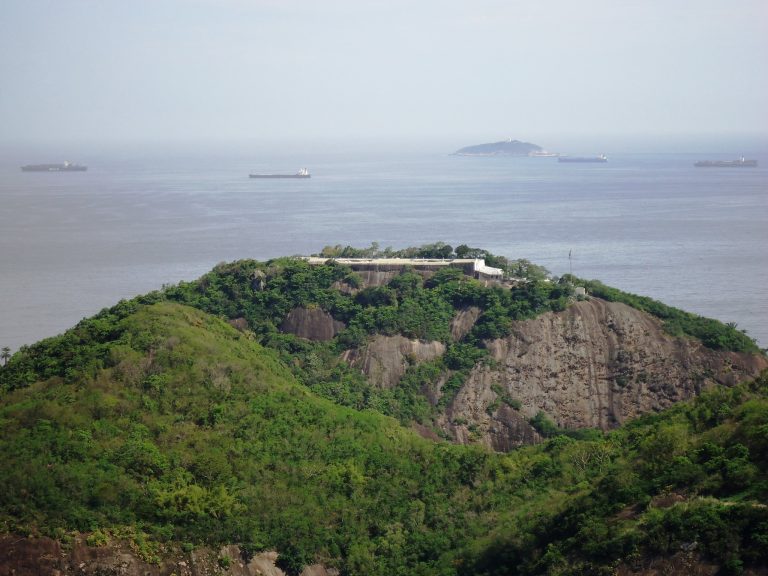
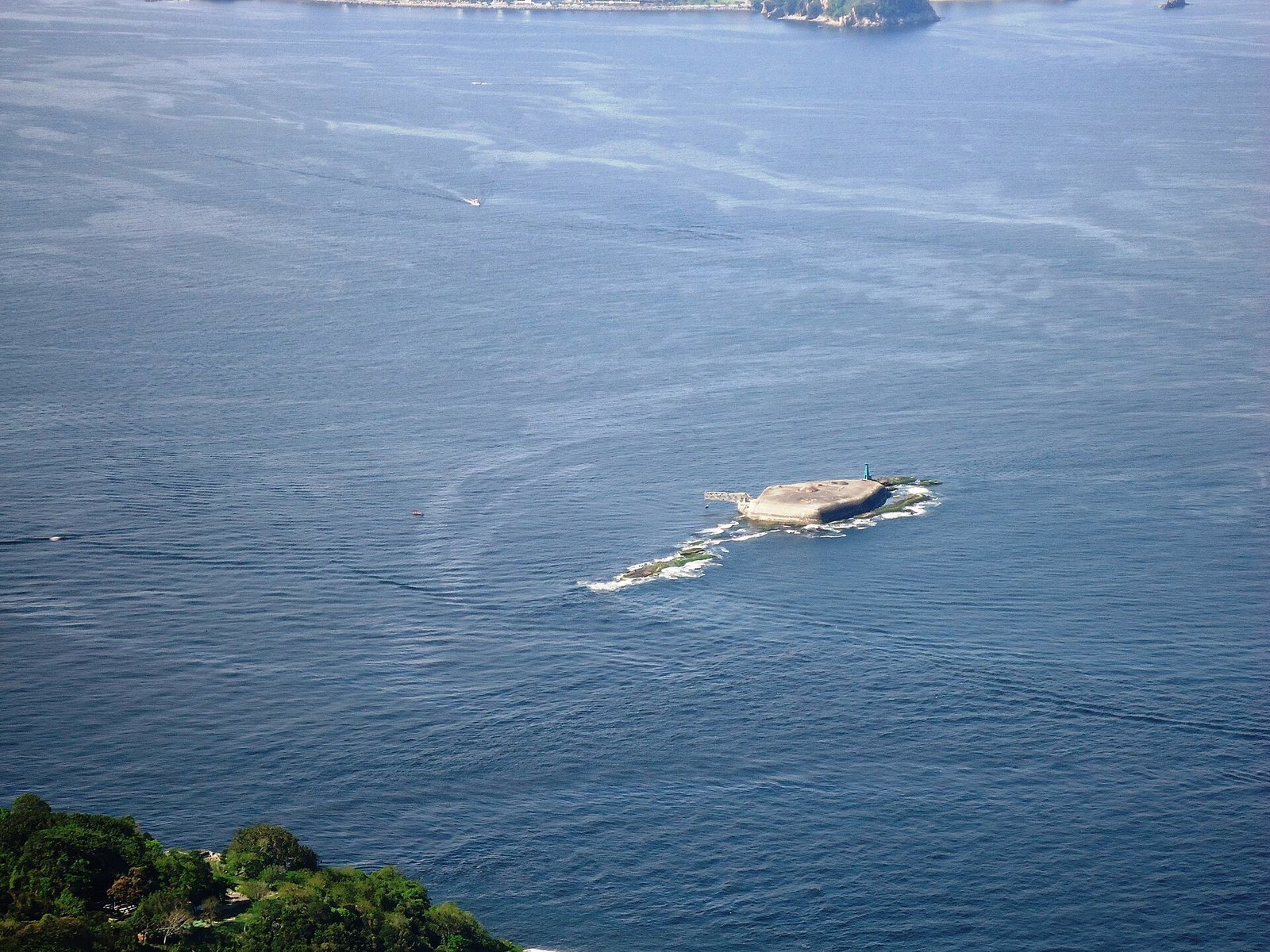
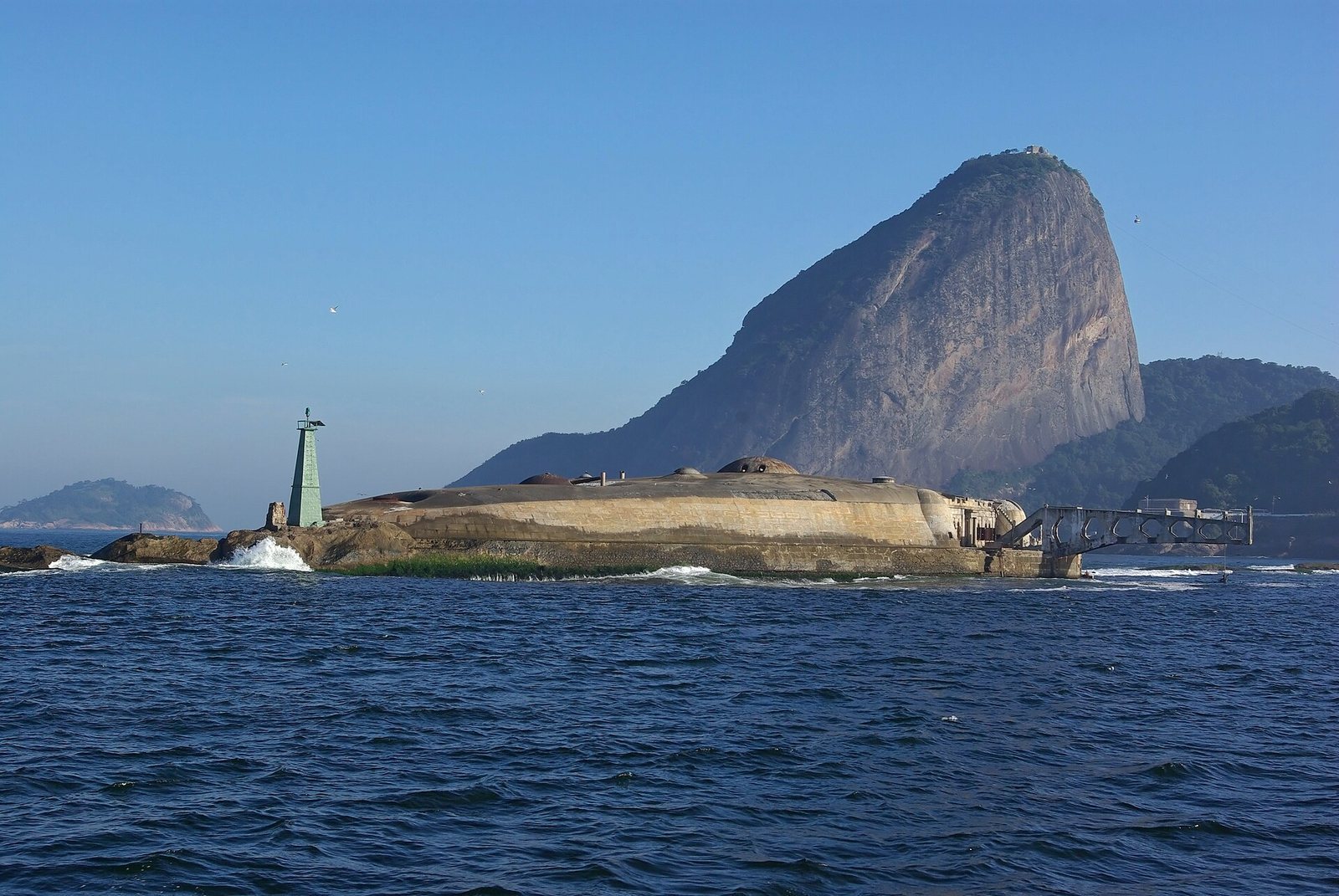
The fort occupies a rocky outcrop about 100 metres long and 60 metres wide, on the right side of Guanabara Bay’s inner entrance and roughly three kilometres from Urca Beach. Its low, exposed position and irregular hexagonal plan were noted in an 1885 description. The fortification combined bastions, projecting defenses arranged to cover the walls with fire, and casemates, protected chambers for troops or guns. Its buildings included barracks and a kitchen.
Armament and surviving fabric
Gun positions
The installations described for 1903 included four turrets: one held two 240 mm guns, another held two 150 mm guns, and each of the other two carried a pair of 75 mm guns. Electrical equipment was also installed.
Openings and condition
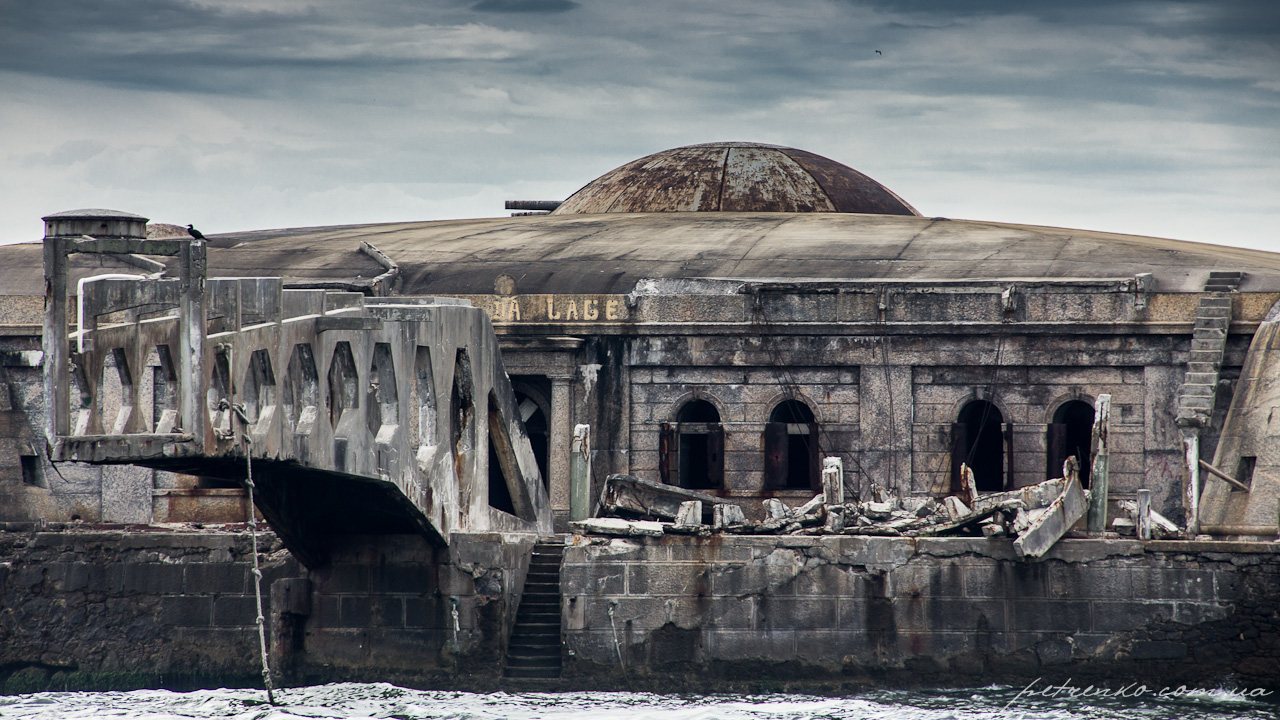
External steel gates and windows, together with internal doors, were fitted in 1906. The fort is now in poor condition. Sea air has corroded parts of the structure, and rust has affected the guns.