Fortress of São José on Ilha das Cobras: A Coastal Defense of Rio de Janeiro
Site at a Glance
- Country
- Brazil
- Primary era
- Early Modern
- Eras represented
- Early Modern
- Civilizations
- Portuguese
- Site type
- Military
- Remains
- Fort
On this page10 sections
History
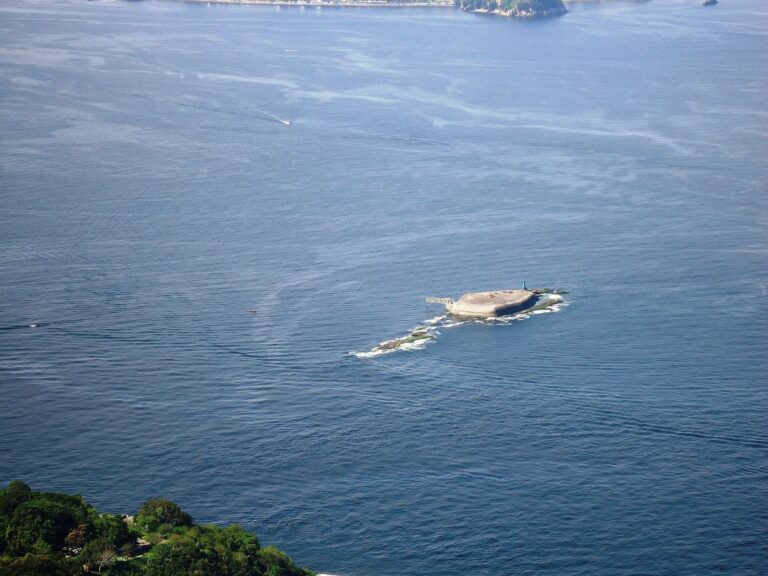
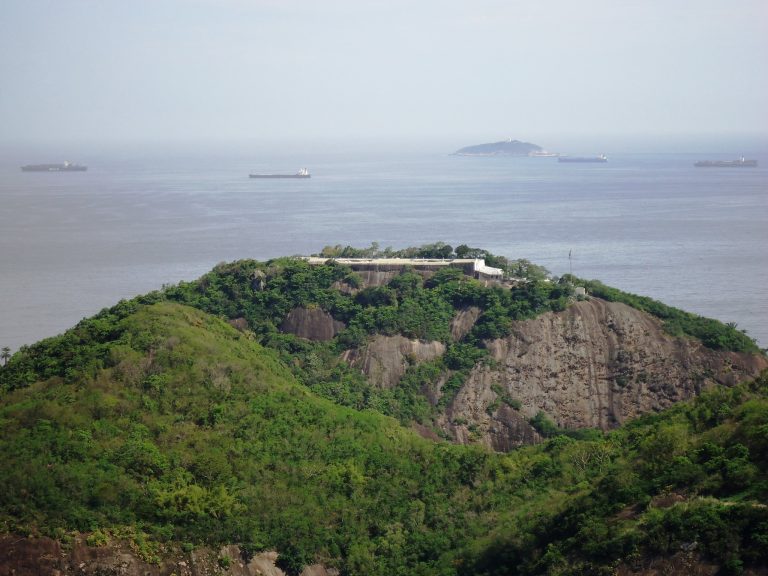
The Fortress of São José on Ilha das Cobras is a coastal defense complex in Guanabara Bay, Rio de Janeiro, Brazil. Portuguese colonial authorities began fortifying the island in 1624, during the period when Portugal was ruled by Spanish Habsburg monarchs. Construction is attributed to Philip IV of Spain, who also ruled Portugal as Philip III. The fortress developed into a bastioned defense, with projecting platforms arranged to let defenders fire along its walls, and protected the city’s harbor and access to the bay.
Foundation and early defenses
The first fortification was established during the second governorship of Martim Correia de Sá, which lasted from 1623 to 1632. In 1624, after Dutch forces captured Salvador and rumors spread of an attack on Rio, colonial authorities strengthened the city’s defenses. The works on Ilha das Cobras responded to the threat of the Dutch West India Company, a Dutch chartered company engaged in Atlantic trade and warfare, as well as privateers.
A new Dutch assault on Salvador in 1638 revived fears of further attacks and of raids by English or French forces. Governor Salvador Correia de Sá e Benevides ordered a fortress built from the remains of the earlier work. Completed in 1639 with Indigenous labor supervised by the Benedictine community at the Monastery of São Bento, it was named the Fortress of Santa Margarida in honor of Margaret of Savoy, Duchess of Mantua and then vice-queen of Portugal.
Construction of another defensive work began in 1703. The Bastion of Santo António, completed in 1709, helped defend Rio’s old port in coordination with the nearby Fort of São Tiago da Misericórdia. The fortress was among the positions occupied during the French privateer René Duguay-Trouin’s invasion of Rio on 13 September 1711. Duguay-Trouin described two fortifications on the island. One apparently had seven artillery pieces before the French increased its armament to 12 cannon and five mortars. A separate figure of 12 guns at four unfinished bastions may instead refer to French artillery positions established during the occupation.
By 1718, the island’s defenses held 26 artillery pieces and 716 cannonballs. Governor Luís Vaía Monteiro oversaw subsequent renovation as officials sought to protect shipments of gold, and later diamonds, leaving Rio’s port.
Expansion and redesign
In 1735, military engineer José da Silva Paes drew up plans to modernize the defenses. Work began in 1738, and the fortress was completed by the end of Governor Gomes Freire de Andrade’s administration in 1763. The plan sought to make the island’s steep slopes difficult to scale, giving the complex the appearance of an elevated castle.
The project also sparked a dispute over who should be credited with founding the fortress. Silva Paes placed an inscription naming himself, which Gomes Freire removed and replaced. Silva Paes then substituted a third version crediting King João V, Gomes Freire, and himself. Gomes Freire may subsequently have assigned Silva Paes to strengthen Portuguese positions at Colonia do Sacramento and Rio Grande de São Pedro in 1737–1738, and to fortify Santa Catarina in 1739.
During his viceroyalty of Rio de Janeiro from 1769 to 1779, Luís d’Almeida Portugal, 2nd Marquess of Lavradio, directed further work. In 1779, he reported that shortages of money and labor had prevented some improvements from advancing as far as he intended.
Prison and changing military use
During the investigation of the Minas Conspiracy, known in Portuguese as the Inconfidência Mineira, the fortress held people accused of opposing Portuguese colonial rule in Minas Gerais. Among them was Joaquim José da Silva Xavier, known as Tiradentes. Arrested in Rio on 6 May 1789 while concealed in a cooper’s home on Latoeiros Street, now Gonçalves Dias Street, he was taken to the island on the night of 10 May and later executed. Other prisoners included Tomás Antônio Gonzaga, Inácio José de Alvarenga Peixoto, and Francisco de Paula Freire de Andrade. Their outcomes included exile to Angola, Mozambique, Cape Verde, or São Tomé, death in prison, and sentences of hanging.
Luís Vieira da Silva, Carlos Correia de Toledo e Melo, José da Silva e Oliveira Rolim, and José Lopes de Oliveira instead served prison terms in Portugal. Vieira da Silva and Rolim were permitted to return to Brazil in 1804 and did so in 1805. Toledo e Melo died in Portugal in 1803, and Lopes de Oliveira there in 1796. The fortress also received repairs during the vice-regency of José Luís de Castro, from 1790 to 1801.
On 21 March 1809, the Royal Navy Brigade was quartered at the fortress following the Portuguese royal family’s arrival in Brazil and the brigade’s part in the conquest of French Guiana. The naval force remained based there. The fortress later held Caetano Pinto de Miranda Montenegro, former governor and captain-general of Pernambuco, after the Pernambucan Revolution of 1817.
Orders dated 30 July 1828 and 29 April 1831 designated the fortification as a civil prison. On 7 October 1831, Marine Artillery rebels seized it, but Major Francisco de Lima e Silva quickly suppressed the revolt. In April 1832, prisoners and soldiers under Major Miguel de Frias e Vasconcelos mutinied at Ilha das Cobras and Villegagnon, with support from the Fortress of Santa Cruz, where they took an artillery piece. They landed at Botafogo and marched toward Campo de Santana. The fortress housed the Navy Hospital from 1838; the institution later became the Central Navy Hospital.
Later military and political use
The fortress was remodeled during the Christie Question, a diplomatic dispute between Brazil and Britain from 1862 to 1865. It then carried 34 guns and housed a Marine battalion. During the Religious Question, a conflict between the imperial government and Catholic bishops over church authority, the bishops of Olinda and Pará, Vital Maria Gonçalves de Oliveira and Antônio de Macedo Costa, were imprisoned there in 1874. In 1875, the Duke of Caxias demanded their imperial pardon as a condition of accepting the presidency of the Council of Ministers. In 1894–1895, the fortress came under the Ministry of War and was classified as a first-class fortification.
During the 1910 Revolt of the Lash, a sailors’ uprising against corporal punishment, João Cândido and other participants were imprisoned in the fortress’s dungeons. Sixteen prisoners died from heat, thirst, and suffocation. In December of that year, troops and ships suppressed a separate uprising by the Marine Battalion stationed there. During the revolt led by junior army officers in July 1922, artillery from Fort Copacabana shelled the fortress from 4 to 6 July. It was later disarmed, and the Rio de Janeiro Navy Arsenal took over its installations.
Brazil’s National Institute of Historic and Artistic Heritage listed the Chapel of São José in 1952, including its Lioz-stone façade. The granite portal of the old fortress gate received separate protection in 1955.
Remains
Island defense layout
The fortification’s layout followed the island’s changing ground, from high ground to an elongated, lower point facing the entrance to Guanabara Bay. The small early work stood between São Bento Hill and the Fort of São Tiago da Misericórdia, overlooking the city’s former anchorage. A later shoreline defense extended along the island’s lower section, with the Bastion of Santo António at its tip. In the three-fort arrangement shown in José da Silva Paes’s 1736 plan, São José occupied the high ground, Pau da Bandeira lay near the island’s center, and Santo António stood toward Ilha dos Ratos, now Ilha Fiscal. The fortified platform at São José included a governor’s house, chapel, powder house, and guardhouse. A plan from 1710–1711 marks Santa Margarida on the high ground and Santo António farther down the island; a 1713 city plan depicts a bridge linking the island to the mainland.
Entrance and chapel
Fortress gate
The old gate has a granite portal. Above it, a Lioz-stone plaque, made from limestone quarried in Portugal, bears a coat of arms and an inscription dating the work to 1736. The text places the construction in João V’s reign and credits Gomes Freire and, in his absence, Silva Paes. It also notes that the fortress was enlarged and improved during Lavradio’s administration.
Chapel of São José
Dedicated to Saint Joseph, the chapel is attached to the Central Navy Hospital. Its front façade is built of Lioz stone.