Stvolínky Castle: A Renaissance and Baroque Episcopal Residence
Site at a Glance
- Rating
- 4
- Popularity
- Very Low
- Country
- Czechia
- Primary era
- Early Modern
- External website
- Open
- Eras represented
- Early Modern
- Civilizations
- Holy Roman Empire, Kingdom of Bohemia
- Site type
- Domestic
- Remains
- Castle
On this page5 sections
History
Stvolínky Castle in Czechia developed from a fortified residence into an episcopal summer residence, combining Renaissance, early Baroque, and Rococo phases. A fortress surrounded by a water moat stood here by 1505, when Vilém II of Illburk recorded it in the name of his wife, Anežka of Helfenštejn.
From fortress to Renaissance residence
Anežka converted the fortress into a Renaissance residence and lived there. Later owners enlarged and altered the building, including Jindřich Kurcpach of Trachenburk and Adam Hrzán of Harasov, who was associated with changes made in 1608. The estate then passed through several hands.
In 1647, Cardinal Arnošt Vojtěch Harrach bought the entire estate for 53,000 gold florins for the planned Bishopric of Litoměřice, the Roman Catholic diocese serving the Litoměřice region. Administration first went to the provost of Litoměřice, a senior cleric overseeing the ecclesiastical estate, and later to Maxmilián Rudolf of Schleinitz, the bishopric’s first bishop.
Episcopal residence and later institutional uses
Between 1655 and 1664, the Renaissance residence was rebuilt in the early Baroque style. It became the bishops’ summer residence, a seasonal retreat and administrative residence rather than the principal cathedral seat. Later occupants included Bishop Jaroslav Ignác of Šternberk and the duke and bishop Mořic Adolf Saský, who arranged for part of the paintings at Litoměřice to be moved to the castle.
During the second half of the eighteenth century, Bishop Emanuel Arnošt of Valdštejn oversaw a Rococo adaptation of the building. At the end of the nineteenth century, under Emanuel Jan Křtitel Schöbel, the castle served as a seminary, an institution for the education and training of clergy. From 1911, it became a holiday residence for children from the Litoměřice convent, while other rooms were rented. One tenant, Rudolf Korb, created the Boží zahrada garden on nearby Dubina Hill.
After 1918, Karl Stellwag rented the castle. From 1935, he was a senator representing the Sudeten German Party led by Konrad Henlein. After the Second World War, Bohuš Urban became the first postwar administrator and also chaired the local National Committee, the local administrative body used in Czechoslovakia during the Communist period. He was arrested in 1946.
State administration, decline, and rescue
In 1950 or 1951, the castle was assigned to the Zahrádky State Farm. Its functions changed sharply: a smithy operated on the ground floor, halls on the first floor were used to dry harvested crops, and apartments occupied parts of the building. In 1970, the damaged castle passed to the local National Committee of Stvolínky. From 1974, the District National Committee of Česká Lípa administered it, while the District Museum used the first floor and most of the attic as a repository, the District Archive occupied the ground floor, and the local committee used other rooms.
A windstorm damaged the roof in 1976. Groundwater and fungal decay in the timber caused further deterioration, while reconstruction schemes demanded substantial investment and were either left incomplete or executed poorly. The chimneys were removed during this period. After 1990, the deteriorating building was emptied. An archival report noted that repairs had continued for several years, with particular attention given to the roof in 1988, while wooden floors were gradually replaced with tiled floors. The castle had held museum collections and archival material on about 1,100 linear metres of shelving.
An association devoted to Stvolínky Castle was founded in 2013 on the initiative of Jiří Bartoš Sturz. Working with the municipality, it began rescue and reconstruction efforts and sought a lasting use for the building. Stvolínky Castle is owned by the municipality and protected as a cultural monument of the Czech Republic. From 2013 to 2023, repairs cost 23 million Czech korunas, including 6 million from the municipal budget.
Remains
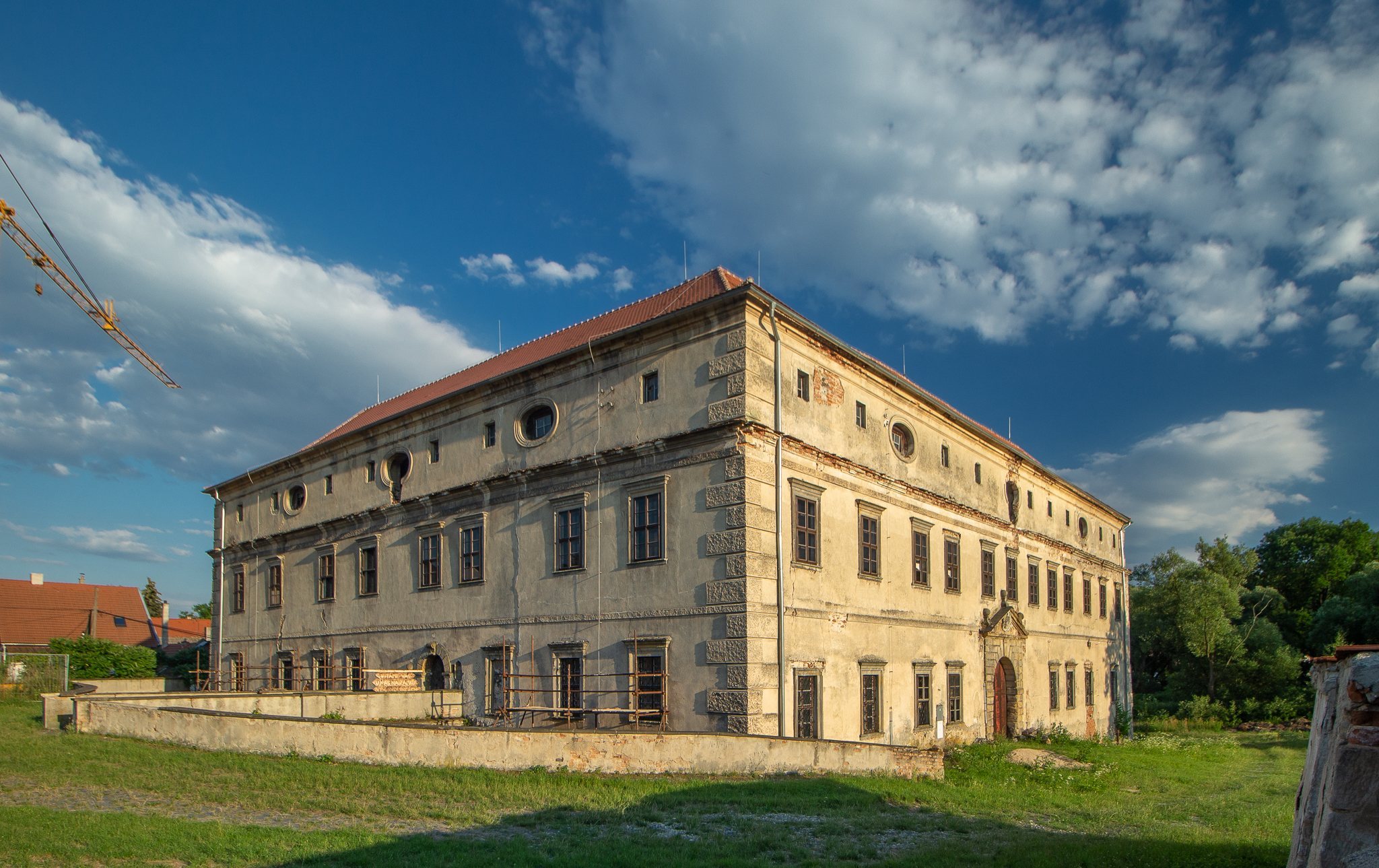
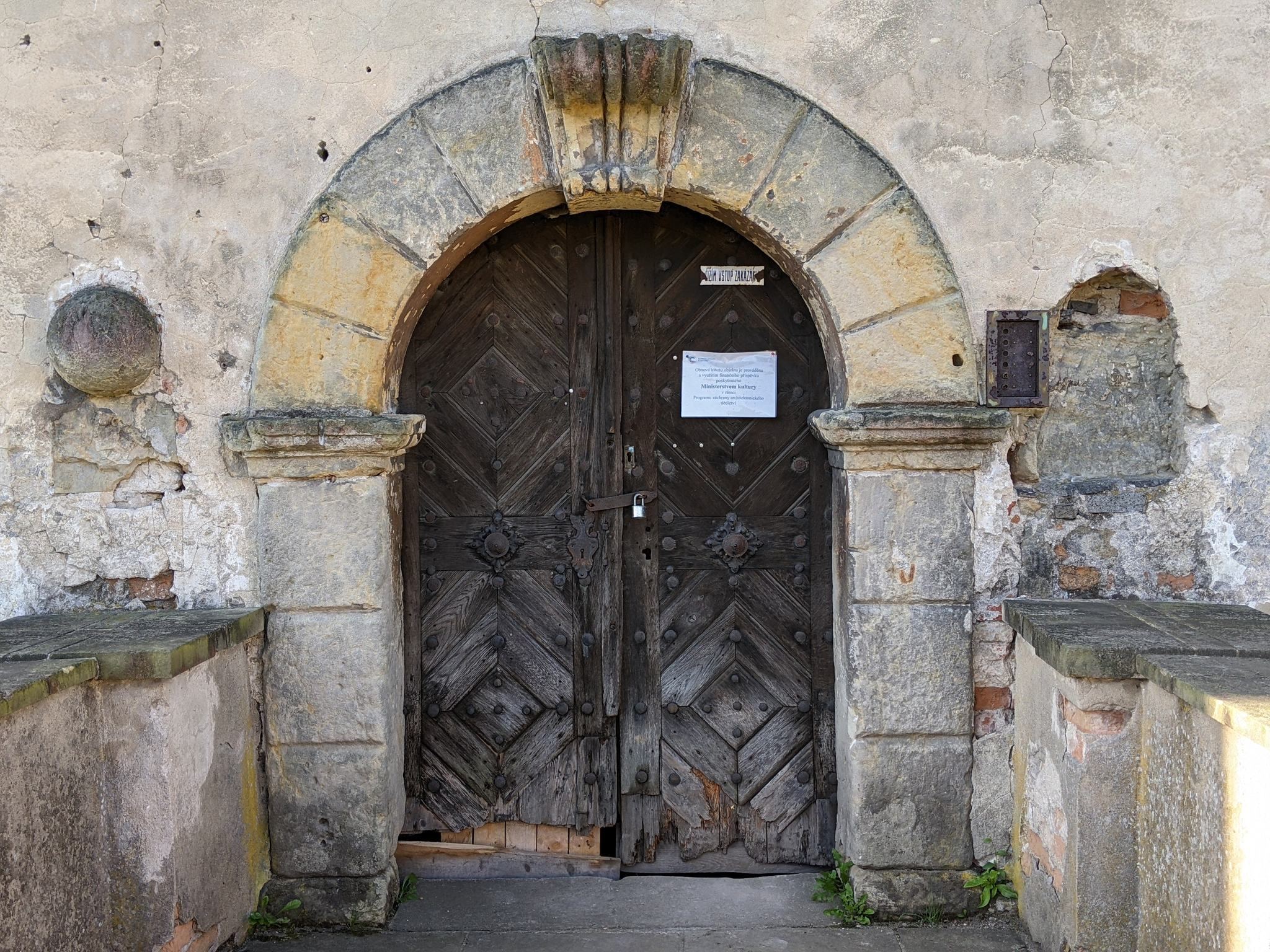
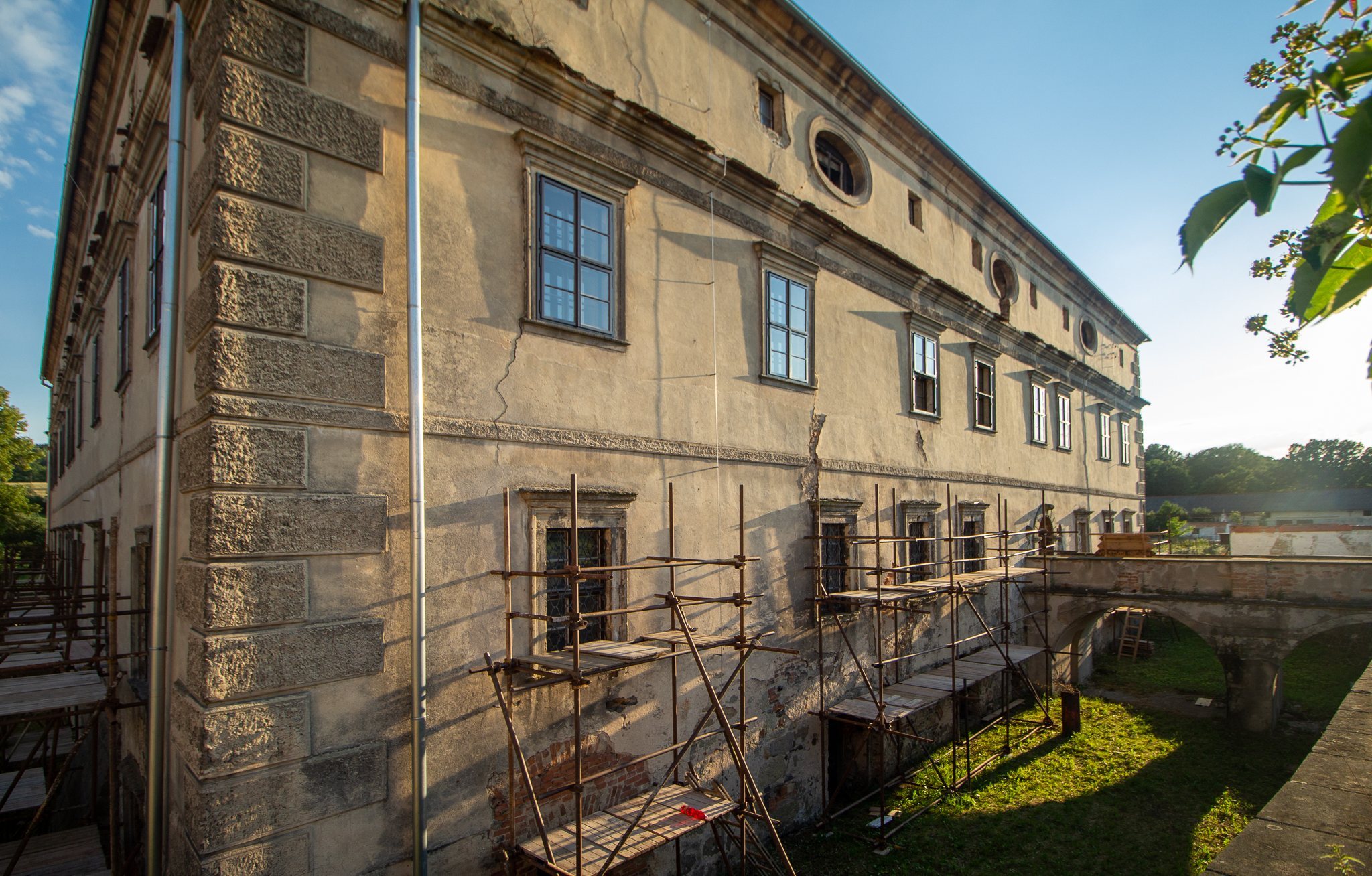
Stvolínky Castle is a two-storey building arranged around four wings. Built of stone and masonry, it retains the form of a residential complex whose appearance reflects successive Renaissance, early Baroque, and Rococo alterations. Partially glazed arcades border the courtyard, while a park and the Church of All Saints lie behind the castle.
Remains of the former water moat can still be seen around the building, and a bridge crosses it. The castle’s later working history is also visible in the changed use of its rooms. The ground floor formerly housed a smithy, the first-floor halls were used for drying crops during the state-farm period, and other sections were divided into apartments. The damaged roof, groundwater, timber decay, unfinished repairs, removed chimneys, and replacement of wooden floors with tiles have all shaped the building’s present condition.