Castro de Bagunte: A Fortified Iron Age Settlement in Portugal
Site at a Glance
- Rating
- 4.5
- Popularity
- Low
- Country
- Portugal
- Primary era
- Iron Age
- Eras represented
- Iron Age, Classical
- Civilizations
- Roman
- Site type
- Military
- Remains
- Fortified Town
On this page7 sections
History
Castro de Bagunte is a fortified hill settlement in Portugal, built by communities of the Castro culture, an Iron Age tradition of defended hill settlements in northwestern Iberia. Occupied probably from the fourth century BC to the fourth century AD, it was later Romanized and remained in use for approximately 800 years. The settlement covered about 50 hectares and occupied a commanding position above the Ave and Este river valleys.
Iron Age settlement and Romanization
Bagunte developed as a substantial Castro-culture settlement surrounded by smaller contemporary communities. Its position on Monte da Soledade, together with the surrounding network of settlements, gave it a strong presence in the landscape. A possible role as a regional central place during the Iron Age cannot be established securely.
A major reorganization took place during the Flavian period, the Roman imperial period from AD 69 to 96. This transformation formed part of the settlement’s Romanization, the process by which an indigenous community became incorporated into the Roman political, economic, and cultural sphere. The settlement continued to contain both pre-Roman and Roman buildings and material.
Rediscovery and protection
Medieval notices provide the earliest recorded references to Bagunte. More detailed descriptions were produced in 1899 by Martins Sarmento, a Portuguese archaeologist and researcher of the region’s prehistoric and Iron Age past. The principal excavation campaigns followed between 1944 and 1947 under Fernando Russel Cortez.
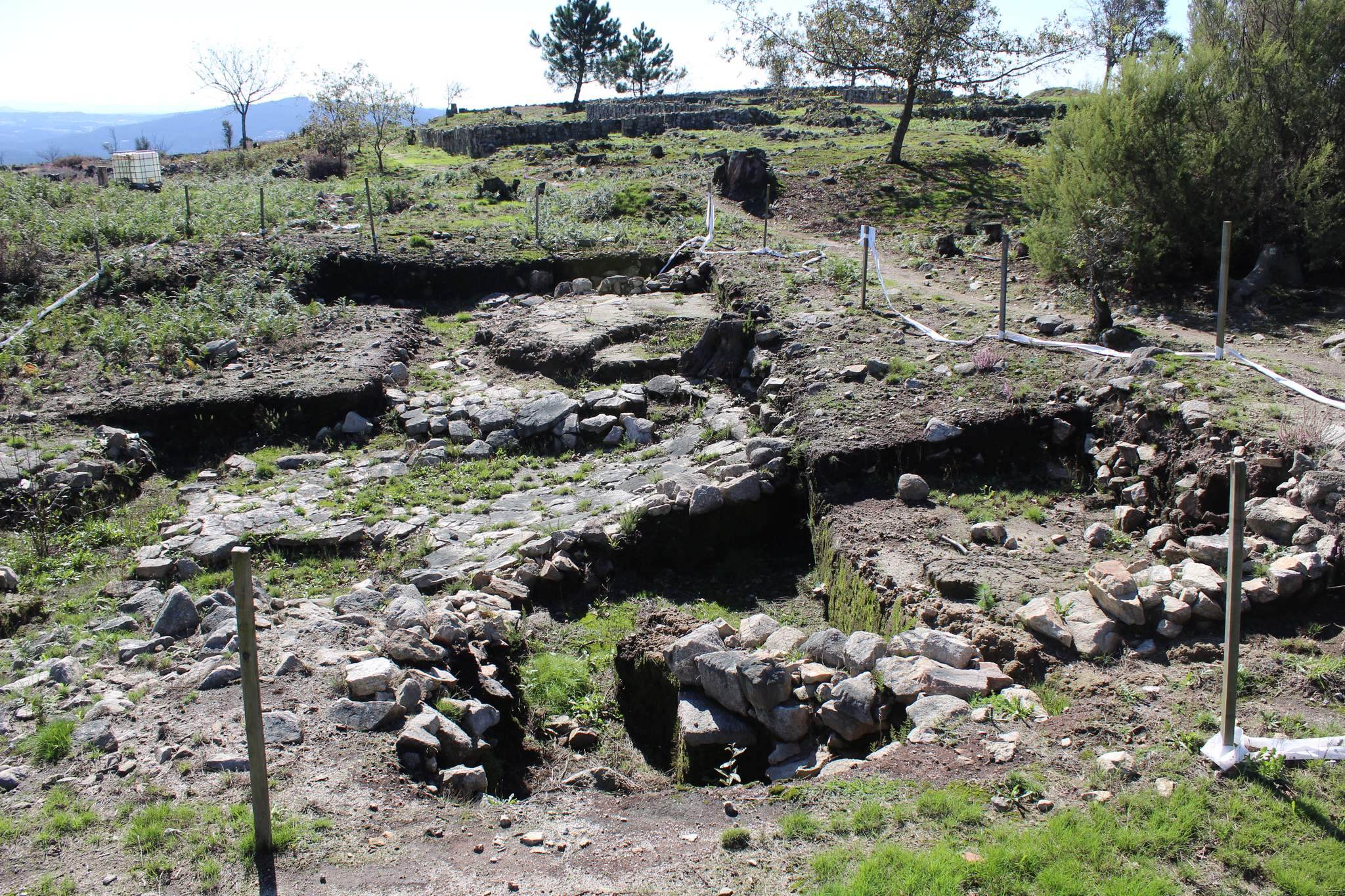
Research then paused for several decades. Intensive forestry and stone extraction caused serious damage to the remains before excavation and conservation resumed from the mid-1990s, particularly in the acropolis, the elevated upper part of the settlement. Bagunte was registered and protected as a National Monument in 1910. An extension of the protected area to 50 hectares has been proposed. It is among the largest and most important archaeological remains in the municipality of Vila do Conde and is comparable in scale with major Castro-culture settlements such as Briteiros and Sanfins.
Remains
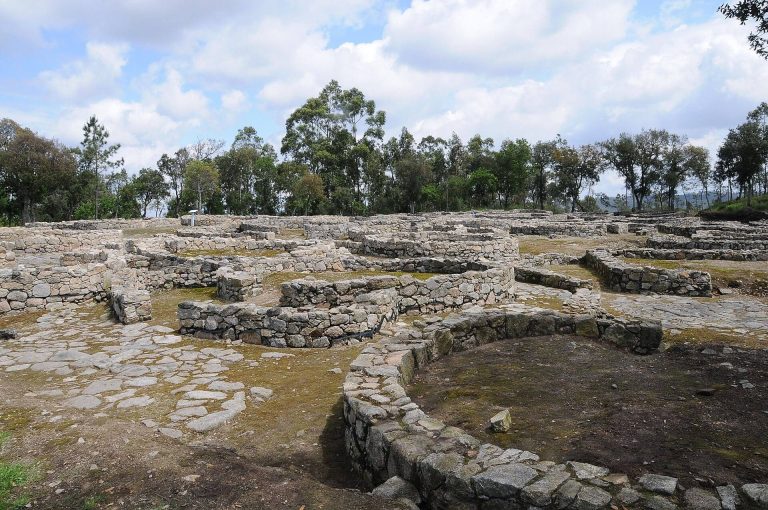
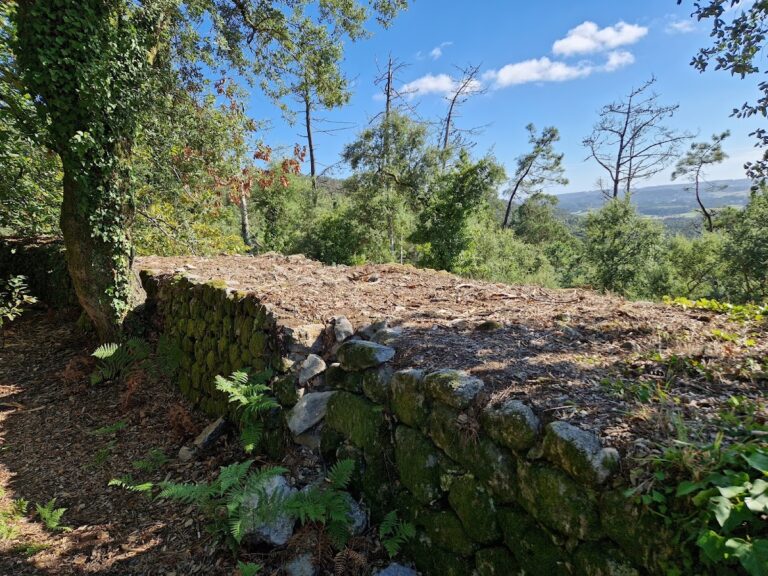
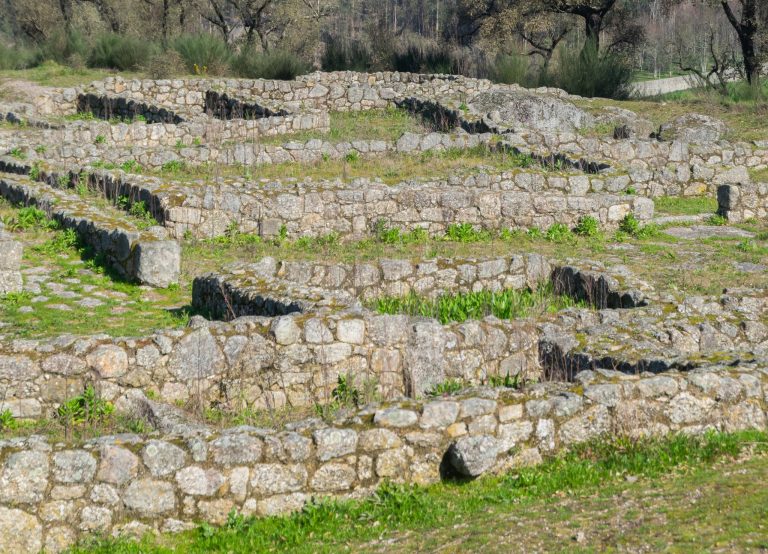
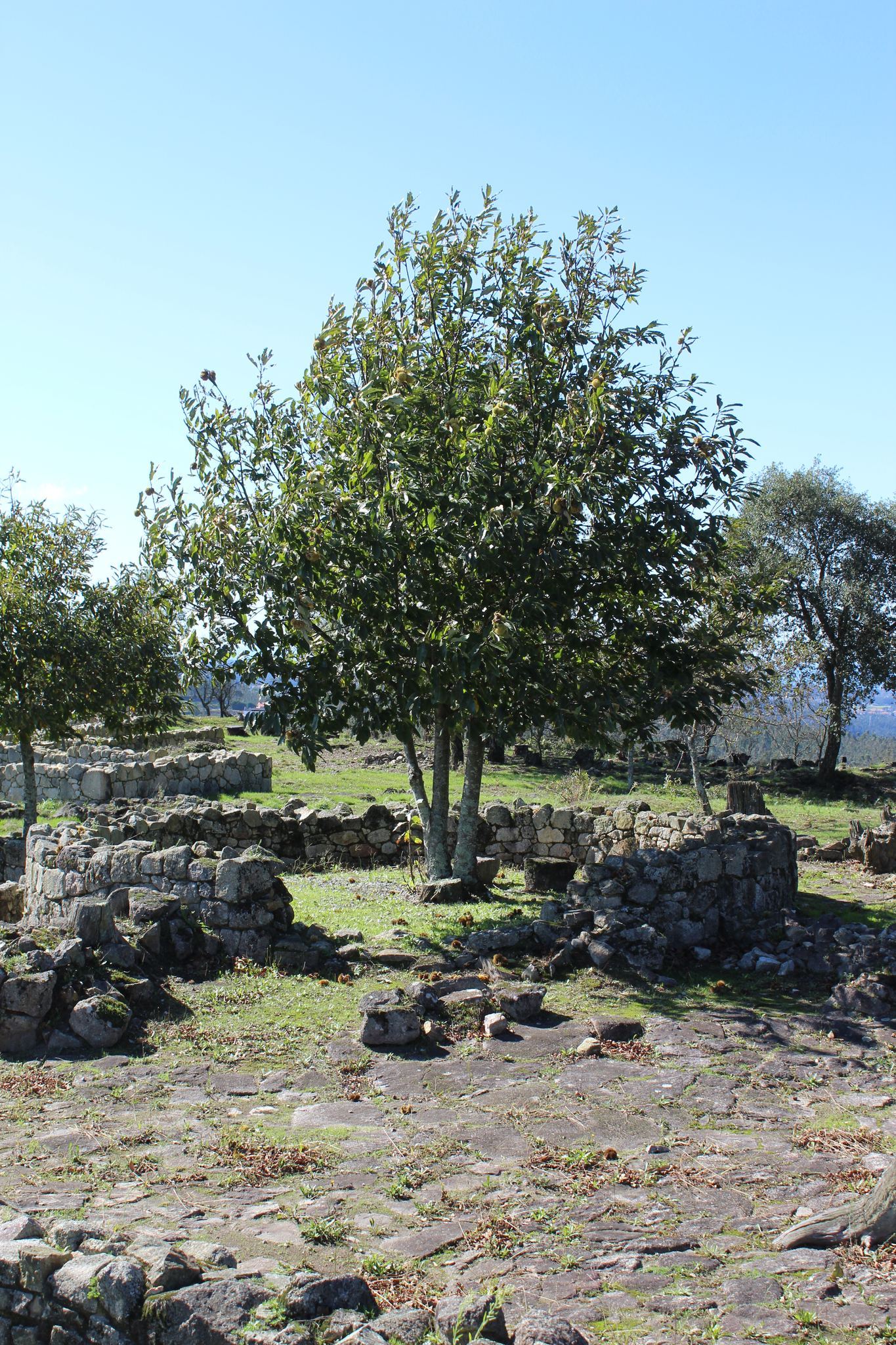
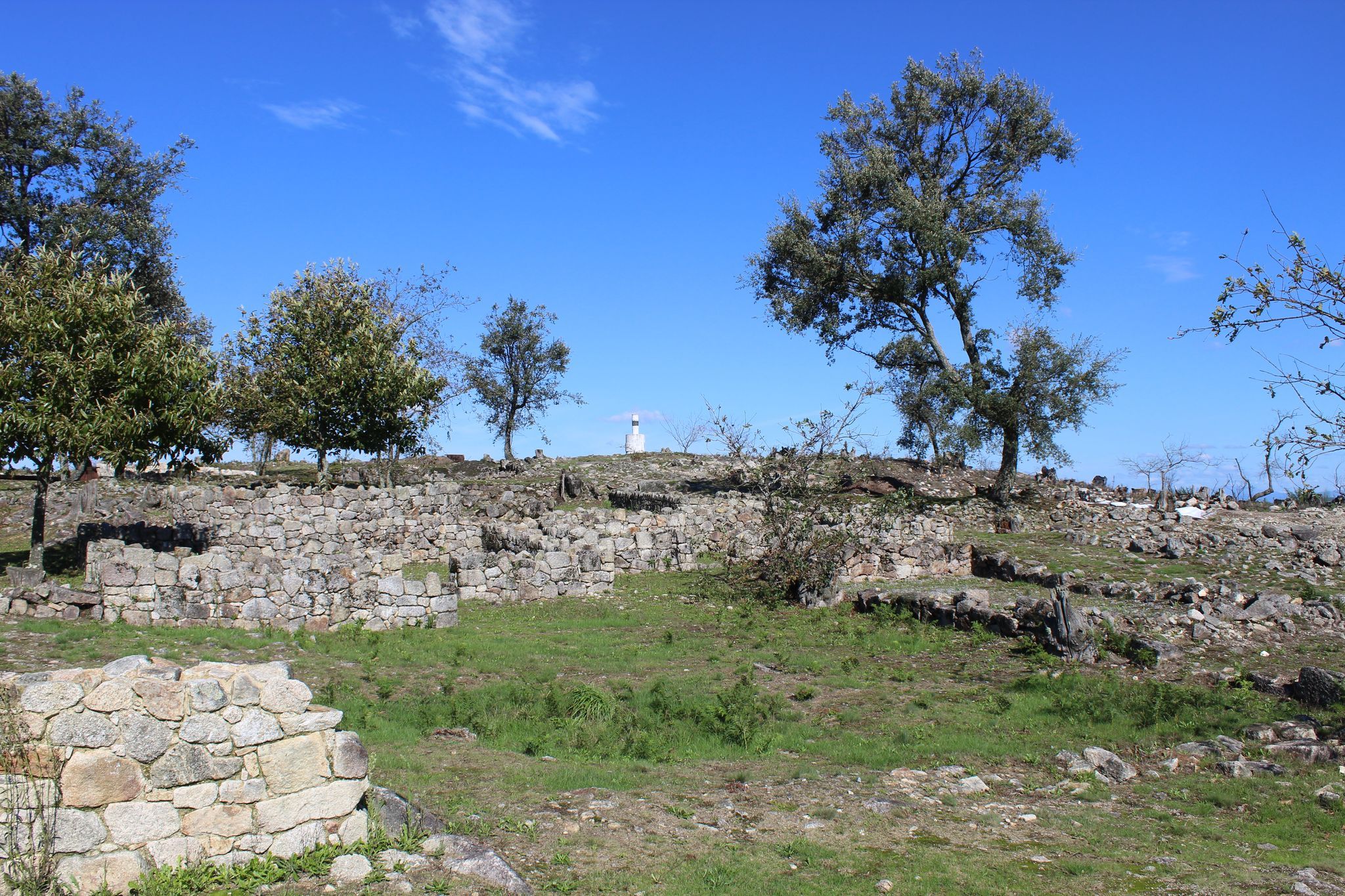
Castro de Bagunte occupies the summit of the approximately 200-metre-high Monte da Soledade in the municipality of Vila do Conde, in Portugal’s Porto District. The settlement extended across roughly 50 hectares and overlooked the entrance to the Ave and Este river valleys. A recorded area measures about 325 metres by 150 metres, although its relationship to the wider settlement area remains uncertain. Excavations have exposed just over 2 hectares, revealing approximately 800 pre-Roman and Roman buildings or houses. Later damage has left only part of this built fabric surviving.
Defensive circuits and settlement layout
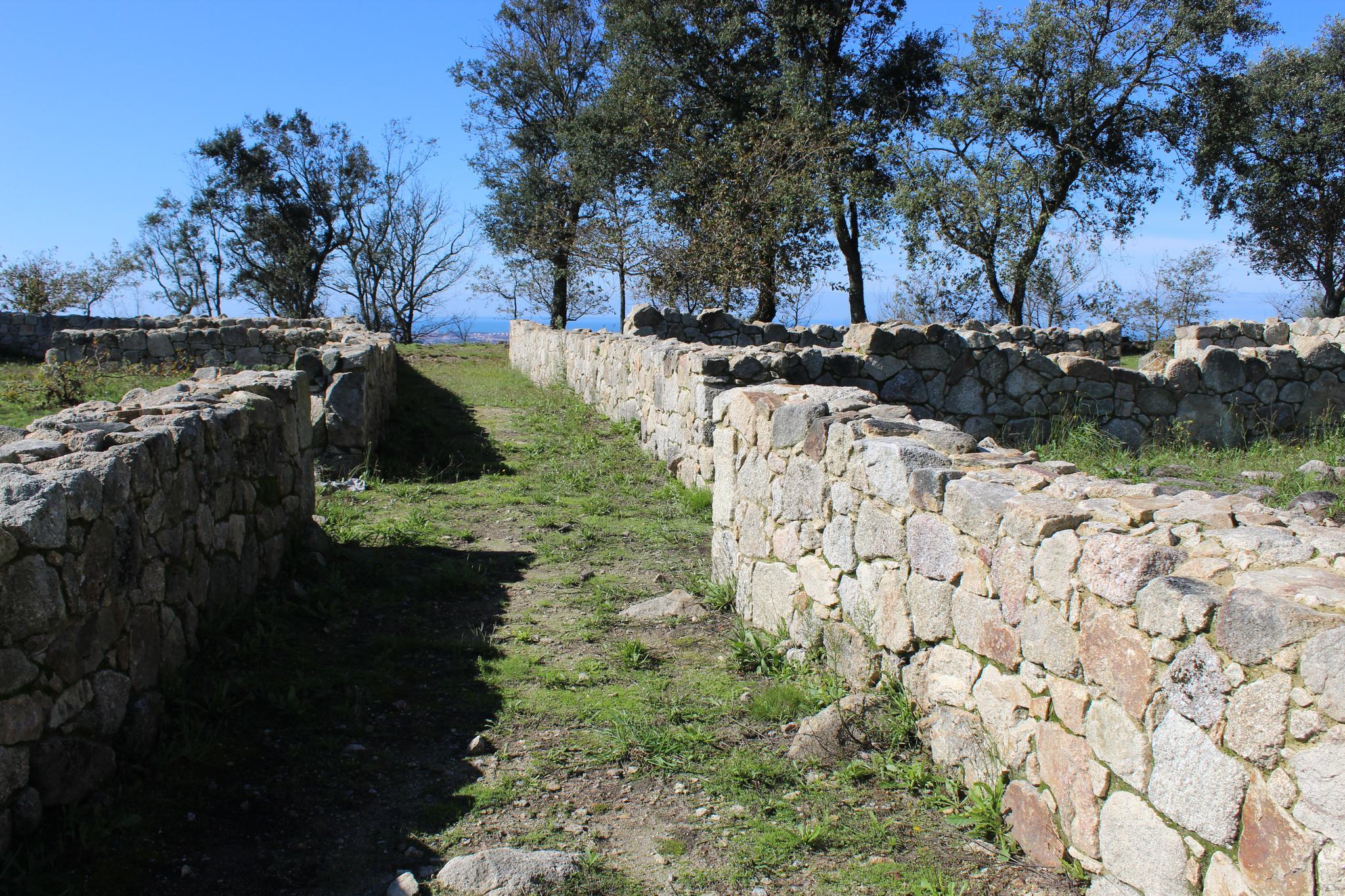
Multiple extensive wall circuits and external ditches defended the settlement. Within the excavated area, paved streets divide the remains into four sectors identified as A through D. Each sector contains as many as five residential complexes, or groups of related houses, that remained occupied over extended periods. The settlement’s layout combines clustered buildings with substantial defensive works, features characteristic of the Castro culture.
Residential buildings
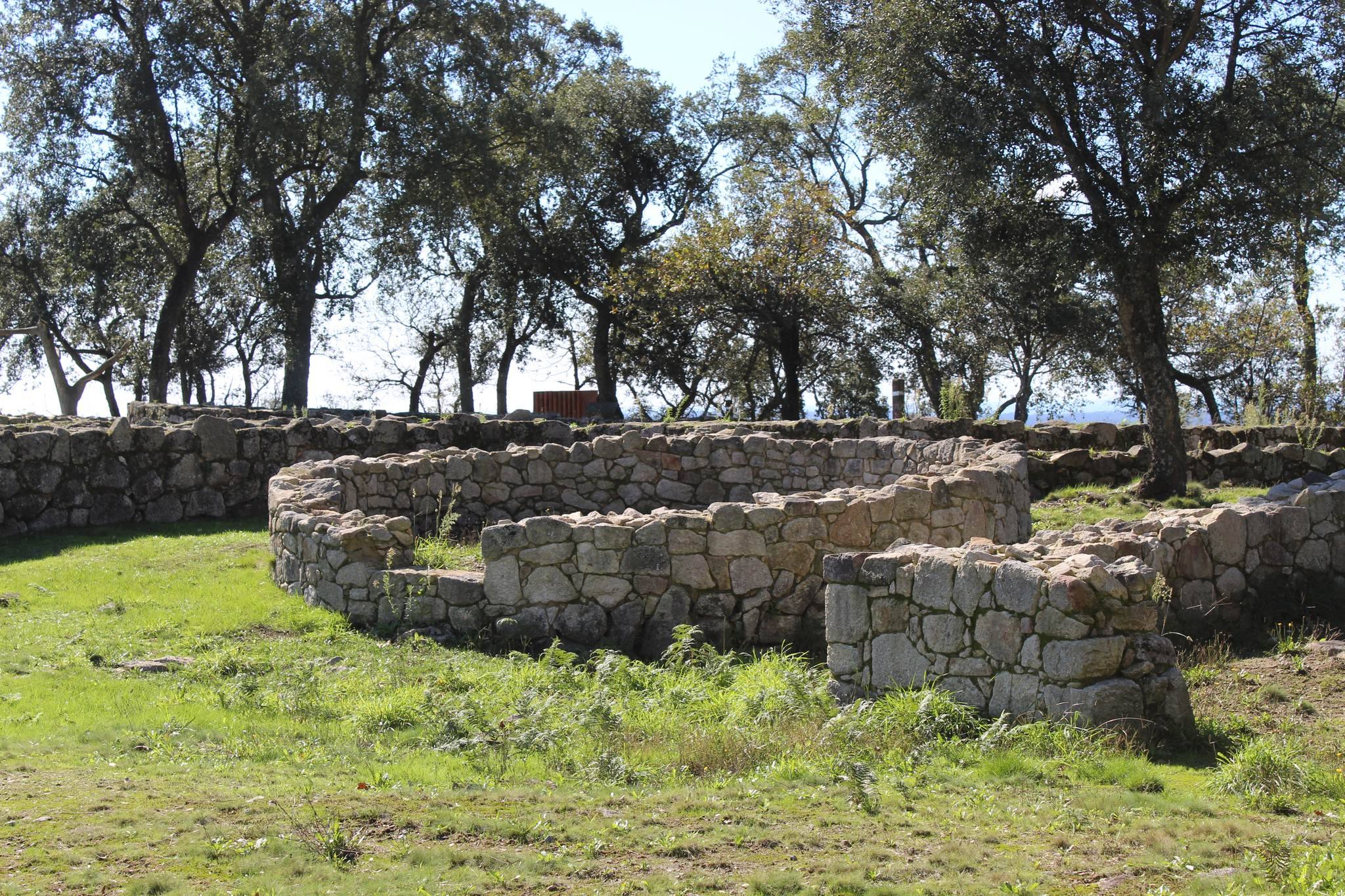
The buildings have circular and elongated rectangular plans. Some include semicircular entrance spaces, while paved floors were frequently identified. The arrangement of plans, doorways, and courtyards within the residential complexes reveals a relative sequence of construction, with a general change from circular to rectangular forms over time.
Finds and surviving collections
Excavations recovered five silver torques, rigid or semi-rigid metal rings worn around the neck or arm. One was an arm ring and four were neck ornaments. Other finds include glass, glass beads, a ring, a knife, crucibles, and large quantities of pre-Roman and Roman pottery. The pottery includes imports from other parts of the Roman Empire. Much of the material recovered during the excavations of the 1940s is preserved at the Museum of Anthropology of the University of Porto.