Royal Chapel of the Treasure of San Gennaro: A Neapolitan Baroque Chapel in Naples
Site at a Glance
- Rating
- 4.8
- Popularity
- Medium
- Country
- Italy
- Primary era
- Early Modern
- External website
- Open
- Eras represented
- Early Modern, Modern
- Civilizations
- Italian, Kingdom of Naples, Spanish
- Site type
- Religious
- Remains
- Chapel
On this page18 sections
History
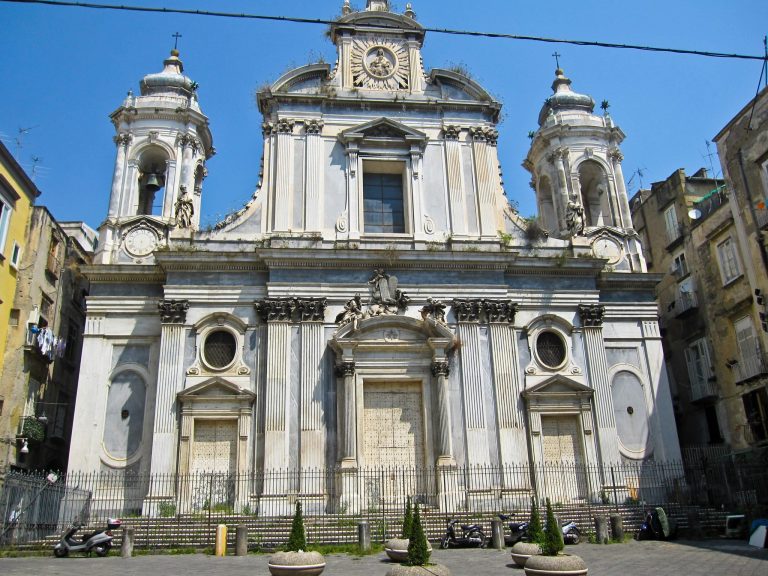
The Royal Chapel of the Treasure of San Gennaro is a Catholic chapel in Naples, Italy, built in the Neapolitan Baroque style between 1608 and 1646. Dedicated to San Gennaro, or Saint Januarius, the Christian martyr and patron saint of Naples, it was created through a civic vow during a period of siege, plague, volcanic eruption, and earthquakes. Its construction and decoration were directed not by the diocesan clergy but by a lay civic institution representing the historic districts of Naples.
The civic vow and foundation
The chapel originated during the crises of 1526 and 1527. Naples was facing a French siege, a renewed outbreak of plague, an eruption of Vesuvius, and earthquakes. On 13 January 1527, representatives of the city formally promised to build San Gennaro a larger and more splendid chapel. The vow was recorded before the notary Vincenzo de Bossis on the cathedral’s high altar. The new chapel was intended to replace the saint’s earlier chapel, which occupied a narrow tower to the left of the cathedral entrance.
Representatives of the five noble civic seats, Capuano, Nido, Montagna, Portanova, and Porto, joined the representative of the People’s seat in making the pledge. They assigned 1,000 ducats to the Eucharistic tabernacle and 10,000 ducats to the new chapel. The historic civic seats, or sedili, were representative districts through which Naples organized aspects of its public life.
On 5 February 1601, elected officials established the Deputation, a twelve-member lay commission with two representatives from each civic seat. It was responsible for promoting and supervising the chapel’s construction and decoration. The original allocation of 10,000 scudi eventually rose to more than 480,000 scudi, supplied without financial support from the Vatican or other ecclesiastical institutions. A foundation bull from Pope Paul V followed in 1605, and construction began on 8 June 1608.
Construction and artistic commissions
Francesco Grimaldi directed the first stage of construction until his death in 1613. Ceccardo Bernucci then took charge, followed by Giovan Giacomo di Conforto, who led the work to completion. The project required the demolition of an oratory, the small church of Sant’Andrea, the Filomarino, Capace, and Cavaselice chapels within the cathedral, and several houses. The building was completed in 1646, although disputes over artistic commissions delayed the decorative program.
The Deputation initially sought artists from outside Naples for the principal cycle of paintings. Giuseppe Cesari, known as Cavalier d’Arpino, was approached in 1618, but the plan did not proceed. Guido Reni received the commission in 1620 and refused it after an associate was attacked. Proposals from Fabrizio Santafede and Battistello Caracciolo were also rejected, and the pictorial campaign had still not begun in 1628.
Threats and attacks against foreign artists were attributed to Belisario Corenzio, Battistello Caracciolo, and Jusepe de Ribera. The conflict became known as the “Cabala of Naples” and contributed to the delay. Domenichino secured the commission in 1630 and completed the principal early stages of the decoration between 1631 and 1633. He continued working until his sudden death on 6 April 1641. The claim that members of the Cabala poisoned him remains probable rather than certain.
Giovanni Lanfranco succeeded Domenichino and completed the dome fresco of Paradise in 1643. On 6 June 1646, the Deputation commissioned Massimo Stanzione to replace Domenichino’s unfinished painting of the Miracle of the Possessed Woman. The Deputation later judged Stanzione’s composition inconsistent with the dominant cycle, so the works were exchanged and Stanzione’s painting was moved to the Chapel of the Conception. In the same year, Jusepe de Ribera completed San Gennaro Emerging Unharmed from the Furnace for the right altar. Although Spanish by birth, Ribera was associated with the Neapolitan school, and the painting was regarded as the chapel’s only work artistically Neapolitan in character.
Lay government and royal status
From its foundation, the Deputation defended the chapel’s lay patronage and its independence from the archiepiscopal curia. Papal bulls and royal protection gave it the status and privileges of a royal palatine chapel. Cardinal Archbishop Francesco Boncompagni opposed its exemption from diocesan jurisdiction, but the Deputation maintained its position.
The chapel’s legal autonomy also survived the political changes of the nineteenth century. After 1861, the Deputation defended its lay status against legislation affecting lay benefices and chaplaincies. On 13 May 1861, the chapel was recognized as a sui generis institution and exempted from the relevant confiscatory legislation. Its autonomy continued through the post-unification laws of 1866 and 1867.
On 15 August 1927, Pope Pius XI’s bull Neapolitanae Civitatis gloria recognized Naples’ patronage over the chapel. The arrangement confirmed the city’s administration of its property, election of chaplains, regulation of their duties, and responsibility for divine worship. During the seventeenth and eighteenth centuries, the chapel also hosted musical activity associated with Cimarosa, Paisiello, Francesco Provenzale, Francesco Durante, Scarlatti, and Charles Broschi. Since 2003, adjoining rooms have housed the Museum of the Treasure of San Gennaro, displaying votive offerings and donations made to the saint over roughly seven centuries by kings, popes, and Neapolitan and European aristocrats.
Remains
The chapel interior
Plan, entrance, and altars
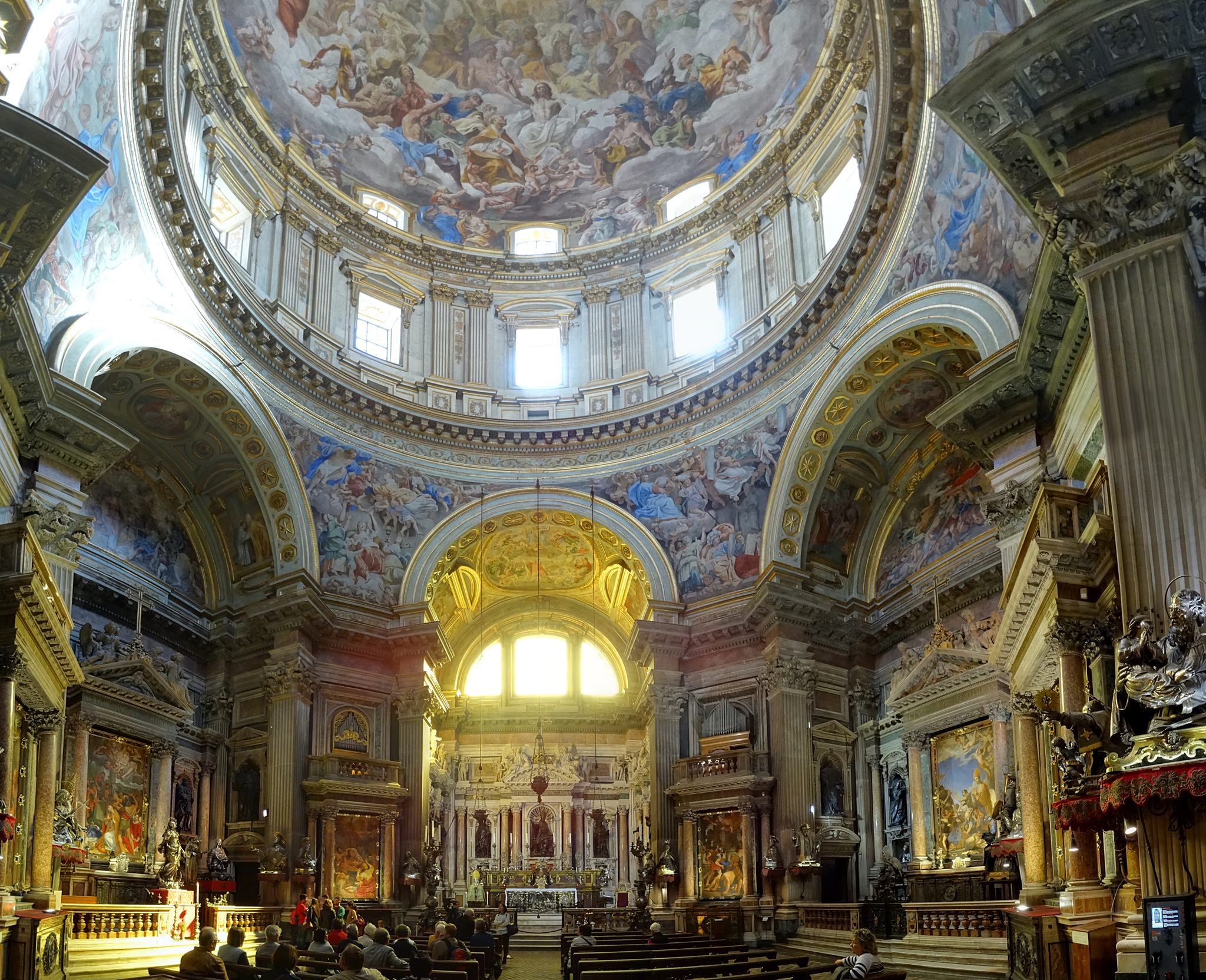
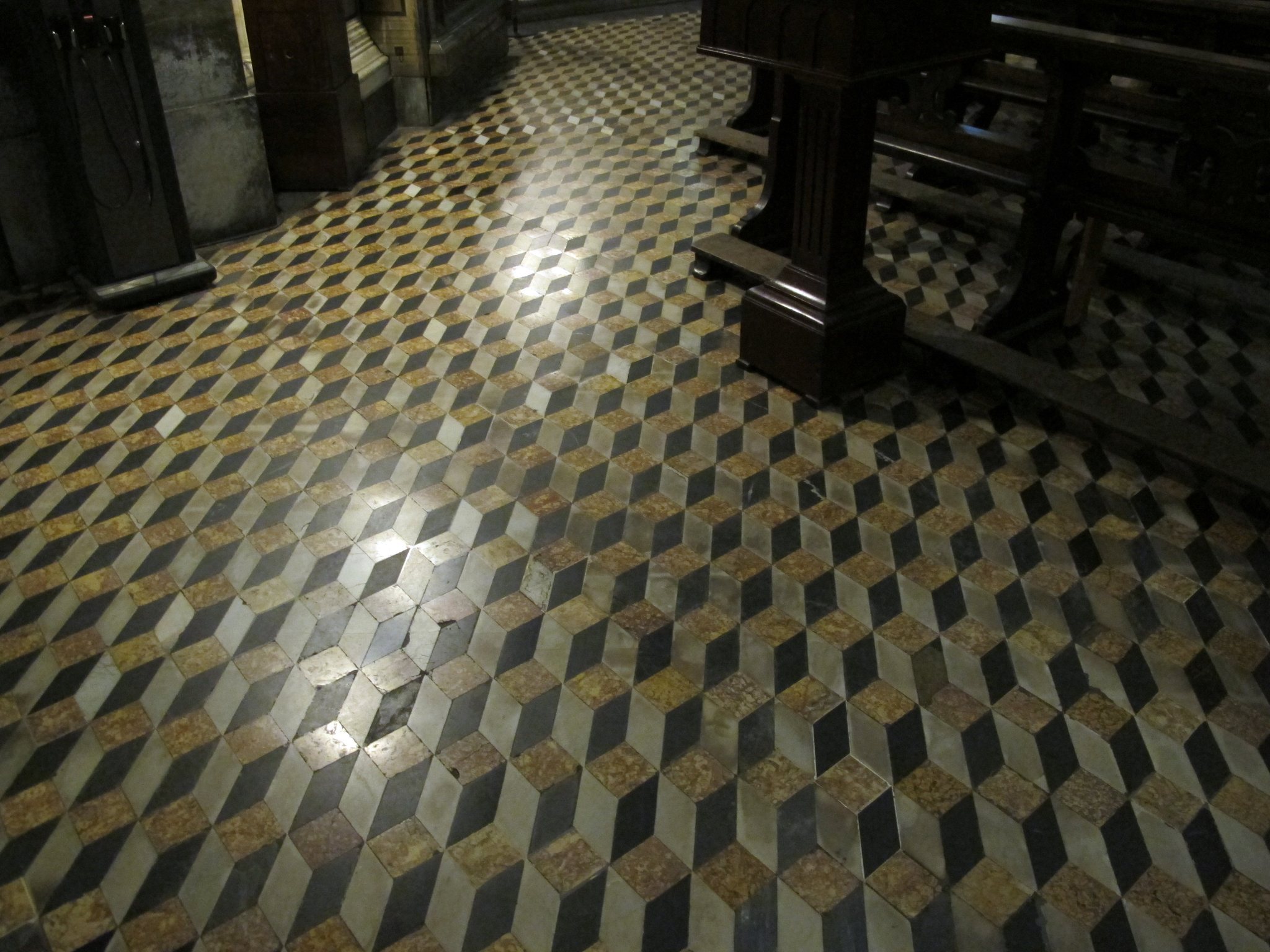
The chapel is a Baroque structure with a Greek-cross plan, in which four arms of approximately equal length meet beneath a central dome. A marble strip in the floor separates its principal entrance from the rest of Naples Cathedral, marking the chapel’s distinct administrative status. The entrance has a monumental gilded-bronze gate designed by Cosimo Fanzago in 1630. It replaced an earlier gate made by Giovan Giacomo di Conforto in 1628.
The high altar stands at the centre of the presbytery. Two further altars occupy the sides, while four smaller altars stand at the bases of the piers supporting the dome. Francesco Solimena created the porphyry high altar, completed in 1667. It frames a silver frontal showing the Translation of San Gennaro’s relics from Montevergine to Naples, made by Giovan Domenico Vinaccia between 1692 and 1695.
Relics and organs
Two niches behind the high altar have silver doors donated by Charles II of Spain in 1667. They contain the ampoules holding San Gennaro’s blood. In front of the altar, slightly to the left, stands the gold-and-silver reliquary bust of the saint. Made in 1305 by the Provençal goldsmiths Etienne Godefroy, Guillaume de Verdelay, and Milet d’Auxerre, it was donated by Charles II of Anjou. A reliquary bust is a sculpted bust made to contain or represent a saint’s relics.
Two pipe organs stand on the side choir galleries beside the apse. Pompeo De Franco built the left organ in 1649. It has five registers and one keyboard, with no pedalboard, and is described as the oldest functioning organ in Naples. The instrument is reported to have remained unchanged. The right organ dates from the same period but was substantially modified by Giovanni and Pietro Petillo in 1902. It has nine registers, seven on the manual and two on the pedal.
Bronze sculpture and reliquary busts
The co-patron saints
Nineteen bronze sculptures surround the chapel. The central figure, San Gennaro Seated, was made in 1645 and placed behind the high altar. It is presented as directing eighteen other co-patron saints in protecting Naples from famine, crisis, plague, and the anger of Vesuvius.
The sculptural program began in 1610 from a design by Francesco Grimaldi and was executed over more than two decades under Cristoforo Monterosso. Giuliano Finelli made most of the sculptures, including San Gennaro Seated, Sant’Agrippino, Sant’Agnello, San Tommaso d’Aquino, Sant’Eufebio, San Severo, Santa Patrizia, Sant’Andrea d’Avellino, San Domenico, San Giacomo della Marca, San Francesco di Paola, and San Nicola. Other works include San Gaetano and Sant’Antonio da Padova by Domenico Marinelli, Santa Teresa by Cosimo Fanzago, Sant’Aspreno and Sant’Attanasio by Giovanni Domenico Monterossi and Tommaso Montani, and San Francesco Saverio by Vinaccia.
Silver reliquary busts
The chapel, sacristy, and Chapel of the Conception contain fifty-four silver reliquary busts representing Naples’ patron saints. Some are attributed to Lorenzo Vaccaro, Giuseppe Sanmartino, Andrea Falcone, and Francesco Citarelli. Together with the central reliquary of San Gennaro, these busts give the interior a strong devotional and civic focus.
Painted decoration
Domenichino’s frescoes
The pictorial program is dominated by episodes from the life of San Gennaro. Domenichino’s frescoes in the entrance lunette, the lunettes of the two side altars, the vault above the high altar, and the three subarches were completed between 1631 and 1633. A lunette is a semicircular area suitable for a painting or fresco. The entrance lunette shows San Gennaro Stopping the Lava. The lunette above the left altar depicts San Gennaro Led to Martyrdom with Festus and Desiderius, while the right altar shows San Gennaro Liberating Naples from the Saracens.
The high-altar vault contains scenes of the saint’s torment, San Gennaro in the Amphitheatre of Pozzuoli, and San Gennaro Restoring the Sight of the Tyrant Timothy. Four pendentive frescoes, painted in 1641, show the Virgin Interceding for Naples, the Meeting of San Gennaro with Christ in Heavenly Glory, Christ Ordering San Gennaro to Defend Naples, and the Patronage of Saints Gennaro, Agrippina, and Agnello Abate. Pendentives are curved triangular surfaces that support a dome above a square or polygonal space.
The dome and lower paintings
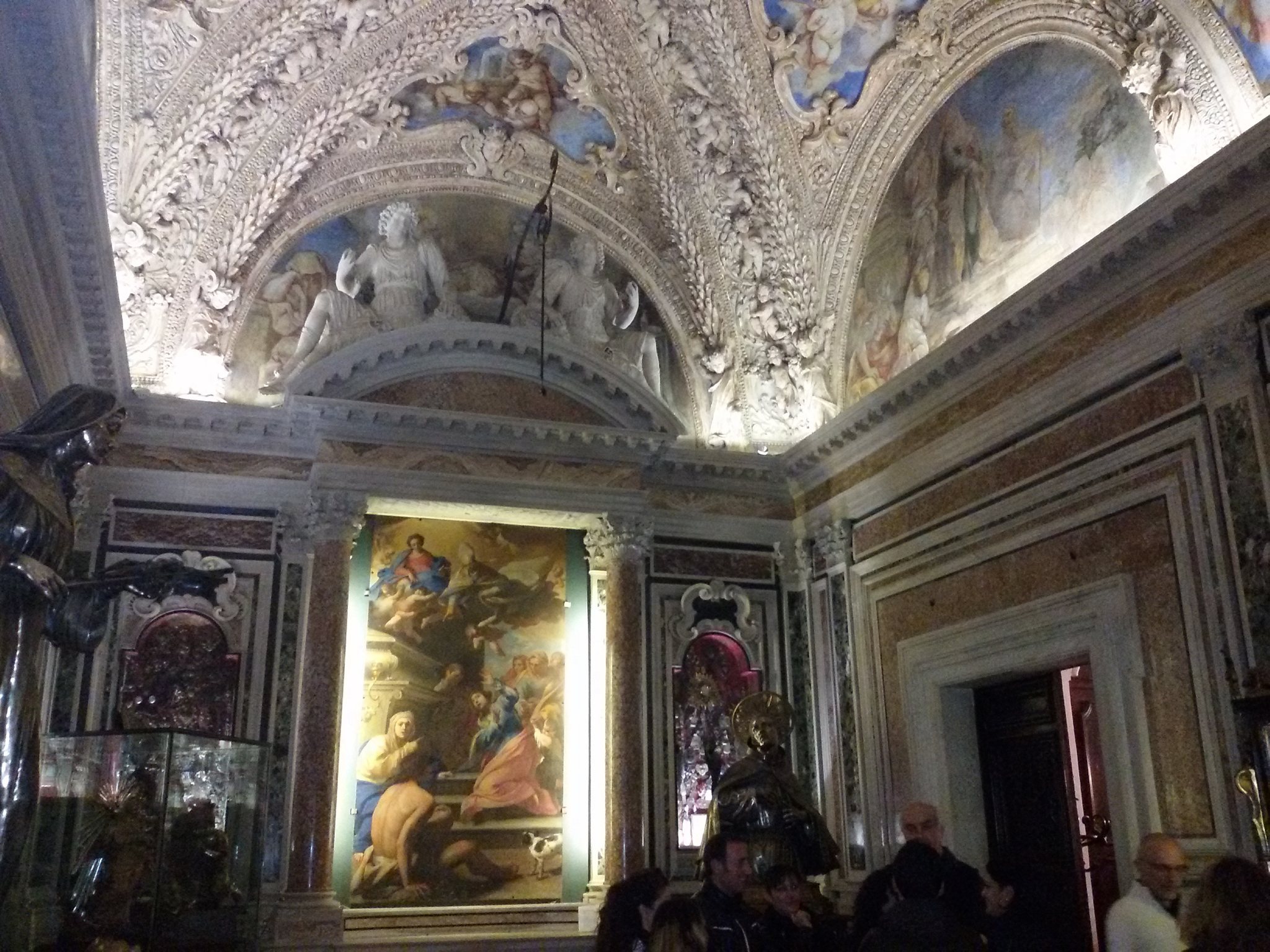
Giovanni Lanfranco painted Paradise in the central dome in 1643. The lower zone contains five oil paintings on copper by Domenichino, made around 1640. They include the Beheading of San Gennaro at the left altar, the Infirm Healed with the Oil of the Saint’s Lamp and the Resurrection of a Dead Man on the sides of the piers, and the Infirm at the Saint’s Tomb and the Possessed Woman Freed through Invocation of the Saint’s Name on the right side. The last composition was left unfinished by Domenichino and was later replaced in its original position by Stanzione’s painting.
Ribera’s 1646 oil painting on copper, San Gennaro Emerging Unharmed from the Furnace, occupies the right altar. Oil painting on copper uses a rigid metal support instead of canvas or wood, a technique employed extensively for the chapel’s lower pictorial cycle.
Adjoining spaces
Passage to the sacristy
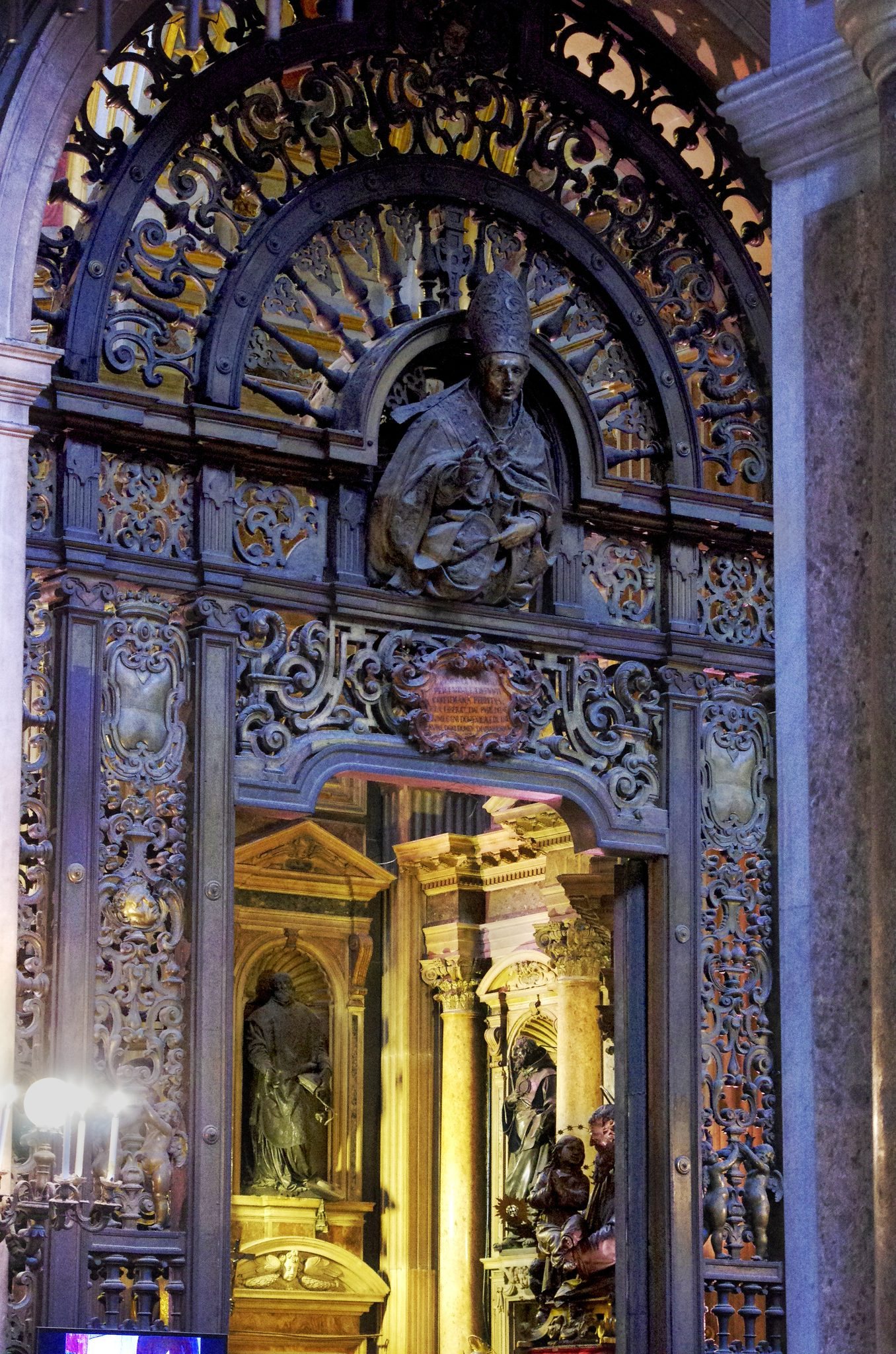
Behind the right altar, a corridor with illusionistic architectural painting leads to an adjoining area that opens onto the sacristy on the right and the Chapel of the Conception on the left. The technique, known as trompe-l’oeil, makes painted architectural forms appear three-dimensional. Francesco Russo and Nicola Maria Rossi created the corridor’s frescoes around 1744. The passage also contains a bronze bust of San Gennaro above the entrance, a marble basin with two marble benches, and four oval paintings by Vincenzo Fato showing the Dropsical Man, the Resurrection of Lazarus, the Man Born Blind, and the Canaanite Woman.
The sacristy
The sacristy contains seventeenth-century furniture by Dionisio Lazzari, still used for liturgical vestments and sacred objects. Andrea Falcone created the stucco friezes and caryatid-like figures around the vault in 1668. They surround Luca Giordano’s oval fresco San Gennaro in Glory, painted in the same year.
The sacristy cupboards contain four copper paintings by Giordano showing the Virgin and Child, Zachariah, Saint Anne, and Saint Joseph. Eight additional copper ovals on the doors depict scenes from the life of Christ. Giordano painted Calvary and Gethsemane. Vincenzo Fato painted the Nativity, Epiphany, Circumcision, and Disputation in 1742, while Paolo De Majo painted the Trinity and the Annunciation in the eighteenth century.
The Chapel of the Conception
The Chapel of the Conception, also called the Chapel of the Immaculate Conception, has a vault decorated with marble and stucco friezes and putti. Luca Giordano painted its illusionistic decoration in 1663, and Giacomo Farelli later completed the work, including the central oval of the Immaculate Conception.
The chapel contains Massimo Stanzione’s Liberation of a Possessed Woman, painted in 1643. It was commissioned to replace Domenichino’s unfinished composition and was moved to the altar here in the nineteenth century after the Deputation judged it less harmonious with the rest of the cycle. Two entrances in the side wall lead toward the rooms of the Museum of the Treasure of San Gennaro.