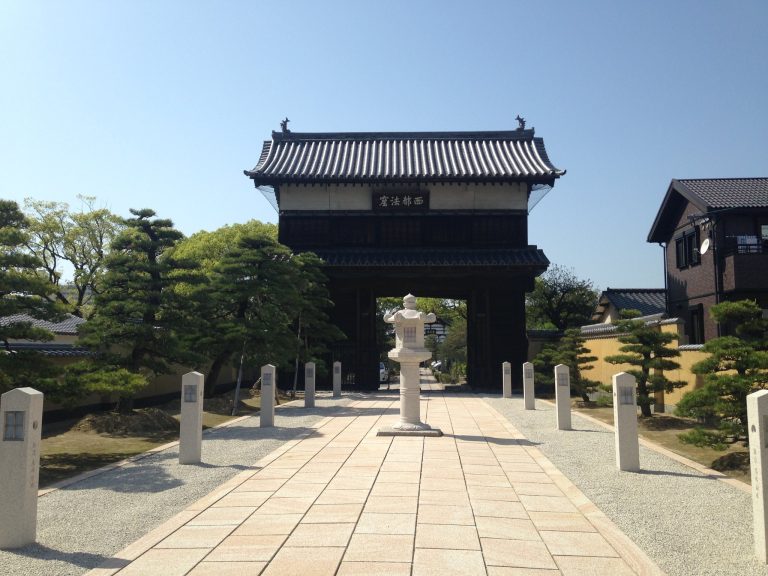
Tōchō-ji Temple: A Historic Shingon Buddhist Temple in Fukuoka


Site at a Glance
- Rating
- 4.4
- Popularity
- Medium
- Country
- Japan
- Primary era
- Modern
- External website
- Open
- Eras represented
- Early Modern, Modern
- Civilizations
- Tokugawa
- Site type
- Religious
- Remains
- Sanctuary
On this page14 sections
History
Tōchō-ji Temple is a Shingon Buddhist temple in Fukuoka, Japan, traditionally founded in 806 by the monk Kūkai, also known as Kōbō-Daishi. Shingon is a form of Esoteric Buddhism centered on ritual, sacred images, mantras, and mandalas. Tōchō-ji is the principal temple of the Kyushu Shingon organization, holds the status of a special head temple, and is traditionally regarded as the oldest Shingon temple in Kyushu.
Foundation and Early History
According to tradition, Kūkai established the temple after returning from China and staying in Hakata. He prayed for the eastward spread of Esoteric Buddhism, carved an image of Fudō Myōō, and founded the original complex. Fudō Myōō is a powerful protective deity who subdues obstacles and evil. The name Tōchō-ji expresses the purpose of Kūkai’s prayer, that the teachings should continue moving eastward.
The first temple stood near the sea in a settlement now represented by the area around present-day Gofukumachi. It was reportedly a large and prosperous complex. Tradition also attributes to Kūkai a self-image and guardian figures of Bishamonten and Jikokuten, and consequently regards Tōchō-ji as the oldest temple founded by Kūkai in Japan.
Warfare and Reconstruction
The complex suffered damage during warfare in the Genkō era, a period from 1331 to 1334 marked by conflict surrounding the weakening Kamakura shogunate. It was rebuilt three years later, though on a substantially smaller scale. Further fighting during the Eiroku and Tenshō periods, which covered much of the sixteenth century, caused another fire and left the temple in decline.
The Kuroda Patronage
In 1601, Kuroda Nagamasa received Chikuzen Province as his fief, beginning the Kuroda family’s rule there through the end of the Edo period. The Edo period was Japan’s early modern era before the Meiji Restoration. Nagamasa’s son, Kuroda Tadayuki, the second lord of Chikuzen, moved Tōchō-ji farther south to its present location and rebuilt it.
Tadayuki became a major patron after adopting Shingon Buddhism. He established the belfry, Goma Hall, Dainichi Hall, and main hall, and granted temple lands producing 200 koku each year. A koku was a historical Japanese measure of rice-based land revenue. Tadayuki also made Tōchō-ji his family’s bodhi temple, a temple associated with the memorial care of a family’s dead.
Kuroda Mitsuyuki, the third lord of Chikuzen, added land producing 100 koku annually and a forest estate of approximately 150,000 tsubo. The Kuroda family cemetery at Tōchō-ji contains the graves of Tadayuki, Mitsuyuki, and Kuroda Harutaka, identified as the eighth lord of the Kuroda domain.
War Damage and Continuing Religious Life
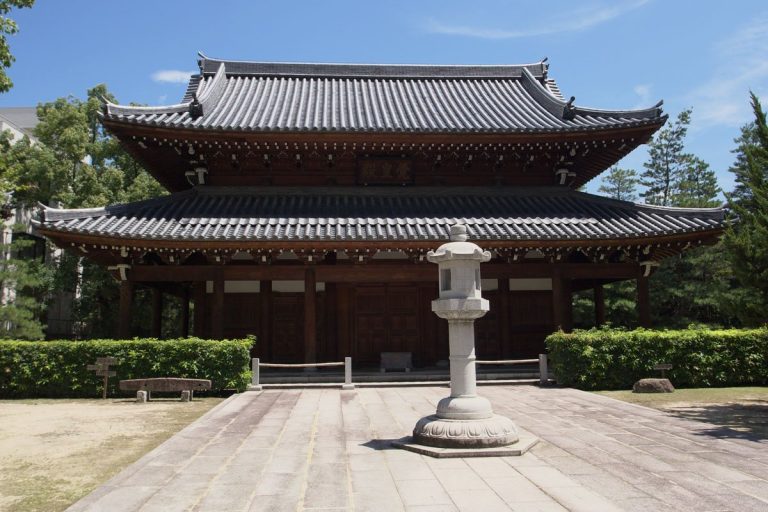
Large parts of the complex were destroyed by fire near the end of the Second World War. The postwar precinct was considerably smaller than its predecessor, and several modern buildings were constructed, including the present main hall, Great Buddha Hall, and pagoda.
Tōchō-ji remains a special head temple of the Kyushu Shingon organization. It is also the first station of the Kyushu Eighty-Eight Sacred Places pilgrimage, the thirty-sixth station of the Kyushu Fudō pilgrimage, and the twenty-second station of the Kyushu Twenty-Four Jizō pilgrimage.
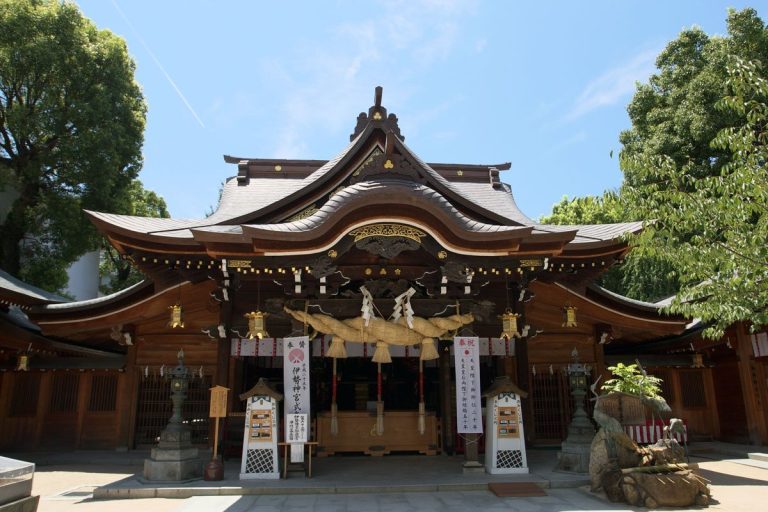
The temple continues to hold a Setsubun festival with bean throwing, protective goma prayers, and fire and star ceremonies. During the Hakata Gion Yamakasa festival, floats pass before the main gate and perform before the priests. This custom reflects the temple’s continuing connection with Kushida Shrine through the affiliated Jingō-ji, which formerly administered the shrine before the Meiji Restoration brought the formal separation of Buddhism and Shinto.
Remains
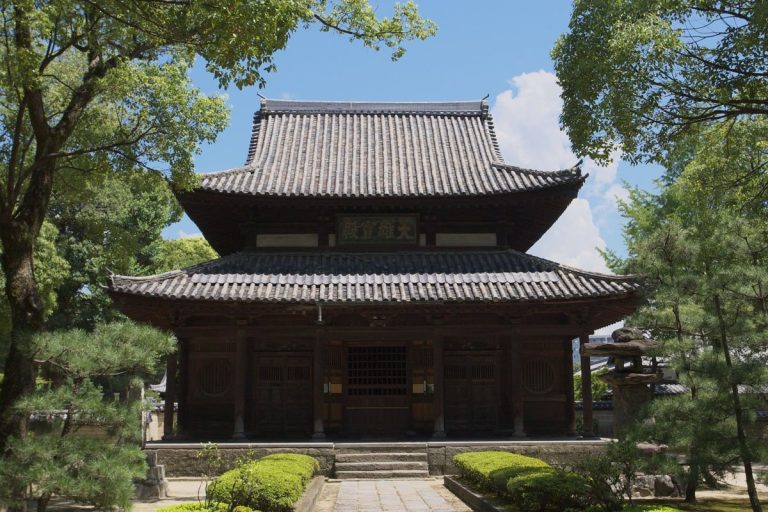
The present precinct combines historic sacred images and nineteenth-century temple architecture with postwar buildings and a modern five-story pagoda. Its principal religious spaces include the main hall, the Rokkaku-dō, or Hexagonal Hall, and the Great Buddha Hall, while the pagoda stands behind and adjoining the main hall.
Sacred Images and Historic Halls
Main Hall
The main hall houses three principal sacred images. At its center is a concealed wooden standing Senju Kannon, the thousand-armed form of Kannon, the Buddhist bodhisattva of compassion. The image dates from the Heian period and is approximately 87 centimeters high. Carved from a single block of wood, it is kept inside a shrine and revealed only on special occasions connected with Kūkai’s birthday. It was designated a National Treasure in 1904 and is now classified as an Important Cultural Property.
A concealed seated image of Kūkai stands in a shrine to the right of the Senju Kannon, while a standing Fudō Myōō occupies the left. The Fudō image is also associated with the monthly public opening of the Rokkaku-dō.
Rokkaku-dō
The Rokkaku-dō was built in 1842. Its outer protective structure surrounds an inner hexagonal revolving Buddhist cabinet, and a pair of guardian-dog statues stands before the entrance. The interior is normally closed and opens on the twenty-eighth day of each month.
The revolving cabinet contains images of Kūkai, the Shinto deity Hokushinreifu, Yakushi Nyorai, Hakui Kannon, Jizō Bosatsu, and Monju Bosatsu. Yakushi Nyorai is associated with healing, while Jizō and Monju are bodhisattvas associated with protection and wisdom. Hexagonal halls commonly housed revolving repositories for Buddhist scriptures, whose rotation was associated with the accumulation of religious merit.
Modern Buildings and Structures
Great Buddha Hall
The Great Buddha Hall houses the wooden seated Shakyamuni Tathagata known as the Fukuoka Great Buddha. Work on the carving began in 1988 and ended four years later. The statue is 10.8 meters high and weighs 30 tonnes. Behind it is a 16.1-meter-high halo carved with numerous Buddha figures, and a treasure exhibition hall stands beside the statue.
Five-Story Pagoda
The five-story pagoda was completed in May 2011. Built entirely from hinoki cypress, it is 25.9 meters high and contains 78 tonnes of timber, including heartwood from Yoshino hinoki in Nara and Shimanto hinoki in Kochi. Its roof is covered with 17,850 frost-resistant Mino tiles from Gifu.
The foundation uses 30 tonnes of stone, including Mannari granite for the footing stones and Tenzan granite from Saga for the platform. An eight-meter finial, the vertical ornamental structure at the top of a pagoda, is made of gilded cast bronze. Its central base carries a Buddhist wheel emblem representing the Buddha’s teaching, with the Kuroda family wisteria crest on the right and the temple’s three-leaf paulownia crest on the left.
The pagoda uses a traditional central-column construction method. Seismic-isolation rubber was installed at the vulnerable junction between the finial and the tower. Coatings made from animal glue, red lead, and shell white protect its wooden members.
Belfry
The belfry is located on the second floor of a reinforced-concrete temple office building. The pagoda stands behind and adjoining the main hall, although its complete form cannot be seen from every point within the precinct.
Kuroda Family Cemetery
The Kuroda family cemetery contains the graves of Kuroda Tadayuki, Kuroda Mitsuyuki, and Kuroda Harutaka. The cemetery is designated a cultural property of Fukuoka City.