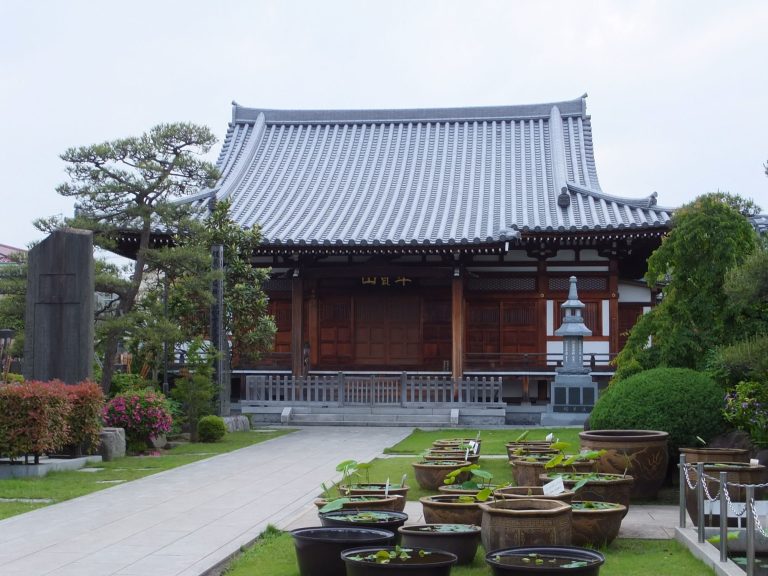
Hosshō-ji Temple: A Nichiren Buddhist Temple in Tokyo
Site at a Glance
- Rating
- 3.9
- Popularity
- Very Low
- Country
- Japan
- Primary era
- Modern
- External website
- Open
- Eras represented
- Modern
- Civilizations
- Japanese
- Site type
- Religious
- Remains
- Temple
On this page12 sections
History
Hosshō-ji Temple is a Nichiren Buddhist temple in Tokyo, Japan, founded in 1492 by a monk regarded as a disciple of the seventh head priest of Mamasan Kōbō-ji. Nichiren Buddhism is a Japanese tradition centered on devotion to the Lotus Sutra. The temple’s formal name is Myōkenzan Genwain Hosshō-ji. It is also known as Yanagishima Myōkendo.
Foundation and institutional development
Hosshō-ji formerly belonged to Kōbō-ji as its head temple and held the institutional rank of a scarlet-gold-brocade temple and a middle head temple. Within Nichiren Buddhism, it became part of the Yanagishima legal-affinity network, an organizational relationship among temples and clergy of the same tradition. During the Edo period, the era of the Tokugawa shogunate from 1603 to 1868, this network developed with Hosshō-ji as its central temple. A separate network was centered on Kōshōzan Kannō-ji.
The temple’s clerical influence expanded through its connection with the Higashiyama Buddhist seminary, an institution for advanced clerical study and training. In 1788, the eighteenth head priest of Hosshō-ji, who had previously served as the seminary’s presiding teacher, entered the temple. Over the following 17 years, he supervised the comprehensive rebuilding of the halls and enlarged the precincts. Later head priests also served as presiding teachers of the seminary, and Hosshō-ji produced successive heads of major Nichiren institutions, including Kōbō-ji and Kaichō-ji.
Myōken devotion and Edo-period fame
Hosshō-ji’s reputation grew through devotion to Myōken, the North Star Myōken Great Bodhisattva. Myōken is associated with the North Star and the Big Dipper, and Japanese devotion to the deity was connected with protection, direction, longevity, and good fortune. During the late eighteenth and early nineteenth centuries, Yanagishima Myōkendo was celebrated as a place where visitors sought good fortune.
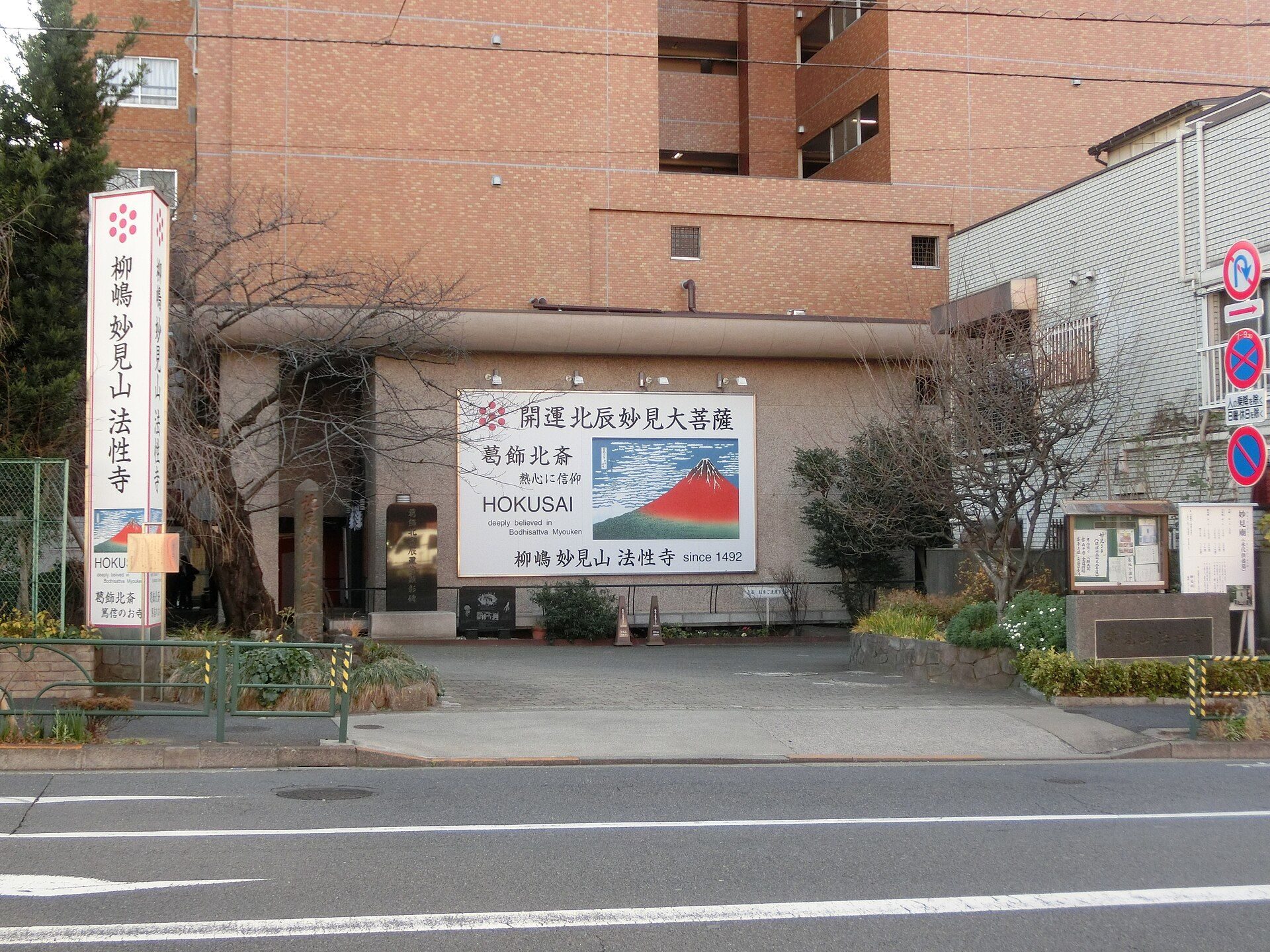
Temple tradition connects the site with Katsushika Hokusai during an important stage of his career. After being expelled from the Katsukawa school, Hokusai is said to have visited Hosshō-ji for 21 days in 1794, praying to overcome financial hardship and succeed as an artist. The tradition relates that he lost consciousness after being struck by lightning while returning home on the day his vow was fulfilled. It further says that his fortunes then improved and that he continued to visit the temple. His artistic name is traditionally connected with the phrase “North Star,” and he left a painting titled “Yanagishima Myōkendo.”
The temple’s popularity was recorded in the Illustrated Guide to Famous Places in Edo. Utagawa Hiroshige and Utagawa Yoshikazu depicted Yanagishima Myōkendo in ukiyo-e prints, a form of Japanese woodblock printing and painting devoted to subjects such as landscapes, actors, courtesans, and popular religious sites. Hiroshige, Utagawa Toyokuni, Ichikawa Sadanji I, Onoe Kikugorō VI, and Katsura Bunji VI were traditionally said to have returned repeatedly while praying for success in their artistic professions. Visits to Yanagishima Myōken also appear in the rakugo performance Nakamura Nakazō and the kabuki play Osome Hisamatsu Ukina no Yomiuri.
Earthquake, war, and twentieth-century rebuilding
Hosshō-ji faced major threats from the Great Kantō Earthquake on 1 September 1923 and from the Second World War. The temple survived both crises through the efforts of successive head priests. Its former head-temple and branch relationships were reorganized in 1941, when Nichiren Buddhism dissolved its traditional head-and-branch system.
Between 1965 and 1973, Tokyo investigated evacuation arrangements for major fires and began designating wide-area evacuation sites. Plans affecting the densely built neighborhoods around Sumida Ward raised the possibility of large-scale displacement. The local community opposed the plans. Hosshō-ji’s thirty-eighth head priest, who also led a neighborhood association, responded by demolishing the principal wooden buildings and replacing them with reinforced-concrete halls and the Narihira Heights apartment building. The redevelopment provided fire-resistant structures and opened the premises widely to local residents.
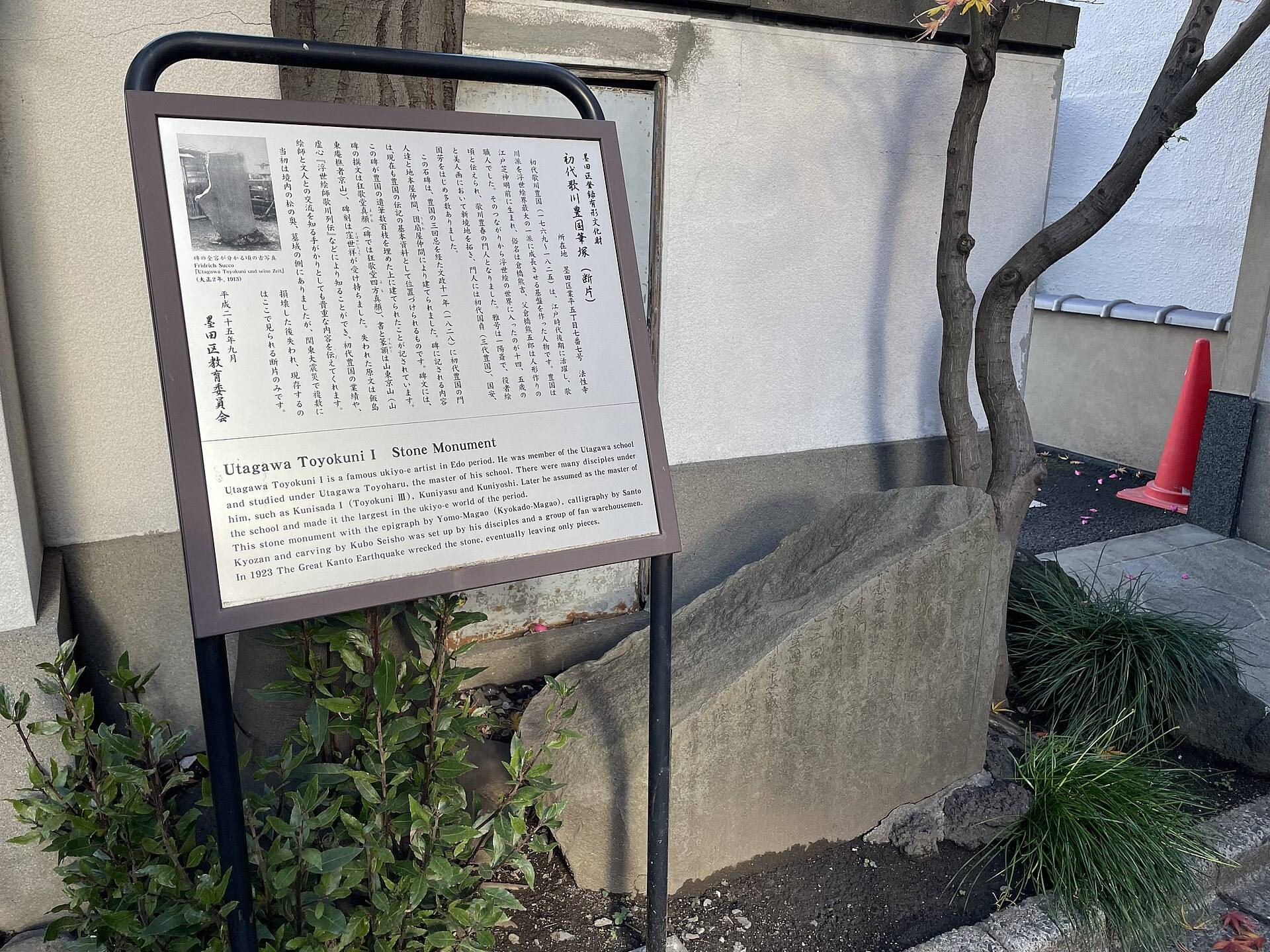
The temple’s North Star and Myōken religious ideal was continued by its thirty-ninth head priest and remains part of Hosshō-ji’s institutional identity. Two surviving fragments associated with the precinct later received recognition as Sumida Ward tangible cultural properties in the historical-materials category. The fragment of the memorial monument to Chikamatsu Monzaemon was registered on 22 June 2009, while the fragment of Utagawa Toyokuni I’s brush mound was registered on 21 March 2013.
Remains
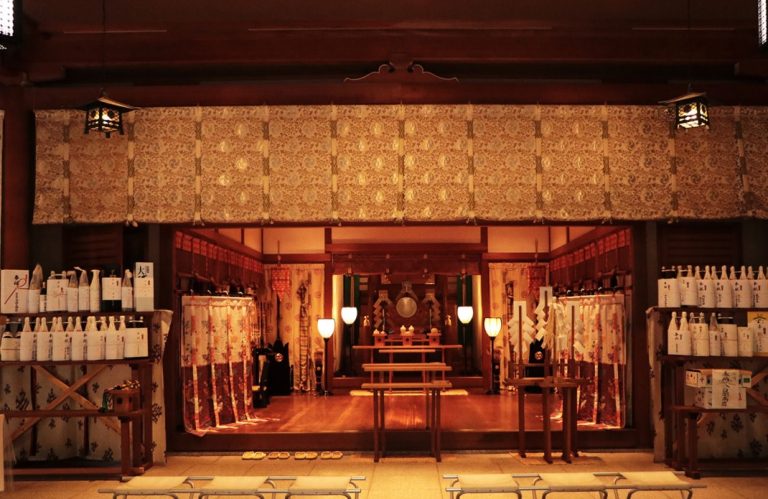
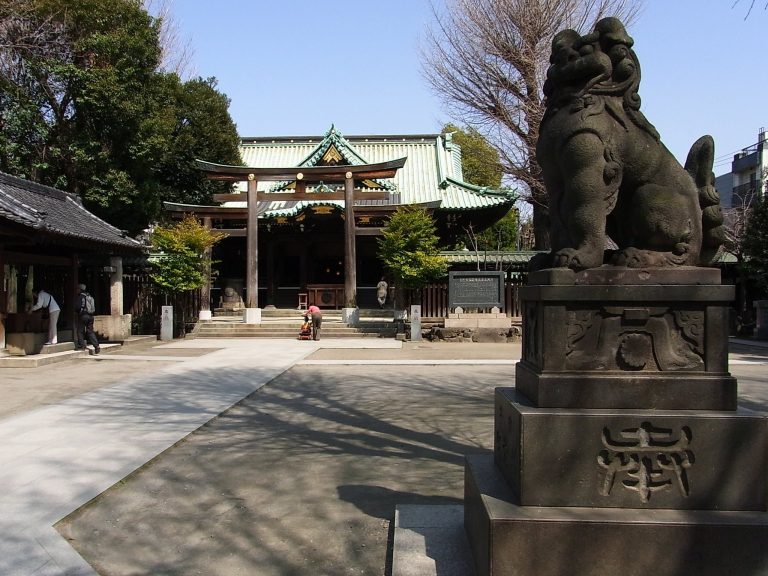
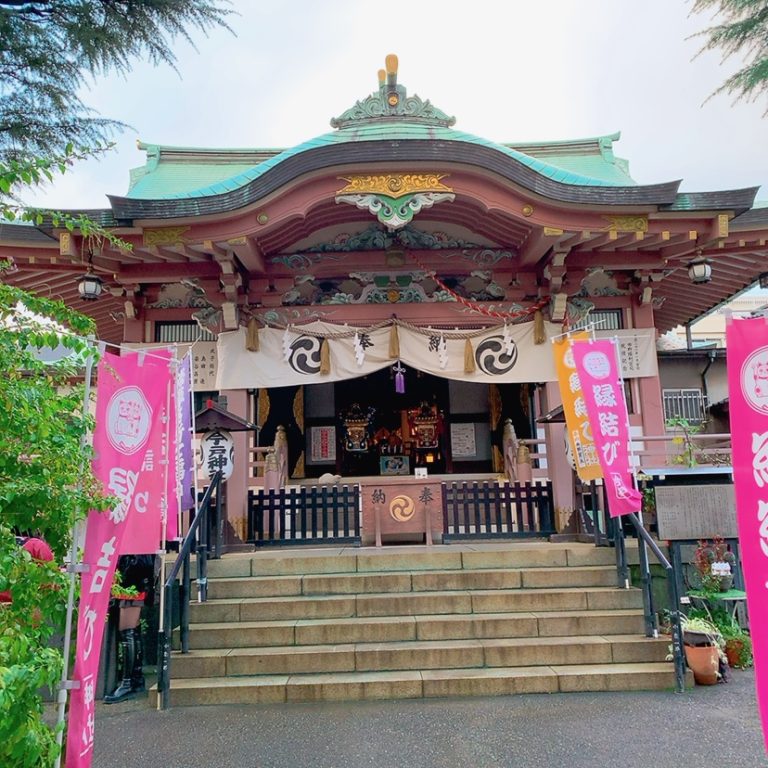
The present precinct contains a main hall, a Myōkendo or Myōken Hall, memorial monuments, and reinforced-concrete buildings created during the twentieth-century redevelopment. The earlier principal wooden buildings included the main hall, guest hall, and priests’ quarters. These were demolished during the redevelopment, which also introduced the Narihira Heights apartment building. The precinct therefore preserves both the temple’s religious features and the physical results of its response to fire-evacuation planning.
Temple buildings and sacred features
Main hall and principal image
The main hall is part of the temple precinct’s current group of buildings. Hosshō-ji’s principal image is a Ten-Worlds mandala, a Nichiren Buddhist diagram representing the ten interrelated states of existence described in Buddhist doctrine. The former wooden main hall was among the buildings removed during the twentieth-century rebuilding, when reinforced-concrete temple structures were constructed in its place.
Myōken Hall
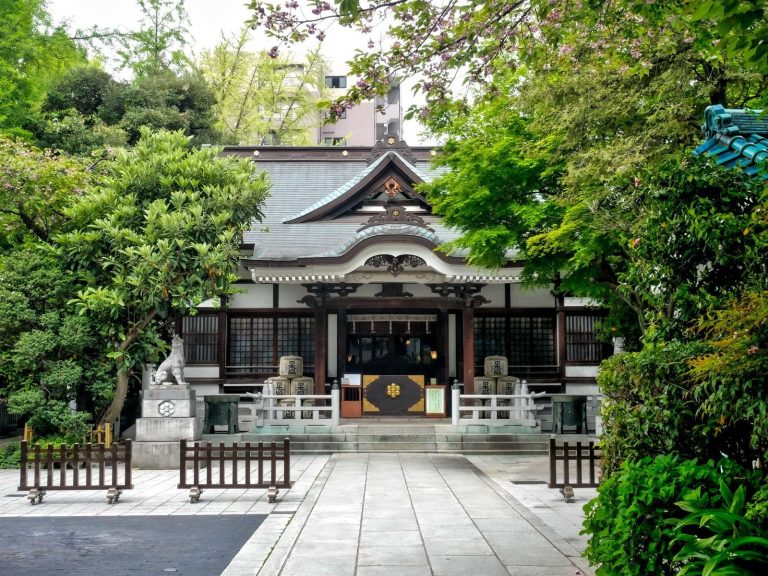
The Myōkendo, or Myōken Hall, enshrines the North Star Myōken Great Bodhisattva. The enshrined image is approximately one shaku long, or about 30 centimeters. A sacred tree called the Eikō Pine stood in front of the hall in the historical description of the precinct. It was also called the Falling Star Pine and the Thousand-Year Pine because Myōken was believed to have first appeared above it. Tradition further says that Tokugawa Hidetada, the second Tokugawa shogun, gave the tree the name “Mirror Pine.”
Memorials and commemorative remains
Hokusai monument
A monument to Katsushika Hokusai stands within the precinct and bears his artistic name, Hokusai Tatsumasa. It preserves the temple’s physical association with the tradition of Hokusai’s devotion to Yanagishima Myōken and his repeated connection with the site.
Chikamatsu memorial fragment
A memorial monument to Chikamatsu Monzaemon is associated with Hosshō-ji. Chikamatsu was a major early modern Japanese playwright known especially for works for puppet theatre and kabuki. The surviving cultural-property item is a fragment of the monument.
Utagawa Toyokuni I brush mound
A brush mound commemorating Utagawa Toyokuni I is also associated with the temple. A brush mound is a memorial for a deceased calligrapher, painter, or writer and symbolizes the burial or honoring of used writing or painting brushes. The surviving cultural-property item is described as a fragment of the mound.