Amino Choshiyama Kofun: A Keyhole-Shaped Burial Mound in Japan


Site at a Glance
- Rating
- 4
- Popularity
- Very Low
- Country
- Japan
- Primary era
- Classical
- External website
- Open
- Eras represented
- Classical
- Civilizations
- Yamato
- Site type
- Burial
- Remains
- Burial Mound
On this page11 sections
History
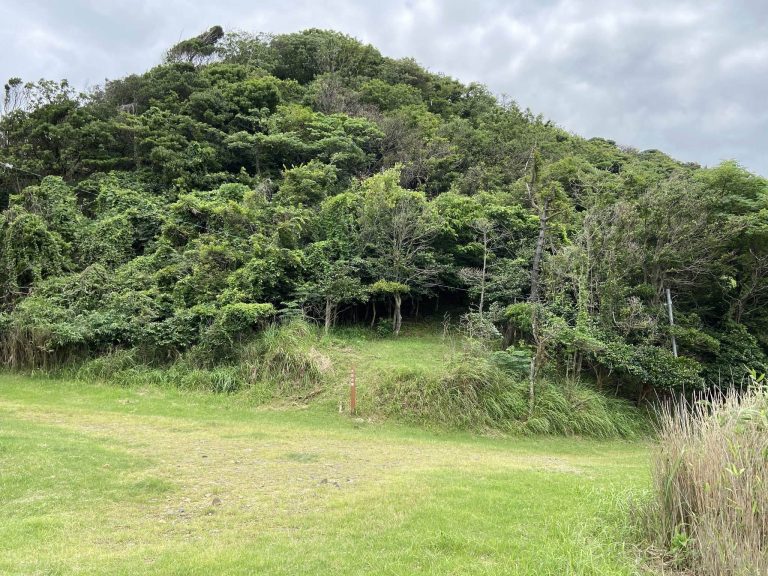
Amino Choshiyama Kofun is a large Kofun-period burial mound in Kyotango, Kyoto, Japan. It was built around the end of the fourth century or the beginning of the fifth century, during the middle Kofun period, an era from approximately the third to the sixth century when political elites were buried in large mounds. The mound is the largest kofun in Kyoto Prefecture and is among the largest on the Sea of Japan coast.
A mound in the middle Kofun period
Amino Choshiyama Kofun is traditionally counted with Shinmeiyama Kofun and Ebisuyama Kofun as one of the three great kofun of the Sea of Japan region. Their generally accepted sequence places Ebisuyama No. 1 Kofun in the middle fourth century, Amino Choshiyama Kofun at the end of the fourth or beginning of the fifth century, and Shinmeiyama Kofun somewhat later, around the same period.
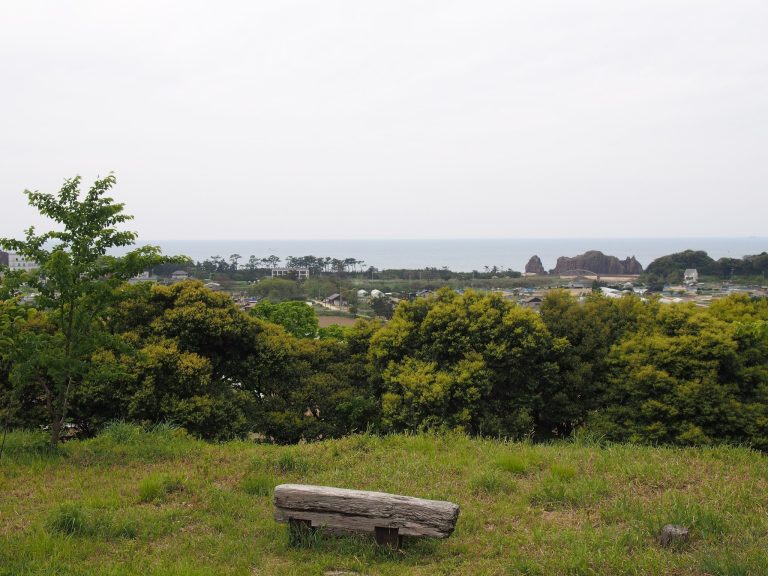
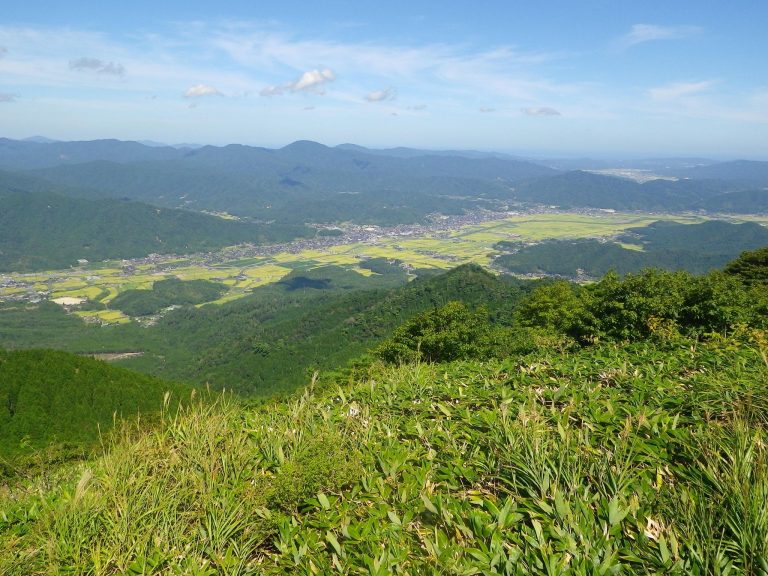
The mound stands on a hill near the mouth of the Fukuta River, which crosses the Tango Peninsula before reaching the Sea of Japan. Hills around the site contain remains from the Yayoi and Kofun periods, including the Hayashi, Miyake, and Taishogun archaeological sites. During the Kofun period, northern Kyoto maintained trade contacts with the Asian mainland, while the wider area around the mouth of the Takeno River was regarded as the center of an ancient kingdom.
Maritime setting and changing regional power
The mound’s white stone surface would have been visible from the sea and is understood to have served as a landmark for ships approaching a harbor. Amino Choshiyama and Shinmeiyama were positioned in relation to ancient lagoons, Asamogawa Lake and Takeno Lake respectively. These shallow, partly enclosed waters could provide sheltered harbors, and their relationship to the burial mounds has been connected with maritime trade through Tango’s lagoon ports.
After the middle of the fifth century, trade declined and the region’s political center shifted inland toward Tamba. This change placed Amino Choshiyama within a broader transformation of the political and maritime landscape of northern Kyoto.
Names, investigation, and protection
An eighteenth- to nineteenth-century historical geography recorded the mound under the name “Teishiyama.” The adjacent mound now called Kanpyō Hōōryō Kofun appeared in the same period as the “Kanpyō Hōōryō” burial place. Sueji Umehara carried out the first modern investigation in 1918. Further surveying took place in 1965 and 1966, followed by boundary-confirmation investigations in 1985 and 1986 and from 2007 to 2009. Excavations before site improvement were conducted between 2015 and 2018.
Amino Choshiyama Kofun and its two subsidiary mounds were designated together as the National Historic Site “Choshiyama Kofun First and Second Kofun” on March 8, 1922. The protected area was enlarged on September 21, 2011. Parts of the precinct, particularly on the front-section side, have been altered by cemetery use and cultivation.
Remains
Main mound and surface features
Keyhole-shaped mound
Amino Choshiyama Kofun is a keyhole-shaped mound, a form that combines a square front section with a circular rear section when viewed from above. Its principal axis runs toward the north-northeast, and its total length is approximately 201 meters. A 2017 investigation revised the earlier measurement of 198 meters.
The circular rear section was built in three stages and measures about 115 meters across and 16 meters high. The square front section also has three stages, reaching approximately 80 meters in width and 10 meters in height. The mound’s form has been considered comparable to that of a kofun in Nara traditionally identified as the tomb of Hibasuhime no Mikoto.
Stone surfacing, haniwa, and moat
Stones known as fukiishi covered the mound’s exterior. Rows of cylindrical haniwa, fired-clay objects placed on or around burial mounds, stood across the structure, with their total number estimated at about 2,000. Fragments of Tango-type cylindrical haniwa and figurative haniwa have also been found. Excavated haniwa from Amino Choshiyama are preserved and displayed at the Tango Ancient Village Museum in Kyotango.
An incomplete moat follows the eastern, southern, and western sides of the mound. It measures approximately 17 to 25 meters wide and forms part of the surviving physical organization of the monument.
Subsidiary mounds
Little Choshiyama Kofun
Little Choshiyama Kofun lies southwest of the main mound, along the extension of its central axis on the rear-section side. It is a circular subsidiary mound approximately 36 meters in diameter and 4.8 meters high. Built in two stages, it retains fukiishi and haniwa.
Kanpyō Hōōryō Kofun
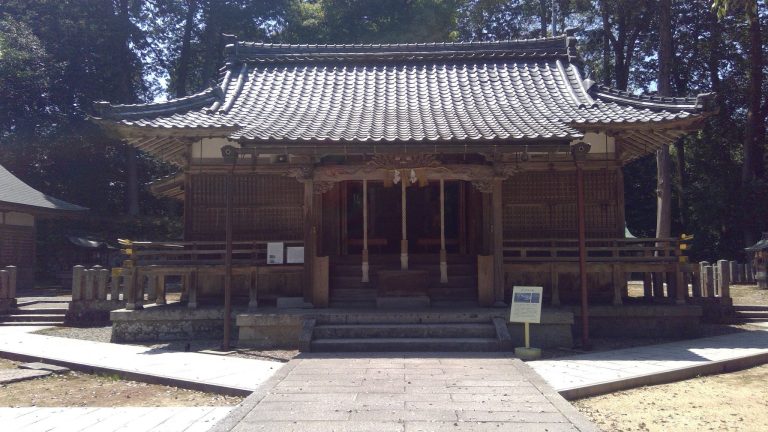
Kanpyō Hōōryō Kofun lies northeast of Amino Choshiyama, along the extension of the central axis on the front-section side. A shrine stands on its summit, and a stone arrangement surrounds the mound. Its present form has been substantially altered.
The mound’s name comes from a later tradition associating it with Emperor Uda, who ruled Japan in the late ninth century and was later known as the retired emperor of the Kanpyō era. This association concerns a person from a much later period than the construction of the kofun. Eighteenth- and nineteenth-century descriptions mention a stone container, possibly a sarcophagus or stone chamber, said to have held a stone pillow, one sword, fourteen or fifteen pottery vessels, and magatama beads. The objects were reportedly reburied and a shrine was erected.
A tuff stone pillow preserved at Honkakuji Temple is said to have come from Kanpyō Hōōryō Kofun. Its dimensions differ from those given in the historical descriptions, so its provenance remains uncertain. Kyotango City designates the pillow as a tangible cultural property.