Shinmeiyama Kofun: A Kofun-Period Burial Mound in Japan


Site at a Glance
- Rating
- 4
- Popularity
- Very Low
- Country
- Japan
- Primary era
- Classical
- External website
- Open
- Eras represented
- Classical, Medieval
- Civilizations
- Yamato
- Site type
- Burial
- Remains
- Burial Mound
On this page8 sections
History
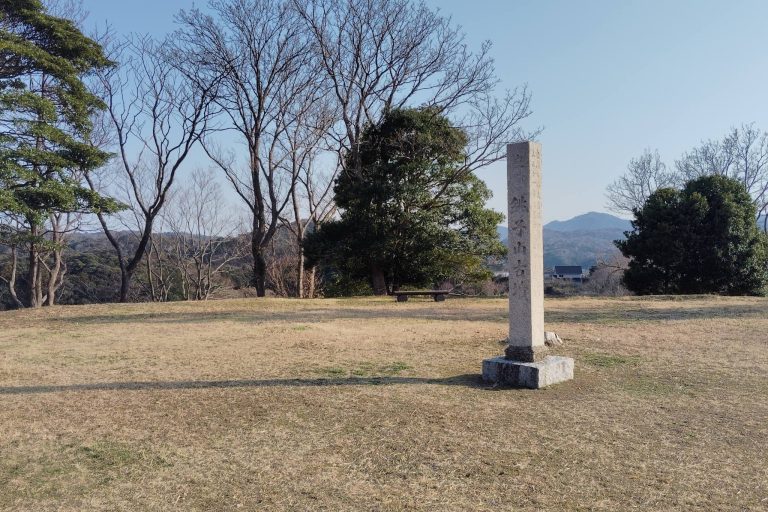
Shinmeiyama Kofun is a Kofun-period burial mound in Kyotango, Japan, constructed around the end of the fourth century or the beginning of the fifth century. The Kofun period, named after monumental tombs for members of Japan’s political elite, was a time when powerful local leaders commissioned large burial mounds. The occupant of Shinmeiyama Kofun is unknown.
A Tomb beside the Sea of Japan
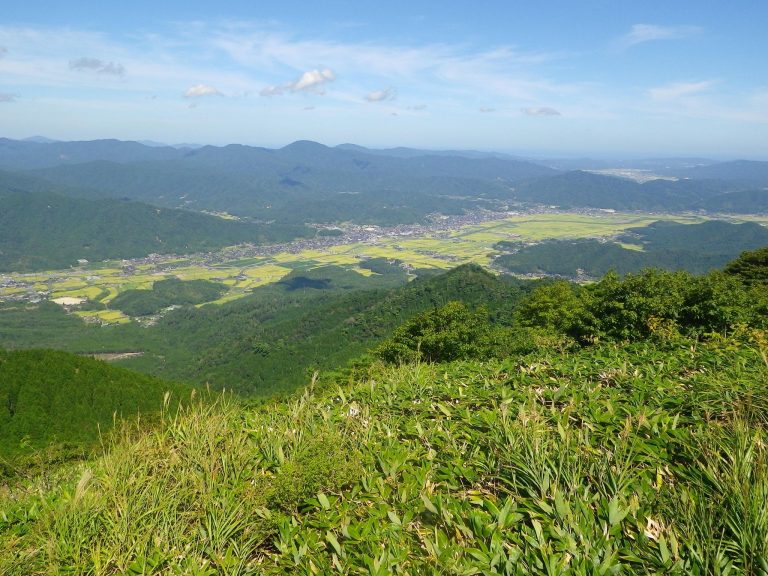
The mound was created near the mouth of the Takeno River on the western coast of the Tango Peninsula, overlooking the Sea of Japan. Builders formed it by cutting away the end of a hill. During the middle Kofun period, northern Kyoto maintained trading contacts with the Asian mainland, and the area around the Takeno River estuary served as a political center of ancient Tango.
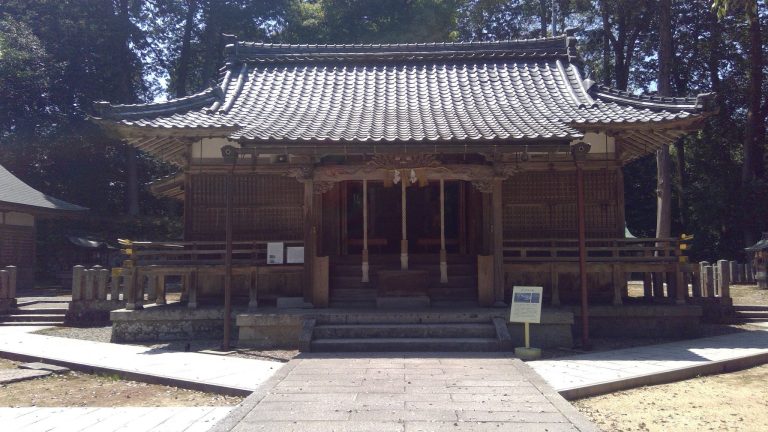
Its white stone covering may have made the mound visible to ships approaching the harbor. This possibility suggests that the river mouth had an important place in maritime activity, although the mound’s precise role in that setting remains interpretive. A theory also connects Shinmeiyama Kofun with ritual activity at nearby Takeno Shrine, a Shinto shrine included in the Engishiki, a tenth-century compilation of regulations and officially recognized shrine rites. The connection remains a theory rather than an established fact.
Changing Regional Power
After the middle of the fifth century, trade declined and political influence shifted inland from Tango toward the neighboring Tamba region. Kurobe Choshiyama Kofun, a later chiefly tomb built in the early fifth century and measuring 105 meters, marked the end of large keyhole-mound construction in Tango.
Shinmeiyama Kofun is grouped with Amino Choshiyama Kofun and Ebisu No. 1 Kofun as the Three Great Kofun of the Sea of Japan. Ebisu No. 1 dates to the middle of the fourth century and measures 145 meters, while Amino Choshiyama dates to the latter half of the fourth century and measures 201 meters. Shinmeiyama was the third of the three to be built.
Later Religious Use and Modern Study
During the late Heian period, from 794 to 1185, a sutra mound was established on the summit. Such mounds were religious installations intended to preserve Buddhist scriptures, often in protective containers, as an act of religious merit and to preserve the teachings for the future. Four sutra containers and two bronze mirrors recovered from Shinmeiyama are Tangible Cultural Properties of Kyotango City. Takeno Shrine owns the objects, which are deposited with the Tango Regional Museum.
Doshisha University’s Archaeological Society surveyed the site between 1964 and 1967. Shinmeiyama Kofun became a National Historic Site of Japan in 1923, with a designated area of 13,150 square meters. A measurement of approximately 200 meters, rather than 190 meters, places it at about thirty-sixth among Japan’s kofun by size.
Remains
Mound Layout and Construction
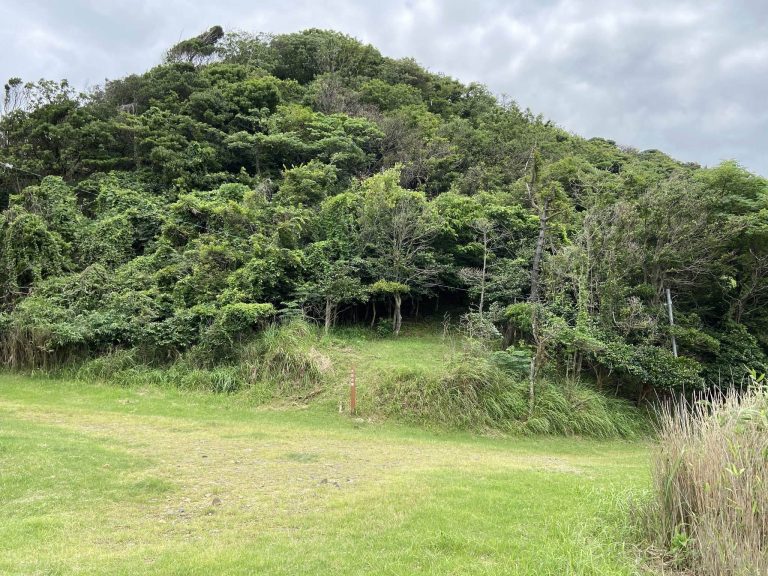
Shinmeiyama Kofun is a keyhole-shaped mound, combining a rectangular front section with a circular rear section when viewed from above. It is oriented toward the northeast and measures approximately 190 meters overall, although an alternative measurement gives approximately 200 meters. The mound has three tiers. Its circular rear section is 129 meters in diameter and 26 meters high, while the rectangular front section is 78 meters wide and 15 meters high. A circular projecting platform marks the junction between the two main sections.
The mound surface was covered with fukiishi, stones laid over burial mounds to protect and stabilize the earth and create a visible finished surface. Wetland around the mound suggests that a surrounding moat may once have existed, but the moat itself has not been directly confirmed. Stone slabs scattered at the center of the circular rear section have led to the presumption that the burial may have included a pit-type stone chamber.
Haniwa and Other Finds
Haniwa, clay funerary objects placed on or around kofun, were found on the mound. The examples include cylindrical pieces and figurative forms shaped like houses, shields, and lids. Fragments of cylindrical haniwa associated with the Tango region were also identified.
One haniwa fragment carries a line engraving of a person rowing a boat. Stone imitations of objects were recovered as well, although their precise forms are unclear. Pottery from the Yayoi period was found within the earth used to build the mound, providing evidence of earlier material incorporated into its construction.
Summit Sutra Mound
The later sutra mound on the summit produced four sutra containers and two bronze mirrors, all dating from the late Heian period. These objects connect the summit with a later religious use of the ancient burial mound and are associated with Takeno Shrine’s stewardship of the finds.