Kono Shrine: The Principal Shrine of Former Tango Province


Site at a Glance
- Rating
- 4.4
- Popularity
- Medium
- Country
- Japan
- Primary era
- Early Modern
- External website
- Open
- Eras represented
- Early Modern, Modern
- Civilizations
- Japanese, Tokugawa
- Site type
- Religious
- Remains
- Sanctuary
On this page15 sections
History
Kono Shrine is a Shinto shrine in Japan, located in Ogaki, Miyazu, Kyoto, and is the ichinomiya, or highest-ranking shrine, of former Tango Province. It is also traditionally regarded as a possible soja, a shrine representing the principal kami of a province. Known by names including Moto-Ise Kono Shrine and Kago-no-miya, it belongs to the group of Moto-Ise sites associated with traditions about earlier sanctuaries of the deities now worshipped at the Ise Grand Shrine.
Deities and Moto-Ise traditions
The principal kami of Kono Shrine is Amenohoakari, regarded in shrine tradition as the ancestral deity of the Amabe clan. Amenohoakari is associated with the sun and agriculture. The shrine’s four associated kami are Toyouke Okami, a deity linked with food and nourishment, Amaterasu, the major Shinto sun deity, Watatsumi, and Mikumari-no-Kami. Older records and traditions identify the enshrined deities differently, including Izanagi and Mikumari-no-Kami.
The shrine’s history is closely connected with Manaihara, where the present-day Manai Shrine stands. Tradition holds that Toyouke Okami was first enshrined there at a sanctuary called Yosa-no-Miya or Yosa Shrine. Amaterasu is said to have been worshipped at the same sanctuary for four years before her worship was transferred to Ise. Another tradition states that Toyouke was later moved to the Outer Shrine of Ise during the reign of Emperor Yuryaku. These traditions give Kono Shrine its Moto-Ise identity, linking it with places associated with the earlier worship of the Ise deities.
Relocation and hereditary priesthood
In 671, the 26th-generation hereditary priest, Amabe Ihoji, is traditionally said to have renamed the sanctuary Kago-no-miya, or Kago Shrine. The name was connected with a tradition that the worshipped deity appeared in the snow riding in a basket. Hikohohodemi was enshrined at that time.
In 719, the 27th-generation hereditary priest, Amabe Eshi, is traditionally said to have moved the shrine from Manaihara to its present location. The principal deity then became Amenohoakari, while Toyouke and Amaterasu were enshrined as associated kami. Kono Shrine consequently treats the present main sanctuary as the lower shrine and Manai Shrine as the upper shrine.
The Amabe clan has served Kono Shrine for many generations. It is described as an ancient lineage that supervised groups connected with maritime work, while its Tango branch used the surname Amabe no Atai. The clan’s genealogy traces 82 generations of hereditary chief priests from Amenohoakari to the current priest and is considered the oldest surviving family tree in Japan. The Amabe clan is also traditionally associated with the office of kuni no miyatsuko, or provincial governor, in ancient Tanba. When Tanba was divided to create Tango in 713, traditions connected the clan’s Tanba lineage with the Amenohoakari-related lineage of Owari.
Recorded status and later history
Kono Shrine’s rituals and traditions are associated with the Kojiki and Nihon Shoki. Its first appearance in the officially compiled national histories came in 849, when it received the rank of Junior Fifth Rank, Lower Grade. Its recorded rank rose to Junior Fourth Rank, Upper Grade by 877. The Engishiki, a shrine register completed in 927, lists Kono Shrine in Yosa District of Tango as a Myojin Taisha and records its participation in the imperial monthly and first-fruits ceremonies.
The nearby remains of the Tango provincial temple indicate that the surrounding area was a provincial center. A medieval view of the shrine precinct appears in Sesshu’s Amanohashidate View, now a National Treasure held by the Kyoto National Museum. Medieval records list shrine estates totaling about 59 cho, including rice fields assigned to Kago-no-miya and land for first-day ritual offerings. During the early-modern period, most of this estate was lost, leaving a much smaller holding.
In 1871, under the modern ranked shrine system, Kono Shrine became a National Shrine of the second rank, or Kokuhei Chusha. A planned elevation to an Imperial Shrine of the first rank in 1945 was not realized because the Second World War ended. After the war, the shrine became a Beppyo Shrine under the Association of Shinto Shrines. In April 2017, it was included in the Agency for Cultural Affairs’ Japan Heritage story “Tango Chirimen Silk Road,” which presents the historical character and cultural traditions of the region.
Festival traditions and protection
The main annual festival takes place on April 24 and is commonly called the Aoi Festival. It was formerly held on the second Horse day of the fourth lunar month and was described as a major festival in the Miyazu Prefectural Record. Neighboring communities present bamboo-leaf dances, sword dances, and kagura, ritual music and dance offered to kami. The festival performing arts are designated an Intangible Folk Cultural Property of Kyoto Prefecture.
The sword dance is a ritual tradition continuing from the Heian period. It was long restricted to men, but women also began performing in 2014 as fewer men could take part because of a declining birthrate and an aging population. The hereditary priestly lineage, shrine documents, archaeological finds, the principal sanctuary, the Manai Shrine sanctuary, and the festival arts have received national or Kyoto Prefecture cultural-property protection. The Amabe Clan Genealogy, owned by the hereditary priestly family rather than by the shrine, is a National Treasure.
Remains
Main sanctuary and precinct features
Main sanctuary
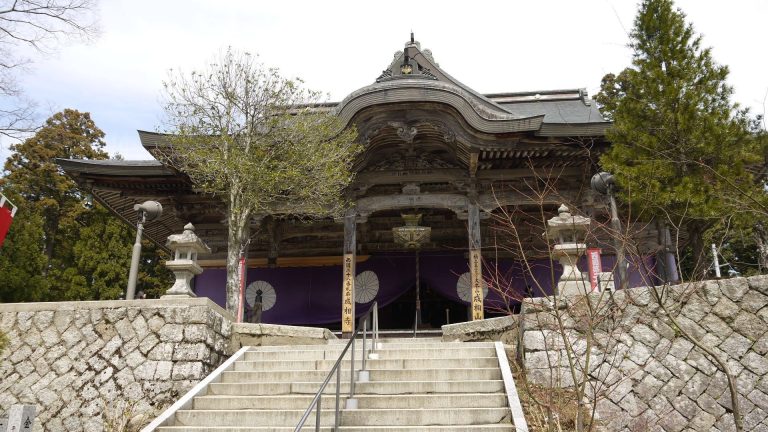
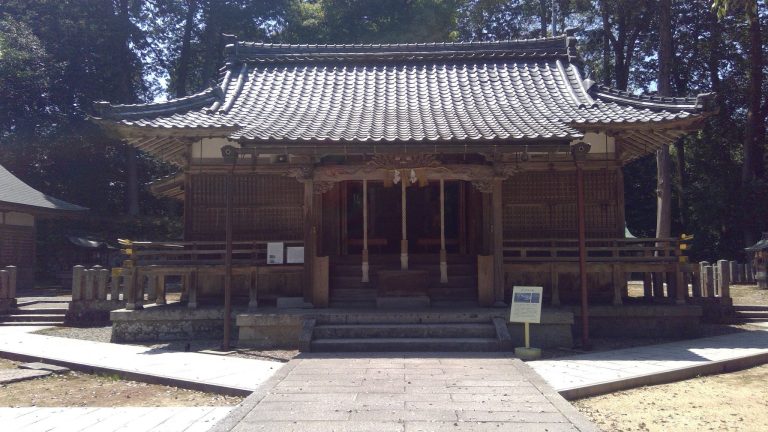
The main sanctuary, treated as the lower shrine, is a three-bay-by-two-bay building in Shinmei-zukuri, an ancient Shinto style using a simple raised timber sanctuary, a gabled roof, and strong symmetry. It has a cypress-bark roof and was rebuilt in 1845. The building is a Tangible Cultural Property of Kyoto Prefecture.
Guardian figures and plaque
Two tuff-stone komainu, paired guardian figures traditionally placed near a shrine entrance, stand on either side of the gate before the main sanctuary. They are generally attributed to the Momoyama period and are designated Important Cultural Properties, although shrine tradition dates them to the Kamakura period. The right foreleg of the open-mouthed figure is split and fitted with an iron ring. A tradition attributes this damage to the warrior Iwami Jutaro, who is said to have cut the figure during the Tensho era after it appeared at Amanohashidate and caused trouble.
A wooden plaque inscribed “Kago no Daimyojin” dates from the Muromachi period. Shrine tradition instead calls it an imperial plaque from 976 and attributes its calligraphy to Fujiwara no Sari. The plaque is held on deposit at the Tango Local Museum of Kyoto Prefecture.
Manai Shrine
Manai Shrine, the upper shrine, stands about 400 meters northeast of the main sanctuary, outside the principal precinct. Its sanctuary is a one-bay-by-two-bay Shinmei-zukuri building with a cypress-bark roof, constructed in 1831. Two iwakura, naturally prominent sacred rocks regarded as places where a kami is present or worshipped, stand behind it.
The principal seat among the rocks enshrines Toyouke Okami, with Mizuhanome, Hikohohodemi, and the five generations of kami of the divine age as associated deities. The western seat enshrines Amaterasu, Izanagi, and Izanami. Ebisu Shrine, also called Hiruko Shrine, enshrines Hikohohodemi and Yamato no Sukune. Hikohohodemi was the principal deity of Kono Shrine before the change to Amenohoakari. This subsidiary sanctuary is a one-bay Nagare-zukuri building with a copper-plate roof and forms part of the cultural-property designation attached to Manai Shrine.
Subsidiary sanctuaries
Amaterasu Imperial Shrine
The Amaterasu Imperial Shrine enshrines either the benevolent or the fierce aspect of Amaterasu.
Manai Inari Shrine
Manai Inari Shrine enshrines Ukanomitama, Ukemochi, and Toyouke-hime. It stood at Manai Shrine until the end of the Meiji period, then was moved and rebuilt within the main precinct in 1991.
Archaeological and heirloom objects
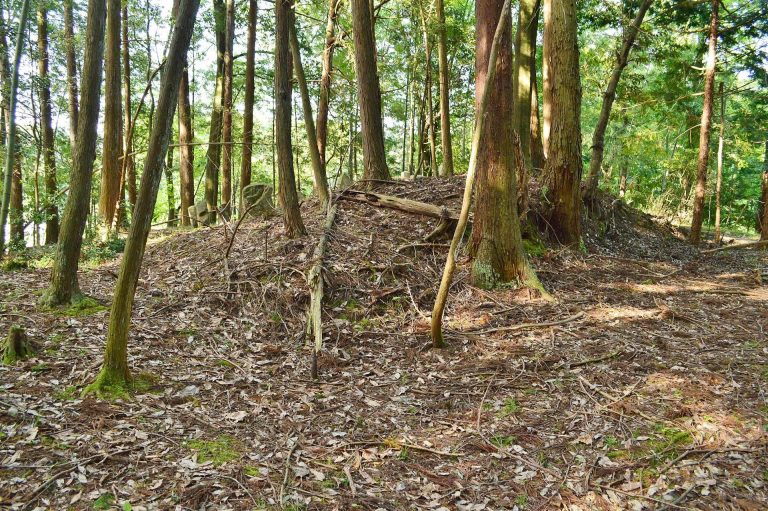
Excavation of the Kono Shrine sutra mound produced two copper sutra cylinders, a mirror decorated with chrysanthemums and paired birds, and a mirror bearing an incised Buddha image. Two cylinders carry an inscription dated 1188. The finds are held on deposit at the Tango Local Museum of Kyoto Prefecture, and the sutra-mound discoveries received cultural-property protection in 1989.
Two heirloom mirrors associated with the Amabe family are traditionally called the Okitsu Mirror and the Hetsu Mirror. The Okitsu Mirror is said to date from the Later Han period and measures 175 millimeters across. It has an inner-floral design and bears the inscription “Long Life and Prosperity for Descendants.” The Hetsu Mirror is said to date from the Former Han period, measures 95 millimeters across, and is an inner-floral-design Zhaoming mirror. The annotated Amabe genealogy records both objects and tradition says that the ancestral deity gave them to Amenohoakari. They are described as the oldest Japanese heirloom mirrors not recovered through excavation, although their relationship to two mirrors among the Ten Sacred Treasures remains unclear.
Sacred maritime landscape
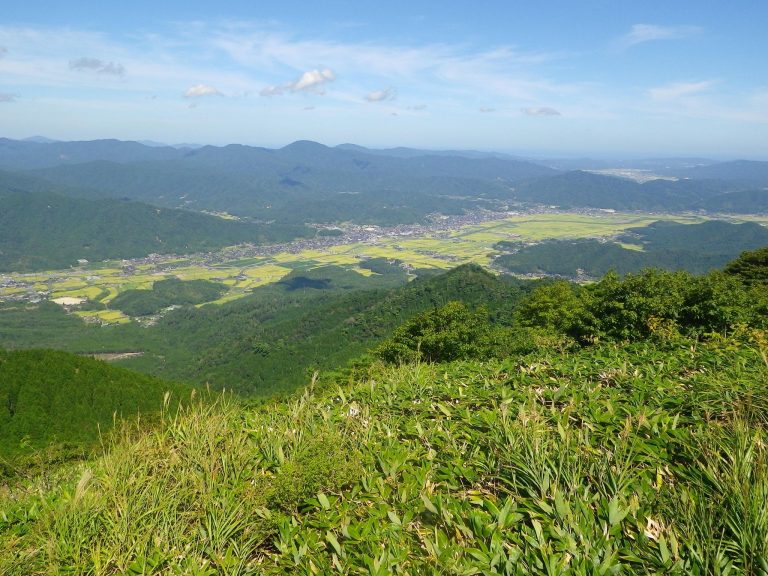
Kono Shrine is associated with the sandbar and sacred landscape of Amanohashidate. The offshore islands of Kanmurijima and Kutsujima form a maritime sacred area associated with Amenohoakari and Ichikishima-hime. A place for worshipping the islands from a distance is located at Kasamatsu Park, forming part of the wider sacred landscape connected with the shrine.