Daijō-ji Temple: A Sōtō Zen Monastery in Kanazawa


Site at a Glance
- Rating
- 4.2
- Popularity
- Low
- Country
- Japan
- Primary era
- Early Modern
- External website
- Open
- Eras represented
- Early Modern
- Civilizations
- Tokugawa
- Site type
- Religious
- Remains
- Monastery
On this page13 sections
History
Daijō-ji Temple is a Buddhist monastery of the Sōtō Zen school in Kanazawa, Japan, in the former province of Kaga. Its formal name is Tōkōzan Daijō-ji, and it was formerly known as Shōjurin and Kinshihō. Traditions place its original foundation in the thirteenth century, either in 1261 or 1263 as a small temple connected with a warrior family, or in 1289, when Tettsū Gikai established its Zen monastery.
From Shingon Foundation to Zen Monastery
The earliest foundation was associated with Togashi Iehisa, a leader of a Fujiwara-related family, and stood near present-day Nonoichi. It was originally a Shingon temple, an esoteric Buddhist tradition centered on ritual, mantra, and mandala practice. The temple housed an image of Dainichi Nyorai, the Japanese manifestation of Vairocana, a cosmic Buddha central to esoteric Buddhist teaching. The image was carved by the mountain ascetic Taichō. Chōkai, a Shingon ritual master, became its first abbot, while Togashi Iehisa was later regarded as the founding patron.
The institution was transformed under Tettsū Gikai, who was invited in 1283. The opening or establishment of the Zen monastery is dated variously to 1289 or 1291, while its formal conversion is placed in 1293. The new Sōtō community retained some ritual elements inherited from esoteric Buddhism. Sōtō Zen emphasizes seated meditation and disciplined monastic practice, and Daijō-ji soon became a place where major teachers shaped the school’s medieval transmission.
Keizan Jōkin joined the new community, served as its chief monk, and later became abbot. Meihō Sotetsu became his disciple at Daijō-ji in 1294, and Gasan Jōseki entered the monastic community in 1296. During his residence, Keizan wrote the Denkōroku, a major Sōtō Zen work based on about a year of his Dharma lectures. Through these teachers, Daijō-ji became one of the foundations of the influential medieval Sōtō tradition in Japan.
Leadership and Lineage
Gikai resigned his duties in 1298 but remained at Daijō-ji until his death in 1309. Keizan left the abbacy after roughly two years and transferred leadership to Meihō in 1311. He also gave Meihō legal documents supporting the monastery’s financial independence. Meihō later lost the abbacy to the Rinzai monk Kyōō Unryō, became abbot of Yōkō-ji in Noto, and regained leadership of Daijō-ji around 1337 or 1338.
Later abbots from Meihō’s transmission line controlled Daijō-ji and regarded it as the principal monastery of Gikai’s lineage. That lineage also included Sōji-ji and other temples associated with Keizan. In 1340, Ashikaga Takauji made Daijō-ji a prayer sanctuary. Takauji founded Japan’s Muromachi shogunate and was a major political patron of Buddhist institutions. Warfare in the late Muromachi period later destroyed the temple.
Relocations and Early-Modern Revival
After its destruction, Daijō-ji moved to an area now in central Kanazawa under the patronage of Katō Shigekiyo, a retainer of Maeda Toshinaga. During the early Edo period, it became the Honda family’s family temple and moved again, this time to present-day Honda-machi.
Gesshū Sōko became abbot in 1671. Working with Manzan Dōhaku, he sought to revive the temple and reconstruct the Sōtō monastic regulations associated with Keizan. Their rigorous training system became known as Kiku Daijō, meaning a monastery of strict Zen training. Daijō-ji consequently acquired a reputation that extended throughout Japan.
The monastery was transferred to its present location in 1697, during the abbacy of Myōshū Shushin, who had taken office the previous year. A fire and subsequent rebuilding are also associated with this episode. The present complex therefore reflects both the temple’s earlier lineage and its reconstruction during the early Edo period.
Modern Continuity
Daijō-ji declined temporarily during the early Meiji-period movement to suppress Buddhism. Watanabe Gensō revived the monastery in 1927, and after the Second World War his senior disciple Matsumoto Ryūtan continued that work. Itabashi Kōshū became head of the monastery in the 1970s, followed by Sakai Chōryū in 1998 and Azuma Ryūshin in 2001.
Daijō-ji has an affiliated Sōtō temple, Shinnyo-ji in Florence, Italy. The Buddha Hall is designated an Important Cultural Property of Japan, while other historic buildings and related cultural properties hold prefectural and municipal designations.
Remains
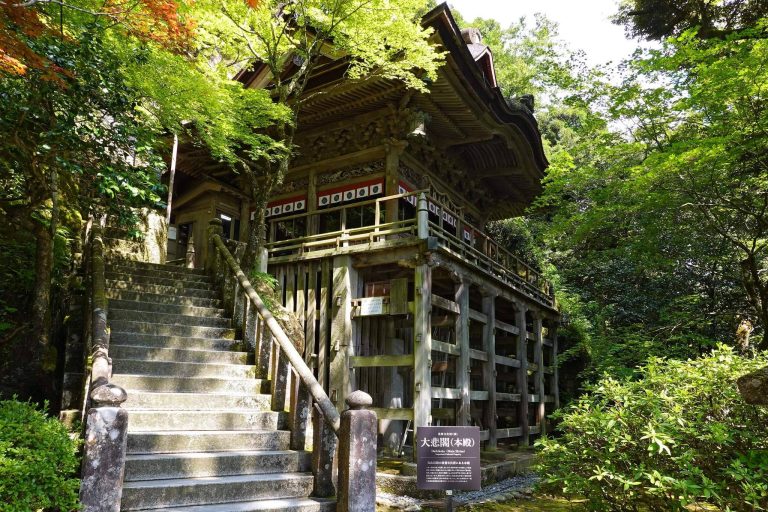
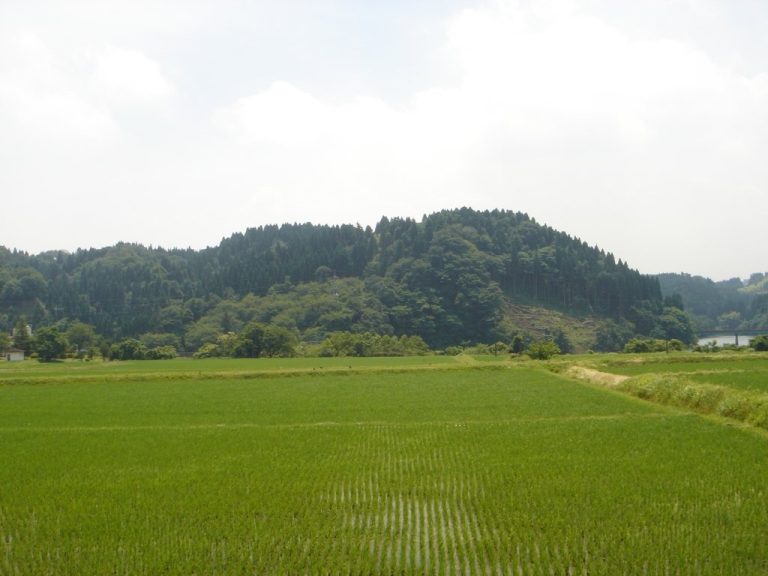
Daijō-ji stands in the wooded hills of southern Kanazawa near the summit of Mount Nodayama. Gentle hills surround the monastery, and a neighboring public park occupies land understood to have formed part of the former temple grounds. The surviving complex combines timber buildings with brick and stone elements and preserves a sequence of entrances, halls, service buildings, lineage spaces, and family memorial structures.
Entrances and Monastic Buildings
Gates and Cloister
The main entrance is the Black Gate, erected in 1665. A mountain gate from the early Edo period provides the principal ceremonial entrance to the Buddhist complex. Within the grounds, a cloister connects the monastic spaces, while a bell-and-drum tower houses the instruments used for monastic timekeeping and ritual.
Service and Residential Buildings
The historic complex also includes a kitchen and monastic service building, a study, and a monks’ hall. The monks’ hall served as a principal space for monastic residence and practice. A lineage hall preserves the institutional memory of the teachers connected with Daijō-ji, while a repository is associated with the Blue Cliff Record.
Principal Halls and Religious Art
Buddha Hall and Dharma Hall
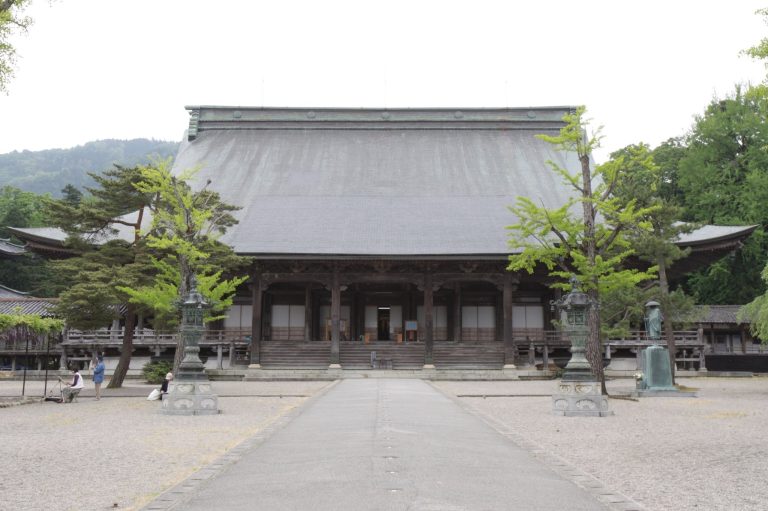
The Buddha Hall was built in 1702, and the present temple’s principal image is Shakyamuni Buddha. The Dharma Hall dates from approximately 1697. Used for teaching and preaching Buddhist doctrine, it belongs to the rebuilding phase associated with the monastery’s transfer to its present location.
Paintings and Kannon Shrine Space
Numerous paintings on paper sliding doors and hanging scrolls by Maruyama Ōkyo and his disciples are preserved at Daijō-ji. Ōkyo, his sons, and twelve pupils visited the temple five times and produced 165 paintings in repayment for the support that the abbot Mitsuzō had given to Ōkyo’s artistic education.
The paintings decorate thirteen rooms arranged around a standing eleven-faced Kannon Bosatsu statue. Kannon is a bodhisattva associated with compassion, and the eleven-faced form is one of its recognized manifestations. The paintings are designated important national cultural properties.
Manuscripts and Memorial Features
Daijō-ji’s cultural-property holdings include the Map of the Five Mountains and Ten Monasteries, the One-Night Blue Cliff, three-generation transmission documents, and other named Buddhist manuscripts. These materials accompany the buildings and artworks in preserving the monastery’s religious and institutional history.
The Honda family mausoleum is another historic component of the complex. Its presence reflects the temple’s early-modern role as the Honda family’s family temple, linking the surviving grounds to the period before the monastery’s transfer to its present site.