Ankoku-ji Temple: A Historic Rinzai Zen Temple in Takayama


Site at a Glance
- Rating
- 4
- Popularity
- Low
- Country
- Japan
- Primary era
- Medieval
- Eras represented
- Medieval, Early Modern
- Civilizations
- Ashikaga shogunate, Tokugawa
- Site type
- Religious
- Remains
- Monastery
On this page10 sections
History
Ankoku-ji Temple is a Rinzai Zen temple in Takayama, Gifu Prefecture, Japan, founded in 1347 during the Muromachi period as part of a nationwide network established under the Ashikaga shogunate. Rinzai is a major school of Zen Buddhism, and the temple belongs to the Myoshinji branch of that tradition. Known also as Hida Ankoku-ji, it is associated with the Hida Thirty-Three Kannon pilgrimage as station 11 and has Shakyamuni Buddha as its principal image.
Foundation and medieval growth
The monk Zuigan founded Ankoku-ji as one of the temples established throughout Japan by Ashikaga Takauji, founder of the Ashikaga military government, and his political and military associate Ashikaga Tadayoshi. These institutions connected religious activity with the new regime. At the height of its medieval development, Ankoku-ji was a large monastery containing a seven-hall compound and nine subsidiary temple residences.
During the Warring States period, a time of prolonged conflict among regional military powers, the temple became caught between the Miki family of Takayama and the Hirose family based at Kokubunji. The Miki family was associated with the Uesugi faction, while the Hirose family was linked to the Takeda faction. Ankoku-ji suffered two military fires, one during the Tensho period (1532–1555) and another during the Eiroku period (1558–1570).
Fire, rebuilding, and preservation
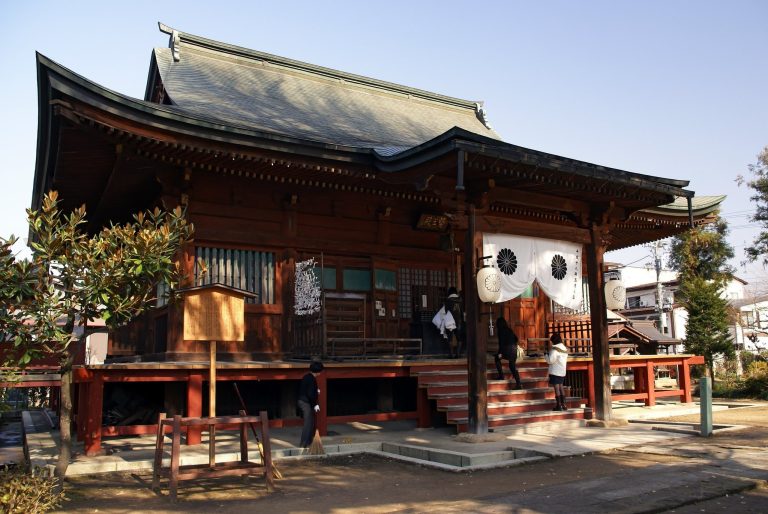
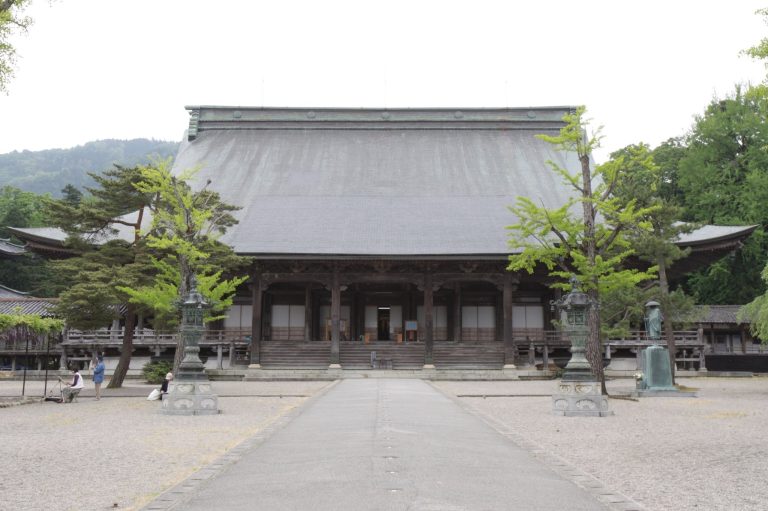
The fires destroyed the temple buildings except for the sutra repository, the founder’s hall, and Kumano Shrine. The present main hall was rebuilt in 1624 by Kanamori Shigeyori, the third lord of the Hida-Takayama domain, after the establishment of Tokugawa rule and the beginning of the Edo period.
Kumano Shrine was traditionally established as the temple’s guardian shrine during the late Muromachi period, when Zuigan enshrined it. Its main sanctuary received designation as an Important Cultural Property in 1979. The sutra repository was protected under Japan’s former preservation law in 1909 and became a National Treasure under the Cultural Properties Protection Law in 1963. In 2016, the repository was included in the Japan Heritage designation for medieval shrine and temple architecture in the Kokufu Basin associated with the skills and spirit of Hida craftsmen.
Remains
The surviving buildings and religious images preserve several stages of Ankoku-ji’s history, from the medieval foundation to the later rebuilding of the temple compound. The site includes the National Treasure sutra repository, the founder’s hall, the principal Buddhist image group, Kumano Shrine, and an Inari shrine associated with the local legend of the fox boy of Ankoku-ji.
Medieval temple buildings and images
Sutra repository
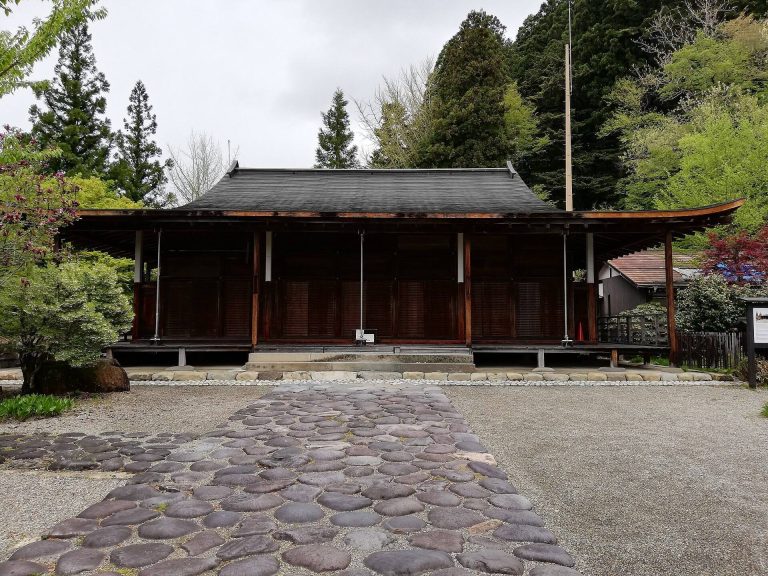
Built in 1408, the sutra repository is a Zen-style structure with an irimoya roof, which combines a hipped roof with gabled sections, covered in thin wooden shingles. Its main body is a one-bay square core surrounded by a lower encircling roof called a mokoshi. From outside, the central section appears to have three bays on both the front and side elevations, but the two inner vertical members are struts rather than columns. Inside, four independent columns define the central core and reveal how the surrounding roof was arranged.
The building has a restrained design that differs from the closely spaced bracket complexes and fan-shaped rafters commonly associated with Zen-style architecture. Its relatively few brackets and widely spaced parallel rafters give the repository a simple appearance. It contains a rotating sutra cabinet regarded as the oldest Japanese example of such a cabinet with a clearly known manufacturing date.
Founder’s hall
The founder’s hall houses a seated image of Zuigan made in 1392. The figure is modeled in clay, while its head is wooden. Clay sculpture had been prominent in the Nara period but was uncommon in medieval Japan. The image is accompanied by a wooden altar and manuscripts placed inside it, including a section of the Avatamsaka Sutra, the Diamond Sutra, the Universal Gate chapter of the Lotus Sutra, and the Heart Sutra.
Shakyamuni image group
The temple’s wooden principal image of Shakyamuni Buddha is accompanied by wooden images of Manjusri and Samantabhadra. This group was made in 1356, within the early period of Ankoku-ji’s history.
Kumano Shrine
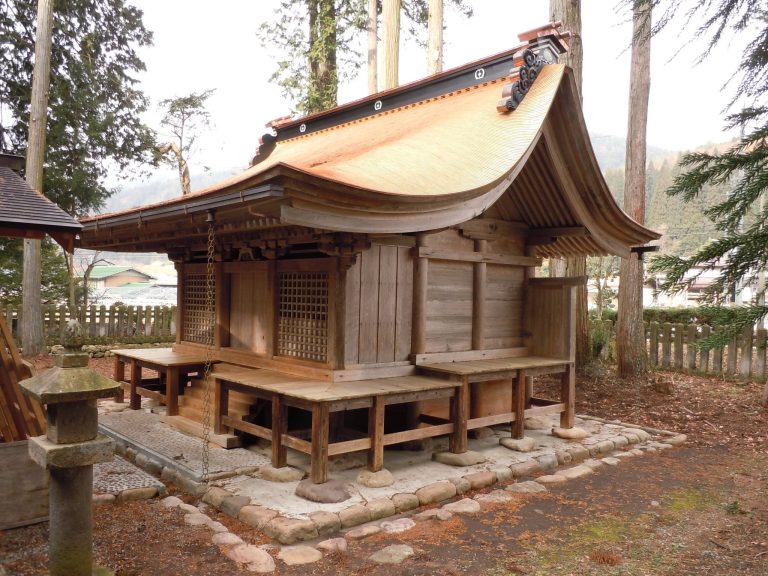
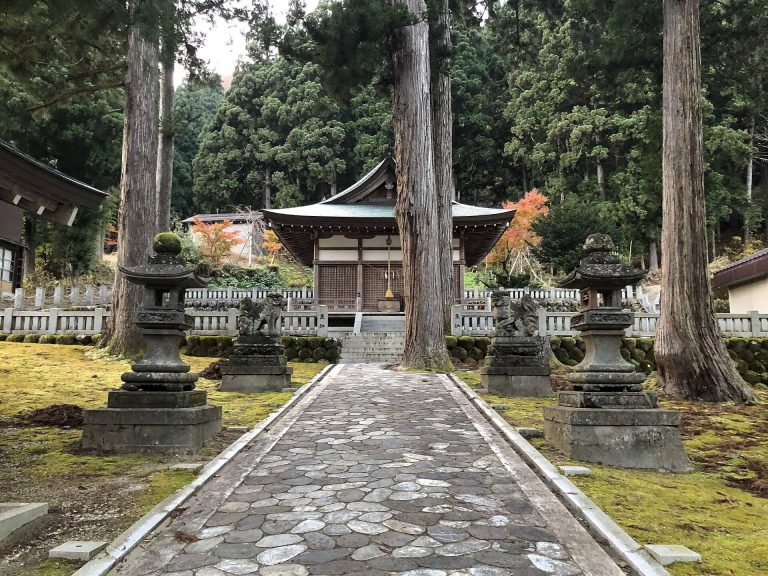
Kumano Shrine stands behind the temple within its grounds. Its main sanctuary is a three-bay building of the nagare-zukuri type, a shrine form whose front roof slope extends forward to create a covered entrance. The sanctuary has a thin wooden-shingle roof. Its unusual form is important for understanding the development of shrine architecture in Hida.
Inari shrine
An Inari shrine also stands within the temple grounds. Inari is traditionally associated with rice, food, agriculture, and prosperity. At Ankoku-ji, the shrine is connected with the local legend of the “fox boy of Ankoku-ji.”