Jūbu-ji Temple: A Tendai Buddhist Temple in Takamatsu, Japan


Site at a Glance
- Rating
- 3.6
- Popularity
- Very Low
- Country
- Japan
- Primary era
- Early Modern
- Eras represented
- Early Modern
- Civilizations
- Tokugawa
- Site type
- Religious
- Remains
- Monastery
On this page8 sections
History
Jūbu-ji Temple is a Tendai Buddhist temple in Takamatsu, Kagawa Prefecture, Japan, traditionally founded in 754 by the Chinese monk Jianzhen. The temple is associated with the inner sanctuary of Negoro-ji Temple, the 82nd site on the Shikoku 88-temple pilgrimage, and is also the 13th site of the New Shikoku Mandala Pilgrimage.
Foundation and Heian-period development
Temple tradition states that Jianzhen established Jūbu-ji after recognizing a resemblance between the surrounding mountain and Vulture Peak in India, a mountain associated with Buddhist teaching. He is also said to have enshrined an image of Shaka Nyorai, the historical Buddha, at the temple’s foundation. The name Jūbu-ji is traditionally connected with this mountain setting.
In 860, during the early Heian period, Enchin, also known as Chisho Daishi, made the temple one of seventeen Danrin monasteries, Buddhist institutions devoted to religious study and training. Jūbu-ji also became an imperial prayer temple under Emperor Seiwa. The temple belongs to the Tendai school, a major Japanese school of Mahayana Buddhism based on teachings associated with the Chinese Tiantai tradition.
Destruction and revival
The temple complex was burned during the Tensho era, between 1573 and 1593, amid the invasion of forces associated with Chosokabe Motochika, a warlord who extended his power across much of Shikoku. A 1747 temple origin account places the burning in the Tensho era but does not name Chosokabe, so the specific attribution to his invasion remains qualified.
Following the destruction, Jūbu-ji declined until only Buddhist halls remained. In 1661, Matsudaira Yorishige, lord of the Takamatsu domain, ordered the temple’s revival and appointed Kankei Ajari of Miidera as its first abbot during the restoration period. Kankei Ajari was a learned Buddhist teacher, and the rebuilt temple complex was completed in 1676.
Jūbu-ji is dedicated principally to Senju-sengen Kannon, the Thousand-Armed and Thousand-Eyed Kannon. Kannon is a bodhisattva associated with compassion, while this form’s many arms and eyes express the ability to perceive suffering and respond in many ways. The temple’s traditional pilgrimage hymn evokes the mountain, its valley stream, and the wind through the pines as voices conveying Buddhist teaching.
The wooden standing statues of the Four Heavenly Kings are designated an Important Cultural Property of Japan. The Four Heavenly Kings are Buddhist guardian deities traditionally associated with protection of the four directions. A fir tree in the temple precincts is preserved under Kagawa Prefecture’s protected-tree system.
Remains
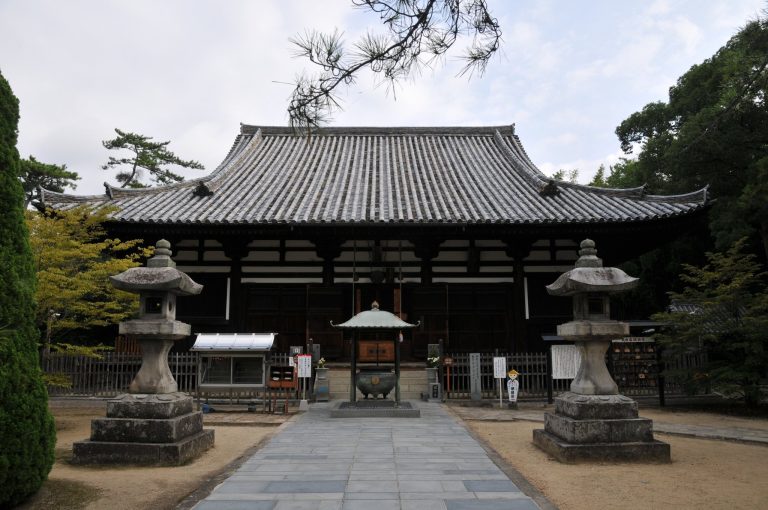
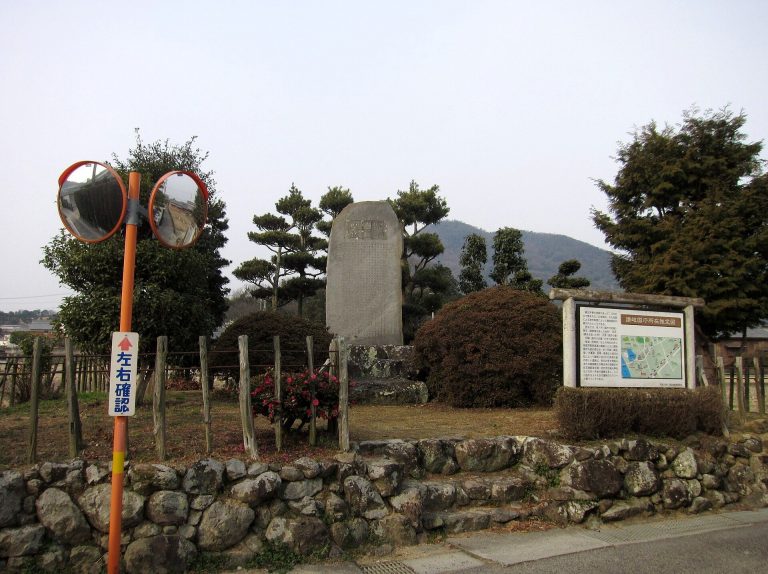
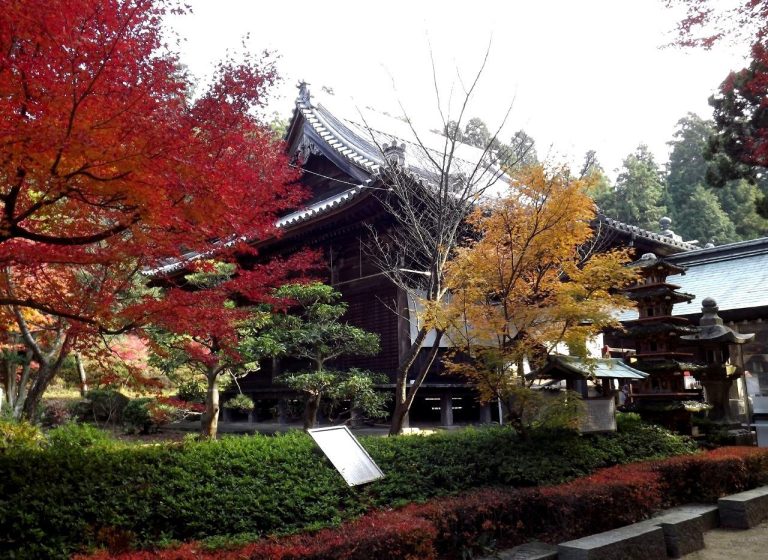
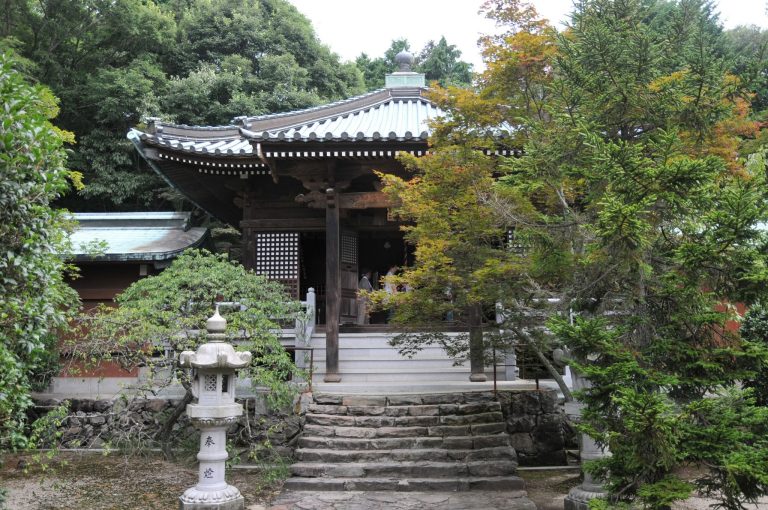
Jūbu-ji stands in the Oku area of Kashihara, in Kokubunji-cho, on a mountain associated with the foundation tradition concerning Vulture Peak. The precincts contain a main gate, main hall, Hall of the Great Teacher, goma hall, repository for the Four Heavenly Kings, Jizo Hall, main temple residence, and pilgrimage office.
Temple halls and sacred images
The principal image is Senju-sengen Kannon. The main hall forms the central setting for this devotion, while the foundation tradition also connects the temple with the image of Shaka Nyorai enshrined at its establishment.
The Hall of the Great Teacher contains an image of Kobo Daishi, the posthumous title of Kukai, who founded the Shingon school of Japanese Buddhism. It is flanked by images traditionally identified as Dengyo Daishi and Chisho Daishi. Dengyo Daishi is the posthumous title of Saicho, who established Tendai Buddhism in Japan, and Chisho Daishi is the posthumous title of Enchin.
The goma hall houses a standing image of Fudo Myoo, a wrathful Buddhist deity associated with immovable resolve and the destruction of spiritual obstacles. The Jizo Hall contains a stone image of Jizo.
Guardian repository
The repository for the Four Heavenly Kings houses wooden standing statues of these four Buddhist guardian deities. Their presence gives the temple a distinct group of protective images within the wider arrangement of halls and religious buildings.
Mountain pilgrimage path
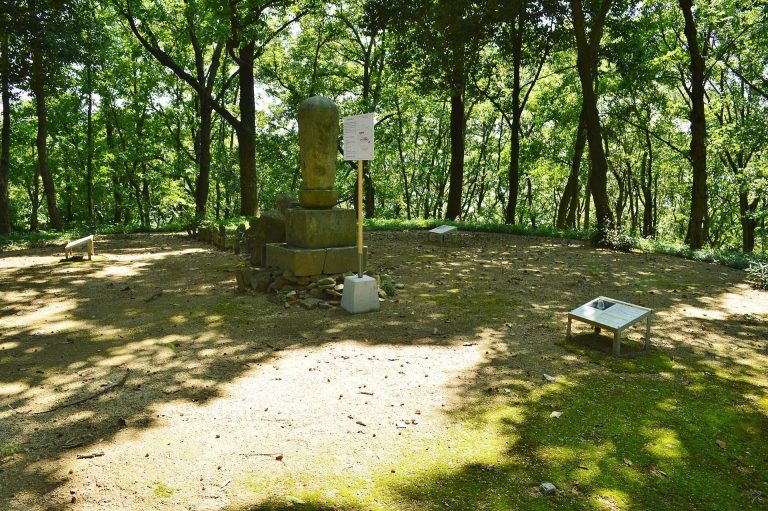
Behind the main hall, a circular path associated with the New Shikoku pilgrimage extends for approximately 2 kilometers through the mountain. Stone Buddhist images are arranged along the route, creating a continuous sacred feature within the wooded temple landscape.
Preserved natural feature
A fir tree within the precincts is recognized as a protected natural feature under Kagawa Prefecture’s preserved-tree system. It forms part of the temple’s surviving physical environment alongside its halls, images, and mountain path.