Rokuharamitsu-ji Temple: A Heian Buddhist Temple in Kyoto


Site at a Glance
- Rating
- 4.3
- Popularity
- Medium
- Country
- Japan
- Primary era
- Medieval
- External website
- Open
- Eras represented
- Medieval, Early Modern
- Civilizations
- Ashikaga shogunate, Toyotomi regime
- Site type
- Religious
- Remains
- Temple
On this page16 sections
History
Rokuharamitsu-ji Temple is a Buddhist temple in Kyoto, Japan, whose origins are associated with the Heian period and a training hall established around a statue of Jūichimen Kannon in 951. Its formal name is Fudaraku-san Fumon-in Rokuharamitsu-ji, and it belongs to the Chisan-ha branch of the Shingon school of Japanese Buddhism. The temple’s hidden principal image, an early-Heian wooden statue of Jūichimen Kannon, is designated a National Treasure.
Origins under Kūya
The exact foundation date remains uncertain. The Heian-period history Fusō Ryakuki links the temple to a training hall created by the Buddhist holy man Kūya for the statue of Jūichimen Kannon erected in 951. The institution was initially known as Saikō-ji. Another tradition places its foundation in 963, when Kūya held a large memorial service for the Great Perfection of Wisdom Sutras on the bank of the Kamo River.
Kūya was renowned for promoting nembutsu, the devotional recitation of a Buddha’s name, particularly the invocation of Amida, and for performing dancing nembutsu. During a plague in Kyoto, he is traditionally said to have drawn the Kannon image through the city on a cart while chanting and distributing tea to the sick. The Kamo River area was then used for disposing of corpses and conducting funerals, placing Kūya’s activity within a setting marked by epidemic and death.
Renaming and Tendai affiliation
After Kūya’s death, Chūshin, a monk of Enryaku-ji, the major Tendai monastery on Mount Hiei, renamed Saikō-ji Rokuharamitsu-ji in 977. He also re-established it as a Tendai-affiliated institution. The name refers either to the six perfections, Buddhist practices associated with progress toward enlightenment, or to the historical name of the surrounding area, Rokuhara.
The Heike compound and wartime destruction
In the late Heian period, Rokuharamitsu-ji became closely associated with the Heike, the Taira clan that dominated Japanese politics during the final phase of the period. Taira no Masamori built a nearby hall dedicated to Amida, now identified with Jōkō-in. Taira no Tadamori later stationed troops in one of the temple’s sub-temples and constructed a residence called Rokuharaden beside it.
Taira no Kiyomori incorporated the temple into the Heike residential compound. More than 5,200 Heike residences were built around this complex, which combined the clan’s domestic and political presence in Kyoto. When the Heike fled the capital in 1183 during the Genpei War, the conflict between the Taira and Minamoto forces, the compound and the temple buildings were burned. The main hall alone escaped the destruction. The Kamakura shogunate later established the Rokuhara Tandai, its military and administrative institution in Kyoto, on the site of the former Heike residences.
Rebuilding and religious change
Rokuharamitsu-ji was rebuilt with the patronage of Minamoto no Yoritomo, founder of the Kamakura shogunate, and Ashikaga Yoshiakira, the second shogun of the later Ashikaga or Muromachi shogunate. Fires continued to affect the grounds, and the main hall was rebuilt in 1363 during the Nanboku-chō period, an era of conflict between rival imperial courts.
During the Bunroku era, from 1593 to 1596, repairs were undertaken in connection with Toyotomi Hideyoshi’s construction of the Kyoto Great Buddha. Hideyoshi also secured a temple estate yielding 70 koku, a rice-based measure of land income. At this time, Rokuharamitsu-ji became a branch temple of Chishaku-in and entered the Shingon tradition.
A large temple complex survived until the end of the Edo period. The anti-Buddhist movement that accompanied the Meiji Restoration greatly reduced the grounds, which later became surrounded by private houses. In 1969, the main hall was dismantled and repaired. Excavation beneath its foundation produced approximately 8,000 mud pagodas, small pagoda-shaped votive objects formed from clay or mud. These objects are also mentioned in works such as Konjaku Monogatarishū and Sankaiki.
Ritual traditions
The temple remains connected with several pilgrimage circuits. It is the seventeenth station of the Saigoku Kannon Pilgrimage, the fifteenth station of the Rakuyō Thirty-Three Kannon Pilgrimage, and a stop on the Miyako Seven Lucky Gods and Shinbutsu Pilgrimage routes. These circuits are devoted chiefly to Kannon worship or to temples and shrines associated with auspicious deities.
The annual Kūya Odori Nembutsu is a dancing nembutsu ceremony held in the inner sanctuary of the main hall every December. Formerly restricted to initiates, it became open to the public after receiving designation as an Important Intangible Folk Cultural Property. The ceremony is regarded as connected with the origins of Japanese dance.
The New Year beverage ritual called Ōbuku tea is associated with Kūya’s distribution of medicinal tea during a Kyoto epidemic. It uses sencha prepared with freshly drawn New Year’s water, knotted kelp, and small ume plums. Its name reflects the tradition that Emperor Murakami also drank the beverage. It is served during the first three days of the year.
In 2009 and the period that followed, demolition work for neighboring school facilities raised concern that vibration might affect the statue of Kūya housed in the treasure hall. Measures to reduce vibration were installed, and the temple requested changes to the school construction plan after some lacquer on the statue’s lips flaked. The Agency for Cultural Affairs did not consider the observed condition to constitute damage.
Remains
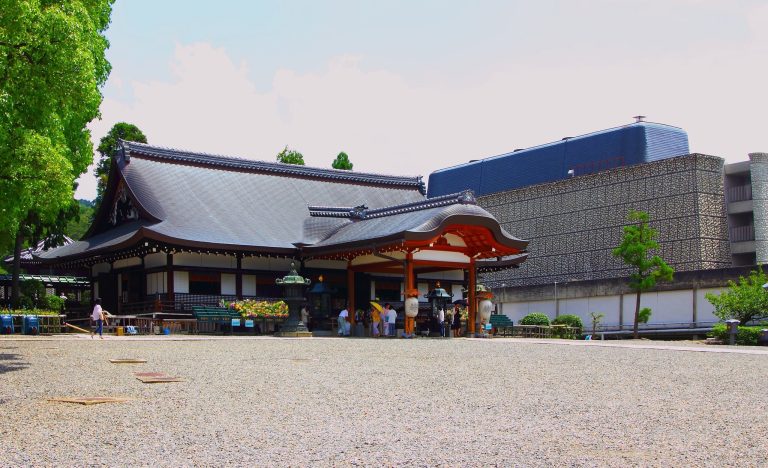
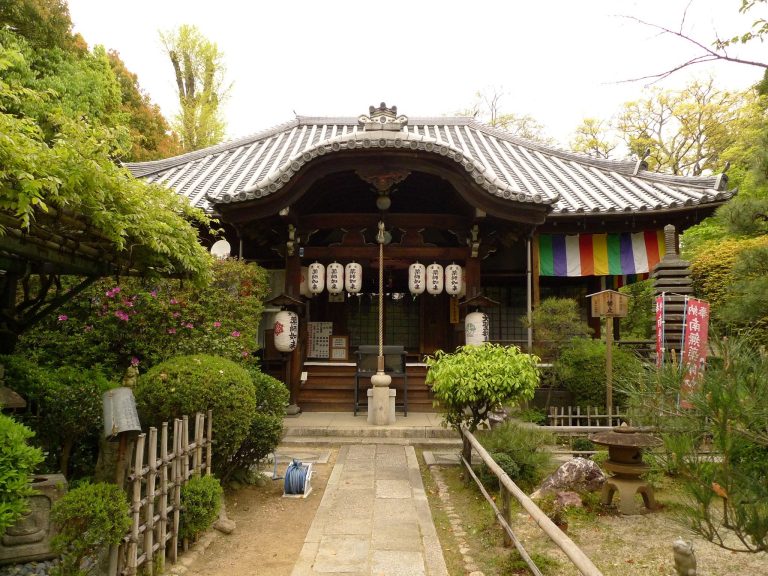
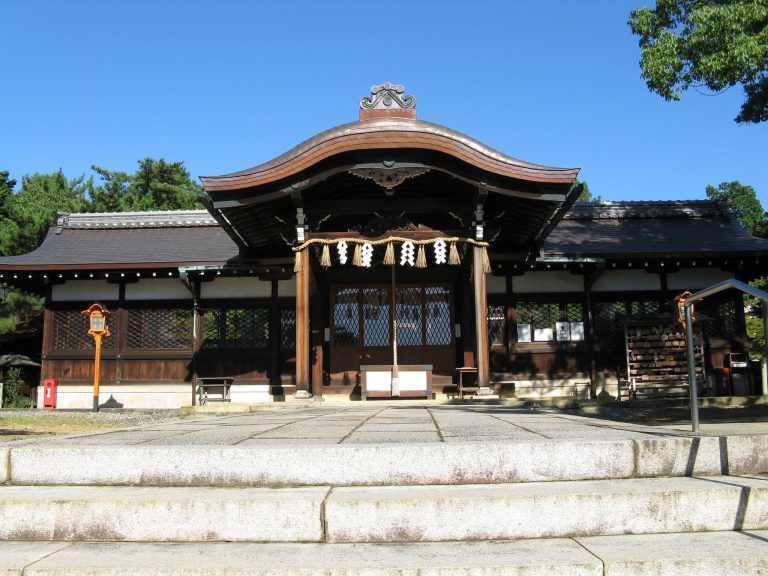
Rokuharamitsu-ji’s surviving fabric is centered on the Muromachi-period main hall rebuilt in 1363. Its interior follows a Tendai-style plan, while later additions and preserved sculpture collections reflect the temple’s successive Buddhist affiliations and periods of rebuilding. The temple’s non-principal Buddhist statues are housed in the treasure hall.
Main Hall and Associated Buildings
Main Hall
The main hall is a wooden building reconstructed in 1363. Its plan includes a wooden-floored outer sanctuary and a lower sanctuary that combines an earthen floor with a partially raised floor. Sliding doors separate these spaces. Toyotomi Hideyoshi added the present entrance porch during the Bunroku era, from 1593 to 1596. The building was dismantled and repaired in 1969, and its foundation yielded approximately 8,000 mud pagodas during that work.
Benten-dō
The Benten-dō is an associated temple building dedicated to Benzaiten, a Buddhist deity connected with music, eloquence, and fortune.
Buddhist Sculptures
Jūichimen Kannon
The temple’s hidden principal image is a wooden standing Jūichimen Kannon from the early Heian period. Jūichimen Kannon is a form of Kannon, the bodhisattva associated with compassion, represented with eleven faces. The image is a hibutsu, a sacred Buddhist image kept hidden from ordinary view, and is designated a National Treasure.
Kūya
The wooden standing statue of Kūya dates from the Kamakura period and was carved by Yasukatsu, the fourth son of the sculptor Unkei. Kūya is shown walking in straw sandals with a gong around his neck. He holds a wooden mallet in his right hand and a staff topped with deer antlers in his left. Six small Amida figures emerge from his mouth, symbolizing the six characters of “Namu Amida Butsu”; wires connect the figures to the statue.
Figures associated with the Heike and Unkei lineage
A wooden seated statue traditionally identified as Taira no Kiyomori depicts a priestly figure holding a Buddhist sutra and dates from the Kamakura period. The temple also preserves a wooden seated Jizō Bosatsu from the same period. Jizō is a bodhisattva associated with protecting beings in difficult circumstances. The Jizō has no inscription, but temple tradition attributes it to Unkei on the basis of its facial expression and drapery style. Another tradition holds that it was transferred from Jizō Jūrin-in, a family temple of the Unkei lineage.
Wooden seated portraits traditionally identified as Unkei and Tankei also came from Jizō Jūrin-in. Their contrasting individual appearances reflect their role as attendants of the principal image when they were enshrined there.
Heian-period and Kamakura-period images
Four wooden standing statues of the Four Heavenly Kings date from the Heian period and are regarded as surviving works from the foundation phase associated with Kūya. The statue of Zōchō-ten is a Kamakura-period replacement. A wooden seated statue of Yakushi Nyorai, the Buddha of healing, also dates from the Heian period. Its style follows Tendai conventions, and it is considered to have been made during Chūshin’s revival of the temple.
A wooden standing Jizō Bosatsu from the Heian period was formerly enshrined in the Rokuhara Jizō Hall. It holds a lock of hair in its left hand and is venerated as Katsurakake Jizō. A related narrative appears in Konjaku Monogatarishū. Other Kamakura-period wooden images include a seated Kōbō Daishi attributed to Chōkai, a pupil of Kaikei, together with a seated Emma-ō, the judge of the dead, and a standing Kichijō-ten, a Buddhist goddess associated with prosperity and good fortune.
Votive objects and religious materials
A collection of materials concerning popular religious beliefs at Rokuharamitsu-ji belongs to the Heian and Kamakura periods and contains 2,163 items. It comprises 1,945 mud pagodas, 101 objects associated with the Mantōkai festival, 60 tea bowls, and 57 other items. Together with the excavated objects from beneath the main hall, this material preserves physical evidence of devotional practices connected with the temple’s long history.