Chausuyama Kofun: A Kofun-Period Chief’s Burial Mound in Japan
Site at a Glance
- Rating
- 3.9
- Popularity
- Very Low
- Country
- Japan
- Primary era
- Classical
- Eras represented
- Classical
- Civilizations
- Yamato
- Site type
- Burial
- Remains
- Burial Mound
On this page6 sections
History
Chausuyama Kofun, also known as Zeze Chausuyama Kofun, is a Kofun-period burial mound in Ōtsu, Japan, on the southern shore of Lake Biwa. Built around the end of the fourth to the beginning of the fifth century, during the middle Kofun period, it was a large tomb for a local chief in the Ōtsu area.
At approximately 122 to 124 meters long, the mound was built later than Ōjiyama No. 1 Kofun and Wani Ōtsukayama Kofun. It is regarded as the third-largest kofun in Shiga Prefecture, after Azuchi-Hyōtanyama Kofun and Kōjinyama Kofun. The identity of the person buried there remains unknown. One tradition connects the tomb with Prince Hikoimasu, a figure in Japan’s early imperial genealogical tradition. Another associates it with the family of Prince Ōtomo, a son of Emperor Tenji who was defeated and died during the Jinshin War, a seventh-century succession conflict.
The tradition concerning Prince Ōtomo is linked to five later burial mounds on the summit of the mound’s circular rear section. These mounds are traditionally called burial mounds and represent a later layer of historical memory associated with the site. Chausuyama Kofun and Kochausuyama Kofun were designated together as a National Historic Site of Japan on March 3, 1921.
Remains
The main mound
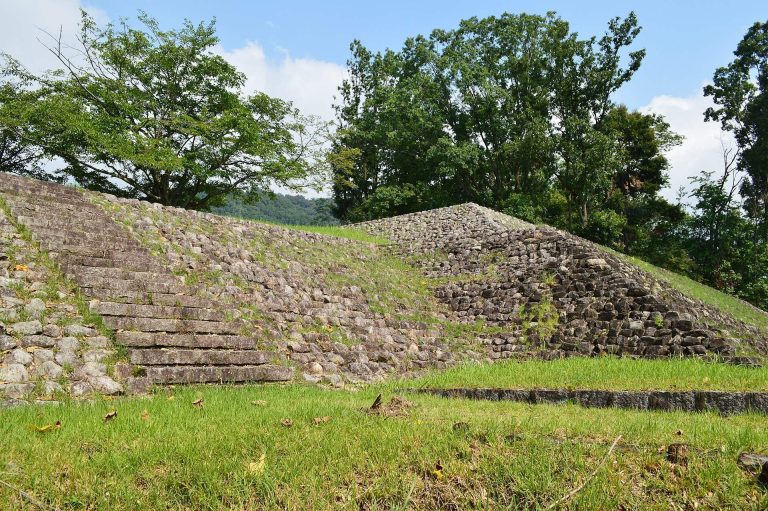
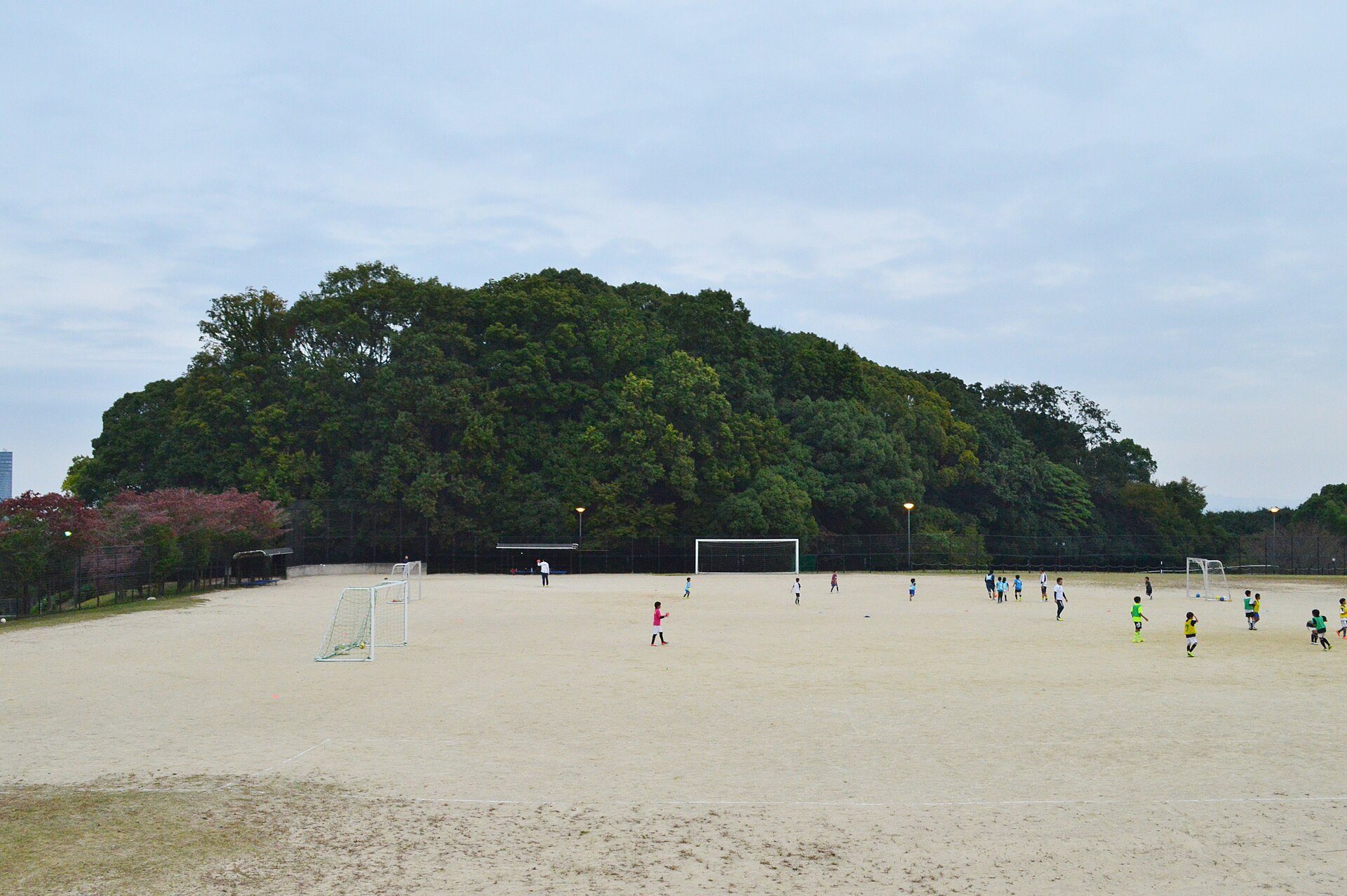
Chausuyama Kofun is a large keyhole-shaped mound, formed by a square front section facing east and a circular rear section. The entire mound measures approximately 122 to 124 meters in length, while the rear section rises about 8 meters high. Its original surface was covered with a stone revetment, and the mound was arranged in successive terraces.
Rows of cylindrical haniwa, clay funerary objects placed on or around burial mounds, stood along the terraces. Figurative haniwa were positioned on the summit. The construction technique and the forms of the haniwa help place the mound in the middle Kofun period. The burial facility and its exact location are unknown because the mound has not been excavated.
The mound’s design resembles that of Saki Misasagiyama Kofun in Nara. The distribution of kofun with this square-fronted and circular-rear form around the Kinai, the historical core surrounding Japan’s ancient political capitals, has been used to propose that territorial control was organized around the Kinai when Chausuyama Kofun was built.
Features within and around the mound
Akiba Shrine and the later mounds
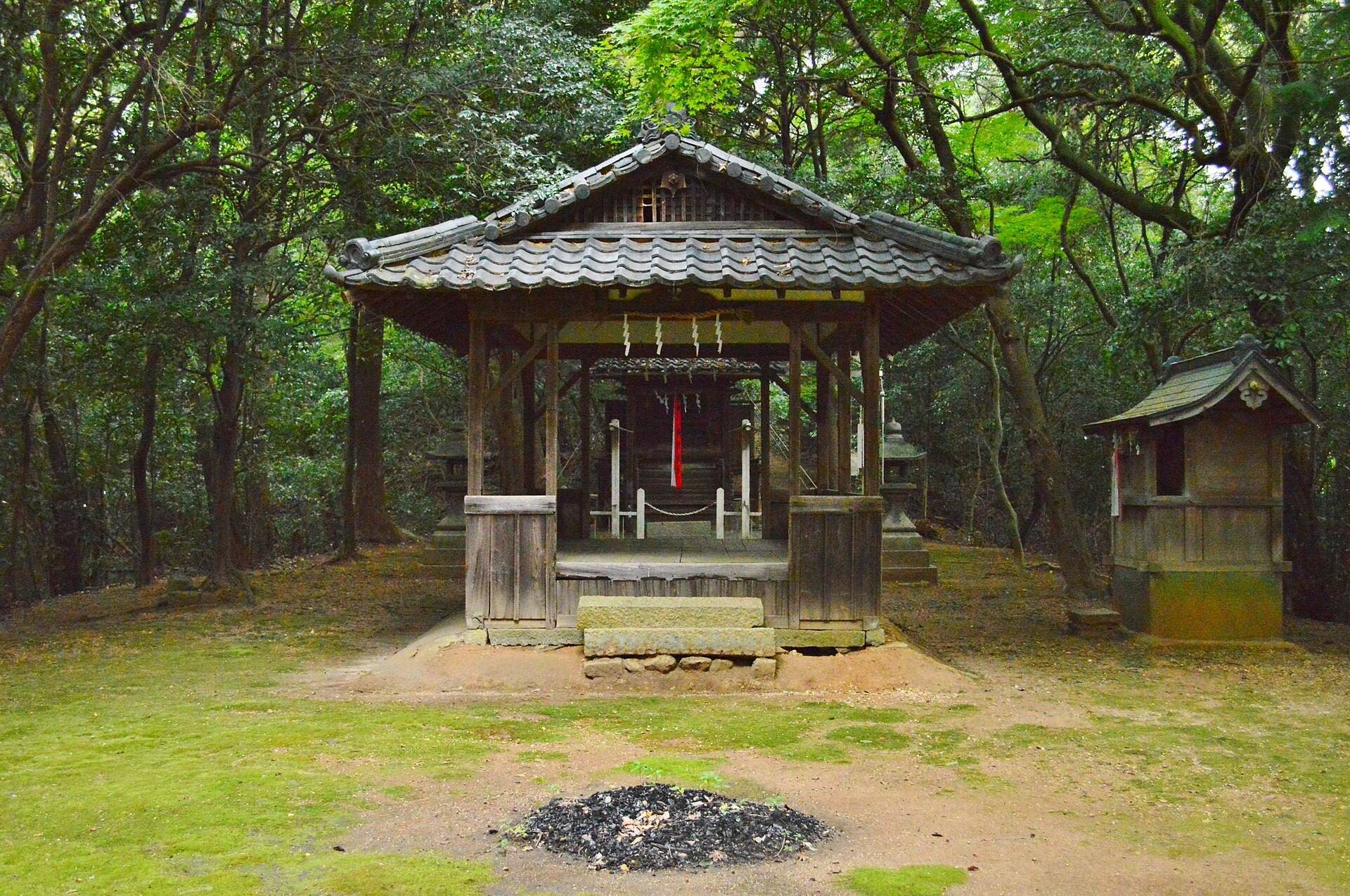
Akiba Shrine lies within the kofun area. Five later mounds remain on the summit of the circular rear section, where tradition associates them with Prince Ōtomo’s family. They form a later group of burial features superimposed on the earlier monument.
Kochausuyama Kofun
Kochausuyama Kofun lies approximately 200 meters south of Chausuyama Kofun. It is a circular mound about 18 meters in diameter. Its details remain unknown because it has not been investigated, but its position has led to the proposal that it served as a subsidiary mound, or baizuka, connected with Chausuyama Kofun.