Kyōrin-bō Temple: A Tendai Buddhist Temple in Japan


Site at a Glance
- Rating
- 4.4
- Popularity
- Low
- Country
- Japan
- Primary era
- Early Modern
- External website
- Open
- Eras represented
- Medieval, Early Modern
- Civilizations
- Ashikaga shogunate, Tokugawa
- Site type
- Religious
- Remains
- Temple
On this page15 sections
History
Kyōrin-bō Temple is a Tendai Buddhist temple in Japan, located in Azuchi, Ōmihachiman, Shiga Prefecture. Temple tradition attributes its foundation to Prince Shotoku in 605, during the reign of Empress Suiko, and associates it with the early development of Buddhism in Japan. The temple is also known as the Stone Temple and serves as the head of the Kyōrin-bō school of incense ceremony.
Traditional Foundation and Religious Identity
According to temple tradition, Prince Shotoku preached in the surrounding forest, giving rise to the temple’s name. Its principal devotional object is the stone image of Akagawa Kannon, a Buddhist bodhisattva associated with compassion. The image is traditionally attributed to Prince Shotoku and is enshrined in a rock cavern on the grounds. The temple’s religious identity remains connected with Tendai Buddhism, a major Japanese Buddhist school derived from the Chinese Tiantai tradition.
Decline, Revival, and Modern Recognition
Kyōrin-bō declined during the warfare of the Sengoku period, the era of civil conflict that affected much of Japan in the sixteenth century. The decline included conflict associated with Oda Nobunaga, a military leader whose campaigns formed part of that wider upheaval. The temple was revived in 1585.
From approximately 1975 until 1995, the temple was uninhabited and deteriorated before being revived again. The writer Shirasu Masako visited in 1969 and introduced Kyōrin-bō as the Stone Temple in her book Kakurezato, published in 1971. The shoin and Sanmon are designated tangible cultural properties by Ōmihachiman City, and the temple gardens are designated scenic places by the city.
Remains
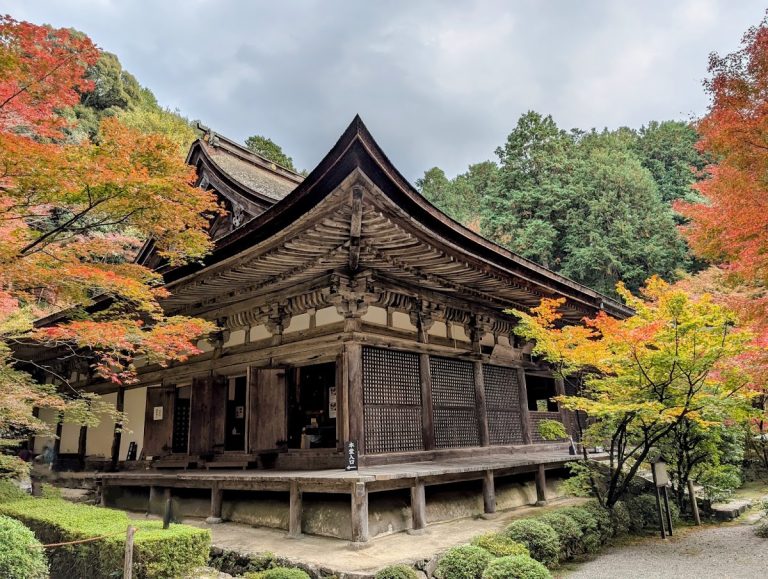
Kyōrin-bō’s grounds combine moss-covered garden stones, large rocks, water features, and thatched-roof buildings. More than 300 maple trees are associated with the temple grounds. The surviving layout brings together devotional spaces, historic residential buildings, gates, and gardens from different periods, producing the wabi-sabi aesthetic associated with the site.
Devotional Features
Main Hall
The main hall contains a life-sized image of Eleven-Headed Kannon placed before the principal image. It also enshrines Niō guardian statues and a Fudō Myōō, a protective Buddhist deity associated with prayer vows and the removal of obstacles.
Akagawa Kannon Cavern
A rock cavern houses the stone image of Akagawa Kannon. This image forms the central devotional focus of Kyōrin-bō and connects the temple’s physical landscape with its tradition concerning Prince Shotoku. The grounds also include the Rock of Prince Shotoku’s Sermon.
Historic Buildings
Sutra Repository
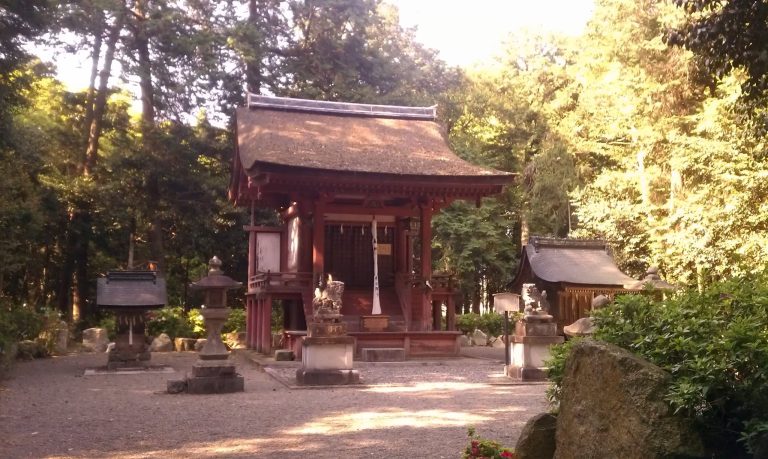
The sutra repository was built during the Edo period to store Buddhist scriptures. Its thatched roof contributes to the visual relationship between the temple buildings and the surrounding stones and gardens.
Shoin
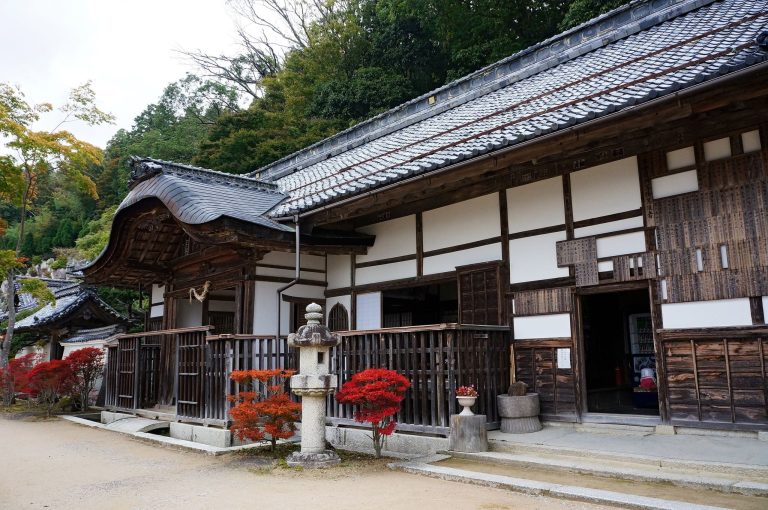
The shoin, a traditional Japanese residential and reception building associated with formal rooms and study spaces, was built in the early Edo period. It also incorporates the temple’s residential and kitchen quarters. The structure has a thatched roof, a gasshō-style form, and an attached study alcove from which the garden is viewed as a “hanging-scroll garden.” The seasonal landscape seen from the shoin resembles a changing landscape painting.
Sanmon and Main Gate
The Sanmon, or temple gate, was built during the Edo period. The main gate is a relocated and reconstructed Edo-period longhouse gate, combining a gate with an attached elongated building, and it also has a thatched roof.
Historic Gardens and Water Features
Enshū Garden
The Enshū Garden lies west of the shoin and dates from the Momoyama period. It is traditionally attributed to Kobori Enshū, a designer associated with garden design, architecture, and the tea tradition. The garden is arranged as a pond-and-strolling garden, intended to be viewed from several points along a route around or through it. Large stones represent features including a dry waterfall, a Crane Island, and a Tortoise Island.
Garden of Potalaka
The Garden of Potalaka lies south of the shoin and dates from the Muromachi period. Its name refers to Potalaka, the mythical abode associated with Kannon in Buddhist tradition.
Water-Harp Feature
The grounds contain a water-harp feature, or suikinkutsu, which produces resonant tones when dripping water strikes a concealed vessel that acts as a resonating chamber. Together with the garden stones, large rocks, moss, and thatched buildings, this feature forms part of the temple’s integrated landscape.